
Page H. Kelley (1924–1997)
Author of Biblical Hebrew: An Introductory Grammar
About the Author
Works by Page H. Kelley
The Masorah of Biblia Hebraica Stuttgartensia: Introduction and Annotated Glossary (1998) 275 copies, 3 reviews
Micah, Nahum, Habakkuk, Zephaniah, Haggai, Zechariah, Malachi: Layman's Bible Book Commentary (Layman's Bible Book Commentary, 14) (1984) 151 copies, 1 review
Tagged
Common Knowledge
- Canonical name
- Kelley, Page H.
- Legal name
- Kelley, Page Hutto
- Birthdate
- 1924-07-19
- Date of death
- 1997-03-13
- Gender
- male
Members
Reviews
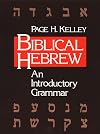
After over a year with this book, I am glad to say I've finished it!
Advantages of Kelley's book:
I love how he combed through the Bible and found actual verses for the exercises in each chapter. It gives a feeling of authenticity to the book, and the joy of working through the Bible rather than fabricated textbook examples. Each chapter has a LOT of helpful exercises of many different kinds, particularly verb identification. There is also an answer key (sold separately) which makes this book show more ideal for self-study.
Disadvantages:
I thought the way he handled weak verbs was unhelpful. His book is very step-by-step: he teaches almost everything about nouns, then moves into verbs, then weak verbs. So there are 10 chapters at the end of the book that focus on weak verbs alone. Some of these chapters were unnecessary, such as certain types of weak verbs that don't lose any of their root consonants - only the vowels change, but one can intuit these pretty easily. Other chapters he overcomplicated immensely, focusing on intricate phonological rules that don't seem necessary to understand biblical Hebrew.
Given the verbs are the most difficult thing about Hebrew morphology, I feel he should have introduced them from the get-go, introducing individual weak verbs along the way and treating them as special irregular cases. Then one is dealing with strong and weak verbs while learning everything else rather than slapping them all at the end of the textbook. show less
Advantages of Kelley's book:
I love how he combed through the Bible and found actual verses for the exercises in each chapter. It gives a feeling of authenticity to the book, and the joy of working through the Bible rather than fabricated textbook examples. Each chapter has a LOT of helpful exercises of many different kinds, particularly verb identification. There is also an answer key (sold separately) which makes this book show more ideal for self-study.
Disadvantages:
I thought the way he handled weak verbs was unhelpful. His book is very step-by-step: he teaches almost everything about nouns, then moves into verbs, then weak verbs. So there are 10 chapters at the end of the book that focus on weak verbs alone. Some of these chapters were unnecessary, such as certain types of weak verbs that don't lose any of their root consonants - only the vowels change, but one can intuit these pretty easily. Other chapters he overcomplicated immensely, focusing on intricate phonological rules that don't seem necessary to understand biblical Hebrew.
Given the verbs are the most difficult thing about Hebrew morphology, I feel he should have introduced them from the get-go, introducing individual weak verbs along the way and treating them as special irregular cases. Then one is dealing with strong and weak verbs while learning everything else rather than slapping them all at the end of the textbook. show less
The Masorah of Biblia Hebraica Stuttgartensia: Introduction and Annotated Glossary by Page H. Kelley
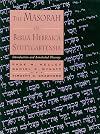
One of the barriers involved in teaching students of biblical Hebrew about the Masorah is the lack of introductory literature on the subject. Although a lot of information about the Masorah is available in print, most of it is in technical professional journals or encyclopedia articles. Scattered about in disparate sources, often not in English, this literature is easier to ignore than it is to incorporate into introductory Hebrew classes. As a result, most students of biblical Hebrew show more complete their studies without any background on the Masorah.
This volume fills this gap by providing an introduction and glossary to the Masorah of the Biblia Hebraica Stuttgartensia. Although the volume could be used by any student of the Hebrew Bible, it is specifically designed to be helpful for students who are just learning Hebrew. Thus it can serve as an important parallel text for second semester or second year Hebrew courses.
The introductory chapters give an overview of the field of Masoretic studies and explain the mechanics of using the Masorah of BHS. The annotated glossary provides students with definitions and explanations for most of the terms used in BHS, including examples. show less
This volume fills this gap by providing an introduction and glossary to the Masorah of the Biblia Hebraica Stuttgartensia. Although the volume could be used by any student of the Hebrew Bible, it is specifically designed to be helpful for students who are just learning Hebrew. Thus it can serve as an important parallel text for second semester or second year Hebrew courses.
The introductory chapters give an overview of the field of Masoretic studies and explain the mechanics of using the Masorah of BHS. The annotated glossary provides students with definitions and explanations for most of the terms used in BHS, including examples. show less
The Masorah of Biblia Hebraica Stuttgartensia : introduction and annotated glossary by Page H. Kelley
Good stuff; a lot of it is a glossary of terms used in the Masorah, so obviously I didn't read that part all the way through. A lot of this book will be more useful for later reference on specific topics than it was for reading through, but it was still good.
The Masorah of Biblia Hebraica Stuttgartensia: Introduction and Annotated Glossary by Page H. Kelley
NO OF PAGES: 241 SUB CAT I: Hebrew SUB CAT II: SUB CAT III: DESCRIPTION: Masorah refers to the strange looking notes printed in the margins of Hebrew Bibles. This book aims to help students understand the significance of the study of Masorah, and to equip them with the tools necessary for the study of it.NOTES: SUBTITLE: Introduction and Annotated Glossary
Lists
You May Also Like


Associated Authors
Statistics
- Works
- 21
- Members
- 2,310
- Popularity
- #11,113
- Rating
- 3.7
- Reviews
- 8
- ISBNs
- 20
- Languages
- 2