
Jim Mason (1) (1940–)
Author of The Ethics of What We Eat
For other authors named Jim Mason, see the disambiguation page.
About the Author
Jim Mason was trained as a lawyer. He was one of founders and editor of the Animals Agenda magazine, and co-author (with Peter Singer) of Animal Factories (1980) and The Ethics of What We Eat (2006). He has written articles for The New York Times, New Scientist, Newsday, Orion, and Audubon show more magazine, and has contributed to several anthologies, including In Defense of Animals (2005). He lives in Virginia. show less
Works by Jim Mason
Associated Works
Tagged
Common Knowledge
- Birthdate
- 1940-09-30
- Gender
- male
- Nationality
- USA
- Associated Place (for map)
- USA
Members
Reviews
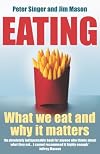
This book was working on getting me to think about changing my diet and shopping habits until it started to be a "Vegan is the only one true way" book. I suspect that it would be where it would loose a lot of other meat-eaters too.
It's an interesting book about the ethics of what you eat and the merits and demerits of each label. Some of the labels have been so diluted and abused that they have lost meaning. It did make my skin crawl when I read about the conditions that our meat is kept in show more before it dies.
I'm a country girl and I understood the relationship between the meat on my plate and the cute animals outside. The bit that truly lost me was "Fearnley-Whittingstall's River Cottage Meat Book includes hints on cooking pheasant, partridge, pigeon, mallard and teal ducks, geese, grouse, woodcock, snipe, rabbit, hare and venison, with a reference to cooking 'the odd squirrel' as well. It seems safe to say that many readers, including many who eat meat will be repulsed by this list." Nope. I've actually eaten a fair few on the list, and feel no shame about it either, a few of those that I haven't I have curiousity about too.
Yes a good read but ignore chapter 17 if you don't want to feel annoyed at preachiness. The rest is interesting aspirations but I'm not sure that I'm willing to go as far as others. show less
It's an interesting book about the ethics of what you eat and the merits and demerits of each label. Some of the labels have been so diluted and abused that they have lost meaning. It did make my skin crawl when I read about the conditions that our meat is kept in show more before it dies.
I'm a country girl and I understood the relationship between the meat on my plate and the cute animals outside. The bit that truly lost me was "Fearnley-Whittingstall's River Cottage Meat Book includes hints on cooking pheasant, partridge, pigeon, mallard and teal ducks, geese, grouse, woodcock, snipe, rabbit, hare and venison, with a reference to cooking 'the odd squirrel' as well. It seems safe to say that many readers, including many who eat meat will be repulsed by this list." Nope. I've actually eaten a fair few on the list, and feel no shame about it either, a few of those that I haven't I have curiousity about too.
Yes a good read but ignore chapter 17 if you don't want to feel annoyed at preachiness. The rest is interesting aspirations but I'm not sure that I'm willing to go as far as others. show less
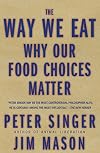
Subtitle: Why Our Food Choices Matter
I never had carefully considered the plight of the chickens, cows or sows that go into my daily diet. This book graphically describes their short and brutish lives and deaths. It then puts forth an argument to prove that it is not ethical to eat anything but a vegan diet. If the lives of humans were not in large part as full of misery as that of animals, it might be a valid argument.
I never had carefully considered the plight of the chickens, cows or sows that go into my daily diet. This book graphically describes their short and brutish lives and deaths. It then puts forth an argument to prove that it is not ethical to eat anything but a vegan diet. If the lives of humans were not in large part as full of misery as that of animals, it might be a valid argument.
This is an excellent book that, were I a different person, a saint and not a sinner, might have changed my life. I think it probably will change it somewhat; I will continue with the baby steps of eating and buying food more mindfully, as I've already begun to do, but I'm not becoming vegan any time soon. [b:The Way We Eat|29377|The Way We Eat Why Our Food Choices Matter|Peter Singer|http://photo.goodreads.com/books/1316130253s/29377.jpg|213660] gives the reader many points to ponder about show more the philosophical questions that arise about eating animals, the treatment of animals who provide food for us, the tension between eating locally and supporting farmers in developing countries, and many more.
But this is not merely a work of philosophy. The authors begin by examining the food shopping and preparation practices of three families. One family eats the typical American diet with lots of meat, convenience foods and fast food, shopping mainly at Walmart or another supermarket. The next, with a vegetarian husband and a carefully omnivorous wife and child, prefers organic and local food and shops at a variety of places including farmers' markets. The third family eats a completely vegan diet and grows much of its own food. Although it's easy to tell that Family #3 is the one the authors admire, each of the families is treated respectfully and the reasons for their choices are respected. The authors provide a lot of information about where each family's food comes from and what happens before it gets to the table. I appreciated the thoughtful and non-sensationalist way that all this information was presented. Whenever possible (since some of the farmers and businesspeople on the more "industrial" end of the spectrum refused interviews), Singer and his co-authors interviewed people on both sides of a question or at least read and quoted extensively from their work. When they disagreed with someone and dissected his arguments, they did so fairly.
The conclusion: it would be best for the welfare of the world (humans, animals, plant life, water, soil and atmosphere) if everyone began to eat a vegan diet as soon as possible. But, realizing that this is unlikely, the authors give a short list of steps that can bring all of our diets closer to sustainability and a higher morality.
I would recommend this book without reservation; I think it was the best non-fiction book I've read all year. show less
But this is not merely a work of philosophy. The authors begin by examining the food shopping and preparation practices of three families. One family eats the typical American diet with lots of meat, convenience foods and fast food, shopping mainly at Walmart or another supermarket. The next, with a vegetarian husband and a carefully omnivorous wife and child, prefers organic and local food and shops at a variety of places including farmers' markets. The third family eats a completely vegan diet and grows much of its own food. Although it's easy to tell that Family #3 is the one the authors admire, each of the families is treated respectfully and the reasons for their choices are respected. The authors provide a lot of information about where each family's food comes from and what happens before it gets to the table. I appreciated the thoughtful and non-sensationalist way that all this information was presented. Whenever possible (since some of the farmers and businesspeople on the more "industrial" end of the spectrum refused interviews), Singer and his co-authors interviewed people on both sides of a question or at least read and quoted extensively from their work. When they disagreed with someone and dissected his arguments, they did so fairly.
The conclusion: it would be best for the welfare of the world (humans, animals, plant life, water, soil and atmosphere) if everyone began to eat a vegan diet as soon as possible. But, realizing that this is unlikely, the authors give a short list of steps that can bring all of our diets closer to sustainability and a higher morality.
I would recommend this book without reservation; I think it was the best non-fiction book I've read all year. show less
Great book about different ethical decisions that go into food choices - eat local vs. fair trade vs. organic. Also discussions of vegetarianism. Sad though - in the end, no matter how well the animals are treated, we still eat them. The description of the happy pigs made me ashamed to have eaten pig products. They are just like dogs or cats.
There were points where this book really veered into preachy, extreme territory though. At one point, Singer discusses people who are essentially show more scavengers - I can't remember his specific term. They go through the trash behind buildings and pull out tossed food and eat that, regardless of what it is or whether its fair trade, vegetarian, etc. The rationale is that since they are not buying the products, they are not creating demand for them, therefore, they are remaining outside the industrial food system. I didn't quite understand if Singer was actually advocating that we all start living like this. It seemed like a way to put readers off of an otherwise very good book. show less
There were points where this book really veered into preachy, extreme territory though. At one point, Singer discusses people who are essentially show more scavengers - I can't remember his specific term. They go through the trash behind buildings and pull out tossed food and eat that, regardless of what it is or whether its fair trade, vegetarian, etc. The rationale is that since they are not buying the products, they are not creating demand for them, therefore, they are remaining outside the industrial food system. I didn't quite understand if Singer was actually advocating that we all start living like this. It seemed like a way to put readers off of an otherwise very good book. show less
Lists
You May Also Like


Associated Authors
Statistics
- Works
- 3
- Also by
- 1
- Members
- 1,053
- Popularity
- #24,475
- Rating
- 4.0
- Reviews
- 10
- ISBNs
- 41
- Languages
- 6