
Shion Miura
Author of The Great Passage
About the Author
Image credit: Amazon.com Author Page
Series
Works by Shion Miura
Tagged
Common Knowledge
- Canonical name
- Miura, Shion
- Legal name
- 三浦しをん
- Birthdate
- 1976-09-23
- Gender
- female
- Education
- Waseda University
- Occupations
- novelist
- Awards and honors
- Naoki Prize (2006)
Booksellers Award (Japan, 2012) - Short biography
- Shion Miura, the daughter of a well-known Japanese classics scholar, started an online book-review column before she graduated from Waseda University. In 2000, she made her fiction debut with Kakuto suru mono ni mar (A Passing Grade for Those Who Fight), a novel based in part on her own experiences during her job hunt. In 2006, she won the Naoki Prize for her linked-story collection Mahoro ekimae Tada Benriken (The Handymen in Mahoro Town). Her other prominent novels include Kaze ga tsuyoku fuiteiru (The Wind Blows Hard), Kogure-so monogatari (The Kogure Apartments), and Ano ie ni kurasu yonin no onna (The Four Women Living in That House). Fune o amu (The Great Passage) received the Booksellers Award in Japan in 2012 and was developed into a major motion picture. She has also published more than fifteen collections of essays and is a manga aficionado.
- Nationality
- Japan
- Birthplace
- Tokyo, Japan
- Associated Place (for map)
- Tokyo, Japan
Members
Reviews
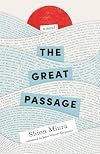
Language has fascinated Kohei Araki since he was a child, but now he's ready to retire and let others take a helm of the project for a new dictionary, to be titled The Great Passage. What follows is the story of various people who have a hand in its creation: Majime, an awkward but hardworking young man; Nishioka, in some ways Majime's opposite but one who comes to appreciate the dictionary work; Kishibe, a young woman who comes to work on the dictionary and has to figure out how to work show more with Majime. Over the course of fourteen years, each of them will have their impact on the dictionary, and it will have its impact on them.
I really can't pass up a book, fictional or nonfictional, about dictionaries. I found it interesting to see the details of Japanese dictionary creation (here fictionalized, but the author includes a bibliography and clearly did her research), and could only imagine the amount of work that must have gone in to translating something like this that depends so much on features of language and writing. A fun, warm story that I would recommend to fans of The Dictionary of Lost Words and The Liar's Dictionary. show less
I really can't pass up a book, fictional or nonfictional, about dictionaries. I found it interesting to see the details of Japanese dictionary creation (here fictionalized, but the author includes a bibliography and clearly did her research), and could only imagine the amount of work that must have gone in to translating something like this that depends so much on features of language and writing. A fun, warm story that I would recommend to fans of The Dictionary of Lost Words and The Liar's Dictionary. show less
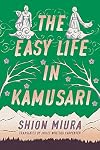
I was enchanted by Kamusari, a remote mountain village in modern-day Japan. Kamusari is a place where time slows down and traditions are important.
The Easy Life in Kamusari is a slice-of-life pastoral novel with a touch of magical realism. The story follows Yuki Hirano, a recent high school graduate who doesn’t know what to do with his life. His parents blackmail him (the nature of the blackmail is hilarious) into going to Kamusari to work as a forestry trainee.
Yuki is used to the hustle show more and bustle of his city, Yokohama. I really liked how the author let me experience the atmosphere of Kamusari through Yuki’s eyes: dense forests, rice fields, and traditional Japanese farmhouses. At first he is bored, he hates the village and the difficult work. Yuki’s transformation from a nonchalant city boy to someone who loves forestry and Kamusari way of life is very touching. The descriptions of the villagers and interactions between characters are quirky and humane. It adds a lot of charm to the book.
“Life here strikes me as pretty unusual. The people are funny in a way. They seem so mild-mannered, but then they’ll quietly say or do something totally destructive.”
“The incoherence of a crazy quilt, the orderliness of spun silk: these two opposites were subtly interwoven into village life.”
I have a lot to say about Miho’s and Yoki’s (Yoki is one of the forest workers) marriage, but I’ll just let Yuki observe instead:
“Miho, walking alongside me, murmured, “I suppose you think I am crazy?” Um, yeah, not being an option, I said nothing.”
The magical realism elements are not a big part of the story, but they add a lovely flavour. There are gods and spirits living on Mount Kamusari – they are essential to village life, but they are only there when the story requires it. Forestry is just as essential to Kamusari and its people – without the forest, there would be no village.
The writing is simple and concise, yet poetic. I loved the descriptions of spring, the summer festival and the awesome drama of the autumn festival. The slow pace lets the reader savour every page.
If you want to read a heartwarming coming-of-age story, then Kamusari is the right place. It made me happy. show less
The Easy Life in Kamusari is a slice-of-life pastoral novel with a touch of magical realism. The story follows Yuki Hirano, a recent high school graduate who doesn’t know what to do with his life. His parents blackmail him (the nature of the blackmail is hilarious) into going to Kamusari to work as a forestry trainee.
Yuki is used to the hustle show more and bustle of his city, Yokohama. I really liked how the author let me experience the atmosphere of Kamusari through Yuki’s eyes: dense forests, rice fields, and traditional Japanese farmhouses. At first he is bored, he hates the village and the difficult work. Yuki’s transformation from a nonchalant city boy to someone who loves forestry and Kamusari way of life is very touching. The descriptions of the villagers and interactions between characters are quirky and humane. It adds a lot of charm to the book.
“Life here strikes me as pretty unusual. The people are funny in a way. They seem so mild-mannered, but then they’ll quietly say or do something totally destructive.”
“The incoherence of a crazy quilt, the orderliness of spun silk: these two opposites were subtly interwoven into village life.”
I have a lot to say about Miho’s and Yoki’s (Yoki is one of the forest workers) marriage, but I’ll just let Yuki observe instead:
“Miho, walking alongside me, murmured, “I suppose you think I am crazy?” Um, yeah, not being an option, I said nothing.”
The magical realism elements are not a big part of the story, but they add a lovely flavour. There are gods and spirits living on Mount Kamusari – they are essential to village life, but they are only there when the story requires it. Forestry is just as essential to Kamusari and its people – without the forest, there would be no village.
The writing is simple and concise, yet poetic. I loved the descriptions of spring, the summer festival and the awesome drama of the autumn festival. The slow pace lets the reader savour every page.
If you want to read a heartwarming coming-of-age story, then Kamusari is the right place. It made me happy. show less
A sweet book about people obsessed with the minutiae of words, and a few passages made me laugh out loud in recognition or because I was so charmed, or both. Yet I’m only giving it 3 stars because I was still left wanting rather more in terms of characterization - the decision to switch POV’s and do the time jump in the middle of the book was startling but not unwelcome, necessarily. These narrative moves had a lot of potential, actually! but I don’t think the story fulfilled that show more potential. We didn’t spend nearly enough time with Nishibe to grow as fond of her as we did Majime and so the ending felt incomplete somehow. Or maybe Nishibe’s characterization was not as vivid. Regardless, I’d like to revisit this one eventually. show less
“A dictionary is a ship that crosses a sea of words.”
Here is a book about people who are in love with words, here is a book about the making of a dictionary. It’s heart-warming, geeky, poignant, funny. There are lots and lots of cool details about Japanese language, meanings of various words, and the process of editing and publishing a dictionary. My inner geeks and nerds were very happy.
When Aroki the editor has to retire and needs a successor, he knows that “my task is to find show more someone who loves dictionaries as much as I do – no, more.” Enter Majime, a walking definition of nerdiness and geekiness. Here he is, at a welcome dinner with his new colleagues:
“What’s your hobby, Majime?" Nishioka boldly asked, searching for a friendly ouverture.
“If I had to pick something, I guess it would be watching people get on the escalator.”
Silence descended on the table.
(There is an excellent explanation for this fascination with escalators, don’t you worry.)
For Majime, this is a story of finding his calling, his agency, a life he loves. Watching it happen is a pleasure. The romance is understated and cute. When it turns out that there is a potential love interest for Majime (Kaguya – she is a chef, and she is not letting anyone “interfere with her world”), the editorial team has to go and check her out. What if she doesn’t understand the lifestyle of dedication that lexicography needs? I really don’t know what this says about these people… ahem. By the way, Majime, when a girl you adore asks you out, you don’t start thinking about the deeper meanings of two similar verbs so that you forget to answer. Just a thought.
I like it when an annoying and obnoxious character becomes someone you can root for, just because the author switches POV.
“Majime was incapable of flattery. Since Majime had said it, Nishioka could believe it: he was needed. He wasn’t a deadweight after all. He felt a burst of joy and pride.
Majime had turned back to his desk with an unconcerned look on his face, little suspecting that he had been Nishioka’s salvation.”
Of course, there are deeper things at play here than just the process of dictionary-making. Words and language define us, connect us, define the world around us, and influence how we see the world. In the end there is sadness and joy, tragedy and a sense of accomplishment, and work that has neither a beginning nor an end.
“Words gave things form so they could rise out of the dark sea.”
P.S. Three five star books in a row, amazing! Not that I am complaining... show less
Here is a book about people who are in love with words, here is a book about the making of a dictionary. It’s heart-warming, geeky, poignant, funny. There are lots and lots of cool details about Japanese language, meanings of various words, and the process of editing and publishing a dictionary. My inner geeks and nerds were very happy.
When Aroki the editor has to retire and needs a successor, he knows that “my task is to find show more someone who loves dictionaries as much as I do – no, more.” Enter Majime, a walking definition of nerdiness and geekiness. Here he is, at a welcome dinner with his new colleagues:
“What’s your hobby, Majime?" Nishioka boldly asked, searching for a friendly ouverture.
“If I had to pick something, I guess it would be watching people get on the escalator.”
Silence descended on the table.
(There is an excellent explanation for this fascination with escalators, don’t you worry.)
For Majime, this is a story of finding his calling, his agency, a life he loves. Watching it happen is a pleasure. The romance is understated and cute. When it turns out that there is a potential love interest for Majime (Kaguya – she is a chef, and she is not letting anyone “interfere with her world”), the editorial team has to go and check her out. What if she doesn’t understand the lifestyle of dedication that lexicography needs? I really don’t know what this says about these people… ahem. By the way, Majime, when a girl you adore asks you out, you don’t start thinking about the deeper meanings of two similar verbs so that you forget to answer. Just a thought.
I like it when an annoying and obnoxious character becomes someone you can root for, just because the author switches POV.
“Majime was incapable of flattery. Since Majime had said it, Nishioka could believe it: he was needed. He wasn’t a deadweight after all. He felt a burst of joy and pride.
Majime had turned back to his desk with an unconcerned look on his face, little suspecting that he had been Nishioka’s salvation.”
Of course, there are deeper things at play here than just the process of dictionary-making. Words and language define us, connect us, define the world around us, and influence how we see the world. In the end there is sadness and joy, tragedy and a sense of accomplishment, and work that has neither a beginning nor an end.
“Words gave things form so they could rise out of the dark sea.”
P.S. Three five star books in a row, amazing! Not that I am complaining... show less
Lists
Awards


You May Also Like


Associated Authors
Statistics
- Works
- 42
- Members
- 1,244
- Popularity
- #20,622
- Rating
- 3.6
- Reviews
- 42
- ISBNs
- 78
- Languages
- 7
- Favorited
- 1