

Keiichirō Hirano
Author of A Man
About the Author
Works by Keiichirō Hirano
Associated Works
Von Katzentötern, schwebenden Rauchern und der Suche nach Nilpferden Kurzgeschichten aus Japan (2018) — Contributor — 2 copies
文学2024 — Contributor — 1 copy
Tagged
Common Knowledge
- Canonical name
- Hirano, Keiichirō
- Birthdate
- 1975-06-22
- Gender
- male
- Nationality
- Japan
- Birthplace
- Gamagori, Aichi prefecture, Japan
- Map Location
- Japan
Members
Reviews
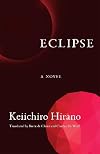
A strange and satisfying novella. It has a style that I am not used to in Japanese fiction – the sentences are long, flowing, colourful. You will need to absorb them slowly and patiently.
Eclipse reminded me of The Name of the Rose – that is, if the latter was a fever dream. In 1482 a young Dominican priest scholar named Nicolas is traveling through France, looking for a complete manuscript of Corpus Hermeticum. Nicolas believes that his mission in life is to reconcile Christianity to show more “pagan” philosophy. There is a lot of such dichotomy and duality in the book - Christian vs pagan, mind vs body, sin vs God, world of flesh vs the divine, female vs male, etc. Can we meld and reconcile?
Nicolas has a habit of thinking deeply about everything he sees. There is a lot of theology and Christian philosophy that an unwary reader might drown in. (I had to quickly refresh my memory on Thomas Aquinas and Willian of Ockham.)
For no particular reason other than curiosity, Nicolas decides to stop at a remote village to visit an alchemist. His interactions with the villagers are very nicely written, and the descriptions are beautiful.
“… we passed three young women who had come flying out of the building. They were all dressed in long white gowns whose hems, flipping in the wind, were like clumps of earth kicked up by galloping horses.”
There is another Dominican there, an inquisitor who carries Bernard Gui’s Inquisitor’s Manual everywhere with him. (Hello again, The Name of the Rose.)
The geometrical layout of the village might carry a deeper meaning and there is a bridge where people have seen ghosts. Nicolas’ first meetings with Pierre the alchemist are powerful and poetic.
Then we go into a territory which is very weird, very disturbing, and impactful. Horrible things happen. There might be a hint of an explanation at the end, but this is up to the reader to determine.
Having finished, I am left with the feeling of wonder and a conviction of having been elsewhere.
This is not a book for every kind of reader. But I am glad that I have read it.
P.S. The preface summarises the plot in great detail. I realised this in time and skimmed forward in panic, as I wanted to go in blind. You’ve been warned :)
Huge thanks to the publisher and NetGalley for this ARC! show less
Eclipse reminded me of The Name of the Rose – that is, if the latter was a fever dream. In 1482 a young Dominican priest scholar named Nicolas is traveling through France, looking for a complete manuscript of Corpus Hermeticum. Nicolas believes that his mission in life is to reconcile Christianity to show more “pagan” philosophy. There is a lot of such dichotomy and duality in the book - Christian vs pagan, mind vs body, sin vs God, world of flesh vs the divine, female vs male, etc. Can we meld and reconcile?
Nicolas has a habit of thinking deeply about everything he sees. There is a lot of theology and Christian philosophy that an unwary reader might drown in. (I had to quickly refresh my memory on Thomas Aquinas and Willian of Ockham.)
For no particular reason other than curiosity, Nicolas decides to stop at a remote village to visit an alchemist. His interactions with the villagers are very nicely written, and the descriptions are beautiful.
“… we passed three young women who had come flying out of the building. They were all dressed in long white gowns whose hems, flipping in the wind, were like clumps of earth kicked up by galloping horses.”
There is another Dominican there, an inquisitor who carries Bernard Gui’s Inquisitor’s Manual everywhere with him. (Hello again, The Name of the Rose.)
The geometrical layout of the village might carry a deeper meaning and there is a bridge where people have seen ghosts. Nicolas’ first meetings with Pierre the alchemist are powerful and poetic.
Then we go into a territory which is very weird, very disturbing, and impactful. Horrible things happen. There might be a hint of an explanation at the end, but this is up to the reader to determine.
Having finished, I am left with the feeling of wonder and a conviction of having been elsewhere.
This is not a book for every kind of reader. But I am glad that I have read it.
P.S. The preface summarises the plot in great detail. I realised this in time and skimmed forward in panic, as I wanted to go in blind. You’ve been warned :)
Huge thanks to the publisher and NetGalley for this ARC! show less
In the 15th century scholars were rediscovering the works of the ancient Greeks and Romans, scouring libraries across Europe to discover rare manuscripts. Florence was the center of this book trade.
Eclipse imagines a young Dominican friar’s quest to find the complete manuscript of the Corpus Hermeticum, Greek Gnostic writings translated into Latin a decade previous. Nicolas “had an intense interest in the pagan philosophy of antiquity.” He was concerned that these pagan ideas would show more challenge Christianity unless the church brought order, as Saint Thomas Aquinas “had subordained Aristotelian philosophy to the divine teachings of the Church.” There was much truth in the pagan philosophies, Nicolas affirmed, but also much error.
Nicolas leaves Paris for the mercantile center of Lyon where a complete manuscript might be found. There, Nicolas meets a bishop who has a complete manuscript, but who also refers him to a local village where an alchemist seeks to produce gold.
At the village Nicolas finds a corrupt priest who is given over to sensual pleasure, and a popular preaching priest with a devoted following. Neither represent Nicolas’ view of true faith.
“People have not understood the meaning of Christ,” he bemoans. They love the human Jesus without understanding his dual nature, God incarnated in the flesh. Nicolas affirms that “we are not licensed to abhor this world,” because God lived among us.
Nicolas visits the alchemist Pierre, observes his work and reads from his personal library. The alchemist believes that “all metallic substances are destined to achieve perfection and become gold.” He is also a cypher, a man of few words, living a regulated life of simple food and a bed of straw, but disappearing regularly into the dark woods reputed to be haunted by demons.
One day, Nicolas trails the alchemist through the woods to a narrow opening leading to a cave, and through the dark cave to a room where is found a hermaphrodite to which Pierre pays homage.
The village has been visited by a series of disasters which continue. Villagers see a huge monster of copulating figures. And then, on the bridge that separates the town, the hermaphrodite is seen and captured, tortured, and condemned to burn at the stake. At the moment of its death, a solar eclipse darkens the earth, and Nicolas experiences a transcendent moment. Years later, he wonders if he had seen the second coming of Christ.
It is a strange story in the form of a memoir, and historical fiction, and a philosophical exploration heavy with Jungian archetypes. I understood that Nicolas was on a spiritual journey into the unconscious, encountering the symbol of wholeness. The hermaphrodite wears a crown of thorns and an ouroboros, symbol of eternal death and rebirth. The sun and moon converge into one during the eclipse, the feminine moon covering the masculine sun, a symbol of the unconscious overwhelming the rational consciousness. Nicolas experienced a psychic wholeness that haunts him all of his life.
As historical fiction, the novel is marvelous, the narrative voice pulling me in right away. Readers may respond viscerally to the heavily symbolic climax without understanding the archetypal imagery, but most may just be confused. I found it fascinating and I kept thinking about it all day and when I woke at night was still pondering it.
This is the first English version of the 1998 award winning Japanese novel.
Thanks to the publisher for a free book through NetGalley. show less
Eclipse imagines a young Dominican friar’s quest to find the complete manuscript of the Corpus Hermeticum, Greek Gnostic writings translated into Latin a decade previous. Nicolas “had an intense interest in the pagan philosophy of antiquity.” He was concerned that these pagan ideas would show more challenge Christianity unless the church brought order, as Saint Thomas Aquinas “had subordained Aristotelian philosophy to the divine teachings of the Church.” There was much truth in the pagan philosophies, Nicolas affirmed, but also much error.
Nicolas leaves Paris for the mercantile center of Lyon where a complete manuscript might be found. There, Nicolas meets a bishop who has a complete manuscript, but who also refers him to a local village where an alchemist seeks to produce gold.
At the village Nicolas finds a corrupt priest who is given over to sensual pleasure, and a popular preaching priest with a devoted following. Neither represent Nicolas’ view of true faith.
“People have not understood the meaning of Christ,” he bemoans. They love the human Jesus without understanding his dual nature, God incarnated in the flesh. Nicolas affirms that “we are not licensed to abhor this world,” because God lived among us.
Nicolas visits the alchemist Pierre, observes his work and reads from his personal library. The alchemist believes that “all metallic substances are destined to achieve perfection and become gold.” He is also a cypher, a man of few words, living a regulated life of simple food and a bed of straw, but disappearing regularly into the dark woods reputed to be haunted by demons.
One day, Nicolas trails the alchemist through the woods to a narrow opening leading to a cave, and through the dark cave to a room where is found a hermaphrodite to which Pierre pays homage.
The village has been visited by a series of disasters which continue. Villagers see a huge monster of copulating figures. And then, on the bridge that separates the town, the hermaphrodite is seen and captured, tortured, and condemned to burn at the stake. At the moment of its death, a solar eclipse darkens the earth, and Nicolas experiences a transcendent moment. Years later, he wonders if he had seen the second coming of Christ.
It is a strange story in the form of a memoir, and historical fiction, and a philosophical exploration heavy with Jungian archetypes. I understood that Nicolas was on a spiritual journey into the unconscious, encountering the symbol of wholeness. The hermaphrodite wears a crown of thorns and an ouroboros, symbol of eternal death and rebirth. The sun and moon converge into one during the eclipse, the feminine moon covering the masculine sun, a symbol of the unconscious overwhelming the rational consciousness. Nicolas experienced a psychic wholeness that haunts him all of his life.
As historical fiction, the novel is marvelous, the narrative voice pulling me in right away. Readers may respond viscerally to the heavily symbolic climax without understanding the archetypal imagery, but most may just be confused. I found it fascinating and I kept thinking about it all day and when I woke at night was still pondering it.
This is the first English version of the 1998 award winning Japanese novel.
Thanks to the publisher for a free book through NetGalley. show less

“Kido suspected that he envied and admired X for being able to discard his past and start anew. Otherwise, there was no satisfactory way to explain his interest in the man. Kido told himself that this desire, the wish to experience the life of another, was not exclusive to those who had lost all hope in the present. It was perfectly normal, an inevitable response to the human predicament, to our entrapment within a single, finite existence.”
This is a well-crafted story about a lawyer, show more Akira Kido, seeking to help a widow find out the real identity of her husband, whom Kido calls X. Her husband had been living under another person’s name. In the process of his research, we learn of his Kido’s personal life and his struggles to repair his broken marriage.
It is a well-written literary mystery. It is a quiet, reflective novel, with deep emphasis on character. It explores identity, memory, mortality, and the gap between the lives we lead and the lives we desire to lead. It also examines the racial history of conflict between Koreans and Japanese. The mystery is the thread that pulls the reader along, drawing on curiosity. Who were these people and why did they desire to lead other lives? It includes multiple layers of intrigue and engages the brain.
I think the reader needs to know it is a mystery but not a thriller. There is little danger to the main characters and there is not much action. The main draw is the writing. I read the English translation by Eli K.P. William. This is my type of book. It has enough of a plot to hold interest, contains deeply drawn characters, and illuminates aspects of human existence in the world. I absolutely loved it. I am adding it to my favorites and plan to read more of Hirano’s works.
“It’s unbearable to have your identity summed up by one thing and one thing only and for other people to have control over what that is.” show less
This is a well-crafted story about a lawyer, show more Akira Kido, seeking to help a widow find out the real identity of her husband, whom Kido calls X. Her husband had been living under another person’s name. In the process of his research, we learn of his Kido’s personal life and his struggles to repair his broken marriage.
It is a well-written literary mystery. It is a quiet, reflective novel, with deep emphasis on character. It explores identity, memory, mortality, and the gap between the lives we lead and the lives we desire to lead. It also examines the racial history of conflict between Koreans and Japanese. The mystery is the thread that pulls the reader along, drawing on curiosity. Who were these people and why did they desire to lead other lives? It includes multiple layers of intrigue and engages the brain.
I think the reader needs to know it is a mystery but not a thriller. There is little danger to the main characters and there is not much action. The main draw is the writing. I read the English translation by Eli K.P. William. This is my type of book. It has enough of a plot to hold interest, contains deeply drawn characters, and illuminates aspects of human existence in the world. I absolutely loved it. I am adding it to my favorites and plan to read more of Hirano’s works.
“It’s unbearable to have your identity summed up by one thing and one thing only and for other people to have control over what that is.” show less
My experience reading Eclipse was a bit like going on a great first date—followed by subsequent dates that were nice enough, but lacked that "glow" that had portended magic.
Keiichiro Hirano's novel tells the story of a young Dominican (the Catholic type, not the Caribbean type) in 15th Century France. Our central character—we never learn his name—admires Thomas Aquinas and hopes, like his hero, to reconcile parts of pagan science and philosophy with Christian doctrine. Pagan ideas, he show more explains "Though for a time driven into exile... are invariably revived by whatever elements they contain that are philosophically valid. And when they return, their errors are seen, seamlessly, as one with their truths. It is for this reason that we are obliged to incorporate the entirety of these systems of thought, submitting them to the teachings of the Church even as we rigorously seek out and expose whatever they harbor that is false, Excluding them would only leave them abandoned, beyond the scope of doctrine. Even poisoned water must be turned to wine." (The reader might ask here "but is the poisoned water going to result in poisoned wine?")
Our Dominican sets out for Florence, hoping to find rare pagan texts that will allow him to begin his work of wine-making/reconciliation. He stops in a village that is home to an alchemist he's been told to seek out and has a series of interesting but inconclusive interactions with this man. Theirs is not a teacher-student relationship, but more like a an older sibling letting a younger sibling tag along while pretending that younger sibling doesn't exist.
They village has been suffering through a miserable period of drenching rain and poor harvests and villagers are beginning to ask who or what is responsible for this disaster. Which leads, of course, to questions of whether something diabolical is at play. At the same time, visions of hermaphroditic giants begin appearing to villagers.
The events that play out in the village at this point provide the heart of the novel, and for our Dominican, open up questions of spiritual and earthly justice, dualism, the nature of the sacred, and the possibility of transcendence. Our Dominican's thoughts span the profound and the banal—and he is much more interesting an following these thoughts than in taking action during this time of crisis. He observes the world, but largely avoids interacting with it.
As I said at the beginning of this review, I lost some of my fervid, love-at-first-sight reaction and I made my way through Eclipse. But I never considered putting the book down. It had substance, though that substance was oddly non-directional.
I received a free electronic copy of this title from the publisher; the opinions are my own. show less
Keiichiro Hirano's novel tells the story of a young Dominican (the Catholic type, not the Caribbean type) in 15th Century France. Our central character—we never learn his name—admires Thomas Aquinas and hopes, like his hero, to reconcile parts of pagan science and philosophy with Christian doctrine. Pagan ideas, he show more explains "Though for a time driven into exile... are invariably revived by whatever elements they contain that are philosophically valid. And when they return, their errors are seen, seamlessly, as one with their truths. It is for this reason that we are obliged to incorporate the entirety of these systems of thought, submitting them to the teachings of the Church even as we rigorously seek out and expose whatever they harbor that is false, Excluding them would only leave them abandoned, beyond the scope of doctrine. Even poisoned water must be turned to wine." (The reader might ask here "but is the poisoned water going to result in poisoned wine?")
Our Dominican sets out for Florence, hoping to find rare pagan texts that will allow him to begin his work of wine-making/reconciliation. He stops in a village that is home to an alchemist he's been told to seek out and has a series of interesting but inconclusive interactions with this man. Theirs is not a teacher-student relationship, but more like a an older sibling letting a younger sibling tag along while pretending that younger sibling doesn't exist.
They village has been suffering through a miserable period of drenching rain and poor harvests and villagers are beginning to ask who or what is responsible for this disaster. Which leads, of course, to questions of whether something diabolical is at play. At the same time, visions of hermaphroditic giants begin appearing to villagers.
The events that play out in the village at this point provide the heart of the novel, and for our Dominican, open up questions of spiritual and earthly justice, dualism, the nature of the sacred, and the possibility of transcendence. Our Dominican's thoughts span the profound and the banal—and he is much more interesting an following these thoughts than in taking action during this time of crisis. He observes the world, but largely avoids interacting with it.
As I said at the beginning of this review, I lost some of my fervid, love-at-first-sight reaction and I made my way through Eclipse. But I never considered putting the book down. It had substance, though that substance was oddly non-directional.
I received a free electronic copy of this title from the publisher; the opinions are my own. show less
Lists
Awards


You May Also Like


Associated Authors
Statistics
- Works
- 15
- Also by
- 2
- Members
- 552
- Popularity
- #45,211
- Rating
- 3.6
- Reviews
- 17
- ISBNs
- 43
- Languages
- 4