
Mariám Petrosyán
Author of The Gray House
About the Author
Works by Mariám Petrosyán
Dom, v kotorom... 9 copies
Tagged
Common Knowledge
- Canonical name
- Petrosyán, Mariám
- Other names
- Մարիամ Պետրոսյան
Петросян, Мариам - Birthdate
- 1968-08-10
- Gender
- female
- Nationality
- Armenia
- Birthplace
- Yerevan, Armenia, Soviet Union
Members
Reviews
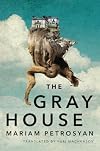
На окраине города, среди стандартных новостроек, стоит Серый Дом, в котором живут Сфинкс, Слепой, Лорд, Табаки, Македонский, Черный и многие другие. Неизвестно, действительно ли Лорд происходит из благородного рода драконов, но вот Слепой - действительно незряч, а Сфинкс - show more мудр и загадочен. Табаки, конечно, не шакал, хотя и любит поживиться чужим добром. Для каждого в Доме есть своя кличка и каждый проживал в нем за один день столько, сколько в Наружности мы иногда не проживаем и за целую жизнь. Каждого Дом принимал или отвергал. Дом хранил уйму тайн, и банальные "скелеты в шкафах" - лишь самый понятный угол незримого мира, куда нет хода из Наружности, где перестают действовать привычные законы пространства-времени. Дом - это нечто гораздо большее, чем просто интернат для детей, от которых отказались родители. Дом - это их отдельная вселенная. show less
Humpback played his flute, and the backyard listened. He was playing very softly, for himself only. The wind whirled the leaves in circles. Then they were caught in the puddles and stopped. Their dance ended. They ended. Now they would turn to mush and dirt. Just like people.The main difficulty with writing stories with a young protagonist is taking the typically uninteresting thoughts of a young person and making them compelling without stripping the child of his or her youthful show more sensibilities. In The Gray House, Mariam Petrosyan pulls this off with over a dozen different kids. The comparisons between this book and Harry Potter are mostly lazy, but in this one aspect, in sheer quantity of children that are worth reading about, Petrosyan can only be matched by J.K. Rowling.
Softer. Softer still. The slender fingers flitting across the holes, the wind throwing the leaves right in the face, the coins in the back pocket cutting into the skin, the bare ankles freezing, covered in goose bumps. Comfort is a piece of sibilant wood. Calming, lulling, if you allow it to be.Each of the children that lives in the House is given a nickname. This might seem gimmicky and annoying at first, but the kids do it for a reason. These are children who have suffered in the outside world. Whether they suffer from physical or mental disabilities, each one has been sent to the House because they can't be handled anywhere else. And if the House has anything to say about it, they don't belong anywhere else. Leave your old name, your old you, at the door.
He loved the House. He'd never had any other home and had never known his parents. Here he grew up as one of many, and he was used to tuning the world out when he needed to be alone. His best flute playing happened when no one was listening. Then everything came out right, every song sounded as if the wind itself whistled into the instrument. He thought sometimes that he wanted someone else to hear it, but he also knew that if someone were listening it wouldn't have come out this well. In the House it was customary to call those with humps "angels," in reference to the folded wings on their backs. This was one of the very few tender names that the House allowed itself to give to its children.The story doesn't spend much time outside of the House, but it doesn't feel at all confined. The world within the House is overflowing with life. I forget the exact words, but Roger Ebert once wrote about the films of Hayao Miyazaki that what makes them stand out from other animated films is the richness and detail of what's going on in the background. The same is true with The Gray House. You can picture every corner of every room, and while you get an inkling of what's happening everywhere, you're at the same time allowed to imagine the past and future of so many events that you could riff for hours off of individual pages. Petrosyan excels with her broad strokes, but the moments where she focuses in might be even better.
Humpback played, keeping time on the wet leaves with his splayed feet. He inhaled the peace and the kindness, and placed himself in the circle of clarity that never would allow the pale hands of those who confuse the soul to worm their way through. Other people sometimes drifted past, behind the fence, but they did not disturb him. In his mind, the Outsides did not exist. There was only him, the wind, his songs, and those he loved. All of that was inside the House, and outside of it was nothing and no one, only the empty and hostile city that lived its own life.The chapter from which I keep quoting is probably my favorite. Petrosyan's story is addicting. The plot is complex, the timeline is unique, and the denouement is a real treat. But it's simple chapters like this one, a quick scene focusing on a secondary character, that make The Gray House the best book I've read this year. The writing is just perfect. Petrosyan (along with the translator, Yuri Machkasov, who deserves a ton of credit for such an undertaking) nails every last word of this from start to finish. Since I've read the book, I find myself revisiting different moments throughout the story just to hang out there, to be in that place with those people, and it never ceases to be a joy. Of course, if it's not obvious already, I spend the most time in the back yard with Humpback.
Mangy cats stole along the boundaries of the yard. Crows marched across the bare lawns, pushing wet leaves. An aquiline-faced boy in a red sweater sat on an overturned crate and played his flute, locked in a circle of empty loneliness. The House breathed on him through its windows.show less
‘The Gray House’ is the first and apparently last book by Mariam Petrosyan. It took her 18 years to write and was an immediate bestseller in Russian when published in 2009. I am fascinated by this success, as its appeal seemed to me obscure and niche. All 721 pages are set in a strange institution for disabled children and teenagers. Although the atmosphere is distinctively creepy, the plot is practically non-existent. There is absolutely no narrative urgency. While I was happy to wallow show more in the strangeness, I am as a rule willing to put up with a lot for weird fiction. More than many would, perhaps. I tried to make sense of the book throughout, but finished it of the opinion that I was missing something. Unlike the case of [b:The Vorrh|16071377|The Vorrh (The Vorrh Trilogy, #1)|Brian Catling|https://i.gr-assets.com/images/S/compressed.photo.goodreads.com/books/1349600836l/16071377._SY75_.jpg|42459978], however, the setting and characters were sufficiently appealing to prevent this incomprehension becoming frustrating. Instead, the experience was like that of [b:The Librarian|24904007|The Librarian|Mikhail Elizarov|https://i.gr-assets.com/images/S/compressed.photo.goodreads.com/books/1423597020l/24904007._SY75_.jpg|6398178]: my lack of Russian cultural and political reference points, plus the translation gap, meant that any allegory went over my head, without detracting from my enjoyment. Surely there must be layers of allegory in here, though. Perhaps the House is a metaphor for Russia? A country living in the wreckage of communism and kleptocratic capitalism, turning inward to nationalism?
It amused me to compare ‘The Gray House’ with other YA. It uses many of the popular tropes: all the protagonists are young adults, they band together into gangs to resist oppression by adults, the names they give things have Capital Letters, and a special few are involved in weird supernatural stuff. Many, albeit not all, chapters are narrated in the first person by youths. The supernatural elements are conceptually similar to the Upside Down in Stranger Things. Yet every YA novel I’ve ever read has been plot-driven, and ‘The Gray House’ is the antithesis of that. Imagine there was no monster from the Upside Down hunting people. The weird underworld just exists, without posing any specific or time-sensitive threat. Perhaps Russian YA is more dilatory and philosophical in general? Indeed, the main characters face only two coherent threats: being thrown out of the institution and each other.
While the House, as they inevitably call it, is a shabby wreck full of violence and mayhem, the Outside is depicted as inherently scarier. Petrosyan does a very effective job at conveying the comfort taken by outsiders banding together and making their own arbitrary rules. The characters will hurt, even murder, each other for their own reasons, while also creating an environment in which all disabilities are supported. This creates an unusual narrative effect whereby a character can be nicknamed Blind, as they are blind, without this being their defining characteristic. As all the characters have some disability, the otherness element is collectively dissolved. Now that I think about it, at no point is any character asked to explain the nature or cause of their disability. Those who use wheelchairs are referred to collectively as the Wheelers, without this being a source of division. The divisions are, to the observing reader, much more obscure. There are five gangs in the House, each living in a separate dormitory and seemingly having their own rules, beliefs, activities, style, and prevailing personality traits.
At the start of the book, a boy nicknamed Smoker (although practically everyone smokes constantly) moves from one gang to another. I initially anticipated a fairly conventional narrative, in which Smoker and thus the reader uncovers the weird secrets of his new gang. Nothing so normal occurs. The point of view wanders from person to person, and even when it returns to Smoker his attempts to unravel the local weirdness are totally ineffectual. His habit of asking questions is greeted with a mixture of amusement, exasperation, and violence. His new gang, who live in the Fourth, are a fascinating band. They include the exquisitely beautiful Noble, ebullient and wonderfully named Tabaqui, truculent Black, and intimidating Blind. Their characterisation builds up slowly and subtly, through many apparently inconsequential scenes of the gang eating meals, smoking, and chatting about nothing much. They often have social gatherings to drink bootleg booze and listen to music, but rarely go to lessons. Dramatic incidents do punctuate the narrative, without meaningfully disturbing the erratic rhythm of life.
One thing I am always very fond of in fiction is spatially condensed weirdness. Not weirdness just for the sake of horror, but something more distinctive, compelling, and, crucially, dreamlike. [b:Annihilation|17934530|Annihilation|Jeff VanderMeer|https://i.gr-assets.com/images/S/compressed.photo.goodreads.com/books/1403941587l/17934530._SX50_.jpg|24946895] and sequels are good examples. Here, the environment of the House should seem claustrophobic, as the characters are all effectively trapped, yet it does not feel so. Even those who are unaware of or cut off from the ambiguous underworld seem to roam the corridors like the House is the size of a city. It has an empty abandoned room available whenever necessary and the walls are covered with pictures and messages. I loved the imagery of these densely decorated walls. Scenes in which they were repainted then immediately covered with new art and text were very satisfying. They reminded me of a time when my parents let me draw and write all over the walls of their bathroom, because it was about to be replastered and repainted. (This wasn’t during childhood; I was about 25. Scribbling on walls is a joy at any age.) The descriptions of messy dormitories were also curiously evocative, serving to further distinguish the gangs through their relationships with possessions, personal space, and cleanliness.
‘The Gray House’ was originally published in three volumes, distinguished by the main narrator. The first is Smoker, the second Tabaqui, the third Sphinx. The second volume was my favourite, as I found Tabaqui the most compelling character. The Longest Night sequence was brilliantly unsettling. Conversely, the sudden arrival of the girls from their side of the House didn’t have very much impact, as none of the female characters were given the narrative point of view. They were potentially really interesting, but not developed much. I wanted to know more about the gangs and traditions they had established. As for the ending,I found the build up to graduation impressively ominous. The brief shift into the staff’s narrative point of view worked very well. The prospect of a springing graduation on the students without warning was genuinely shocking. Blind’s anticipation of this and the final Fairy Tale Night made for a strong denouement. I was of course left with many unanswered questions. In general, it was amazing how little I’d learned about the underworld linked to the House in more than seven hundred pages. More specifically, I still want to know what moving to ‘another loop’ means. Tabaqui never explained this!
Despite its dilatory pace and refusal to explain anything, I think ‘The Gray House’ is very much worth the time it requires. Petrosyan’s strange institution could be an elaborate allegory, an obsessively detailed dream-image, both, or neither. It has an ambiguity that invites the reader to dwell on and in it. While not a book I plan to re-read, nor is it one I’ll soon forget. show less
It amused me to compare ‘The Gray House’ with other YA. It uses many of the popular tropes: all the protagonists are young adults, they band together into gangs to resist oppression by adults, the names they give things have Capital Letters, and a special few are involved in weird supernatural stuff. Many, albeit not all, chapters are narrated in the first person by youths. The supernatural elements are conceptually similar to the Upside Down in Stranger Things. Yet every YA novel I’ve ever read has been plot-driven, and ‘The Gray House’ is the antithesis of that. Imagine there was no monster from the Upside Down hunting people. The weird underworld just exists, without posing any specific or time-sensitive threat. Perhaps Russian YA is more dilatory and philosophical in general? Indeed, the main characters face only two coherent threats: being thrown out of the institution and each other.
While the House, as they inevitably call it, is a shabby wreck full of violence and mayhem, the Outside is depicted as inherently scarier. Petrosyan does a very effective job at conveying the comfort taken by outsiders banding together and making their own arbitrary rules. The characters will hurt, even murder, each other for their own reasons, while also creating an environment in which all disabilities are supported. This creates an unusual narrative effect whereby a character can be nicknamed Blind, as they are blind, without this being their defining characteristic. As all the characters have some disability, the otherness element is collectively dissolved. Now that I think about it, at no point is any character asked to explain the nature or cause of their disability. Those who use wheelchairs are referred to collectively as the Wheelers, without this being a source of division. The divisions are, to the observing reader, much more obscure. There are five gangs in the House, each living in a separate dormitory and seemingly having their own rules, beliefs, activities, style, and prevailing personality traits.
At the start of the book, a boy nicknamed Smoker (although practically everyone smokes constantly) moves from one gang to another. I initially anticipated a fairly conventional narrative, in which Smoker and thus the reader uncovers the weird secrets of his new gang. Nothing so normal occurs. The point of view wanders from person to person, and even when it returns to Smoker his attempts to unravel the local weirdness are totally ineffectual. His habit of asking questions is greeted with a mixture of amusement, exasperation, and violence. His new gang, who live in the Fourth, are a fascinating band. They include the exquisitely beautiful Noble, ebullient and wonderfully named Tabaqui, truculent Black, and intimidating Blind. Their characterisation builds up slowly and subtly, through many apparently inconsequential scenes of the gang eating meals, smoking, and chatting about nothing much. They often have social gatherings to drink bootleg booze and listen to music, but rarely go to lessons. Dramatic incidents do punctuate the narrative, without meaningfully disturbing the erratic rhythm of life.
One thing I am always very fond of in fiction is spatially condensed weirdness. Not weirdness just for the sake of horror, but something more distinctive, compelling, and, crucially, dreamlike. [b:Annihilation|17934530|Annihilation|Jeff VanderMeer|https://i.gr-assets.com/images/S/compressed.photo.goodreads.com/books/1403941587l/17934530._SX50_.jpg|24946895] and sequels are good examples. Here, the environment of the House should seem claustrophobic, as the characters are all effectively trapped, yet it does not feel so. Even those who are unaware of or cut off from the ambiguous underworld seem to roam the corridors like the House is the size of a city. It has an empty abandoned room available whenever necessary and the walls are covered with pictures and messages. I loved the imagery of these densely decorated walls. Scenes in which they were repainted then immediately covered with new art and text were very satisfying. They reminded me of a time when my parents let me draw and write all over the walls of their bathroom, because it was about to be replastered and repainted. (This wasn’t during childhood; I was about 25. Scribbling on walls is a joy at any age.) The descriptions of messy dormitories were also curiously evocative, serving to further distinguish the gangs through their relationships with possessions, personal space, and cleanliness.
‘The Gray House’ was originally published in three volumes, distinguished by the main narrator. The first is Smoker, the second Tabaqui, the third Sphinx. The second volume was my favourite, as I found Tabaqui the most compelling character. The Longest Night sequence was brilliantly unsettling. Conversely, the sudden arrival of the girls from their side of the House didn’t have very much impact, as none of the female characters were given the narrative point of view. They were potentially really interesting, but not developed much. I wanted to know more about the gangs and traditions they had established. As for the ending,
Despite its dilatory pace and refusal to explain anything, I think ‘The Gray House’ is very much worth the time it requires. Petrosyan’s strange institution could be an elaborate allegory, an obsessively detailed dream-image, both, or neither. It has an ambiguity that invites the reader to dwell on and in it. While not a book I plan to re-read, nor is it one I’ll soon forget. show less

The Gray House is the story of kids in a school for children with disabilities. Nothing is what it seems like in the house though. Strange and mystical things happen and as graduation approaches this strange happenings are becoming more and more important.
I finished the book while I was on vacation last week. I really liked it. It was creepy, mystical, and a bit dark, yet hopeful too. I appreciated all the characters in their own way. It was not an easy book to read, and there is still a show more lot that happened that I don't understand, but that was part of the appeal of the book. The translation was wonderful. Nothing felt out of place and although it is a Russian book, it felt universal. show less
I finished the book while I was on vacation last week. I really liked it. It was creepy, mystical, and a bit dark, yet hopeful too. I appreciated all the characters in their own way. It was not an easy book to read, and there is still a show more lot that happened that I don't understand, but that was part of the appeal of the book. The translation was wonderful. Nothing felt out of place and although it is a Russian book, it felt universal. show less
Lists
Awards


You May Also Like


Associated Authors
Statistics
- Works
- 6
- Members
- 645
- Popularity
- #39,134
- Rating
- 3.8
- Reviews
- 21
- ISBNs
- 27
- Languages
- 6
- Favorited
- 1