
Mario Escobar (1) (1971–)
Author of Auschwitz Lullaby: A Novel
For other authors named Mario Escobar, see the disambiguation page.
Mario Escobar (1) has been aliased into Mario Escobar Golderos.
Works by Mario Escobar
Works have been aliased into Mario Escobar Golderos.
Exterminio: La verdadera historia de sangre y muerte que supuso la conquista (Spanish Edition) (2012) 5 copies
Historia de la masoneria en Estados Unidos / History of Freemasonry in the United States (Spanish Edition) (2009) 3 copies
Associated Works
Works have been aliased into Mario Escobar Golderos.
Tagged
Common Knowledge
- Legal name
- Golderos, Mario Escobar
- Birthdate
- 1971
- Gender
- male
- Nationality
- Spanish
- Associated Place (for map)
- Spanish
Members
Reviews
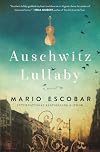
Reading about World War II and the Holocaust is one of those topics that is hard to avoid. It's a horrible stain on our worlds history but one that we should never forget. Looking at the inhumane occurrences that happened to thousands of people makes one realize just how truly blessed we are to live the lives we live. I hesitated picking up Auschwitz Lullaby by Mario Escobar but I am so thankful that I did.
Auschwitz Lullaby is the harrowing story of Helene Hannemann, an Aryan German woman show more who married a Gypsy violinist, Johann, and had five beautiful children. The family is living in Germany in the early 1940's and despite the hatred that was spewed on Johann and Helene by racist Germans and Nazis the Hannemann's had lived a fairly normal life up until World War II. At the time that the war breaks out Helene is the sole provider for the family and works as a nurse while her husband Johann looks for a job.
One fateful day, while on the way to taking her children to school, Helene is confronted by SS guards and told that they have come to take her husband and children away. She has heard rumors of the concentration camps but had hoped up until this point that her family could somehow survive the war undetected. Now her worst fears are materializing right in front of her. Helene, being of pure Aryan blood, spares her but she chooses to stay by her husband and children and the family is immediately taken to Auschwitz-Birkenau.
Auschwitz Lullaby goes into great detail of the horrors that the Hannemann family endures while traveling to Auschwitz and their stay there. Johann is immediately taken away to a separate work camp and Helene is forced to protect her five young children and do everything she can to survive. Her being Aryan, and being a nurse, she gets a job at the medical barracks and a particular doctor, Herr Doctor Mengele, takes a liking to her and puts her in charge of a kindergarten that he is wanting to create inside the camp. This bides her and her family time but as you get closer and closer to the end of the book you wonder if Helene and her children will survive Auschwitz and the war.
This the first story I've read by Mario Escobar and I have to say that I am incredibly impressed. He puts you in that concentration camp with Helene and her children. You feel the anguish that Helene feels when she watches her friend choose to clutch the electrified fence and commit suicide and the torment of watching children waste away or being taken away to their deaths. You can see the meanger bits of food that was provided to sustain the Gypsies, visualize their bones protruding from their fragile frames, feel the hatred that was spewed on the inmates by the SS guards, and can almost smell the sickening smell of burning flesh.
Helene Hannemann's story is a true story and almost every event in the story did in fact happen to her and her children. Helene is the narrator of this heartbreaking tale but the journal that she supposedly wrote, of which this book is based off of, is false. This is the author's interpretation of what he believes Helene might have written based on several reliable sources and I believe he's done a wonderful job. As a mother myself, I hope I would've done what Helene did to protect her children from this deplorable place and even though she is long gone I commend her for her bravery in the face of utter darkness.
To say that I highly recommend this book is an understatement. Auschwitz Lullaby is a pained history that everyone should know, a true tale about a woman who did everything she could to protect her children in one of the evilest places ever to have been created.
*I received a copy of this book from Thomas Nelson and NetGalley in exchange for an honest, unbiased review. All opinions are my own. show less
Auschwitz Lullaby is the harrowing story of Helene Hannemann, an Aryan German woman show more who married a Gypsy violinist, Johann, and had five beautiful children. The family is living in Germany in the early 1940's and despite the hatred that was spewed on Johann and Helene by racist Germans and Nazis the Hannemann's had lived a fairly normal life up until World War II. At the time that the war breaks out Helene is the sole provider for the family and works as a nurse while her husband Johann looks for a job.
One fateful day, while on the way to taking her children to school, Helene is confronted by SS guards and told that they have come to take her husband and children away. She has heard rumors of the concentration camps but had hoped up until this point that her family could somehow survive the war undetected. Now her worst fears are materializing right in front of her. Helene, being of pure Aryan blood, spares her but she chooses to stay by her husband and children and the family is immediately taken to Auschwitz-Birkenau.
Auschwitz Lullaby goes into great detail of the horrors that the Hannemann family endures while traveling to Auschwitz and their stay there. Johann is immediately taken away to a separate work camp and Helene is forced to protect her five young children and do everything she can to survive. Her being Aryan, and being a nurse, she gets a job at the medical barracks and a particular doctor, Herr Doctor Mengele, takes a liking to her and puts her in charge of a kindergarten that he is wanting to create inside the camp. This bides her and her family time but as you get closer and closer to the end of the book you wonder if Helene and her children will survive Auschwitz and the war.
This the first story I've read by Mario Escobar and I have to say that I am incredibly impressed. He puts you in that concentration camp with Helene and her children. You feel the anguish that Helene feels when she watches her friend choose to clutch the electrified fence and commit suicide and the torment of watching children waste away or being taken away to their deaths. You can see the meanger bits of food that was provided to sustain the Gypsies, visualize their bones protruding from their fragile frames, feel the hatred that was spewed on the inmates by the SS guards, and can almost smell the sickening smell of burning flesh.
Helene Hannemann's story is a true story and almost every event in the story did in fact happen to her and her children. Helene is the narrator of this heartbreaking tale but the journal that she supposedly wrote, of which this book is based off of, is false. This is the author's interpretation of what he believes Helene might have written based on several reliable sources and I believe he's done a wonderful job. As a mother myself, I hope I would've done what Helene did to protect her children from this deplorable place and even though she is long gone I commend her for her bravery in the face of utter darkness.
To say that I highly recommend this book is an understatement. Auschwitz Lullaby is a pained history that everyone should know, a true tale about a woman who did everything she could to protect her children in one of the evilest places ever to have been created.
*I received a copy of this book from Thomas Nelson and NetGalley in exchange for an honest, unbiased review. All opinions are my own. show less
Clearly I'm in the minority here: I do not care for this book. Most reviewers, though, seemed to be moved by Helene's story, the family's love, Helene's courage. So am I. Helene's story is important. It needs to be told. But perhaps not by this author. And not with the "aid" of supposed first-person narration by Josef Mengele, Auschwitz's "Angel of Death".
I am deeply, deeply unimpressed -- "disturbed" would be more accurate -- by the author's choice to begin and end the book, prologue and show more epilogue, with the voice of Dr Mengele. He's really a misunderstood soul in this view, so sentimental he chooses to spend an entire transatlantic flight reading the diary of a woman he himself sent to her death. I read a brief biography of the man: he was evil to the core, laughing and whistling while he stood on the platform choosing people for immediate death or for torture in his twisted "experiments". The filling of the Mengele-sandwich is the pretended journal of Helene Hannemann, who was a real person, but (let's hope) not the person depicted in the book. The author (and the author's "Helene" voice) seem to confuse Mengele's affability (typical of sociopaths) with positive traits.
I've noticed that when male authors choose to write books in the first-person voice of a woman, often something rings very false. It's sometimes hard to pick out the details that betray the falsity, but in this book a busy professional nurse and mother of five begins her day by showering and then, rubbing the steam off the mirror, dwelling upon her crows' feet and the bags under her "blue eyes" and musing that it was only to be expected given her circumstances (which she mentions in their entirety, as one does in one's diary -- not!). This kind of pause to dwell upon personal attributes seems odd for a woman: in the midst of life's pressing tasks, women are usually more likely to glimpse the mirror in passing and be surprised, "when did I start to look like my mother?" (or, as my grandmother said, "Who is this old lady!") but on further thought, it's also bad writing in general. When a character spends too much time describing his or her own appearance, it always seems as if they are particularly self-centred.
"Helene" the diarist tells us how much she loves her husband and informs her diary about the proper use of Roma/Sinti/Romani versus the German use of ethnic slurs, and then goes on to use the word "gypsy" repeatedly on page after page. This is neither believable in context (calls husband by ethnic slur that is longer to write out than preferred term?) nor acceptable in a 21st century book. Coming from the callous and from Nazis, the word is absolutely authentic and necessary but putting it in Helene's voice diminishes her.
I might not finish this one. :P show less
I am deeply, deeply unimpressed -- "disturbed" would be more accurate -- by the author's choice to begin and end the book, prologue and show more epilogue, with the voice of Dr Mengele. He's really a misunderstood soul in this view, so sentimental he chooses to spend an entire transatlantic flight reading the diary of a woman he himself sent to her death. I read a brief biography of the man: he was evil to the core, laughing and whistling while he stood on the platform choosing people for immediate death or for torture in his twisted "experiments". The filling of the Mengele-sandwich is the pretended journal of Helene Hannemann, who was a real person, but (let's hope) not the person depicted in the book. The author (and the author's "Helene" voice) seem to confuse Mengele's affability (typical of sociopaths) with positive traits.
I've noticed that when male authors choose to write books in the first-person voice of a woman, often something rings very false. It's sometimes hard to pick out the details that betray the falsity, but in this book a busy professional nurse and mother of five begins her day by showering and then, rubbing the steam off the mirror, dwelling upon her crows' feet and the bags under her "blue eyes" and musing that it was only to be expected given her circumstances (which she mentions in their entirety, as one does in one's diary -- not!). This kind of pause to dwell upon personal attributes seems odd for a woman: in the midst of life's pressing tasks, women are usually more likely to glimpse the mirror in passing and be surprised, "when did I start to look like my mother?" (or, as my grandmother said, "Who is this old lady!") but on further thought, it's also bad writing in general. When a character spends too much time describing his or her own appearance, it always seems as if they are particularly self-centred.
"Helene" the diarist tells us how much she loves her husband and informs her diary about the proper use of Roma/Sinti/Romani versus the German use of ethnic slurs, and then goes on to use the word "gypsy" repeatedly on page after page. This is neither believable in context (calls husband by ethnic slur that is longer to write out than preferred term?) nor acceptable in a 21st century book. Coming from the callous and from Nazis, the word is absolutely authentic and necessary but putting it in Helene's voice diminishes her.
I might not finish this one. :P show less
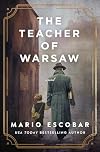
NOTE: I was given early access to this manuscript through NetGalley in exchange for writing an impartial review. Thank you Harper Muse. Publication Date: June 7, 2022
Powerful, profoundly sad, and yet inspiring historical fiction, THE TEACHER OF WARSAW is based on the true story of Janusz Korczak, who headed up a Jewish orphanage in Poland on the eve of World War II, when the books begins. If you know anything about history, you know this is not going to go well.
60 year old Janusz is a show more dedicated physician, a man well-known in his community, and a respected educator. Though more agnostic than religious, he is unfailingly kind and open to all -- friends, staff, and children. Above all, the care for his charges is based on love and seeing each child as an individual. Despite his own growing physical limitations, Janusz puts his wide circle of contacts to work to maintain a semblance of normalcy, for as long as possible. Always appearing confident and encouraging, he puts the needs of those around him ahead of his own. Lessons must continue and he even uses his own storytelling ability -- to impart wise lessons to his orphans. A man you have to love and a true hero who inspires.
Not surprisingly, the reason the book is so difficult to read (and I found I sometimes had to take breaks) is because I knew from page one how events will unfold, while Janusz does not. So, as readers, we wind up witnessing the Holocaust almost as if a participant. As rumors about mass killings begin to circulate, characters in the book can consider and dismiss them. We, as readers, can't. As some residents of the Warsaw Ghetto begin to consider fighting back, we know they will become part of the Warsaw Uprising. I found myself braced throughout the book, continually asking just how bad are things going to get.
I've read few books that have had a greater emotional impact than this one. Yes, it reminded me of the unimaginable brutality and sadness that surround the Holocaust. But it also reminded me of the amazing optimism and resiliency of human beings and what a remarkable difference a single person can make to the lives of so many. Even in the midst of chaos. show less
Powerful, profoundly sad, and yet inspiring historical fiction, THE TEACHER OF WARSAW is based on the true story of Janusz Korczak, who headed up a Jewish orphanage in Poland on the eve of World War II, when the books begins. If you know anything about history, you know this is not going to go well.
60 year old Janusz is a show more dedicated physician, a man well-known in his community, and a respected educator. Though more agnostic than religious, he is unfailingly kind and open to all -- friends, staff, and children. Above all, the care for his charges is based on love and seeing each child as an individual. Despite his own growing physical limitations, Janusz puts his wide circle of contacts to work to maintain a semblance of normalcy, for as long as possible. Always appearing confident and encouraging, he puts the needs of those around him ahead of his own. Lessons must continue and he even uses his own storytelling ability -- to impart wise lessons to his orphans. A man you have to love and a true hero who inspires.
Not surprisingly, the reason the book is so difficult to read (and I found I sometimes had to take breaks) is because I knew from page one how events will unfold, while Janusz does not. So, as readers, we wind up witnessing the Holocaust almost as if a participant. As rumors about mass killings begin to circulate, characters in the book can consider and dismiss them. We, as readers, can't. As some residents of the Warsaw Ghetto begin to consider fighting back, we know they will become part of the Warsaw Uprising. I found myself braced throughout the book, continually asking just how bad are things going to get.
I've read few books that have had a greater emotional impact than this one. Yes, it reminded me of the unimaginable brutality and sadness that surround the Holocaust. But it also reminded me of the amazing optimism and resiliency of human beings and what a remarkable difference a single person can make to the lives of so many. Even in the midst of chaos. show less
NOTE: I was given early access to this manuscript through NetGalley in exchange for writing an impartial review. Thank you Harper Muse. Publication Date: June 7, 2022
Powerful, profoundly sad, and yet inspiring historical fiction, THE TEACHER OF WARSAW is based on the true story of Janusz Korczak, who headed up a Jewish orphanage in Poland on the eve of World War II, when the books begins. If you know anything about history, you know this is not going to go well.
60 year old Janusz is a show more dedicated physician, a man well-known in his community, and a respected educator. Though more agnostic than religious, he is unfailingly kind and open to all -- friends, staff, and children. Above all, the care for his charges is based on love and seeing each child as an individual. Despite his own growing physical limitations, Janusz puts his wide circle of contacts to work to maintain a semblance of normalcy, for as long as possible. Always appearing confident and encouraging, he puts the needs of those around him ahead of his own. Lessons must continue and he even uses his own storytelling ability -- to impart wise lessons to his orphans. A man you have to love and a true hero who inspires.
Not surprisingly, the reason the book is so difficult to read (and I found I sometimes had to take breaks) is because I knew from page one how events will unfold, while Janusz does not. So, as readers, we wind up witnessing the Holocaust almost as if a participant. As rumors about mass killings begin to circulate, characters in the book can consider and dismiss them. We, as readers, can't. As some residents of the Warsaw Ghetto begin to consider fighting back, we know they will become part of the Warsaw Uprising. I found myself braced throughout the book, continually asking just how bad are things going to get.
I've read few books that have had a greater emotional impact than this one. Yes, it reminded me of the unimaginable brutality and sadness that surround the Holocaust. But it also reminded me of the amazing optimism and resiliency of human beings and what a remarkable difference a single person can make to the lives of so many. Even in the midst of chaos. show less
Powerful, profoundly sad, and yet inspiring historical fiction, THE TEACHER OF WARSAW is based on the true story of Janusz Korczak, who headed up a Jewish orphanage in Poland on the eve of World War II, when the books begins. If you know anything about history, you know this is not going to go well.
60 year old Janusz is a show more dedicated physician, a man well-known in his community, and a respected educator. Though more agnostic than religious, he is unfailingly kind and open to all -- friends, staff, and children. Above all, the care for his charges is based on love and seeing each child as an individual. Despite his own growing physical limitations, Janusz puts his wide circle of contacts to work to maintain a semblance of normalcy, for as long as possible. Always appearing confident and encouraging, he puts the needs of those around him ahead of his own. Lessons must continue and he even uses his own storytelling ability -- to impart wise lessons to his orphans. A man you have to love and a true hero who inspires.
Not surprisingly, the reason the book is so difficult to read (and I found I sometimes had to take breaks) is because I knew from page one how events will unfold, while Janusz does not. So, as readers, we wind up witnessing the Holocaust almost as if a participant. As rumors about mass killings begin to circulate, characters in the book can consider and dismiss them. We, as readers, can't. As some residents of the Warsaw Ghetto begin to consider fighting back, we know they will become part of the Warsaw Uprising. I found myself braced throughout the book, continually asking just how bad are things going to get.
I've read few books that have had a greater emotional impact than this one. Yes, it reminded me of the unimaginable brutality and sadness that surround the Holocaust. But it also reminded me of the amazing optimism and resiliency of human beings and what a remarkable difference a single person can make to the lives of so many. Even in the midst of chaos. show less
Lists
You May Also Like
Associated Authors
Statistics
- Works
- 28
- Also by
- 1
- Members
- 1,297
- Popularity
- #19,796
- Rating
- 4.0
- Reviews
- 94
- ISBNs
- 213
- Languages
- 8