
Anthony Veasna So (1992–2020)
Author of Afterparties: Stories
About the Author
Anthony Veasna So was an American writer. He was born on February 20, 1992 and was raised in Stockton, California. He was a graduate of Stanford University, studying English literature, and earned his MFA in fiction at Syracuse University. He taught English and creative writing at Syracuse show more University. His writing has appeared in the New Yorker, n+1, Granta, and ZYZZYVA. His debut story collection, Afterparties, is to be published on August 3, 2021. He died on December 8, 2020 in San Francisco at the age of 28. (Bowker Author Biography) show less
Image credit: Anthony Veasna So photo courtesy Samantha Lamb
Works by Anthony Veasna So
Straight Thru Cambotown 1 copy
Associated Works
Tagged
Common Knowledge
- Birthdate
- 1992-02-20
- Date of death
- 2020-12-08
- Gender
- male
- Education
- Syracuse University (MFA - Creative Writing)
Stanford University - Occupations
- short story writer
- Cause of death
- drug overdose
- Nationality
- USA
- Birthplace
- Stockton, California, USA
- Place of death
- San Francisco, California, USA
- Associated Place (for map)
- California, USA
Members
Reviews
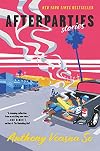
For me, the most striking thing about these stories from Anthony Veasna So (sadly lost to an overdose prior to this book's publication) a first gen Cambodian American, is the ways in which they highlight how living through horror finds its first level of relief through humor. So tells the stories of the generation of refugees, his grandparents and parents and their contemporaries, who escaped Cambodian genocide of Pol Pot's Khmer Rouge and of their children. My parents and their show more contemporaries were the children of parents who escaped Lenin's mass extermination of Jews in the Soviet Union and Hitler's Shoah in Germany, scarred survivors. For my grandparents generation, and So's parents, the only two options for going forward seem to be relentless jocularity or the walking nightmare of PTSD. (I had grandparents who took both paths.) It was this dynamic that lead to the 50's-80's Jewish domination of comedy. Jews owned humor, from Shecky Greene to Milton Berle, Henny Youngman to Lenny Bruce, Joan Rivers to Don Rickles, and on and on. Mid-century Jews laughed so they would not cry. That same humor and those same PTSD soaked wraiths show up in Afterparties. They just look a little different than my grandparents, and they are populating parts of California in which no one else wants to live rather than parts of New York where no one else wants to live, but they share a lot. The children of this generation who escaped genocide are dutiful if not always loving offspring pushed to become professionals and insulate themselves with money, hanging on to their heritage mostly through food. This next generation, the children of the damned, are flashy and endlessly acquisitive in ways that make their Americanized children cringe. (I am that generation for the Jews and So is that gen for the Cambos.) I have no grand point, just that maybe this is what follows a holocaust necessarily. Those who avoid walking around like empty shells, seeing Cossacks or Khmer Rouge soldiers hiding in suburban American backyards, those people embrace fake it 'til you make it humor. Its a lot to chew on.
As for So's stories themselves, they are heartbreaking and funny and illuminating and show us so many people we want to know. Some of the stories are better than others, but I found all worth my time and attention. So's death is tragic in its own right, but the tragedy is compounded by the clear promise of his work -- I expect he would have written some spectacular stuff had he lived.
My favorite story was "The Shop" where we see connection to community and innate kindness destroy a man before his son's eyes. The story also features a closeted lover, some surprising monks, and a hilarious and heartbreaking doctor's wife who might have been my favorite character in the book. That story was, in my estimation, as close to perfect as it could be. "We Would've Been Princes" set at a huge family wedding and at the afterparty for the younger generation, came very close. It sharply defines the competing forces of being an American and a Cambodian. The stories I felt weakest were those So wrote from a woman's perspective. "Three Women of Chuck's Donuts" featured two smart and resourceful young girls and their exhausted but resolute mother, and though I found the older daughter's character compelling, I thought her grit and her mother's was overshadowed by the specter of the danger men bring with them a constant. The other "Somaly Serey, Serey Somaly" is sent in a nursing home and touched on the end of life, the ghosts of the past, and of the women charged with shepherding those at the end of their lives through the confusion of dementia and the press of memories more horrible than most of us can imagine. Again, the POV character, Serey, was really interesting but then fell off into this void, her bravery and compassion overshadowed by the demands of the old world and other external limitations. Those two stories were stripped of the honest humor and pathos of the other stories and they left little room to see the flashes of freedom and its rewards, of opportunities ahead (to succeed and to crash and burn), we see elsewhere. Both were still good, but less magical that the rest.
One note, many of So's characters are gay and horny, and the sex here is graphic and not remotely romanticized. You will read about bodies stuck together with cum, chafed and stretched rectums and jaws that seize up from overuse. If that is a problem for you that is between you and yourself (I may be judging you, but you do you) and you will want to steer clear. There is a line in one story about a guy wanting to bottom but not with a white guy because he doesn't want his rectum colonized by a "white predator." That made me laugh out loud sitting alone on a park bench, and it was totally worth looking crazy. If you steer clear you will miss moments like that.
Additional note. I started out listening to this on audio and hated the reader. Most of the recitation was flat and over-enunciated, and when the reader did try to infuse some energy into certain parts his tone and choices of what to emphasize often did not fit the prose. I traded the audio for the Kindle version and was happy I did so. show less
As for So's stories themselves, they are heartbreaking and funny and illuminating and show us so many people we want to know. Some of the stories are better than others, but I found all worth my time and attention. So's death is tragic in its own right, but the tragedy is compounded by the clear promise of his work -- I expect he would have written some spectacular stuff had he lived.
My favorite story was "The Shop" where we see connection to community and innate kindness destroy a man before his son's eyes. The story also features a closeted lover, some surprising monks, and a hilarious and heartbreaking doctor's wife who might have been my favorite character in the book. That story was, in my estimation, as close to perfect as it could be. "We Would've Been Princes" set at a huge family wedding and at the afterparty for the younger generation, came very close. It sharply defines the competing forces of being an American and a Cambodian. The stories I felt weakest were those So wrote from a woman's perspective. "Three Women of Chuck's Donuts" featured two smart and resourceful young girls and their exhausted but resolute mother, and though I found the older daughter's character compelling, I thought her grit and her mother's was overshadowed by the specter of the danger men bring with them a constant. The other "Somaly Serey, Serey Somaly" is sent in a nursing home and touched on the end of life, the ghosts of the past, and of the women charged with shepherding those at the end of their lives through the confusion of dementia and the press of memories more horrible than most of us can imagine. Again, the POV character, Serey, was really interesting but then fell off into this void, her bravery and compassion overshadowed by the demands of the old world and other external limitations. Those two stories were stripped of the honest humor and pathos of the other stories and they left little room to see the flashes of freedom and its rewards, of opportunities ahead (to succeed and to crash and burn), we see elsewhere. Both were still good, but less magical that the rest.
One note, many of So's characters are gay and horny, and the sex here is graphic and not remotely romanticized. You will read about bodies stuck together with cum, chafed and stretched rectums and jaws that seize up from overuse. If that is a problem for you that is between you and yourself (I may be judging you, but you do you) and you will want to steer clear. There is a line in one story about a guy wanting to bottom but not with a white guy because he doesn't want his rectum colonized by a "white predator." That made me laugh out loud sitting alone on a park bench, and it was totally worth looking crazy. If you steer clear you will miss moments like that.
Additional note. I started out listening to this on audio and hated the reader. Most of the recitation was flat and over-enunciated, and when the reader did try to infuse some energy into certain parts his tone and choices of what to emphasize often did not fit the prose. I traded the audio for the Kindle version and was happy I did so. show less
This was like stepping into a gallery of exquisitely crafted vignettes, each with the potential to expand into its own captivating novel. I found myself craving more with each story, needing to probe deeper into the lives of the characters and the world they inhabited. While the pacing, with frequent stops and starts, occasionally left me wanting, it also served to underscore the fleeting nature of the narratives. Through these vignettes, I gained insights into the Cambodian-American show more experience in California, particularly the profound impact of the refugee experience and the complex interplay between generations. Despite my desire for greater character and plot development, I couldn't help but fall in love with the richly drawn characters. The writing was immersive, evocative, reflective, and contemplative. Truly my only complaint is that it wasn't a thick stack of interconnected novels, letting me linger even longer. show less
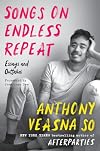
I was worried this would be filled with junk salvaged from Veasna So's desktop after his sudden death, but it turns out this writer is as good as I thought he was after reading Afterparties. A substantial percentage of this is pieces of what I assume would have been a novel or a series of linked short stories, and these fragments are nearly all very very good. I wanted to know so much more about the central characters, Darren, Vince and Molly, their families. I wanted more info on the show more specifics of their (maybe) inheritance from their cool aunt whom they loved, but also saw as nothing more than the money she would leave them and thus free them up from the need to actually work for their living rather just live in their self-indulgent bubbles.
There are a number of essays included here that were previously published (mostly in n+1) that are interesting though many are the work of someone who has not grown out of the belief that intellect and discernment are the most important, perhaps the only important, qualities. These essays remind one of how young Veasna So was, barely out of college, just a couple years older than my son who, like this author. is amazing but very much a work in progress. The review of Crazy Rich Asians, or the criticism of the "smart" reality television movement (think Queer Eye, Love on the Spectrum, etc.) or the observations on how one should read are pretentious and impatient, but in each of them there is some incredibly smart reflection and also in each of them there is some next level writing. I have little doubt that Veasna So would have continued to evolve and get better. His is a loss to literature as well as to those who loved him.
One high point for me: When I read Afterparties I kept thinking how similar the habits, behaviors and humor of the older Cambodians who had survived the genocide were to the Jews I knew who survived the pogroms and the holocaust. I mentioned that in my review I think. So I was gratified when Veasna So mentions in an essay here that Americans conflate all Asians, but that Cambodians are nothing like the Chinese, rather they are like Jews. It was great to feel like I really understood this author's intentions and messaging and it helped me see better the connection between me and other 1st and 2nd gen people who are the children and grandchildren of refugees. show less
There are a number of essays included here that were previously published (mostly in n+1) that are interesting though many are the work of someone who has not grown out of the belief that intellect and discernment are the most important, perhaps the only important, qualities. These essays remind one of how young Veasna So was, barely out of college, just a couple years older than my son who, like this author. is amazing but very much a work in progress. The review of Crazy Rich Asians, or the criticism of the "smart" reality television movement (think Queer Eye, Love on the Spectrum, etc.) or the observations on how one should read are pretentious and impatient, but in each of them there is some incredibly smart reflection and also in each of them there is some next level writing. I have little doubt that Veasna So would have continued to evolve and get better. His is a loss to literature as well as to those who loved him.
One high point for me: When I read Afterparties I kept thinking how similar the habits, behaviors and humor of the older Cambodians who had survived the genocide were to the Jews I knew who survived the pogroms and the holocaust. I mentioned that in my review I think. So I was gratified when Veasna So mentions in an essay here that Americans conflate all Asians, but that Cambodians are nothing like the Chinese, rather they are like Jews. It was great to feel like I really understood this author's intentions and messaging and it helped me see better the connection between me and other 1st and 2nd gen people who are the children and grandchildren of refugees. show less
Rating: 4* of five
The Publisher Says: By the New York Times bestselling author of the award-winning AFTERPARTIES comes a collection like none other: sharply funny, emotionally expansive essays and linked short fiction exploring family, queer desire, pop culture, and race
The late Anthony Veasna So’s debut story collection, Afterparties, was a landmark publication, hailed as a “bittersweet triumph for a fresh voice silenced too soon” (Fresh Air). And he was equally known for his comic, show more soulful essays, published in n+1, The New Yorker, and The Millions.
Songs on Endless Repeat gathers those essays together, along with previously unpublished fiction. Written with razor-sharp wit and an unflinching eye, the essays examine his youth in California, the lives of his refugee parents, his intimate friendships, loss, pop culture, and more. And in linked fiction following three Cambodian American cousins who stand to inherit their late aunt’s illegitimate loan-sharking business, So explores community, grief, and longing with inimitable humor and depth.
Following “one of the most exciting contributions to Asian American literature in recent years” (Vulture), Songs on Endless Repeat is an astonishing final expression by a writer of “extraordinary achievement and immense promise” (The New Yorker).
I RECEIVED A DRC FROM THE PUBLISHER VIA EDELWEISS+. THANK YOU.
My Review: There are very few things I am more moved, saddened, and affected by than the early death of a promising artist. Basquiat, Heath Ledger, Anthony Veasna So, all dead from random bad luck. All gay guys (yeah, I said it about Legder, my gaydar goes DEFCON-5 every time I see him) who didn't get to finish their rough-edged bumptious growing processes. That is very much the feeling I had reading this collection of the gone-too-soon Author So's bits and bobs.
There's a kind of youthful arrogance, a judgment-passing superior smirk that shades into a sneer, in all the essays. It's to be expected, he was lionized early and often. He wasn't wrong, or wrong-headed; he was cocksure and unaware, in his youth, that being unsympathetic in your judgments doesn't make them stronger. In time perhaps that would've worn off, and he'd've reserved the sharpness of his eyes for more worthy opponents.
His fiction fragments in here point to an idea for a novel that could have turned into something interesting had he had time and some very good guidance. The fact is there was raw talent here, there was a Voice, and that loss is horrible. That it was down to self-destructive behaviors makes me think that the work we have now might have been all we ever got, living or dead. Many many addicted folk with powerful talents lose the war in themselves.
Not really recommended on its own; the reason to read it is that it feels like an act of mourning for what we all lost when he died of an overdose. show less
The Publisher Says: By the New York Times bestselling author of the award-winning AFTERPARTIES comes a collection like none other: sharply funny, emotionally expansive essays and linked short fiction exploring family, queer desire, pop culture, and race
The late Anthony Veasna So’s debut story collection, Afterparties, was a landmark publication, hailed as a “bittersweet triumph for a fresh voice silenced too soon” (Fresh Air). And he was equally known for his comic, show more soulful essays, published in n+1, The New Yorker, and The Millions.
Songs on Endless Repeat gathers those essays together, along with previously unpublished fiction. Written with razor-sharp wit and an unflinching eye, the essays examine his youth in California, the lives of his refugee parents, his intimate friendships, loss, pop culture, and more. And in linked fiction following three Cambodian American cousins who stand to inherit their late aunt’s illegitimate loan-sharking business, So explores community, grief, and longing with inimitable humor and depth.
Following “one of the most exciting contributions to Asian American literature in recent years” (Vulture), Songs on Endless Repeat is an astonishing final expression by a writer of “extraordinary achievement and immense promise” (The New Yorker).
I RECEIVED A DRC FROM THE PUBLISHER VIA EDELWEISS+. THANK YOU.
My Review: There are very few things I am more moved, saddened, and affected by than the early death of a promising artist. Basquiat, Heath Ledger, Anthony Veasna So, all dead from random bad luck. All gay guys (yeah, I said it about Legder, my gaydar goes DEFCON-5 every time I see him) who didn't get to finish their rough-edged bumptious growing processes. That is very much the feeling I had reading this collection of the gone-too-soon Author So's bits and bobs.
There's a kind of youthful arrogance, a judgment-passing superior smirk that shades into a sneer, in all the essays. It's to be expected, he was lionized early and often. He wasn't wrong, or wrong-headed; he was cocksure and unaware, in his youth, that being unsympathetic in your judgments doesn't make them stronger. In time perhaps that would've worn off, and he'd've reserved the sharpness of his eyes for more worthy opponents.
His fiction fragments in here point to an idea for a novel that could have turned into something interesting had he had time and some very good guidance. The fact is there was raw talent here, there was a Voice, and that loss is horrible. That it was down to self-destructive behaviors makes me think that the work we have now might have been all we ever got, living or dead. Many many addicted folk with powerful talents lose the war in themselves.
Not really recommended on its own; the reason to read it is that it feels like an act of mourning for what we all lost when he died of an overdose. show less
Lists
Five star books (1)
Awards


You May Also Like


Associated Authors
Statistics
- Works
- 3
- Also by
- 2
- Members
- 606
- Popularity
- #41,483
- Rating
- 4.0
- Reviews
- 28
- ISBNs
- 22
- Languages
- 2
- Favorited
- 2