
Anne Eliot Crompton (1930–2011)
Author of Merlin's Harp
About the Author
Series
Works by Anne Eliot Crompton
The Rainbow Pony 1 copy
Associated Works
Spaceships and Spells: A Collection of New Fantasy and Science-fiction Stories (1987) — Contributor — 24 copies
Tagged
Common Knowledge
- Birthdate
- 1930-04-06
- Date of death
- 2011-05-22
- Gender
- female
- Occupations
- children's book author
painter
fantasy novel author - Short biography
- Anne Eliot Crompton grew up in a college town in the 1940s, a time when women’s roles in myth were less acknowledged than today. When she married and moved to the country to raise children and animals, she realized how much "heavy lifting" had been done by women throughout human history. Part of her life’s work was to shine light on their immense contribution to the human story. Many of her works are interpretations of Arthurian legend.
- Nationality
- USA
- Birthplace
- Northampton, Massachusetts, USA
- Places of residence
- Chesterfield, Massachusetts, USA
- Place of death
- Brattleboro, Vermont, USA
- Associated Place (for map)
- Massachusetts, USA
Members
Reviews
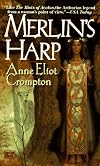
Wow. I can't believe all the haters in the review section here.
After some contemplation, I'm guessing that it's because the book was repackaged for the newer edition with a wholly inappropriate cover. The original ROC edition has a pretty lovely, Pre-Raphaelite-inspired cover by Don Maitz. The new edition has this cheesy, pink-glittery cover that makes it look like a cheap romance for 13-year-old girls.
You can't judge a book by its cover, but you can surely make certain that the wrong show more people read a book by its cover.
This book is not aimed at young teens. It is also NOT: confusing, hard-to-follow, full of 'flowery' or 'verbose' language, OR for people who have no clue about the Arthurian mythos.
Yes, the book's author absolutely expects that the reader is familiar with Arthurian legends, and that you will be able to recognize the elements of classic characters and events in hers. I don't think that's too much of a demand, considering the scores and scores of novels that have been written in this genre, and how much the Arthurian legends are part of the very underpinnings of Western society.
The language of the story is very simple and straightforward. There are occasional poems, often presented as lyrics to the ballads that Merlin sings. But the bulk of the novel is basic, uncomplicated prose, with a nod to the styles of fairy tales and legends. At times, it reminded me of Patricia McKillip. I do like McKillip better - but she's one of my most favorite authors.
The real success here is how Crompton brilliantly portrays events from the point of view of the 'Fey.' She makes the Fey real - portrays them as a believable people, with a convincing, well-rounded, but very, very foreign culture. And she does this without sacrificing their magic. (Other books I've read in the genre have made them just another tribe, feared, hated, and misunderstood - but Crompton does all this, AND keeps them truly fey.) Writing from the perspective of someone from a culture with a very different moral standard to the one we're used to can be challenging - but I feel that this book did it wonderfully. I felt that I came to understand Niviene. Sometimes her attitude shocked me, sometimes I agreed with her. But more importantly, the portrayal of her character led me to think of things from a perspective not my own - which is one of the main raisons d'être of fiction in general.
I'd recommend this book highly to anyone interested in quality mythic fiction, Arthurian legend and faerie lore. It's not a perfect book, but it's a beautiful, worthwhile one. show less
After some contemplation, I'm guessing that it's because the book was repackaged for the newer edition with a wholly inappropriate cover. The original ROC edition has a pretty lovely, Pre-Raphaelite-inspired cover by Don Maitz. The new edition has this cheesy, pink-glittery cover that makes it look like a cheap romance for 13-year-old girls.
You can't judge a book by its cover, but you can surely make certain that the wrong show more people read a book by its cover.
This book is not aimed at young teens. It is also NOT: confusing, hard-to-follow, full of 'flowery' or 'verbose' language, OR for people who have no clue about the Arthurian mythos.
Yes, the book's author absolutely expects that the reader is familiar with Arthurian legends, and that you will be able to recognize the elements of classic characters and events in hers. I don't think that's too much of a demand, considering the scores and scores of novels that have been written in this genre, and how much the Arthurian legends are part of the very underpinnings of Western society.
The language of the story is very simple and straightforward. There are occasional poems, often presented as lyrics to the ballads that Merlin sings. But the bulk of the novel is basic, uncomplicated prose, with a nod to the styles of fairy tales and legends. At times, it reminded me of Patricia McKillip. I do like McKillip better - but she's one of my most favorite authors.
The real success here is how Crompton brilliantly portrays events from the point of view of the 'Fey.' She makes the Fey real - portrays them as a believable people, with a convincing, well-rounded, but very, very foreign culture. And she does this without sacrificing their magic. (Other books I've read in the genre have made them just another tribe, feared, hated, and misunderstood - but Crompton does all this, AND keeps them truly fey.) Writing from the perspective of someone from a culture with a very different moral standard to the one we're used to can be challenging - but I feel that this book did it wonderfully. I felt that I came to understand Niviene. Sometimes her attitude shocked me, sometimes I agreed with her. But more importantly, the portrayal of her character led me to think of things from a perspective not my own - which is one of the main raisons d'être of fiction in general.
I'd recommend this book highly to anyone interested in quality mythic fiction, Arthurian legend and faerie lore. It's not a perfect book, but it's a beautiful, worthwhile one. show less
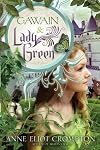
This was an interesting take on the Arthurian mythos with Gawain and the Green Knight and various Green Man allegories along with the clash of Paganism and Christianity and different traditions across Britain. It felt a little too self-aware.
I see what the author was trying for but it just didn't have either a mythic or realistic feel to it for me.
I see what the author was trying for but it just didn't have either a mythic or realistic feel to it for me.
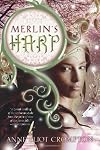
Nivienne lives among her Fey kin on Apple Island, known to humans as Avalon. She’s the daughter of the Lady of the Lake and an apprentice to Merlin, the half-human, half-fey sorcerer who knows King Arthur. Turmoil in Arthur’s kingdom threatens to affect the fey, however, and Nivienne must use her cunning and knowledge to navigate the treacheries of human men.
I don’t get offended by books often. Premarital sex, abstinence until marriage, drinking, backstabbing, pranking, people killing show more people, etc.—everything is good in my opinion as long as it’s written well and doesn’t sound like an agenda that is out of place within the fictional world. MERLIN’S HARP, however, is a mess of a novel, poorly organized and weakly characterized—unfortunate, because the writing is beautiful and the story held such promise.
For a generation that’s being bombarded with a multitude of sensations, experiences, and information left and right, we need stories that are far more organized—less ADD—than the lives we lead. The story of MERLIN’S HARP is exceedingly difficult to follow. It is almost impossible to tell without dedicating 110% of your brainpower to the task whether Nivienne is narrating something that’s occurring in the present or something that happened in her past—and if it is the latter, which part of her past it occurred, as, yes, she somehow attempts to provide us with multiple flashbacks at once. And it’s less than lack of chronology throughout the story as it is the fact that the flashbacks (or whatever we should call them) provide us with hardly any cohesive information about either the characters or the world in which the story is set.
Crompton’s fey are fairly dissimilar to humans: they’re heartless, free-spirited sexual beings. They would’ve provided an interesting contrast to human characteristics, had their lustful behavior been better developed. I have nothing against any kind of sex in fiction, but when characters are objectifying and rubbing up on one another left and right without first having been developed into characters whose lustful actions are justified, then I DO have a problem with that. MERLIN’S HARP is a very sensual read, but my difficulty in connecting to any of the characters, of understanding their motivations, makes it an awkward read at best.
Overall, I’m afraid MERLIN’S HARP is yet another example of a book that is being marketed to the wrong genre. Readers of adult fantasy may be better suited to appreciate its slow story, meandering plot, and sensual writing. YA fantasy fans, however, may find this book difficult to get through. show less
I don’t get offended by books often. Premarital sex, abstinence until marriage, drinking, backstabbing, pranking, people killing show more people, etc.—everything is good in my opinion as long as it’s written well and doesn’t sound like an agenda that is out of place within the fictional world. MERLIN’S HARP, however, is a mess of a novel, poorly organized and weakly characterized—unfortunate, because the writing is beautiful and the story held such promise.
For a generation that’s being bombarded with a multitude of sensations, experiences, and information left and right, we need stories that are far more organized—less ADD—than the lives we lead. The story of MERLIN’S HARP is exceedingly difficult to follow. It is almost impossible to tell without dedicating 110% of your brainpower to the task whether Nivienne is narrating something that’s occurring in the present or something that happened in her past—and if it is the latter, which part of her past it occurred, as, yes, she somehow attempts to provide us with multiple flashbacks at once. And it’s less than lack of chronology throughout the story as it is the fact that the flashbacks (or whatever we should call them) provide us with hardly any cohesive information about either the characters or the world in which the story is set.
Crompton’s fey are fairly dissimilar to humans: they’re heartless, free-spirited sexual beings. They would’ve provided an interesting contrast to human characteristics, had their lustful behavior been better developed. I have nothing against any kind of sex in fiction, but when characters are objectifying and rubbing up on one another left and right without first having been developed into characters whose lustful actions are justified, then I DO have a problem with that. MERLIN’S HARP is a very sensual read, but my difficulty in connecting to any of the characters, of understanding their motivations, makes it an awkward read at best.
Overall, I’m afraid MERLIN’S HARP is yet another example of a book that is being marketed to the wrong genre. Readers of adult fantasy may be better suited to appreciate its slow story, meandering plot, and sensual writing. YA fantasy fans, however, may find this book difficult to get through. show less
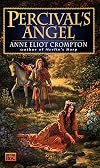
'Percival's Angel' is set in the same world as 'Merlin's Harp,' (see my review of that book for feelings that apply equally to this novel) but it works very well as a stand-alone novel. Readers will benefit to a degree from having some of the background of the world, and backstory on minor characters if they've read the previous book, but it's not at all necessary.
The story is loosely based on the tales of the Knight of the Round Table, Percival, and the quest for the Holy Grail - but it's show more really about clashes between cultures, conflicts between people, and the search for meaning in life... like so many 'quest' stories.
The novel follows Lili, a girl of the fey, as she follows her childhood friend, Percy, out of the protected forest where her people live in isolation. Percival's mother took him into the forest as a babe, hoping to keep him from ever becoming a knight - a calling that proved the death of all her previous children. Regardless, Percival seeks to break free of his mother. Lili seeks to help him, and discover the power of the human heart, which Merlin has told her about, and which, as a member of the fey, she feels that she lacks.
Soon enough, Percival is recruited into the Quest for the Grail... which is simply a story that Merlin made up, to keep troublesome knights occupied in peacetime. But where humans believe, power is lent...
I didn't like this book quite as much as Merlin's Harp, but it's still a beautiful work of mythic fiction, rich in layers of meaning.
I liked it enough that, as soon as I finished it, I ordered Crompton's third book based on Arthurian tales (Gawain). show less
The story is loosely based on the tales of the Knight of the Round Table, Percival, and the quest for the Holy Grail - but it's show more really about clashes between cultures, conflicts between people, and the search for meaning in life... like so many 'quest' stories.
The novel follows Lili, a girl of the fey, as she follows her childhood friend, Percy, out of the protected forest where her people live in isolation. Percival's mother took him into the forest as a babe, hoping to keep him from ever becoming a knight - a calling that proved the death of all her previous children. Regardless, Percival seeks to break free of his mother. Lili seeks to help him, and discover the power of the human heart, which Merlin has told her about, and which, as a member of the fey, she feels that she lacks.
Soon enough, Percival is recruited into the Quest for the Grail... which is simply a story that Merlin made up, to keep troublesome knights occupied in peacetime. But where humans believe, power is lent...
I didn't like this book quite as much as Merlin's Harp, but it's still a beautiful work of mythic fiction, rich in layers of meaning.
I liked it enough that, as soon as I finished it, I ordered Crompton's third book based on Arthurian tales (Gawain). show less
Lists
Awards


You May Also Like


Associated Authors
Statistics
- Works
- 21
- Also by
- 6
- Members
- 645
- Popularity
- #39,134
- Rating
- 3.1
- Reviews
- 17
- ISBNs
- 43
- Languages
- 2
- Favorited
- 1