
Ann Tompert
Author of Grandfather Tang's Story: A Tale Told With Tangrams
About the Author
Works by Ann Tompert
Just A Little Bit 1 copy
Tell-a-tale books 1 copy
Tagged
Common Knowledge
- Gender
- female
- Occupations
- children's book author
Members
Reviews

Using Saint Patrick's "Confession" - one of two letters he is known to have written - as her source, Ann Tompert tells the story of the man who is credited with converting Ireland to Christianity, and who became the patron saint of that country. From Patrick's youth in late 4th-century Roman Britain, through his enslavement in Ireland; from his escape from captivity through his return to the country of his bondage - Tompert covers all of the major events of her subject's life, discussing the show more hardship and persecution he faced, when trying to spread the word of Christianity. She concludes with his death on March 17th, sometime around the year 461 AD - from this date comes the modern holiday of St. Patrick's Day - and includes a discussion of some of the folklore associated with him, in her brief afterword...
Picking up Ann Tompert and Michael Garland's Saint Patrick, I had Tomie dePaola's Patrick: Patron Saint of Ireland at the back of my mind, and it was difficult not to compare the two, when reading. I think that Tompert does an excellent job with her narrative, and I liked that she used St. Patrick's own writing, of which there is very little, in crafting her story. Unlike the dePaola, she pays less attention to the folklore associated with this saint, relegating it to a mention in her afterword and concentrating on the story of Patrick's life instead. Unfortunately, I wasn't as enamored with the artwork, as I was with the text. I did like the decorative Celtic knotwork borders that Garland used, but the mixed media paintings themselves left me mostly cold. The color palette sometimes struck me as odd, there was a flat quality to some of the images that put me off, and I didn't like the streaky effect of the human faces. This last was clearly a deliberate choice - all of the skin had a textured quality, with alternating pink and grayish stripes, giving almost the effect of having been painted over wood - and I found it distracting. It's difficult to describe the effect it had on me, but it was almost as if the characters were fading in and out. Tastes vary of course, and other readers seem to have really enjoyed these illustrations, so take that as you will. I myself have a back-and-forth relationship with Garland's art - this is my eighth picture-book from him - sometimes loving it and sometimes disliking it. In any case, despite not loving the visuals here, I still enjoyed the book, and would recommend it to any picture-book readers looking for stories about Saint Patrick. It could be paired very nicely with the dePaola, or with a telling of one of the famous legends about the saint, such as Sheila MacGill-Callahan's The Last Snake in Ireland: A Story about St. Patrick. show less
Picking up Ann Tompert and Michael Garland's Saint Patrick, I had Tomie dePaola's Patrick: Patron Saint of Ireland at the back of my mind, and it was difficult not to compare the two, when reading. I think that Tompert does an excellent job with her narrative, and I liked that she used St. Patrick's own writing, of which there is very little, in crafting her story. Unlike the dePaola, she pays less attention to the folklore associated with this saint, relegating it to a mention in her afterword and concentrating on the story of Patrick's life instead. Unfortunately, I wasn't as enamored with the artwork, as I was with the text. I did like the decorative Celtic knotwork borders that Garland used, but the mixed media paintings themselves left me mostly cold. The color palette sometimes struck me as odd, there was a flat quality to some of the images that put me off, and I didn't like the streaky effect of the human faces. This last was clearly a deliberate choice - all of the skin had a textured quality, with alternating pink and grayish stripes, giving almost the effect of having been painted over wood - and I found it distracting. It's difficult to describe the effect it had on me, but it was almost as if the characters were fading in and out. Tastes vary of course, and other readers seem to have really enjoyed these illustrations, so take that as you will. I myself have a back-and-forth relationship with Garland's art - this is my eighth picture-book from him - sometimes loving it and sometimes disliking it. In any case, despite not loving the visuals here, I still enjoyed the book, and would recommend it to any picture-book readers looking for stories about Saint Patrick. It could be paired very nicely with the dePaola, or with a telling of one of the famous legends about the saint, such as Sheila MacGill-Callahan's The Last Snake in Ireland: A Story about St. Patrick. show less

Little Fox Goes to the End of the World, illustrated by John Wallner.
"Tired of playing in the soft green grass near the mouth of her den," Little Fox announces that she intends to set off to find the end of the world in this charming picture-book from Ann Tompert. Wise mother fox, rather than arguing with her frustrated daughter, draws her out with questions, allowing her to experience the longed-for voyage of exploration - over mountains and deserts, past the island of one-eyed cats - while show more still safe at home...
With a gentle narrative that emphasizes a mother's role, both in protecting her child, and encouraging her growth, and journey of discovery, as well as appealing four-tone pencil illustrations, Little Fox Goes to the End of the World is a delight, and I thank my friend Chandra for pointing me toward it. Originally published in 1976, it has long out-of-print, although it look like a new edition (with different illustrations, done by Laura J. Bryant) is due for publication this fall. Happy news for Ann Tompert fans! show less
"Tired of playing in the soft green grass near the mouth of her den," Little Fox announces that she intends to set off to find the end of the world in this charming picture-book from Ann Tompert. Wise mother fox, rather than arguing with her frustrated daughter, draws her out with questions, allowing her to experience the longed-for voyage of exploration - over mountains and deserts, past the island of one-eyed cats - while show more still safe at home...
With a gentle narrative that emphasizes a mother's role, both in protecting her child, and encouraging her growth, and journey of discovery, as well as appealing four-tone pencil illustrations, Little Fox Goes to the End of the World is a delight, and I thank my friend Chandra for pointing me toward it. Originally published in 1976, it has long out-of-print, although it look like a new edition (with different illustrations, done by Laura J. Bryant) is due for publication this fall. Happy news for Ann Tompert fans! show less
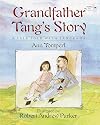
I really enjoyed how there were subtitles written in tangrams. I liked how the story began and ended with Little Soo and Grandfather bonding and sharing storytime. This detail made it clear that the book was telling a story within a story.
I think it can be relatable to most readers and it gives much insight to the Chinese folktale cutlture. I picked up this sense because the animals that the folkatle was about were illustrated appropriately to match the Chinese theme. For instance, the fish show more was drawn as a Koy fish and grandfather and Little Soo were dressed in Chinese dresses and flat shoes and black hair. Small details like these made the book culturally accurate.
My favorite aspect of this book was that the story that grandfather told related to his relationship with his grandaughter. As the reader, you don't sense this or put it all together until the last two pages. This kept my interest and since there was a purpose to the story, I thought it was a nice touch.
I think the big idea of this picture book is how closely bonded children are with their elders in the Chinese culture. There was no major lesson or theme in this story other than realizing that the grandfather and Little Soo really love and value each other. This is so humbling to read and made me reflect on my realtionship with my grandparents and how nice it is for children to have such a significant bond with them. show less
I think it can be relatable to most readers and it gives much insight to the Chinese folktale cutlture. I picked up this sense because the animals that the folkatle was about were illustrated appropriately to match the Chinese theme. For instance, the fish show more was drawn as a Koy fish and grandfather and Little Soo were dressed in Chinese dresses and flat shoes and black hair. Small details like these made the book culturally accurate.
My favorite aspect of this book was that the story that grandfather told related to his relationship with his grandaughter. As the reader, you don't sense this or put it all together until the last two pages. This kept my interest and since there was a purpose to the story, I thought it was a nice touch.
I think the big idea of this picture book is how closely bonded children are with their elders in the Chinese culture. There was no major lesson or theme in this story other than realizing that the grandfather and Little Soo really love and value each other. This is so humbling to read and made me reflect on my realtionship with my grandparents and how nice it is for children to have such a significant bond with them. show less
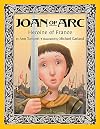
As someone who grew up in catholic schools but felt little attachment to the religion itself, Joan of Arc has always been an intriguing story. To an outsider, the tale of a young girl who hears voices telling her to bring down the English could easily be misinterpreted as some sort of mental illness. But, to an observant young catholic, the story can be much more than that, destiny calling. Either way, it is an exciting tale of a war hero that deserves reader's familiarity.
Ann Tompert and show more Michael Garland's Joan of Arc: Heroine of France has a few things going for it. First, in what is essentially an action adventure story, the heroine is a female. While that may not seem like a huge deal, to young female readers, it very well could be. Secondly, with boundless tradition and folklore to draw from, the story is quite rich in detail. However, the downfall of the book is the way in which the story is communicated to the reader. Instead of creating a fantastic world, Tompert talks of angels and the voice of the heavens as if they are normal pieces of the world.
Garland's illustration falls under similar criticism. Though I did appreciate his use of both realistic scenery and cartoonish characters, the illustration of Joan left a little to be desired. Each time the heroin is pictured, she has what I perceived to be a very confused look on her face. Perhaps that is the proper response to the situation, however, it does not mesh well with the war-hero through-line.
Joan of Arc: Heroine of France is a solid option for young readers interested in something action-tinged and provides a decent historical backdrop for education purposes. Interested parties could certainly do worse, but they could probably do better, as well. show less
Ann Tompert and show more Michael Garland's Joan of Arc: Heroine of France has a few things going for it. First, in what is essentially an action adventure story, the heroine is a female. While that may not seem like a huge deal, to young female readers, it very well could be. Secondly, with boundless tradition and folklore to draw from, the story is quite rich in detail. However, the downfall of the book is the way in which the story is communicated to the reader. Instead of creating a fantastic world, Tompert talks of angels and the voice of the heavens as if they are normal pieces of the world.
Garland's illustration falls under similar criticism. Though I did appreciate his use of both realistic scenery and cartoonish characters, the illustration of Joan left a little to be desired. Each time the heroin is pictured, she has what I perceived to be a very confused look on her face. Perhaps that is the proper response to the situation, however, it does not mesh well with the war-hero through-line.
Joan of Arc: Heroine of France is a solid option for young readers interested in something action-tinged and provides a decent historical backdrop for education purposes. Interested parties could certainly do worse, but they could probably do better, as well. show less
Lists
Awards


You May Also Like


Associated Authors
Statistics
- Works
- 41
- Members
- 3,814
- Popularity
- #6,645
- Rating
- 3.8
- Reviews
- 60
- ISBNs
- 97
- Languages
- 2
- Favorited
- 2