
Tim Pears
Author of In the Place of Fallen Leaves
About the Author
Series
Works by Tim Pears
Associated Works
Stories of Hope and Wonder: In Support of the UK's Healthcare Workers (2020) — Contributor — 11 copies, 1 review
Tagged
Common Knowledge
- Canonical name
- Pears, Tim
- Birthdate
- 1956-11-15
- Gender
- male
- Occupations
- novelist
- Awards and honors
- Lannan Literary Award (Fiction, 1996)
- Agent
- Victoria Hobbs (AM Heath)
- Short biography
- Tim Pears - Short Biography - 2005
Born in 1956, Tim Pears grew up in Devon, left school at sixteen and worked in a wide variety of jobs: farm labourer, nurse in a mental hospital, pianist's bodyguard, painter and decorator, video maker, college night porter, art gallery manager, and others.
His first novel, In the Place of Fallen Leaves, was published in 1993. It was awarded the Hawthornden Prize and the Ruth Hadden Memorial Award. Also in 1993 Tim Pears graduated from the Direction course at the National Film and Television School. He has written the script for a feature film, Loop, which was released in 1999.
In 1996 Tim received a Lannan Award, in America.
His second novel, In a Land of Plenty, was published in 1997. It was made into a ten part drama series for the BBC by Sterling Pictures (with TalkBack Productions) and broadcast in 2001.
A Revolution of the Sun was published in 2000, Wake Up in 2002, and Blenheim Orchard in 2007 by Bloomsbury.
These novels have been variously published in America, France, Germany and Denmark.
Tim Pears was Writer in Residence at Cheltenham Festival of Literature, 2002-03, and is Royal Literary Fund Fellow at Oxford Brookes University 2006-08. He has taught a good deal of creative writing, most recently at Ruskin College, Oxford, in which city he lives with his wife and children. - Nationality
- UK
- Places of residence
- Oxford, Oxfordshire, England, UK
- Associated Place (for map)
- England, UK
Members
Discussions
Found: WWII book featuring the Franja Partisan Hospital (adult fiction) in Name that Book (June 2022)
Reviews
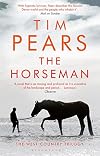
This book got off to a slow start and was actually kind of boring with it's descriptions of the drudgery of farm life in western England in 1911. Until it wasn't. And then it was just so good.
The first in a trilogy it told the story of the coming of age of Leo Sercombe, who is bound and determined to be an expert on the care and training of horses, in the mold of his father. Quiet, thoughtful and determined as he is he falls for the estate owner's daughter and the resultant fiery ending of show more this first volume is totally out of whack with all the quiet preceding narrative. Therefore, I can't wait for volume two show less
The first in a trilogy it told the story of the coming of age of Leo Sercombe, who is bound and determined to be an expert on the care and training of horses, in the mold of his father. Quiet, thoughtful and determined as he is he falls for the estate owner's daughter and the resultant fiery ending of show more this first volume is totally out of whack with all the quiet preceding narrative. Therefore, I can't wait for volume two show less
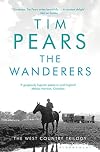
In this beguiling, gorgeous, yet frustrating novel, we first meet Leo Sercombe in 1912. The young teenager is on the run through the Devon countryside, bearing the wounds of a severe beating, and near faint with hunger.
Gypsies take him in, but he receives little kindness, and not only because he’s an outsider, what they call a gentile. They sense his weakness, his ache for friendship, and, with few exceptions, treat him cruelly because they can, even after he shows his usefulness. Leo has show more a way with horses, a valuable skill, and he’s curious, quick to learn, eager to please. Theirs is a hard existence, however, with little room for sentiment, and Leo’s reminded at every turn that he owes them his life and had better not try to run away.
Meanwhile, Charlotte (Lottie) Prideaux has just lost her mother, and she too is rootless, without friends, though in a very different, coddled context. She’s a lord’s daughter, and her father lets her do more or less what she pleases, with one crucial exception.
The narrative hints that because Leo and Lottie became too friendly, the boy and most of his family were banished from the estate, which also presumably explains the beating he took. (Since The Wanderers is the second book of a planned trilogy, these events may be more explicit in the first volume, The Horseman.) In protest, for months, Lottie refuses to say anything to her father except, “Yes, Papa,” or, “No, Papa,” and tells him he did wrong to punish the Sercombes.
With great subtlety, Pears shows that Lottie and Leo care deeply about one another, though neither spends much time thinking about it, and both outwardly pretend no connection exists. This understatement makes you want all the more for the two to find one another again. But that’s not how the real world or this novel works, and Lottie and Leo have learning to do.
They’re both empathic, lonely, see beyond surfaces, and love the natural world, about which they have an abiding curiosity. But where Lottie dissects animals to study them and borrows anatomy textbooks from the local veterinarian, Leo helps butcher animals for food and assists a ewe through a breech birth because that’s his job, for which he receives neither thanks nor payment.
Pears never underlines the comparison; he doesn’t have to. You only need to watch Leo make his way, suffering physically and emotionally, whereas there’s always someone looking out for the daughter of the manor. Nevertheless, you see Leo gain knowledge that Lottie may never have. I love this juxtaposition, simple and elegant like the prose, which creates a coming-of-age story unlike any other I’ve read.
Yet The Wanderers, though superbly written with brilliant characterizations, lacks a plot to speak of, a climax, or resolution. Having recently torn apart Charles Frazier’s Varina for that failing and others, it’s only fair to ask what Pears does to overcome this deficit, and to what extent he succeeds.
He does ask implied, powerful questions, and though nothing happens in the usual way of novels, everything also happens, because it all matters. Partly that’s because Pears offers a view of life on the margins that few writers attempt, but it’s not just the content. Here, the episodic chapters open the characters to the reader, and the small moments establish a constant emotional connection.
Even so, I still feel cheated at the end. Does it matter how many questions Pears leaves hanging? Yes and no. If you’re the type of reader who prefers to have everything wrapped up, then this book may not be for you. If that uncertainty doesn’t faze you, the narrative offers a breathtaking ride. show less
Gypsies take him in, but he receives little kindness, and not only because he’s an outsider, what they call a gentile. They sense his weakness, his ache for friendship, and, with few exceptions, treat him cruelly because they can, even after he shows his usefulness. Leo has show more a way with horses, a valuable skill, and he’s curious, quick to learn, eager to please. Theirs is a hard existence, however, with little room for sentiment, and Leo’s reminded at every turn that he owes them his life and had better not try to run away.
Meanwhile, Charlotte (Lottie) Prideaux has just lost her mother, and she too is rootless, without friends, though in a very different, coddled context. She’s a lord’s daughter, and her father lets her do more or less what she pleases, with one crucial exception.
The narrative hints that because Leo and Lottie became too friendly, the boy and most of his family were banished from the estate, which also presumably explains the beating he took. (Since The Wanderers is the second book of a planned trilogy, these events may be more explicit in the first volume, The Horseman.) In protest, for months, Lottie refuses to say anything to her father except, “Yes, Papa,” or, “No, Papa,” and tells him he did wrong to punish the Sercombes.
With great subtlety, Pears shows that Lottie and Leo care deeply about one another, though neither spends much time thinking about it, and both outwardly pretend no connection exists. This understatement makes you want all the more for the two to find one another again. But that’s not how the real world or this novel works, and Lottie and Leo have learning to do.
They’re both empathic, lonely, see beyond surfaces, and love the natural world, about which they have an abiding curiosity. But where Lottie dissects animals to study them and borrows anatomy textbooks from the local veterinarian, Leo helps butcher animals for food and assists a ewe through a breech birth because that’s his job, for which he receives neither thanks nor payment.
Pears never underlines the comparison; he doesn’t have to. You only need to watch Leo make his way, suffering physically and emotionally, whereas there’s always someone looking out for the daughter of the manor. Nevertheless, you see Leo gain knowledge that Lottie may never have. I love this juxtaposition, simple and elegant like the prose, which creates a coming-of-age story unlike any other I’ve read.
Yet The Wanderers, though superbly written with brilliant characterizations, lacks a plot to speak of, a climax, or resolution. Having recently torn apart Charles Frazier’s Varina for that failing and others, it’s only fair to ask what Pears does to overcome this deficit, and to what extent he succeeds.
He does ask implied, powerful questions, and though nothing happens in the usual way of novels, everything also happens, because it all matters. Partly that’s because Pears offers a view of life on the margins that few writers attempt, but it’s not just the content. Here, the episodic chapters open the characters to the reader, and the small moments establish a constant emotional connection.
Even so, I still feel cheated at the end. Does it matter how many questions Pears leaves hanging? Yes and no. If you’re the type of reader who prefers to have everything wrapped up, then this book may not be for you. If that uncertainty doesn’t faze you, the narrative offers a breathtaking ride. show less
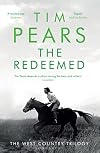
Sixteen-year-old Leo Sercombe, a native of North Devon and a skilled horseman with a deep love of the natural world, sails with the Royal Navy from Scapa Flow in late May 1916 to do battle against the Germans.
That alone would be a peculiar irony, but, even worse, Leo’s encased in a steel-plated gun turret on the heavy cruiser Queen Mary, without fresh air or a window to the exterior. I probably don’t need to tell you that the Queen Mary will fare poorly in the imminent Battle of show more Jutland. But I should note that Pears suggests how British complacency and pride in an outdated warship brings disaster, and that the sailors pay the price.
Meanwhile, Charlotte (Lottie) Prideaux, an earl’s daughter roughly Leo’s age and a childhood companion (their illicit friendship having caused great trouble in an earlier volume), studies veterinary medicine on the sly. Lottie watches, pained, as her father’s estate transforms under the pressures of war and modernity.
But she’s determined to follow this career denied young women, especially the well-born, and in her zeal, she trusts the wrong party, enduring violence and betrayal. There are no protections in this world.
The Redeemed is the final installment of Pears’s West Country Trilogy and makes a fitting sequel to The Wanderers, a mesmerizing novel of grace and beauty. As with the previous work, in The Redeemed, the prose remains luminous and fixed on the physical world, especially through Leo’s part of the narrative. Many writers try to do this, but Pears has the particular knack of rendering Leo through the natural and metaphysical at once, whether he’s in his gun turret or at anchor at Scapa Flow.
Lottie’s world involves going on rounds as a veterinarian’s assistant, pretending to be male; learning how to help a mare get through a breech birth; getting angry when a farmer mistreats his animals, all rendered in painstaking detail. But she’s also the daughter of the manor, with a stepmother not much older than herself, and the precarious emotional territory that entails. Through her and the constraints she faces, the reader sees England of the past fade forever, a touching elegy to what once was.
I like both narratives very much, though I think Leo’s succeeds more fully, portraying his social skittishness and fierce desire for independence, much like the horses he loves, and his fear to ask for friendship, which he subsumes in a remarkably disciplined dedication for work. You also see how the machine has come to dominate — the gun turret, the tractor that replaces farm horses, the people he once knew who’ve changed their rural ways of life to accommodate the trend — and what gets lost in the exchange.
Throughout, whether from the narrative, the title, or the jacket cover, you sense that Lottie and Leo are meant to find one another again, but you know the path won’t be easy. Pears strings out the tension to the utmost. Along the way, both characters blunder, especially Leo, who trusts very little and has trouble claiming his own.
Compared to The Wanderers, The Redeemed doesn’t hang together as tightly, and though the story unfolds with riveting detail, it’s not always clear why and how the pieces belong or fit together. Though Pears doesn’t waste words, his discursive style may not be for everyone, though I find it enthralling.
I did bump up against one contrivance. The story implies that Leo enlists in the navy at sixteen to avoid the trenches; but if so, why didn’t he wait a couple years to see whether the war would end first? Had he done so, however, I suspect that those two years would have posed a serious problem for the novelist. What would Leo do in all that time, and might he seek out Lottie too soon? Not only that, Jutland was the only major naval battle of the war, and you can see why Pears wants to include it, for he does a magnificent job of rendering it and linking it to Leo’s character.
But that’s a minor point and in no way detracts from The Redeemed. I think I enjoyed the book more for having read its predecessor, but it’s not essential. show less
That alone would be a peculiar irony, but, even worse, Leo’s encased in a steel-plated gun turret on the heavy cruiser Queen Mary, without fresh air or a window to the exterior. I probably don’t need to tell you that the Queen Mary will fare poorly in the imminent Battle of show more Jutland. But I should note that Pears suggests how British complacency and pride in an outdated warship brings disaster, and that the sailors pay the price.
Meanwhile, Charlotte (Lottie) Prideaux, an earl’s daughter roughly Leo’s age and a childhood companion (their illicit friendship having caused great trouble in an earlier volume), studies veterinary medicine on the sly. Lottie watches, pained, as her father’s estate transforms under the pressures of war and modernity.
But she’s determined to follow this career denied young women, especially the well-born, and in her zeal, she trusts the wrong party, enduring violence and betrayal. There are no protections in this world.
The Redeemed is the final installment of Pears’s West Country Trilogy and makes a fitting sequel to The Wanderers, a mesmerizing novel of grace and beauty. As with the previous work, in The Redeemed, the prose remains luminous and fixed on the physical world, especially through Leo’s part of the narrative. Many writers try to do this, but Pears has the particular knack of rendering Leo through the natural and metaphysical at once, whether he’s in his gun turret or at anchor at Scapa Flow.
Lottie’s world involves going on rounds as a veterinarian’s assistant, pretending to be male; learning how to help a mare get through a breech birth; getting angry when a farmer mistreats his animals, all rendered in painstaking detail. But she’s also the daughter of the manor, with a stepmother not much older than herself, and the precarious emotional territory that entails. Through her and the constraints she faces, the reader sees England of the past fade forever, a touching elegy to what once was.
I like both narratives very much, though I think Leo’s succeeds more fully, portraying his social skittishness and fierce desire for independence, much like the horses he loves, and his fear to ask for friendship, which he subsumes in a remarkably disciplined dedication for work. You also see how the machine has come to dominate — the gun turret, the tractor that replaces farm horses, the people he once knew who’ve changed their rural ways of life to accommodate the trend — and what gets lost in the exchange.
Throughout, whether from the narrative, the title, or the jacket cover, you sense that Lottie and Leo are meant to find one another again, but you know the path won’t be easy. Pears strings out the tension to the utmost. Along the way, both characters blunder, especially Leo, who trusts very little and has trouble claiming his own.
Compared to The Wanderers, The Redeemed doesn’t hang together as tightly, and though the story unfolds with riveting detail, it’s not always clear why and how the pieces belong or fit together. Though Pears doesn’t waste words, his discursive style may not be for everyone, though I find it enthralling.
I did bump up against one contrivance. The story implies that Leo enlists in the navy at sixteen to avoid the trenches; but if so, why didn’t he wait a couple years to see whether the war would end first? Had he done so, however, I suspect that those two years would have posed a serious problem for the novelist. What would Leo do in all that time, and might he seek out Lottie too soon? Not only that, Jutland was the only major naval battle of the war, and you can see why Pears wants to include it, for he does a magnificent job of rendering it and linking it to Leo’s character.
But that’s a minor point and in no way detracts from The Redeemed. I think I enjoyed the book more for having read its predecessor, but it’s not essential. show less
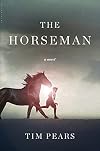
Set in 1911-1912 on the lands of Lord Prideaux in Somerset, Tim Pears’s The Horseman follows the daily rounds of Leopold Sercombe, son of Albert, the estate’s respected carter. For most of the book, the author does not refer to Leo by name; he is simply “the boy”, an almost archetypical figure of pastoral life, keenly observant of the ways of nature and intuitive in his communication with non-human creatures. A reluctant twelve-year-old schoolboy, whose hands feel the teacher’s show more switch more often than any other student, Leo is neither disobedient, nor simple; his interests just lie elsewhere. Peers taunt him for his oddness, for preferring the company of animals, especially horses, over humans. On the days that he does attend school, he daydreams, his attention absorbed by the swallows’ nest-building activities on the other side of the window glass or the sound of an owl scrabbling in the chimney. Afternoons, he inevitably drifts back to his father’s farm, one of six on the estate.
When we first meet Leo, he stands on the sidelines, observing his father, uncle, brothers and cousin as they go about their work in the fields. Increasingly, though, he joins in on the labour. His father, an exacting man, known to whip Leo’s older cousin, Herbert, for ploughing a less-than straight furrow, is surprisingly patient and forbearing with Leo, never berating the boy for his truancy. He recognizes and cultivates his son’s abilities and encourages his uncanny way with horses. Spongelike Leo absorbs his father’s techniques with the animals. No need for questions; he learns by osmosis. Albert would like to see Leo gain a place on the estate’s stud farm or in the master’s stables. His training of the boy causes resentment in others, however. It intensifies the rancour between Albert and his brother, Enoch, the under-carter on the estate, and it angers his nephew, Herbert, who believes he is the rightful recipient of the training.
Pears’s book is arranged in unnumbered chapters named for the months of the year. There may be as many as five chapters in a row about the busiest month—all called “August” and as few as one chapter each for the months of late fall and winter, when there’s less to be done on the farm. Beginning in January, 1911 and continuing into June, 1912, each chapter presents a seasonal activity on the farm or wider estate. In January, 1911, Lord Prideaux’s partridge and pheasant shoot, in which Leo serves as a cartridge boy, is the focus. Subsequent chapters take the reader through manure spreading, turnip sowing, Mrs. Sercombe’s spring cleaning, the birth of a foal, the giddy spring turning out of the horses to pasture, and so on. Leo sees cart wheels being fashioned and horses being shod. He leads horses to and from the mowing, rakes the mown barley fields, and begins to break and train horses. One day while on an errand, he meets the head groom of the estate’s stables. Herb Shattock takes a shine to Leo and sometimes has him assist with the master’s horses.
Throughout the novel, Pears’s writing is unvarnished but fine. North Devon dialect is used, and biblical allusions are frequent. Considerable attention is paid to the workings of such new farm machines as mowers and binders. It is not uncommon for the author to linger over the intricate workings of cogs and rollers. Implements used by the smith, games keeper, and carter are precisely named.
The Horseman sets the reader down in the now-vanished world of rural England of more than a hundred years ago, where the rhythm and pace of working life were slower and dictated by the changing seasons, and where the harshness and physicality of existence were more directly experienced, too. Pears is especially strong at showing the complexity of the relationships between humans and domesticated animals. Unlike most of us, rural people then had daily contact with, even deep attachments to, the animals they would eventually eat. Leo has difficulty with this. It is “a mystery”, his mother says, that cared-for animals should come to such an end, but the Lord decreed it. Still, she adds, Leo is right to ponder this strange and puzzling thing. In a similar vein, Leo’s father confesses he had to make a case to the gaffer (boss) about not being responsible for selling those horses he had watched being born and had personally worked with.
In its attention to the cycle of the seasons and with its rustic characters (not to mention a distressing scene involving a pig that rivals the one in Jude the Obscure), The Horseman recalls the works of Hardy, but it lacks the intricate plotting of the great Victorian novelist. The narrative becomes most lively in the scenes where the master’s motherless, headstrong daughter, Charlotte, appears. Like Leo, “Lottie” was born in the last year of the last century. Spirited, emotional, and an expert horsewoman herself, she is one of the few humans to actually pique his interest. Though only a young girl with a small gun, she performs admirably in the shoot described at the beginning of the book. A little later, she dresses in boy’s clothes and watches Leo from atop a fence as he trains a colt. Lottie and Leo’s attraction to each other is natural, sympathetic, and uncomplicated by talk.
The first two-thirds of Pears’s book move at a very slow pace—with nothing much of consequence happening, but that all changes very suddenly as the novel draws to a close. In the final chapters, quiet, guileless Leo unwittingly provokes unanticipated, dramatic upheaval in the Sercombe family. No doubt the fall-out from this event—the change it brings to Leo’s and his family’s fortunes—is to be explored in the next installment of a planned trilogy.
Some years ago I was captivated by Pears’s debut, In the Place of Fallen Leaves. I later attempted his In a Land of Plenty, but it didn't engage me. A few months ago, though, my hopes were renewed when I learned that with The Horseman Pears would be returning to the pastoral setting of his first novel. As it turns out, this new book still couldn't quite take me back to the place of his first one. I was occasionally frustrated with the slow pace, the lengthy (and sometimes tedious) descriptions of farm work and equipment. However, once I recognized that the book was going to demand an adjustment in reading pace and more mental effort than I’m used to applying to fiction, I came to appreciate the book. It grew on me, and I find myself looking forward to discovering Leo’s fate in Pears’s next book.
I’d recommend The Horseman to patient readers with an interest in rural life and England’s agricultural past. Rating 3.5 (rounded down to 3).
Many thanks to the publisher, Bloomsbury USA, and NetGalley for providing me with a digital text for review. show less
When we first meet Leo, he stands on the sidelines, observing his father, uncle, brothers and cousin as they go about their work in the fields. Increasingly, though, he joins in on the labour. His father, an exacting man, known to whip Leo’s older cousin, Herbert, for ploughing a less-than straight furrow, is surprisingly patient and forbearing with Leo, never berating the boy for his truancy. He recognizes and cultivates his son’s abilities and encourages his uncanny way with horses. Spongelike Leo absorbs his father’s techniques with the animals. No need for questions; he learns by osmosis. Albert would like to see Leo gain a place on the estate’s stud farm or in the master’s stables. His training of the boy causes resentment in others, however. It intensifies the rancour between Albert and his brother, Enoch, the under-carter on the estate, and it angers his nephew, Herbert, who believes he is the rightful recipient of the training.
Pears’s book is arranged in unnumbered chapters named for the months of the year. There may be as many as five chapters in a row about the busiest month—all called “August” and as few as one chapter each for the months of late fall and winter, when there’s less to be done on the farm. Beginning in January, 1911 and continuing into June, 1912, each chapter presents a seasonal activity on the farm or wider estate. In January, 1911, Lord Prideaux’s partridge and pheasant shoot, in which Leo serves as a cartridge boy, is the focus. Subsequent chapters take the reader through manure spreading, turnip sowing, Mrs. Sercombe’s spring cleaning, the birth of a foal, the giddy spring turning out of the horses to pasture, and so on. Leo sees cart wheels being fashioned and horses being shod. He leads horses to and from the mowing, rakes the mown barley fields, and begins to break and train horses. One day while on an errand, he meets the head groom of the estate’s stables. Herb Shattock takes a shine to Leo and sometimes has him assist with the master’s horses.
Throughout the novel, Pears’s writing is unvarnished but fine. North Devon dialect is used, and biblical allusions are frequent. Considerable attention is paid to the workings of such new farm machines as mowers and binders. It is not uncommon for the author to linger over the intricate workings of cogs and rollers. Implements used by the smith, games keeper, and carter are precisely named.
The Horseman sets the reader down in the now-vanished world of rural England of more than a hundred years ago, where the rhythm and pace of working life were slower and dictated by the changing seasons, and where the harshness and physicality of existence were more directly experienced, too. Pears is especially strong at showing the complexity of the relationships between humans and domesticated animals. Unlike most of us, rural people then had daily contact with, even deep attachments to, the animals they would eventually eat. Leo has difficulty with this. It is “a mystery”, his mother says, that cared-for animals should come to such an end, but the Lord decreed it. Still, she adds, Leo is right to ponder this strange and puzzling thing. In a similar vein, Leo’s father confesses he had to make a case to the gaffer (boss) about not being responsible for selling those horses he had watched being born and had personally worked with.
In its attention to the cycle of the seasons and with its rustic characters (not to mention a distressing scene involving a pig that rivals the one in Jude the Obscure), The Horseman recalls the works of Hardy, but it lacks the intricate plotting of the great Victorian novelist. The narrative becomes most lively in the scenes where the master’s motherless, headstrong daughter, Charlotte, appears. Like Leo, “Lottie” was born in the last year of the last century. Spirited, emotional, and an expert horsewoman herself, she is one of the few humans to actually pique his interest. Though only a young girl with a small gun, she performs admirably in the shoot described at the beginning of the book. A little later, she dresses in boy’s clothes and watches Leo from atop a fence as he trains a colt. Lottie and Leo’s attraction to each other is natural, sympathetic, and uncomplicated by talk.
The first two-thirds of Pears’s book move at a very slow pace—with nothing much of consequence happening, but that all changes very suddenly as the novel draws to a close. In the final chapters, quiet, guileless Leo unwittingly provokes unanticipated, dramatic upheaval in the Sercombe family. No doubt the fall-out from this event—the change it brings to Leo’s and his family’s fortunes—is to be explored in the next installment of a planned trilogy.
Some years ago I was captivated by Pears’s debut, In the Place of Fallen Leaves. I later attempted his In a Land of Plenty, but it didn't engage me. A few months ago, though, my hopes were renewed when I learned that with The Horseman Pears would be returning to the pastoral setting of his first novel. As it turns out, this new book still couldn't quite take me back to the place of his first one. I was occasionally frustrated with the slow pace, the lengthy (and sometimes tedious) descriptions of farm work and equipment. However, once I recognized that the book was going to demand an adjustment in reading pace and more mental effort than I’m used to applying to fiction, I came to appreciate the book. It grew on me, and I find myself looking forward to discovering Leo’s fate in Pears’s next book.
I’d recommend The Horseman to patient readers with an interest in rural life and England’s agricultural past. Rating 3.5 (rounded down to 3).
Many thanks to the publisher, Bloomsbury USA, and NetGalley for providing me with a digital text for review. show less
Lists
Awards


You May Also Like


Associated Authors
Statistics
- Works
- 14
- Also by
- 2
- Members
- 1,071
- Popularity
- #24,021
- Rating
- 3.7
- Reviews
- 45
- ISBNs
- 107
- Languages
- 3
- Favorited
- 2