
Rodney Barnes (1)
Author of Killadelphia, Volume 1 : Sins of the Father
For other authors named Rodney Barnes, see the disambiguation page.
About the Author
Image credit: Taken from the author's homepage
Series
Works by Rodney Barnes
STAR WARS: THE MANDALORIAN - SEASON TWO, PART ONE (STAR WARS: THE MANDALORIAN SEASON 2) (2023) 12 copies
Nita Hawes' Nightmare Blog, Volume 1: The Fire Next Time (Nita Hawes Nightmare Blog, 1) (2022) 10 copies
STAR WARS: THE MANDALORIAN - SEASON TWO, PART TWO (STAR WARS: THE MANDALORIAN SEASON 2) (2024) 10 copies
Star Wars: Ahsoka (2024-) #8 (of 8) 5 copies
Star Wars: Ahsoka (2024-) #1 (of 8) 4 copies
Star Wars: Ahsoka (2024-) #2 (of 8) 4 copies
Star Wars: Ahsoka (2024-) #4 (of 8) 4 copies
Star Wars: Ahsoka (2024-) #5 (of 8) 4 copies
Star Wars: Ahsoka (2024-) #7 (of 8) 4 copies
Star Wars: War of the Bounty Hunters - IG-88 (2021) #1 (Star Wars: War Of The Bounty Hunters (2021) One-Shots) (2021) 4 copies
Star Wars: Ahsoka (2024-) #3 (of 8) 3 copies
Batman: Full Moon (2024-) #4 2 copies
Star Wars: Ahsoka (2024-) #6 (of 8) 2 copies
Crownsville #2 1 copy
James Bond: Himeros #1 1 copy
Crownsville #3 1 copy
Crownsville #4 1 copy
Crownsville #5 1 copy
Alice Cooper (2023-) #1 1 copy
Alice Cooper Crossroads 1 copy
Star Wars - Inquisitoren 1 copy
Batman: Full Moon (2024-) #1 1 copy
Falcon Vol. 01: Flight 1 copy
Batman: Full Moon (2024-) #2 1 copy
Batman: Full Moon (2024-) #3 1 copy
Associated Works
Tagged
Common Knowledge
- Birthdate
- 20th century
- Gender
- male
- Education
- Howard University
- Occupations
- screenwriter
- Nationality
- USA
- Birthplace
- Annapolis, Maryland, USA
- Places of residence
- Los Angeles, California, USA
- Associated Place (for map)
- USA
Members
Reviews
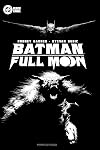
Showed a lot of promise at the beginning, but delivered a really disappointing ending that almost retroactively takes away from the earlier parts of the story that did work well. The last fourth of the book felt heavily rushed, with a number of resolutions to long setups feeling very underwhelming, and brand new ideas and concepts are introduced at the 11th hour only to be immediately resolved. It was almost makes me wonder if the limited series was supposed to be longer than it actually show more ended up being (maybe 6 issues would have done a lot more justice to the ambition of the story). Regardless, the end result is a story that stumbles and falls in execution in almost every step of the way and the only defense it has to offer are that it atleast introduces some concepts that could have hypothetically been interesting to explore had there been proper time to brew.
The characters are almost as bland and unimpressive as the plot, with the only minor exception being Man-bat. Which honestly says a lot about the quality of the writing we are talking about here. The interpretation of Batman here is also that of an unpolished brute that struggles to help himself in most of the circumstances he finds himself in and is often swept up by the tides of fate without much resistance at all, only to be rescued repeatedly by the other side characters. There is a creator interview in which Rodney Barnes states that Batman's arrogance of being in his home turf and his history of success of being able to handle anything that comes his way is the reason for a lot of his undoing in this story. That would be a better excuse if this wasn't an elseworlds story and we had history with this batman. As harsh as it is, as far as I am concerned, that is a lazy excuse for taking a shortcut. I also question the choice of relegating John Constantine to a comic relief quip machine. One of the strongest sorcerers in the universe does absolutely nothing the entire story other than constantly be creepy to Zatana and at the end of the book make a case for werewolf exceptionalism amongst dark creatures.
The only salvageable part of the book is the phenomenal art by Stevan Subic which consistently delivers the gothic tone and additionally a slasher horror vibe that is very reminiscent of the genre. A few panels are so remarkable that I make audible sounds when I encountered them, so that counts for something at the least.
It is fair to say that both the stars I have given is entirely for the art and the tone of the story. If anything the story severely holds back the potential of the artist. show less
The characters are almost as bland and unimpressive as the plot, with the only minor exception being Man-bat. Which honestly says a lot about the quality of the writing we are talking about here. The interpretation of Batman here is also that of an unpolished brute that struggles to help himself in most of the circumstances he finds himself in and is often swept up by the tides of fate without much resistance at all, only to be rescued repeatedly by the other side characters. There is a creator interview in which Rodney Barnes states that Batman's arrogance of being in his home turf and his history of success of being able to handle anything that comes his way is the reason for a lot of his undoing in this story. That would be a better excuse if this wasn't an elseworlds story and we had history with this batman. As harsh as it is, as far as I am concerned, that is a lazy excuse for taking a shortcut. I also question the choice of relegating John Constantine to a comic relief quip machine. One of the strongest sorcerers in the universe does absolutely nothing the entire story other than constantly be creepy to Zatana and at the end of the book make a case for werewolf exceptionalism amongst dark creatures.
The only salvageable part of the book is the phenomenal art by Stevan Subic which consistently delivers the gothic tone and additionally a slasher horror vibe that is very reminiscent of the genre. A few panels are so remarkable that I make audible sounds when I encountered them, so that counts for something at the least.
It is fair to say that both the stars I have given is entirely for the art and the tone of the story. If anything the story severely holds back the potential of the artist. show less
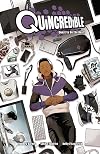
While I’m personally drained from the real-world parallels/social commentary (black communities being underfunded/sabotaged, police brutality, protestors getting whooped as if they’re criminals, unsafe neighborhoods, etc), it works very well here. I feel for Quin. His desire to be accepted and have friends, his frustrations about learning the hero business all by himself, and his questioning his morality/who’s really the bad guy are all so good. Dr. Davis' motivation makes sense too. show more No one is black or white here. maybe the villain was a little cartoony tho
If superheroes really existed, I could see some asking if they would be another form of cops. The unrest from so much systematic stuff just bubbling over…I just really enjoyed reading this.
Also, I love the cast of New Orleans superheroes. Glow, Noble, and so on seem so cool. I would like to read stories from their perspective as well.
4.5 show less
If superheroes really existed, I could see some asking if they would be another form of cops. The unrest from so much systematic stuff just bubbling over…I just really enjoyed reading this.
Also, I love the cast of New Orleans superheroes. Glow, Noble, and so on seem so cool. I would like to read stories from their perspective as well.
4.5 show less
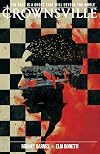
(Full disclosure: I received a free e-ARC for review through Edelweiss. Content warning for racist violence. Caution: vague spoilers ahead!)
Reporter Paul Blair is having the worst week ever. Right after the death of his mother, he finds out that he's getting forced into early retirement by the new editorial head of his paper. Now, after thirty-one years at the Capital Gazette, he's got one month to wrap up any outstanding stories, and work on one last lead. Spoiler alert: it's going to be show more one hell of a headliner.
Paul is tasked with investigating the apparent suicide of a rent-a-cop at the long-abandoned Crownsville Hospital. (Apparently inspired by the Crownsville Hospital Center, known at its inception in 1911 as the Hospital for the Negro Insane of Maryland.) Somewhat serendipitously, the hospital was also the focus of his mother Eloise's deathbed (and later, ghostly haunting) confession. When she worked as a nurse there in the 1970s, Eloise helped the (white) doctors perform unspeakable experiments on children - all black, all kidnapped from the streets of Baltimore. It seems that the horrors that took place within Crownsville's walls have reverberated for generations.
Paul teams up with Michael Simms of the Annapolis PD, whose mother was a psychiatric patient at Crownsville, along with the reluctant Montana Coates, another security officer. What they find defies logic - and humanity.
CROWNSVILLE is right up my alley (haunted asylums? vengeful zombie children? all hung on the excavation of our racist past/present? sign me up.), and I so wanted to love it, but the ending felt very rushed and a little too deus ex machina. The remorseful doctor just didn't hit me as authentic (the Ruskies made me do it!), especially since he was content to leave dozens of undead children buried on the grounds of Crownsville, damned to suffer for all of eternity ... even though he, conveniently, had been sitting on a way of killing them for good the whole damn time. Like, why wait for a mass casualty event, my dude?
I was also confused about the nature of the experiments. At one point, it sounds as though they're creating a virus capable of destroying our enemies' children by altering their DNA; and yet it ultimately results in undead super child soldiers, so idk.
Normally the artwork isn't really my jam, but it actually works quite well with the story, enhancing its grim tone and otherworldly feel. Even though CROWNSVILLE isn't without its flaws, I'm looking forward to the hinted-at sequel. show less
Reporter Paul Blair is having the worst week ever. Right after the death of his mother, he finds out that he's getting forced into early retirement by the new editorial head of his paper. Now, after thirty-one years at the Capital Gazette, he's got one month to wrap up any outstanding stories, and work on one last lead. Spoiler alert: it's going to be show more one hell of a headliner.
Paul is tasked with investigating the apparent suicide of a rent-a-cop at the long-abandoned Crownsville Hospital. (Apparently inspired by the Crownsville Hospital Center, known at its inception in 1911 as the Hospital for the Negro Insane of Maryland.) Somewhat serendipitously, the hospital was also the focus of his mother Eloise's deathbed (and later, ghostly haunting) confession. When she worked as a nurse there in the 1970s, Eloise helped the (white) doctors perform unspeakable experiments on children - all black, all kidnapped from the streets of Baltimore. It seems that the horrors that took place within Crownsville's walls have reverberated for generations.
Paul teams up with Michael Simms of the Annapolis PD, whose mother was a psychiatric patient at Crownsville, along with the reluctant Montana Coates, another security officer. What they find defies logic - and humanity.
CROWNSVILLE is right up my alley (haunted asylums? vengeful zombie children? all hung on the excavation of our racist past/present? sign me up.), and I so wanted to love it, but the ending felt very rushed and a little too deus ex machina. The remorseful doctor just didn't hit me as authentic (the Ruskies made me do it!), especially since he was content to leave dozens of undead children buried on the grounds of Crownsville, damned to suffer for all of eternity ... even though he, conveniently, had been sitting on a way of killing them for good the whole damn time. Like, why wait for a mass casualty event, my dude?
I was also confused about the nature of the experiments. At one point, it sounds as though they're creating a virus capable of destroying our enemies' children by altering their DNA; and yet it ultimately results in undead super child soldiers, so idk.
Normally the artwork isn't really my jam, but it actually works quite well with the story, enhancing its grim tone and otherworldly feel. Even though CROWNSVILLE isn't without its flaws, I'm looking forward to the hinted-at sequel. show less
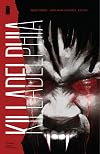
I didn't know what to expect when I started reading Killadelphia, Rodney Barnes and Jason Shawn Alexander's new comic. I had been a fan of Barnes' work on the second season of American Gods so I was eager to take a dive into some of his other work. Killadelphia looked really interesting because I love a good vampire story and it seemed like Barnes had a unique take on the genre - and boy did he ever. Killadelphia might just be the best comic I've read all year. It's this perfect blend of show more absurd-yet-scary horror and gritty, grounded, realistic drama. In many ways, it feels old fashioned and reminiscent of film noir, but in other ways it feels startlingly modern and poignant.
At first glance, Killadelphia might seem like a pretty standard mystery. In the wake of his father's death, Jimmy returns to his hometown and ends up trying to solve one of his father's unsolved cases. Of course, that investigation leads him down a slippery slope that ends in vampires. As often happens in stories of this ilk, Barnes uses this simple setup as a way of easing the reader into the story. He starts us with the story of Jimmy's fractured relationship with his father and we immediately understand why he'd be compelled to continue one of his dad's old cases. And because we understand that, we're invested in Jimmy on a personal level and are completely willing to follow him into these dark and weird corners. It's really effective and it's nice to have moments to get to know the main characters of something like this before you really put them through the ringer. And it's a rare thing to see in most mainstream comics, so I'm really glad Barnes spent the time to establish the world of Killadelphia and ground us in character drama before thrusting us into the supernatural.
But, of course, everything hits the fan pretty quickly and the comic gets really weird really fast - in the best way possible. In my opinion, all of the best vampire stories have something silly about them. I mean there's just something super melodramatic about vampires; they're dark, brooding, and kind of ridiculous yet somehow still scary. Killadelphia definitely adheres to this trend. I mean, the villain is literally John Adams, who had been a vampire for over two-hundred years, and that's a really silly idea. But it also really works. It's interesting seeing how this American founding father got from where he was in the early 1800s to this melodramatic villain trying to take over the world (including some genuinely funny gags at Hamilton - both the person and the musical). Equally interesting is seeing Adams as the leader of a cult trying to change the fabric of America - by basically upholding the status quo and just changing who's in charge. If that's not an indictment of certain aspects of American politics, I don't know what is. And, somehow, Barnes manages to make all of this feel truly frightening. There's a genuine danger being posed by Adams and you can really feel how important it is for him to be defeated. It's a remarkable feat and it's so much fun to read, even if it is a little silly.
However, once you get past the inherent absurdism of seeing a founding father as a vampire, it's easy to pick up on what Barnes is actually doing with this comic. While revolving around vampires, Killadelphia is less a story about them and more a story about humanity's past and its future. The idea of fractured relationships (particularly between parents and their children) is one frequently touched upon. Jimmy and has father have this palpably real relationship. There is love between them but there is also bitterness. It feels real in an almost painful way. It's one of those deeply relatable things that instantly connects you to a story. Some of my favorite scenes were between the two of them, especially towards the latter half of the comic. I'll always wish comics had more time for moments like these, but I'm so glad Barnes found a way to include them as they're honestly the heart and soul of the comic.
Also important is the idea of freedom. What makes a person free? Is it freedom from poverty, freedom from oppression, freedom to live one's own life? Has American ever been free for everyone or are do those in power always try to control those who lack power? All of these questions give Killadelphia a kind of thematic heft that's often missing from other supernatural fare and these ideas are explored thoroughly in these issues, particularly in scenes between Adams and some of the vampires he commands. While I initially came to the comic for the vampires, I stayed for these meaty ideas because it's in these moments that the comic feels grounded and relatable. None of us can relate to what it's like to be a vampire, but all of us can relate to the very real problems Barnes explores throughout the comic. At the end of the day, Killadelphia is this delightful mix of melodramatic horror and gritty character drama and I loved every page of it.
Every good comic is a combination of great writing and great artwork and Killadelphia is no exception. While Barnes' script is already pretty stellar, Alexander's artwork breathes life into Barnes' world. While the script luxuriates in some of the more fantastic elements, the artwork really leans into the gritty reality of the story. Alexander depicts Philadelphia as this dark, gritty city - almost like something out of a film noir. The whole thing just drips with atmosphere. It's a dark comic, visually and thematically, and Alexander does a lot of work with light and shadows - which feels wholly appropriate given the whole vampire thing. Speaking of the vampires, Alexander walks this really interesting line between depicting them as monsters and depicting them as humans. There are some vampires who still have their humanity, and he takes careful steps to ensure that's depicted, but there are other times where he leans into the more traditionally monstrous side of things. Overall, it's a really beautiful comic and Alexander's artwork elevates the script without detracting or distracting from the story being told. It's some good stuff.
All in all, Killadelphia is a compelling read from start to finish. It's a brilliant mixture of tones, combining traditional vampire melodrama with the grittier tones of familial drama. It aims a magnifying glass both at America's history and at its present, examining our flaws and our potential. It's one of those comics that entertains you while also making you think. The artwork is gorgeous and moody and adds a lot of atmosphere to the story without distracting from what's going on. At the end of the day, I cannot recommend Killadelphia enough. It's one of those comics that everyone will be talking about - and rightfully so. Now's the best time to hop on the train, because a new arc is about to start and you'll want to be there for it. show less
At first glance, Killadelphia might seem like a pretty standard mystery. In the wake of his father's death, Jimmy returns to his hometown and ends up trying to solve one of his father's unsolved cases. Of course, that investigation leads him down a slippery slope that ends in vampires. As often happens in stories of this ilk, Barnes uses this simple setup as a way of easing the reader into the story. He starts us with the story of Jimmy's fractured relationship with his father and we immediately understand why he'd be compelled to continue one of his dad's old cases. And because we understand that, we're invested in Jimmy on a personal level and are completely willing to follow him into these dark and weird corners. It's really effective and it's nice to have moments to get to know the main characters of something like this before you really put them through the ringer. And it's a rare thing to see in most mainstream comics, so I'm really glad Barnes spent the time to establish the world of Killadelphia and ground us in character drama before thrusting us into the supernatural.
But, of course, everything hits the fan pretty quickly and the comic gets really weird really fast - in the best way possible. In my opinion, all of the best vampire stories have something silly about them. I mean there's just something super melodramatic about vampires; they're dark, brooding, and kind of ridiculous yet somehow still scary. Killadelphia definitely adheres to this trend. I mean, the villain is literally John Adams, who had been a vampire for over two-hundred years, and that's a really silly idea. But it also really works. It's interesting seeing how this American founding father got from where he was in the early 1800s to this melodramatic villain trying to take over the world (including some genuinely funny gags at Hamilton - both the person and the musical). Equally interesting is seeing Adams as the leader of a cult trying to change the fabric of America - by basically upholding the status quo and just changing who's in charge. If that's not an indictment of certain aspects of American politics, I don't know what is. And, somehow, Barnes manages to make all of this feel truly frightening. There's a genuine danger being posed by Adams and you can really feel how important it is for him to be defeated. It's a remarkable feat and it's so much fun to read, even if it is a little silly.
However, once you get past the inherent absurdism of seeing a founding father as a vampire, it's easy to pick up on what Barnes is actually doing with this comic. While revolving around vampires, Killadelphia is less a story about them and more a story about humanity's past and its future. The idea of fractured relationships (particularly between parents and their children) is one frequently touched upon. Jimmy and has father have this palpably real relationship. There is love between them but there is also bitterness. It feels real in an almost painful way. It's one of those deeply relatable things that instantly connects you to a story. Some of my favorite scenes were between the two of them, especially towards the latter half of the comic. I'll always wish comics had more time for moments like these, but I'm so glad Barnes found a way to include them as they're honestly the heart and soul of the comic.
Also important is the idea of freedom. What makes a person free? Is it freedom from poverty, freedom from oppression, freedom to live one's own life? Has American ever been free for everyone or are do those in power always try to control those who lack power? All of these questions give Killadelphia a kind of thematic heft that's often missing from other supernatural fare and these ideas are explored thoroughly in these issues, particularly in scenes between Adams and some of the vampires he commands. While I initially came to the comic for the vampires, I stayed for these meaty ideas because it's in these moments that the comic feels grounded and relatable. None of us can relate to what it's like to be a vampire, but all of us can relate to the very real problems Barnes explores throughout the comic. At the end of the day, Killadelphia is this delightful mix of melodramatic horror and gritty character drama and I loved every page of it.
Every good comic is a combination of great writing and great artwork and Killadelphia is no exception. While Barnes' script is already pretty stellar, Alexander's artwork breathes life into Barnes' world. While the script luxuriates in some of the more fantastic elements, the artwork really leans into the gritty reality of the story. Alexander depicts Philadelphia as this dark, gritty city - almost like something out of a film noir. The whole thing just drips with atmosphere. It's a dark comic, visually and thematically, and Alexander does a lot of work with light and shadows - which feels wholly appropriate given the whole vampire thing. Speaking of the vampires, Alexander walks this really interesting line between depicting them as monsters and depicting them as humans. There are some vampires who still have their humanity, and he takes careful steps to ensure that's depicted, but there are other times where he leans into the more traditionally monstrous side of things. Overall, it's a really beautiful comic and Alexander's artwork elevates the script without detracting or distracting from the story being told. It's some good stuff.
All in all, Killadelphia is a compelling read from start to finish. It's a brilliant mixture of tones, combining traditional vampire melodrama with the grittier tones of familial drama. It aims a magnifying glass both at America's history and at its present, examining our flaws and our potential. It's one of those comics that entertains you while also making you think. The artwork is gorgeous and moody and adds a lot of atmosphere to the story without distracting from what's going on. At the end of the day, I cannot recommend Killadelphia enough. It's one of those comics that everyone will be talking about - and rightfully so. Now's the best time to hop on the train, because a new arc is about to start and you'll want to be there for it. show less
Lists
To Read 2026 (1)
Awards


You May Also Like


Associated Authors
Statistics
- Works
- 102
- Also by
- 3
- Members
- 688
- Popularity
- #36,763
- Rating
- 3.5
- Reviews
- 33
- ISBNs
- 62
- Languages
- 3
- Favorited
- 1