
Devon Price
Author of Unmasking Autism: Discovering the New Faces of Neurodiversity
About the Author
Image credit: Devon Price
Works by Devon Price
Unmasking for Life: The Autistic Person's Guide to Connecting, Loving, and Living Authentically (2025) 84 copies, 3 reviews
Unlearning Shame: How We Can Reject Self-Blame Culture and Reclaim Our Power (2024) 81 copies, 2 reviews
Against Community 1 copy
Associated Works
Unmasking Autism, How to Break Up with Your Phone, Hyperfocus, One Thing (2022) — Contributor — 1 copy
Tagged
Common Knowledge
- Canonical name
- Price, Devon
- Birthdate
- 20th century
- Gender
- male
- Education
- Ohio State University
Loyola University - Occupations
- Social Psychologist
- Nationality
- USA
- Birthplace
- Middleburg, Ohio, USA
- Map Location
- Ohio, USA
Members
Reviews
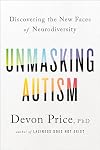
Massively empowering, it reads in parts more like a manifesto or a call to arms for disabled visibility and rights.
I never highlighted anything in a book before but this one has quotable material on almost every page, so it has the honor of receiving my first ever highlights. In 40 years of reading. That's how powerfully it resonated.
I recognized myself in the descriptions of all the damage masking does to autistic people and really enjoyed the punk spirit of the autistic self-advocacy show more movements described. I wanna be a part of that.
I got extremely upset about ABA, an abusive behavioral therapy still often forced on autistic kids to make them appear more neurotypical (while growing to hate themselves inside). The book contains links to first-hand accounts by ABA "technicians", this is stuff everyone needs to know.
I was also shocked by the reports of how dangerous it can be for a black autistic person in the US to unmask. I know this is a US societal problem and not directly related to autism, but damn.
A real rollercoaster but ultimately it left me motivated to change something, stop masking and start engaging with local self-advocacy networks.
No autistic people should go through what we went through, so we need to hack society by being more visible, more politically active and most importantly by fighting to be socially accepted. The book has some ideas on how to do this. Let's rock. show less
I never highlighted anything in a book before but this one has quotable material on almost every page, so it has the honor of receiving my first ever highlights. In 40 years of reading. That's how powerfully it resonated.
I recognized myself in the descriptions of all the damage masking does to autistic people and really enjoyed the punk spirit of the autistic self-advocacy show more movements described. I wanna be a part of that.
I got extremely upset about ABA, an abusive behavioral therapy still often forced on autistic kids to make them appear more neurotypical (while growing to hate themselves inside). The book contains links to first-hand accounts by ABA "technicians", this is stuff everyone needs to know.
I was also shocked by the reports of how dangerous it can be for a black autistic person in the US to unmask. I know this is a US societal problem and not directly related to autism, but damn.
A real rollercoaster but ultimately it left me motivated to change something, stop masking and start engaging with local self-advocacy networks.
No autistic people should go through what we went through, so we need to hack society by being more visible, more politically active and most importantly by fighting to be socially accepted. The book has some ideas on how to do this. Let's rock. show less
Though a neurotypical myself, I’ve made recent efforts towards better understanding a colleague at work who is on the autism spectrum. I did so with the hope of learning to deal with future colleagues who might come from similar perspectives. I work in software development, which is targeted as a potential career path with less interaction with neurotypicals. So I expect more interactions with future co-workers on the spectrum. I’ve read several works on autism, and Devon Price’s book show more surpasses them all with its depth in research and in modern psychological concepts. Anyone seeking to understand someone on the spectrum, whether a friend or themselves, will benefit from Price’s wisdom and knowledge.
Of note, Price considers themselves autistic. Further, they acquired a PhD in psychology to understand how to help fellow autistics with life. Autism’s prevalence seems only to be increasing in America, and common understanding among the rest of us – so-called “neurotypicals” – needs to increase. Price makes a convincing case that expecting those with autism to conform to unnatural modes of living is inhumane and inefficient. They also makes a strong case against applying a medical model of disease alone. The personalities and personhood of neurodiverse people need to be considered more by educators and healthcare workers.
Although this book stands out in excellence, I have two specific criticisms. First, Price’s definition of the autistic condition is highly subjective; they seem to allow almost anyone to identify with it. The inclusion criteria are quite wide, and the exclusion criteria are almost non-existent. While this breadth is helpful in counseling situations, wider life presents many situations, like health insurance or accessing educational services, where some firm labeling is needed. Of course, many situations relating to mental health fall into the same camp; this problem is not unique to autism or Price.
Second, Price’s suggestions to make a world more friendly to neurodiversity seems a bit idealistic and naive. While I agree that Americans tend to overwork in attempts to be productive, the need to work is important to embrace for us all as individuals and society. Particularly because I’m reading this for co-workers, I’d like to hear more specifics about how to work together for the common good. Future writings might need to be done by someone with more distance from individual psychotherapy and more business experience.
Despite these concerns, overall, this book taught me a lot. I haven’t found a better resource yet, period. We all have to unmask from social expectations to some degree, and I learned how I can be less oppressive towards others. I still have plenty more to learn, but I now have a better foundation to work with. While this book is aimed towards those with autism and neurotypicals near those with autism, it deserves an even wider audience. We all need to learn to make the world a better place for neurodiversity. I suspect that books like this will only provide a beginning for a decades-long effort, but it persuades that we’ll improve our common lot through the work. show less
Of note, Price considers themselves autistic. Further, they acquired a PhD in psychology to understand how to help fellow autistics with life. Autism’s prevalence seems only to be increasing in America, and common understanding among the rest of us – so-called “neurotypicals” – needs to increase. Price makes a convincing case that expecting those with autism to conform to unnatural modes of living is inhumane and inefficient. They also makes a strong case against applying a medical model of disease alone. The personalities and personhood of neurodiverse people need to be considered more by educators and healthcare workers.
Although this book stands out in excellence, I have two specific criticisms. First, Price’s definition of the autistic condition is highly subjective; they seem to allow almost anyone to identify with it. The inclusion criteria are quite wide, and the exclusion criteria are almost non-existent. While this breadth is helpful in counseling situations, wider life presents many situations, like health insurance or accessing educational services, where some firm labeling is needed. Of course, many situations relating to mental health fall into the same camp; this problem is not unique to autism or Price.
Second, Price’s suggestions to make a world more friendly to neurodiversity seems a bit idealistic and naive. While I agree that Americans tend to overwork in attempts to be productive, the need to work is important to embrace for us all as individuals and society. Particularly because I’m reading this for co-workers, I’d like to hear more specifics about how to work together for the common good. Future writings might need to be done by someone with more distance from individual psychotherapy and more business experience.
Despite these concerns, overall, this book taught me a lot. I haven’t found a better resource yet, period. We all have to unmask from social expectations to some degree, and I learned how I can be less oppressive towards others. I still have plenty more to learn, but I now have a better foundation to work with. While this book is aimed towards those with autism and neurotypicals near those with autism, it deserves an even wider audience. We all need to learn to make the world a better place for neurodiversity. I suspect that books like this will only provide a beginning for a decades-long effort, but it persuades that we’ll improve our common lot through the work. show less
This book was good as a whole, but definitely only addressed one segment of the autistic experience with masking. As an early diagnosed autistic who's been in the neurodiversity movement for years I kept waiting for Price to address masking not just as something you learn on your own that's imposed by general societal ableism, but when it's trained by the psychiatric and/or “early intervention” systems in a way that seeks to extinguish your behaviors *specifically because* they are seen show more as autistic/“disordered”. The experience is qualitatively different in a lot of ways that just aren't acknowledged. This is something Price mentions briefly in the context of ABA (though I wish there were more actual ABA survivor perspectives in the book) but it's not just ABA, it's at the roots of the carceral special education system and psychiatry and the school to prison pipeline and state disability services like early intervention and so many other things. Most of the strategies for people whose masking is self imposed have never worked for me as a survivor of some of these (and not others; I definitely do have important privileges and some of the exact same blind spots as Price does!) I found a lot of my experience as a (non-Black) autistic of color being unaccounted for too, especially wrt how parents and family relationships reinforce masking. I could say more about this, but I've had trouble with the archetype of the entitled white autism mom who values conformity for conformity's sake, not because I don't think this type of person exists but because of my own experience with a mom who wanted me to conform and put me through a few harmful autism "interventions" (I was lucky enough to avoid some of the worst ones) because of her own experience growing up as a poor Korean adoptee in predominantly white private schools. She came to value conformity because of her own trauma, and didn't want me to experience a compounded form of that alienation by acting visibly autistic AND being Asian. It still wasn't right, but I would have appreciated some degree of acknowledgement that parents of color have different rationales for making their kids suppress autistic traits than the average "white mommy who wants little Timmy to stop flapping.”
I'm very critical of the book but giving it 3 1/2 stars because I think it did have some good insights and conclusions. I guess I'm just uneasy with Price's proposal of unmasking-as-politics for the same reason I'm wary of coming-out-as-politics in queer theory. People mask because they're scared of what will happen when they fail to, and trying not to display the kinds of autistic behaviors that get people in prison and institutions and under guardianship and in sheltered workshops. So yes it is a conditional privilege and a survival strategy, but what about the autistics who don't or can't use it? The people who have always been called non-people and never got a chance to prove they weren't? Isn't that the place where we need liberation the most? Isn’t that who the disability rights movement was built on the backs of? By asking people to unmask you are not just asking them to risk social judgement and become freer, you are asking them to give up a material form of privilege that you can be killed for not having. I don't really believe in the model of... trickle-down liberation? that Price proposes, where those of us who are able to "unmask" doing so leads to those who aren't being freer and safer and alive. and the author acknowledges this in a cursory way but as a Goodreads reviewer mentions, "these might not work if you're Black or poor or mentally ill or intellectually disabled or nonspeaking or..." doesn't work because these are the people who need to be free before the rest of us can. It just feels so individualist even though Price is a cool leftist online and good at taking a systemic approach in some areas.
Some books I liked better about autistic liberation are Loud Hands: Autistic People Speaking (an anthology of historical voices from the politicized side of the neurodiversity movement, from over 10 years ago but still is so good) and Autistic Community and the Neurodiversity Movement (collection of essays from people who've been on the frontlines of things). Also alllll of Mel Baggs' work at ballastexistenz and the tumblr blog withasmoothroundstone, and the Autistic Archive online (its like the queer zine archive project but for autistic history!) show less
I'm very critical of the book but giving it 3 1/2 stars because I think it did have some good insights and conclusions. I guess I'm just uneasy with Price's proposal of unmasking-as-politics for the same reason I'm wary of coming-out-as-politics in queer theory. People mask because they're scared of what will happen when they fail to, and trying not to display the kinds of autistic behaviors that get people in prison and institutions and under guardianship and in sheltered workshops. So yes it is a conditional privilege and a survival strategy, but what about the autistics who don't or can't use it? The people who have always been called non-people and never got a chance to prove they weren't? Isn't that the place where we need liberation the most? Isn’t that who the disability rights movement was built on the backs of? By asking people to unmask you are not just asking them to risk social judgement and become freer, you are asking them to give up a material form of privilege that you can be killed for not having. I don't really believe in the model of... trickle-down liberation? that Price proposes, where those of us who are able to "unmask" doing so leads to those who aren't being freer and safer and alive. and the author acknowledges this in a cursory way but as a Goodreads reviewer mentions, "these might not work if you're Black or poor or mentally ill or intellectually disabled or nonspeaking or..." doesn't work because these are the people who need to be free before the rest of us can. It just feels so individualist even though Price is a cool leftist online and good at taking a systemic approach in some areas.
Some books I liked better about autistic liberation are Loud Hands: Autistic People Speaking (an anthology of historical voices from the politicized side of the neurodiversity movement, from over 10 years ago but still is so good) and Autistic Community and the Neurodiversity Movement (collection of essays from people who've been on the frontlines of things). Also alllll of Mel Baggs' work at ballastexistenz and the tumblr blog withasmoothroundstone, and the Autistic Archive online (its like the queer zine archive project but for autistic history!) show less
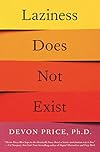
A really interesting book with a provocative title. Devon challenges to look at our own overcommitted, busy lives and stop blaming ourselves for not doing everything we think we ought to be doing, and beating ourselves up if we take time out to rest and recharge. He argues that we will be better employees, better friends and relatives and better citizens if we stop feeling guilty about what we don't do, and instead celebrate what we are able to achieve, and look for the good and the show more beautiful in the world. He also teaches us, instead of rushing to judgment, to practice "compassionate curiosity", looking for the reasons (individual and systemic) that may be behind failures we see in others. He calls us to be humble about our own abilities and free ourselves accept ourselves with our own imperfections. I found this work thought provoking and though the title may overstate the case a little, the content will stay with me for a long time. show less
Lists
Awards


You May Also Like


Associated Authors
Statistics
- Works
- 5
- Also by
- 1
- Members
- 1,744
- Popularity
- #14,746
- Rating
- 4.2
- Reviews
- 46
- ISBNs
- 33
- Languages
- 2
- Favorited
- 2