
Kelley Eskridge
Author of Solitaire
About the Author
Image credit: Photo by Nicola Griffith
Works by Kelley Eskridge
Strings [short fiction] 5 copies
And Salome Danced 3 copies
Alien Jane 2 copies
The Eye Of The Storm 1 copy
Associated Works
Sirens and Other Daemon Lovers: Magical Tales of Love and Seduction (1998) — Contributor — 375 copies, 7 reviews
Sisters of the Revolution: A Feminist Speculative Fiction Anthology (2015) — Contributor — 346 copies, 8 reviews
The Year's Best Fantasy and Horror: Eighth Annual Collection (1995) — Contributor — 331 copies, 6 reviews
Beyond Binary: Genderqueer and Sexually Fluid Speculative Fiction (2012) — Author — 160 copies, 4 reviews
Nebula Awards 31: SFWA's Choices For The Best Science Fiction And Fantasy Of The Year (Nebula Awards Showcase) (1997) — Contributor — 97 copies
Flying Cups and Saucers: Gender Explorations in Science Fiction and Fantasy (1998) — Author — 57 copies, 3 reviews
Women of Other Worlds: Excursions Through Science Fiction and Feminism (1999) — Contributor — 43 copies
Tagged
Common Knowledge
- Birthdate
- 1960-09-21
- Gender
- female
- Education
- Northwestern University
University of South Florida
St Paul's School, Concord, New Hampshire, USA - Occupations
- project manager
novelist
short story writer
essayist - Relationships
- Griffith, Nicola (spouse)
- Nationality
- USA
- Birthplace
- Florida, USA
- Places of residence
- Seattle, Washington, USA
- Associated Place (for map)
- USA
Members
Reviews

Ren Segura is the Hope of Ko; chosen at birth to lead her people into a new era, a representative of the corporation that hopes to become a global power, one of the elite in the new EarthGov.
There's just one problem: Ren's entire life is a lie.
We meet Ren, aka Jackal, on the worst day of her life, when everything she's ever known begins to crumble -- which turns out to be a perfect way to get to know her. Because Jackal is at her magnificent best under pressure, and things are only going to show more get worse.
I don't actually want to get into plot much, because I think the journey is an integral part of the book, with the reader sharing in Jackal's uncertainty and fear. And you will.
I tend to avoid 'adult' sci-fi because the whole 'Other' dynamic gets in the way of connecting with the characters -- I feel like I'm watching them from behind a glass, or through some slightly garbled translation. I know that part of it is due to the alien setting, and Ko is certainly different from today's world -- but there were enough similarities to keep me grounded, especially since Eskridge kept her focus on the human element. I think that is really the key to any good sci-fi: never let the shiny tech get in the way of the human heart of the story (or alien/cyborg heart, whatever). We connect to people, not computers, no matter what channels we're going through, and Jackal's experience makes this wrenchingly clear.
Eskridge's prose complements her story with a light touch, sparse without being sterile, balancing calm with sudden moments of sledgehammer force. And those moments hit hard -- this isn't a horror piece at all, but a few moments felt worse than all the zombies I've been slogging through lately. Possibly because I cared much more.
The worldbuilding is also elegantly done, with a neat trick of introducing how things work in Ko by showing characters' reactions as they start to fall apart. Plus, I'd just finished a management class and I was getting a real kick out of the 'Corporate Culture Eats the World' vibe. I was a bit hazy on the wider world workings but since my focus was on the main characters, I didn't really mind.
And what fascinating, lovely, challenging characters. My adoration goes out mainly to Jackal and Snow, but Scully and terrifying Crichton and loon-bat-gorgeous Estar all deserve good shoutouts (and Jane, oh you are awesome!).
I'm glad that I got this book via Early Reviewers, because I honestly wouldn't have picked it up otherwise. And that would have been a shame.
**Like this review? Find more at the Ravenous Bookshelf http://ravenousbookshelf.blogspot.com/ show less
There's just one problem: Ren's entire life is a lie.
We meet Ren, aka Jackal, on the worst day of her life, when everything she's ever known begins to crumble -- which turns out to be a perfect way to get to know her. Because Jackal is at her magnificent best under pressure, and things are only going to show more get worse.
I don't actually want to get into plot much, because I think the journey is an integral part of the book, with the reader sharing in Jackal's uncertainty and fear. And you will.
I tend to avoid 'adult' sci-fi because the whole 'Other' dynamic gets in the way of connecting with the characters -- I feel like I'm watching them from behind a glass, or through some slightly garbled translation. I know that part of it is due to the alien setting, and Ko is certainly different from today's world -- but there were enough similarities to keep me grounded, especially since Eskridge kept her focus on the human element. I think that is really the key to any good sci-fi: never let the shiny tech get in the way of the human heart of the story (or alien/cyborg heart, whatever). We connect to people, not computers, no matter what channels we're going through, and Jackal's experience makes this wrenchingly clear.
Eskridge's prose complements her story with a light touch, sparse without being sterile, balancing calm with sudden moments of sledgehammer force. And those moments hit hard -- this isn't a horror piece at all, but a few moments felt worse than all the zombies I've been slogging through lately. Possibly because I cared much more.
The worldbuilding is also elegantly done, with a neat trick of introducing how things work in Ko by showing characters' reactions as they start to fall apart. Plus, I'd just finished a management class and I was getting a real kick out of the 'Corporate Culture Eats the World' vibe. I was a bit hazy on the wider world workings but since my focus was on the main characters, I didn't really mind.
And what fascinating, lovely, challenging characters. My adoration goes out mainly to Jackal and Snow, but Scully and terrifying Crichton and loon-bat-gorgeous Estar all deserve good shoutouts (and Jane, oh you are awesome!).
I'm glad that I got this book via Early Reviewers, because I honestly wouldn't have picked it up otherwise. And that would have been a shame.
**Like this review? Find more at the Ravenous Bookshelf http://ravenousbookshelf.blogspot.com/ show less
 This review was written for LibraryThing Early Reviewers.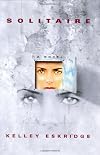
I loved this book. I devoured it.
I didn't think I was going to love the book. The first few pages told the backstory in a vaguely clunky, self-conscious way, and that backstory is quintessential science fiction exceptionalist kitsch. Ko is a corporate entity that functions like a country, there is an Earth Congress, our narrator is a member of a set of special, selected-from-birth people called Hopes.... Sigh. Thankfully the self-consciousness goes away once the main character deliberately show more breaks a friend's nose, and the backstory appropriately fades into the background as the real story gets started. And that story is not at all what I expected. There are multiple turns and jumps at points where I had no reason to expect anything to turn, which are not so much plot twists as the author taking advantage of the opportunity to tell an entire story about isolation and the human spirit and what it means to love and be loved and find oneself. I love that. I also loved how well-developed even the characters who disappear after a few dozen pages are. This book has all the characterization and between-the-lines strengths of a short story at the same time as it has all the plot and depth of a novel.
I love how analytic, cold, and manipulative these characters are, and how there is nothing apologetic in that. The environment deliberately teaches people how to use psychology to their advantage and use it over and over. It's the upper echelons of people management in a high-functioning company, and it's celebrated. It's very INTJ.
The unapologetic analytic mind reminded me a lot of Nicola Griffith's work (which is a comparison I'm hesitant to make just because it is so tempting, being that the two authors are partners). However, it's only been in Eskridge and Griffith's work that I've seen that sort of character -- my sort of character -- fully embraced. In fact there are many similarities between what I've read of each author, down to the serious themes of loneliness and isolation and a Nordic character in the main relationship. The similarities between books leaves me feeling like both authors write their lives. It feels voyeuristic. These characters feel too based in reality, for all that their environments and plots are fictional. These works all seem much more personal -- somehow -- than do the other authors I've worked my way through the ouevres of. It's strange, and it adds a whole different level on which to read the books.
Solitaire is scarily real world. It is tangible and utterly believable in the uncaring, efficient pain in which humans are treated as objects to be used in power plays and experiments. The possibility that the horrific occurrences in the book could be happening even now just make this story all the more disturbing. At the same time, it never gets *too* overbearing and has sufficient brightness to balance. Definitely among the most engaging books I've read in quite a while. show less
I didn't think I was going to love the book. The first few pages told the backstory in a vaguely clunky, self-conscious way, and that backstory is quintessential science fiction exceptionalist kitsch. Ko is a corporate entity that functions like a country, there is an Earth Congress, our narrator is a member of a set of special, selected-from-birth people called Hopes.... Sigh. Thankfully the self-consciousness goes away once the main character deliberately show more breaks a friend's nose, and the backstory appropriately fades into the background as the real story gets started. And that story is not at all what I expected. There are multiple turns and jumps at points where I had no reason to expect anything to turn, which are not so much plot twists as the author taking advantage of the opportunity to tell an entire story about isolation and the human spirit and what it means to love and be loved and find oneself. I love that. I also loved how well-developed even the characters who disappear after a few dozen pages are. This book has all the characterization and between-the-lines strengths of a short story at the same time as it has all the plot and depth of a novel.
I love how analytic, cold, and manipulative these characters are, and how there is nothing apologetic in that. The environment deliberately teaches people how to use psychology to their advantage and use it over and over. It's the upper echelons of people management in a high-functioning company, and it's celebrated. It's very INTJ.
The unapologetic analytic mind reminded me a lot of Nicola Griffith's work (which is a comparison I'm hesitant to make just because it is so tempting, being that the two authors are partners). However, it's only been in Eskridge and Griffith's work that I've seen that sort of character -- my sort of character -- fully embraced. In fact there are many similarities between what I've read of each author, down to the serious themes of loneliness and isolation and a Nordic character in the main relationship. The similarities between books leaves me feeling like both authors write their lives. It feels voyeuristic. These characters feel too based in reality, for all that their environments and plots are fictional. These works all seem much more personal -- somehow -- than do the other authors I've worked my way through the ouevres of. It's strange, and it adds a whole different level on which to read the books.
Solitaire is scarily real world. It is tangible and utterly believable in the uncaring, efficient pain in which humans are treated as objects to be used in power plays and experiments. The possibility that the horrific occurrences in the book could be happening even now just make this story all the more disturbing. At the same time, it never gets *too* overbearing and has sufficient brightness to balance. Definitely among the most engaging books I've read in quite a while. show less
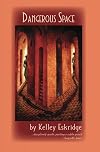
Dangerous Space is a revelation. I had no idea these gorgeous short stories were out there. Put me on the list of people who will now read absolutely everything Kelley Eskridge writes, because if these are characteristic of her work, I want it all.
Eskridge often makes creativity her subject, writing movingly about various forms of art, especially music. The opening story, “Strings,” posits a world in which the classical composers are revered so completely that any deviation from their show more scores, note by note, tempo by tempo, is punishable by loss of employment, and apparently by loss of the right to make music at all. Master musicians are named for their instruments, so that the world’s best violinist is known only as “Stradivarius,” the best pianist as “Steinway.” Being an instrument carries with it great prestige and wealth, but the musician who is cursed with an imagination is condemned to a world in which she can hear her music only in her own head. Improvisation is a crime, and new composition is absolutely unheard of. What will such a person sacrifice in order to be true to herself, to her music? This story gives me goosebumps; Eskridge can explain the process of creating better than anyone I’ve ever read. Try it:
"The music in her exulted and laughed and wept and reached out, farther, farther, until she wondered why everyone in the room did not stop, look, point, dance, run. It poured out sweet and strong through her heart and head and hands into the wood and gut of the violin that was her second voice, and her song was yes and yes and yes in a shout and a whisper and a pure, high cry."
“Eye of the Storm” is about art and creativity, too, but the art is a very different one: the art of war, of defense, of fighting. The way Eskridge writes about it, though, it might as well be dancing – or, more to the point, sex. The narrator, aptly named Mars, begins his tale by stating, “I am a child of war. It’s a poor way to start.” But he must take the world as he finds it, and his world is violent. “No one can escape what they’re born to,” his mother tells him. And so, as he grows, he learns to fight – mostly, at first, by being badly beaten by another boy whom he asks to teach him. Once he has learned, he heads for the city, seeking to fight. He doesn’t know that there are soon to be auditions for the city guard, but he soon learns it from strangers on the road, with whom he forms a quad – the basic fighting group that must audition as such. As Mars learns to fight with his group, he finds that it is as exciting and intimate to him as making love, which leads him to refuse the offers of everyone in his quad for actual sex. Of course they get accepted into the guard, but the story’s only just begun there. How it plays out will not surprise you, precisely – as it plays out, it seems the only way the story could possibly good, the mark of a great storyteller. It’s a lovely fairy tale, told this time not from the point of view of the princess, but through the eyes of the guards.
The piece de resistance in this book is the novella “Dangerous Space.” This gorgeous story about a band and how it makes music – and how sex can screw everything up unless and until it becomes love – is so good that it will stay with you forever. I particularly liked that it is told from the point of view of an extremely skilled “sound guy,” the one who knows how to set the console, the monitors, the mix to make the band sound as good as it should. This might be the story of a band as it becomes famous, but it is really about how “the drummer brought down his sticks, the bass walked in, the guitar wailed an impossible chord, and the singer opened his mouth and took me apart and put me back together again and again and again.” And it’s about how sometimes those who create must be pushed and prodded to do their best work – not to hide from the raw emotion that sits at the base of their art, but to bleed before the world. It’s an amazing work, and it took me apart.
Eskridge published a debut novel some years ago; it is called Solitaire, and is being reissued by Small Beer Press on January 1, 2011. (Small Beer Press is one of those amazing small presses I write about here from time to time; you could do worse than to simply read everything they publish, absolutely including its zine, Lady Churchill’s Rosebud Wristlet.) Eskridge is an editor, mentor and coach for Sterling Editing, which I suspect means she doesn’t devote as much time to her own writing as I, an eager reader of her work, would prefer. I’m looking forward to reading Solitaire, and I’m looking forward to rereading Dangerous Space. It’s that good. show less
Eskridge often makes creativity her subject, writing movingly about various forms of art, especially music. The opening story, “Strings,” posits a world in which the classical composers are revered so completely that any deviation from their show more scores, note by note, tempo by tempo, is punishable by loss of employment, and apparently by loss of the right to make music at all. Master musicians are named for their instruments, so that the world’s best violinist is known only as “Stradivarius,” the best pianist as “Steinway.” Being an instrument carries with it great prestige and wealth, but the musician who is cursed with an imagination is condemned to a world in which she can hear her music only in her own head. Improvisation is a crime, and new composition is absolutely unheard of. What will such a person sacrifice in order to be true to herself, to her music? This story gives me goosebumps; Eskridge can explain the process of creating better than anyone I’ve ever read. Try it:
"The music in her exulted and laughed and wept and reached out, farther, farther, until she wondered why everyone in the room did not stop, look, point, dance, run. It poured out sweet and strong through her heart and head and hands into the wood and gut of the violin that was her second voice, and her song was yes and yes and yes in a shout and a whisper and a pure, high cry."
“Eye of the Storm” is about art and creativity, too, but the art is a very different one: the art of war, of defense, of fighting. The way Eskridge writes about it, though, it might as well be dancing – or, more to the point, sex. The narrator, aptly named Mars, begins his tale by stating, “I am a child of war. It’s a poor way to start.” But he must take the world as he finds it, and his world is violent. “No one can escape what they’re born to,” his mother tells him. And so, as he grows, he learns to fight – mostly, at first, by being badly beaten by another boy whom he asks to teach him. Once he has learned, he heads for the city, seeking to fight. He doesn’t know that there are soon to be auditions for the city guard, but he soon learns it from strangers on the road, with whom he forms a quad – the basic fighting group that must audition as such. As Mars learns to fight with his group, he finds that it is as exciting and intimate to him as making love, which leads him to refuse the offers of everyone in his quad for actual sex. Of course they get accepted into the guard, but the story’s only just begun there. How it plays out will not surprise you, precisely – as it plays out, it seems the only way the story could possibly good, the mark of a great storyteller. It’s a lovely fairy tale, told this time not from the point of view of the princess, but through the eyes of the guards.
The piece de resistance in this book is the novella “Dangerous Space.” This gorgeous story about a band and how it makes music – and how sex can screw everything up unless and until it becomes love – is so good that it will stay with you forever. I particularly liked that it is told from the point of view of an extremely skilled “sound guy,” the one who knows how to set the console, the monitors, the mix to make the band sound as good as it should. This might be the story of a band as it becomes famous, but it is really about how “the drummer brought down his sticks, the bass walked in, the guitar wailed an impossible chord, and the singer opened his mouth and took me apart and put me back together again and again and again.” And it’s about how sometimes those who create must be pushed and prodded to do their best work – not to hide from the raw emotion that sits at the base of their art, but to bleed before the world. It’s an amazing work, and it took me apart.
Eskridge published a debut novel some years ago; it is called Solitaire, and is being reissued by Small Beer Press on January 1, 2011. (Small Beer Press is one of those amazing small presses I write about here from time to time; you could do worse than to simply read everything they publish, absolutely including its zine, Lady Churchill’s Rosebud Wristlet.) Eskridge is an editor, mentor and coach for Sterling Editing, which I suspect means she doesn’t devote as much time to her own writing as I, an eager reader of her work, would prefer. I’m looking forward to reading Solitaire, and I’m looking forward to rereading Dangerous Space. It’s that good. show less
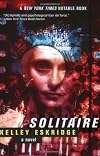
I picked up this book in a bargain bin because it looked interesting. Beginning to read it, I thought, "wow, stylistically, this book reminds me A LOT of Nicola Griffith" (an author I particularly like). Next time I picked it up, I noticed the dedication: "to Nicola, my sunshine." I looked it up and yep, Kelley Eskridge is Nicola Griffith's partner; they met at a Clarion workshop. Whether or not proximity has influence on style, this is an amazing book.
Ren Segura, a young woman who calls show more herself Jackal, has had a privileged life. Born at just the right second, in one of the world's largest corporations, she has been designated a 'Hope' - a celebrity, and an example of what is to be a brilliant new era for the world. It's a good life - but a lot to live up to - especially when her jealous mother reveals that her claim to fame is a sham - she wasn't really born at exactly that time. Under a lot of emotional stress, Jackal is then, unluckily, involved in a horrible accident, and comes under media suspicion of actually being a violent terrorist. Convinced by her corporation to plead guilty, her fall is complete - and she is pressured to sign up for a new sort of criminal punishment. Rather than spending 40 years in jail, she will serve out her sentence in an electronically induced state which makes her feel like she is spending time in solitary confinement - allowing her to go free only a short time later - but wiith unknown psychological consequences.
Great characters, interesting situations and a satisfying conclusion... I'm putting this down as one of the best of this year. show less
Ren Segura, a young woman who calls show more herself Jackal, has had a privileged life. Born at just the right second, in one of the world's largest corporations, she has been designated a 'Hope' - a celebrity, and an example of what is to be a brilliant new era for the world. It's a good life - but a lot to live up to - especially when her jealous mother reveals that her claim to fame is a sham - she wasn't really born at exactly that time. Under a lot of emotional stress, Jackal is then, unluckily, involved in a horrible accident, and comes under media suspicion of actually being a violent terrorist. Convinced by her corporation to plead guilty, her fall is complete - and she is pressured to sign up for a new sort of criminal punishment. Rather than spending 40 years in jail, she will serve out her sentence in an electronically induced state which makes her feel like she is spending time in solitary confinement - allowing her to go free only a short time later - but wiith unknown psychological consequences.
Great characters, interesting situations and a satisfying conclusion... I'm putting this down as one of the best of this year. show less
Lists
5 Best 5 Years (1)
Best Dystopias (1)
Awards


You May Also Like


Associated Authors
Statistics
- Works
- 7
- Also by
- 13
- Members
- 559
- Popularity
- #44,692
- Rating
- 3.8
- Reviews
- 33
- ISBNs
- 8
- Favorited
- 2
