

Michael Stuart Newton
Author of Savage Girls and Wild Boys: A History of Feral Children
About the Author
Works by Michael Stuart Newton
The Penguin Book of Ghost Stories: From Elizabeth Gaskell to Ambrose Bierce (2010) — Editor; Introduction — 186 copies, 4 reviews
Associated Works
Tagged
Common Knowledge
- Legal name
- Newton, Michael Stuart
- Other names
- Newton, Michael
- Birthdate
- 1965-12-31
- Gender
- male
- Occupations
- professor
author
editor - Organizations
- professor, University College London
professor, Central Saint Martins College of Art and Design
Members
Reviews
The Penguin Book of Ghost Stories: From Elizabeth Gaskell to Ambrose Bierce (Penguin Classics) by Michael Newton
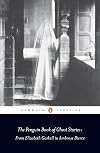
I bought this book a little while ago – fully intending to read it during Halloween week. I’m not especially fond of Halloween, although I don’t actually dislike it; I just thought it might be fun. As an aside, although I never read horror – or anything too dark, – I don’t find ghost stories scary – as I don’t believe in ghosts –I find much of what goes on in the real world to be far more frightening. I do however find that these kind of old fashioned ghost stories to be show more strangely cosy and absolutely perfect for reading on dark chilly evenings in late Autumn. I do imagine though, that these stories wouldn’t be regarded as particularly frightening by most people anyway. I suspect we are all just a little more sophisticated, far more cynical and dismissive of things we can’t explain, than the readers who these stories were originally written for.
This collection is a real joy – a veritable who’s who of nineteenth century authors on both sides of the Atlantic, including Elizabeth Gaskell, Charles Dickens, Harriet Beecher Stowe, Rudyard Kipling, Sheridan Le Fanu and Edith Wharton - among others. Nineteen stories by some fabulous writers – what’s not to like? Well of course – as with any collection of short stories there are some which I enjoyed more than others. Thrawn Janet by Robert Louis Stevenson was one I struggled with as it’s written in - what I found to be - very difficult Scottish dialect. I also found the story by Henry James pretty hard going and I skipped some of it I’m afraid. All the other stories though are wonderfully readable, and I thoroughly enjoyed them.
“There could be no doubt, however, of the fact, for the lamps grew larger and brighter every moment, and I even fancied I could already see the dark outline of the carriage between them. It was coming up very fast, and quite noiselessly; the snow being nearly a foot deep under the wheels.
And now the body of the vehicle became distinctly visible behind the lamps. It looked strangely lofty. A sudden suspicion flashed upon me. Was it possible that I had passed the crossroads in the dark without observing the sign-post, and could this be the very coach which I had come to meet?”
(from The North Mail by Amelia B Edwards)
As I think I have said before I do find it difficult to review short story collections – which ones do I talk about? I generally come down on the side of talking about some I liked most. The first story – The Nurse’s Tale by Elizabeth Gaskell is one I have read before – and I love it – it’s marvellously atmospheric. An ageing children’s nurse recounts the story of a ghost child in the house where she and her young charge went to live following the death of the child’s parents. A perfect opening to this collection it is the story of cold wintery weather, footprints in the snow and windswept fens, eerie organ music and ghostly apparitions. The Cold Embrace by Mary Elizabeth Braddon – the author of Lady Audley’s secret which I read recently, concerns the aftermath of a tragic death. A feckless young man betroths himself to a young woman, who pledges that even in death she will love him. When the young man throws her over, the broken hearted young girl is driven to desperate measures. Margaret Oliphant’s The Open Door – is one of the slightly longer stories – and was also one of my favourites. A former Colonel’s beloved young son appears to become terribly ill, is very distressed and told by the doctor to stay in bed. The boy is claiming to have heard strange moaning noises coming from some local ruins. The boy’s father promises his son to discover what it all means, and with the help of his butler and his thoroughly unconvinced doctor friend, he does just that. The Monkey’s Paw by W. W Jacobs will be one story I don’t think I will easily forget. It’s a wonderfully chilling twist on the old three wishes type fairy-tale. Afterward the final story in this collection is by the brilliant Edith Wharton, a chilling story of a woman and her businessman husband who now living in England move into a house they are told is haunted but that they would never know it – at least not till long “afterward.”
I am glad I finished this collection just in time to post this review late on a Halloween night – it does seem appropriate. I would certainly recommend this collection to those who enjoy these kinds of old fashioned chillers, they are perfect winter evening reading. show less
This collection is a real joy – a veritable who’s who of nineteenth century authors on both sides of the Atlantic, including Elizabeth Gaskell, Charles Dickens, Harriet Beecher Stowe, Rudyard Kipling, Sheridan Le Fanu and Edith Wharton - among others. Nineteen stories by some fabulous writers – what’s not to like? Well of course – as with any collection of short stories there are some which I enjoyed more than others. Thrawn Janet by Robert Louis Stevenson was one I struggled with as it’s written in - what I found to be - very difficult Scottish dialect. I also found the story by Henry James pretty hard going and I skipped some of it I’m afraid. All the other stories though are wonderfully readable, and I thoroughly enjoyed them.
“There could be no doubt, however, of the fact, for the lamps grew larger and brighter every moment, and I even fancied I could already see the dark outline of the carriage between them. It was coming up very fast, and quite noiselessly; the snow being nearly a foot deep under the wheels.
And now the body of the vehicle became distinctly visible behind the lamps. It looked strangely lofty. A sudden suspicion flashed upon me. Was it possible that I had passed the crossroads in the dark without observing the sign-post, and could this be the very coach which I had come to meet?”
(from The North Mail by Amelia B Edwards)
As I think I have said before I do find it difficult to review short story collections – which ones do I talk about? I generally come down on the side of talking about some I liked most. The first story – The Nurse’s Tale by Elizabeth Gaskell is one I have read before – and I love it – it’s marvellously atmospheric. An ageing children’s nurse recounts the story of a ghost child in the house where she and her young charge went to live following the death of the child’s parents. A perfect opening to this collection it is the story of cold wintery weather, footprints in the snow and windswept fens, eerie organ music and ghostly apparitions. The Cold Embrace by Mary Elizabeth Braddon – the author of Lady Audley’s secret which I read recently, concerns the aftermath of a tragic death. A feckless young man betroths himself to a young woman, who pledges that even in death she will love him. When the young man throws her over, the broken hearted young girl is driven to desperate measures. Margaret Oliphant’s The Open Door – is one of the slightly longer stories – and was also one of my favourites. A former Colonel’s beloved young son appears to become terribly ill, is very distressed and told by the doctor to stay in bed. The boy is claiming to have heard strange moaning noises coming from some local ruins. The boy’s father promises his son to discover what it all means, and with the help of his butler and his thoroughly unconvinced doctor friend, he does just that. The Monkey’s Paw by W. W Jacobs will be one story I don’t think I will easily forget. It’s a wonderfully chilling twist on the old three wishes type fairy-tale. Afterward the final story in this collection is by the brilliant Edith Wharton, a chilling story of a woman and her businessman husband who now living in England move into a house they are told is haunted but that they would never know it – at least not till long “afterward.”
I am glad I finished this collection just in time to post this review late on a Halloween night – it does seem appropriate. I would certainly recommend this collection to those who enjoy these kinds of old fashioned chillers, they are perfect winter evening reading. show less
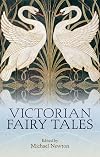
*Introduction
*Note on the Texts
*Select Bibliography
*A Chronology of the Victorian Fairy Tale
I don't usually comment on introductions at any length, but the 'introduction' here is actually one of the best essays on 'fairy tales' that I've read, and definitely the best that specifically addresses this era's iterations of these stories. Intelligent and detailed, well-researched and footnoted, the essay treats its topic with respect and affection, while still critically examining the time period show more and how these tales were regarded by various elements of their potential audience.
PROLOGUE: (The editor starts with two pre-Victorian tales, to give the reader a 'taste' of the kind of stories that were influencing Victorian authors.)
*Grimm, 'Rumpel-Stilts-Kin'
Interesting: "In the 1812 edition of the Brothers Grimm tales, Rumpelstiltskin then "ran away angrily, and never came back". The ending was revised in a final 1857 edition to a more gruesome ending wherein Rumpelstiltskin "in his rage drove his right foot so far into the ground that it sank in up to his waist; then in a passion he seized the left foot with both hands and tore himself in two".
The 1812 version is featured here - the later one is the one I grew up with. It's funny that we often think of these stories as only having been made more 'mild' over time, but this one was revised toward the bloodier ending!
*Hans Christian Andersen, 'The Princess and the Peas'
The version included here appears to be the first English translation of this work.
"Charles Boner was the first to translate "The Princess and the Pea" into English, working from a German translation that had increased Andersen's lone pea to a trio of peas in an attempt to make the story more credible... Boner's translation was published as "The Princess on the Peas" in A Danish Story-Book in 1846. Boner has been accused of missing the satire of the tale by ending with the rhetorical question, "Now was not that a lady of exquisite feeling?" rather than Andersen's joke of the pea being placed in the Royal Museum."
*ROBERT SOUTHEY, 'The Story of the Three Bears'
This morning, thinking about this story, I asked the most convenient person in my home: "What happened to Goldilocks?" The answer, "Uh, she got eaten by bears?" So I thought, as well!
Southey's version of this nursery tale was published in 1837 (the first written version of the story; whether the idea originated with Southey is debated.) There's no adorable blond child here at all. The home invader who samples porridge and sits in chairs is, instead, a foul-tempered old homeless woman. However, the plot, language and phrasing will be very familiar to those who've read any of a number of versions.
And... no one gets eaten by a bear. The vagrant jumps out a window to escape. Which, to my way of thinking, kind of misses the point of the three bears being 'bears.'
*JOHN RUSKIN, 'The King of the Golden River'
This is the only work of fiction that the prolific and multi-talented Ruskin wrote. However, it manages to encapsulate a great many of the ideals that we think of today, when we think of Ruskin. It has the emphasis on 'Christian' mercy and charity, generosity over greed, and, to an almost distracting degree, the love of the beauties of nature. Indeed, the main 'message' of the tale is that natural bounty is what should be valued more than gold.
The piece wraps its morals in the tale of a young boy and his two cruel and greedy brothers. When a generous act leads to the youngest brother being granted the secret of 'how to turn a river to gold,' he confides in his siblings - but their lack of charity leads to their demise; leaving the reward for the sorely put-upon but unfailingly upstanding hero.
*WILLIAM MAKEPEACE THACKERAY, 'The Rose and the Ring'
According to the author's introduction, this was intended to be put on as a dramatic presentation, or pantomime, at Christmastime, for children.
It was indeed published at Christmas (1854), but I'm not at all convinced that the main intended audience was children. This is, technically, a fairy tale, but it's mainly a political and social satire, caricaturing the events and personalities of the day. I'm quite certain that quite a lot of the humor flew past me, but it seems that it was quite timely.
The titular rose and ring are magical objects that makes the bearer seem irresistibly beautiful to those around them. They originate with the Fairy Blackstick, who is quite unpopular after wishing some infants 'misfortune' at their christenings, rather than magical blessings. However, sometimes a bit of misfortune is good for the character.
The plot is a rather slapstick romantic comedy, with quite a lot of lampooning of the upper crust. It's entertaining - but was probably even funnier 150 years ago.
*GEORGE MACDONALD, 'The Golden Key'
A re-read... 'When I was a child. I read MacDonald's ‘The Princess and the Goblin’ and ‘The Light Princess’ dozens of times, and loved them. I know I also read ‘At the Back of the North Wind’ and didn’t care for it as much. I’m not at all sure I would’ve loved this when I was little, but I loved it now. It does feature the same Grandmother/Lady seen in ‘The Princess and the Goblin,’ with her magical baths. She has got to be one of my favorite characters in fiction, and even a brief appearance is wonderful. Plus, air-fish! I loved the air fish! (After having an Oscar in a tank for some years, I used to dream about fish ‘swimming’ around my room, through the air.)
Plot-wise, this is sort of a cross between a religious allegory and Plato’s ‘parable of the cave.’ Two innocents, one of whom finds a golden key at the end of the rainbow, go on a quest to find the ‘land from whence the (sublimely beautiful) shadows come.’
The story is odd and allusive, rather than didactic, and quite lovely.'
*DINAH MULOCK CRAIK, 'The Little Lame Prince and His Travelling Cloak'
I would've liked this better if the narrative voice was a little less intrusive. The narrator/author tells us that this originated as an oral bedtime story for her daughter, and the style very much reflects that. It actually reminded me quite a lot of the episodic tales that my mother told me as a very small child. That made be feel warmly toward the story in general, but as an adult, I still found it a bit... hmm, not quite condescending, but perhaps a bit too... instructive?
The prince of the story is orphaned in infancy, and worse, partially paralyzed due to an accident. His uncle seizes his rightful throne, and has the boy imprisoned in a remote tower, with only a criminal nursemaid for company. But what no one knows about is the boy's (fairy?) godmother, who gifts him with a magic traveling cloak and some words of wisdom.
His cloak (a symbol for the power of imagination?) allows him to learn about the world, to such a degree that when the time comes for him to claim his rightful place as a just ruler, he is able to rise to the occasion...
* MARY DE MORGAN, 'The Wanderings of Arasmon'
A tragic tale with a very pre-Raphaelite sensibility. de Morgan was a family friend of (and told her fairy tales to the children of) both William Morris and the Burne-Joneses. The story includes two exceedingly beautiful illustrations by the renowned fairy-tale illustrator Walter Crane. These two remind me much more of Burne-Jones' work than most of Crane's designs.
A devoted couple, Arasmon and Chrysea, are travelling musicians. When they encounter a village under a debilitating curse, Chrysea takes it upon herself to break the cruel magic. She succeeds, but is transformed into a harp by vengeful elves. Unknowing, Arasmon finds the harp - but his wife is gone. Heartbroken, he travels the world searching for her, unaware that she is in his grasp the whole time...
The ending is a little bit annoying and sentimentalI'm just not much for the whole dying of grief thing , but does have the feel of an authentic romantic myth.
After reading this one, I'm picking up de Morgan's collected stories.
* JULIANA HORATIA EWING, 'The First Wife's Wedding Ring'
A short tale with a very traditional feel to it. An older son goes off to seek his fortune after his mother dies. His father gives him the wedding ring as a token of his identity, and a confirmation that he is indeed, his son and heir. Unfortunately, on his way home after years of wandering, the ring is lost. His father's new wife demands that he produce the ring or be disinherited.
A quest to retrieve the ring ensues, involving a threatening giant. However, the quest's resolution is unsatisfyingly quick and easy; making the rewards heaped upon the young man seem almost undeserved.
* OSCAR WILDE, 'The Selfish Giant'
Oscar Wilde! Oscar Wilde is awesome, right? Not to mention decadent, unconventional...?
Well, you wouldn't guess it from this tale.
This is a saccharine, moralizing story with a bit of a priggish attitude. The Christian allegory could not be more blatant if this were a retelling of a Bible verse.
A selfish giant doesn't allow any of the children to play in his garden. Because of his attitude, the garden becomes a bleak place where spring never blooms. But he eventually learns to mend his ways, and reaps the rewards...
*ANDREW LANG, 'Prince Prigio'
Like generations of other children, I grew up loving Andrew Lang's 'Fairy Books.' However, I don't think I ever had the opportunity to read 'Prince Prigio.' It's too bad; I think that not only would I have enjoyed it, I might've learned some valuable life tips from it. Howeer there are some bits that might've flown right over my head at that time.
The story is humorous, clever and satirical... but not to such a degree that it detracts from the pure enjoyability of the story.
Prince Prigio is an oldest son who was gifted by the fairies with a number of magical gifts at his christening - not least the gift of being 'too clever.' However, Prigio takes after his pragmatic and scientific-minded mother, and doesn't believe in fairies - or anything magical at all. Therefore, when his father insists that he go on a quest to defeat the notorious fabulous beast, the Firedrake - he doesn't take the request seriously at all. After all, the beast doesn't exist!
However, the way events play out may requires that several characters rethink their basic outlooks...
*FORD MADOX FORD, 'The Queen Who Flew'
A young and painfully innocent Queen spends her days in her garden, talking to her only 'friend' - a crotchety old bat (literally). When she gets the bat to tell her a magical secret that allows her to fly, she ventures out into the world and encounters some unexpected truths, in the process of having a series of fanciful adventures.
Clever and imaginative, with the feeling of a great bedtime story. And the bat! I ADORED the bat!
*LAURENCE HOUSMAN, 'The Story of the Herons'
I'm pretty sure I read this one as a child... elements of Swan Maiden and selkie stories mesh. The ol' Fairy Christening Curse means that this princess is doomed to love the first living thing she sees. Her family goes to lengths to protect her until a suitable prince can be found - but the malevolent fairy's intervention dooms her to fall passionately in love with a heron. Out of a bittersweet and difficult situation, eventually a family manages to achieve a kind of happy ending.
*KENNETH GRAHAME, 'The Reluctant Dragon'
A re-read. 'Of course, I had 'The Wind in the Willows' as a child. I truly wish I'd had this story as well. It's less well known - but I'm not sure why.
This is a truly wonderful story-within-a-story: two children, fancying that the snow tracks they've followed from their yard are those of a dragon, encounter a kindly neighbor, who tells them a story - of course, about a boy who meets a literarily-inclined, and unusually good-tempered dragon.
Whimsical, warm and clever. '
*E. NESBIT, 'Melisande'
Another one that I'd read as a child.
The Fairy Christening Curse strikes again! This princess' family tried to avoid it by inviting NO fairies to the party, in the hopes that if no one was invited, no one could get offended. Well, that didn't work, and their darling daughter ends up cursed with baldness!
Perhaps she should've left well enough alone... because when she's later gifted a wish to cure herself, a poorly-worded requests causes her to end up with more hair than the kingdom can handle. When a well-meaning prince tries to help, the kingdom ends up with more princess than it can handle!
RUDYARD KIPLING, 'Dymchurch Flit'
The story related here is a narrative about how the fairies departed England. However, for me at least, the plot was nearly lost. The main goal of the story really seems to be to conjure up the speech and attitudes of a particular type of rural Briton, and the associated superstitions. Heavy dialect, and a number of expressions that you're probably going to need the footnotes to understand.
APPENDIX: What is a Fairy Tale?'
John Ruskin, 'Introduction' to German Popular Tales
Well, this is a bit insufferable. Apparently, Ruskin felt the need to show off his ability to write in a 'literary' style as opposed to the simpler style he says he feels more appropriate for fairy stories. The result feels both pretentious and sententious.
Juliana Horatia Ewing, 'Preface' to Old-Fashioned Fairy Tales
Feels quite defensive, as if Ms. Ewing has been repeatedly attacked on the topic of the value of fairy tales.
George MacDonald, 'The Fantastic Imagination'
Oh, this is a beautiful essay. I'd recommend this to any and every artist of any sort, but especially any writers of the fantastic. I wouldn't say I agree with every single point made here, but with most of them.
"The best thing you can do for your fellow... is not to give him things to think about, but to wake things up that are in him; or say, to make him think things for himself."
Laurence Housman, 'Introduction' to Gammer Grethel's Fairy Tales
A nice concluding essay. "The true end and object of a fairy tale... is in the expression of the joy of living. There begins and ends the morality."
The book also includes some illuminating and explanatory notes on the stories, the context of their original publication and history, as well as footnotes for more obscure phrases. Nicely done.
Five stars, for not only the presentation of some lovely and entertaining stories, but for a book that the reader will really come aways with a greater understanding of these tales and their historical and social context.
____
NOTE - Goodreads has conflated the editor of this book with a very different author of the same name. Here is the bio of THIS Michael Newton (from Oxford University Press):
Michael Newton, Senior Lecturer, Department of English, University of Leiden
Michael Newton has taught at University College London, Princeton University, and Central Saint Martin's College of Art and Design, and now works at Leiden University. He is the author of Savage Girls and Wild Boys: A History of Feral Children (Faber, 2002), Age of Assassins: A History of Conspiracy and Poltical Violence, 1865-1981 (Faber, 2012) and a book on Kind Hearts and Coronets for the BFI Film Classics series. He has edited Edmund Gosse's Father and Son for Oxford World's Classics, and The Penguin Book of Ghost Stories and Conrad's The Secret Agent for Penguin. He has written and reviewed for the Times Literary Supplement, London Review of Books, the New Statesman, and The Guardian.
____
Many thanks to Oxford University Press and Netgalley for the opportunity to preview a copy of this book. As always, my opinions are solely my own. show less
*Note on the Texts
*Select Bibliography
*A Chronology of the Victorian Fairy Tale
I don't usually comment on introductions at any length, but the 'introduction' here is actually one of the best essays on 'fairy tales' that I've read, and definitely the best that specifically addresses this era's iterations of these stories. Intelligent and detailed, well-researched and footnoted, the essay treats its topic with respect and affection, while still critically examining the time period show more and how these tales were regarded by various elements of their potential audience.
PROLOGUE: (The editor starts with two pre-Victorian tales, to give the reader a 'taste' of the kind of stories that were influencing Victorian authors.)
*Grimm, 'Rumpel-Stilts-Kin'
Interesting: "In the 1812 edition of the Brothers Grimm tales, Rumpelstiltskin then "ran away angrily, and never came back". The ending was revised in a final 1857 edition to a more gruesome ending wherein Rumpelstiltskin "in his rage drove his right foot so far into the ground that it sank in up to his waist; then in a passion he seized the left foot with both hands and tore himself in two".
The 1812 version is featured here - the later one is the one I grew up with. It's funny that we often think of these stories as only having been made more 'mild' over time, but this one was revised toward the bloodier ending!
*Hans Christian Andersen, 'The Princess and the Peas'
The version included here appears to be the first English translation of this work.
"Charles Boner was the first to translate "The Princess and the Pea" into English, working from a German translation that had increased Andersen's lone pea to a trio of peas in an attempt to make the story more credible... Boner's translation was published as "The Princess on the Peas" in A Danish Story-Book in 1846. Boner has been accused of missing the satire of the tale by ending with the rhetorical question, "Now was not that a lady of exquisite feeling?" rather than Andersen's joke of the pea being placed in the Royal Museum."
*ROBERT SOUTHEY, 'The Story of the Three Bears'
This morning, thinking about this story, I asked the most convenient person in my home: "What happened to Goldilocks?" The answer, "Uh, she got eaten by bears?" So I thought, as well!
Southey's version of this nursery tale was published in 1837 (the first written version of the story; whether the idea originated with Southey is debated.) There's no adorable blond child here at all. The home invader who samples porridge and sits in chairs is, instead, a foul-tempered old homeless woman. However, the plot, language and phrasing will be very familiar to those who've read any of a number of versions.
And... no one gets eaten by a bear. The vagrant jumps out a window to escape. Which, to my way of thinking, kind of misses the point of the three bears being 'bears.'
*JOHN RUSKIN, 'The King of the Golden River'
This is the only work of fiction that the prolific and multi-talented Ruskin wrote. However, it manages to encapsulate a great many of the ideals that we think of today, when we think of Ruskin. It has the emphasis on 'Christian' mercy and charity, generosity over greed, and, to an almost distracting degree, the love of the beauties of nature. Indeed, the main 'message' of the tale is that natural bounty is what should be valued more than gold.
The piece wraps its morals in the tale of a young boy and his two cruel and greedy brothers. When a generous act leads to the youngest brother being granted the secret of 'how to turn a river to gold,' he confides in his siblings - but their lack of charity leads to their demise; leaving the reward for the sorely put-upon but unfailingly upstanding hero.
*WILLIAM MAKEPEACE THACKERAY, 'The Rose and the Ring'
According to the author's introduction, this was intended to be put on as a dramatic presentation, or pantomime, at Christmastime, for children.
It was indeed published at Christmas (1854), but I'm not at all convinced that the main intended audience was children. This is, technically, a fairy tale, but it's mainly a political and social satire, caricaturing the events and personalities of the day. I'm quite certain that quite a lot of the humor flew past me, but it seems that it was quite timely.
The titular rose and ring are magical objects that makes the bearer seem irresistibly beautiful to those around them. They originate with the Fairy Blackstick, who is quite unpopular after wishing some infants 'misfortune' at their christenings, rather than magical blessings. However, sometimes a bit of misfortune is good for the character.
The plot is a rather slapstick romantic comedy, with quite a lot of lampooning of the upper crust. It's entertaining - but was probably even funnier 150 years ago.
*GEORGE MACDONALD, 'The Golden Key'
A re-read... 'When I was a child. I read MacDonald's ‘The Princess and the Goblin’ and ‘The Light Princess’ dozens of times, and loved them. I know I also read ‘At the Back of the North Wind’ and didn’t care for it as much. I’m not at all sure I would’ve loved this when I was little, but I loved it now. It does feature the same Grandmother/Lady seen in ‘The Princess and the Goblin,’ with her magical baths. She has got to be one of my favorite characters in fiction, and even a brief appearance is wonderful. Plus, air-fish! I loved the air fish! (After having an Oscar in a tank for some years, I used to dream about fish ‘swimming’ around my room, through the air.)
Plot-wise, this is sort of a cross between a religious allegory and Plato’s ‘parable of the cave.’ Two innocents, one of whom finds a golden key at the end of the rainbow, go on a quest to find the ‘land from whence the (sublimely beautiful) shadows come.’
The story is odd and allusive, rather than didactic, and quite lovely.'
*DINAH MULOCK CRAIK, 'The Little Lame Prince and His Travelling Cloak'
I would've liked this better if the narrative voice was a little less intrusive. The narrator/author tells us that this originated as an oral bedtime story for her daughter, and the style very much reflects that. It actually reminded me quite a lot of the episodic tales that my mother told me as a very small child. That made be feel warmly toward the story in general, but as an adult, I still found it a bit... hmm, not quite condescending, but perhaps a bit too... instructive?
The prince of the story is orphaned in infancy, and worse, partially paralyzed due to an accident. His uncle seizes his rightful throne, and has the boy imprisoned in a remote tower, with only a criminal nursemaid for company. But what no one knows about is the boy's (fairy?) godmother, who gifts him with a magic traveling cloak and some words of wisdom.
His cloak (a symbol for the power of imagination?) allows him to learn about the world, to such a degree that when the time comes for him to claim his rightful place as a just ruler, he is able to rise to the occasion...
* MARY DE MORGAN, 'The Wanderings of Arasmon'
A tragic tale with a very pre-Raphaelite sensibility. de Morgan was a family friend of (and told her fairy tales to the children of) both William Morris and the Burne-Joneses. The story includes two exceedingly beautiful illustrations by the renowned fairy-tale illustrator Walter Crane. These two remind me much more of Burne-Jones' work than most of Crane's designs.
A devoted couple, Arasmon and Chrysea, are travelling musicians. When they encounter a village under a debilitating curse, Chrysea takes it upon herself to break the cruel magic. She succeeds, but is transformed into a harp by vengeful elves. Unknowing, Arasmon finds the harp - but his wife is gone. Heartbroken, he travels the world searching for her, unaware that she is in his grasp the whole time...
The ending is a little bit annoying and sentimental
After reading this one, I'm picking up de Morgan's collected stories.
* JULIANA HORATIA EWING, 'The First Wife's Wedding Ring'
A short tale with a very traditional feel to it. An older son goes off to seek his fortune after his mother dies. His father gives him the wedding ring as a token of his identity, and a confirmation that he is indeed, his son and heir. Unfortunately, on his way home after years of wandering, the ring is lost. His father's new wife demands that he produce the ring or be disinherited.
A quest to retrieve the ring ensues, involving a threatening giant. However, the quest's resolution is unsatisfyingly quick and easy; making the rewards heaped upon the young man seem almost undeserved.
* OSCAR WILDE, 'The Selfish Giant'
Oscar Wilde! Oscar Wilde is awesome, right? Not to mention decadent, unconventional...?
Well, you wouldn't guess it from this tale.
This is a saccharine, moralizing story with a bit of a priggish attitude. The Christian allegory could not be more blatant if this were a retelling of a Bible verse.
A selfish giant doesn't allow any of the children to play in his garden. Because of his attitude, the garden becomes a bleak place where spring never blooms. But he eventually learns to mend his ways, and reaps the rewards...
*ANDREW LANG, 'Prince Prigio'
Like generations of other children, I grew up loving Andrew Lang's 'Fairy Books.' However, I don't think I ever had the opportunity to read 'Prince Prigio.' It's too bad; I think that not only would I have enjoyed it, I might've learned some valuable life tips from it. Howeer there are some bits that might've flown right over my head at that time.
The story is humorous, clever and satirical... but not to such a degree that it detracts from the pure enjoyability of the story.
Prince Prigio is an oldest son who was gifted by the fairies with a number of magical gifts at his christening - not least the gift of being 'too clever.' However, Prigio takes after his pragmatic and scientific-minded mother, and doesn't believe in fairies - or anything magical at all. Therefore, when his father insists that he go on a quest to defeat the notorious fabulous beast, the Firedrake - he doesn't take the request seriously at all. After all, the beast doesn't exist!
However, the way events play out may requires that several characters rethink their basic outlooks...
*FORD MADOX FORD, 'The Queen Who Flew'
A young and painfully innocent Queen spends her days in her garden, talking to her only 'friend' - a crotchety old bat (literally). When she gets the bat to tell her a magical secret that allows her to fly, she ventures out into the world and encounters some unexpected truths, in the process of having a series of fanciful adventures.
Clever and imaginative, with the feeling of a great bedtime story. And the bat! I ADORED the bat!
*LAURENCE HOUSMAN, 'The Story of the Herons'
I'm pretty sure I read this one as a child... elements of Swan Maiden and selkie stories mesh. The ol' Fairy Christening Curse means that this princess is doomed to love the first living thing she sees. Her family goes to lengths to protect her until a suitable prince can be found - but the malevolent fairy's intervention dooms her to fall passionately in love with a heron. Out of a bittersweet and difficult situation, eventually a family manages to achieve a kind of happy ending.
*KENNETH GRAHAME, 'The Reluctant Dragon'
A re-read. 'Of course, I had 'The Wind in the Willows' as a child. I truly wish I'd had this story as well. It's less well known - but I'm not sure why.
This is a truly wonderful story-within-a-story: two children, fancying that the snow tracks they've followed from their yard are those of a dragon, encounter a kindly neighbor, who tells them a story - of course, about a boy who meets a literarily-inclined, and unusually good-tempered dragon.
Whimsical, warm and clever. '
*E. NESBIT, 'Melisande'
Another one that I'd read as a child.
The Fairy Christening Curse strikes again! This princess' family tried to avoid it by inviting NO fairies to the party, in the hopes that if no one was invited, no one could get offended. Well, that didn't work, and their darling daughter ends up cursed with baldness!
Perhaps she should've left well enough alone... because when she's later gifted a wish to cure herself, a poorly-worded requests causes her to end up with more hair than the kingdom can handle. When a well-meaning prince tries to help, the kingdom ends up with more princess than it can handle!
RUDYARD KIPLING, 'Dymchurch Flit'
The story related here is a narrative about how the fairies departed England. However, for me at least, the plot was nearly lost. The main goal of the story really seems to be to conjure up the speech and attitudes of a particular type of rural Briton, and the associated superstitions. Heavy dialect, and a number of expressions that you're probably going to need the footnotes to understand.
APPENDIX: What is a Fairy Tale?'
John Ruskin, 'Introduction' to German Popular Tales
Well, this is a bit insufferable. Apparently, Ruskin felt the need to show off his ability to write in a 'literary' style as opposed to the simpler style he says he feels more appropriate for fairy stories. The result feels both pretentious and sententious.
Juliana Horatia Ewing, 'Preface' to Old-Fashioned Fairy Tales
Feels quite defensive, as if Ms. Ewing has been repeatedly attacked on the topic of the value of fairy tales.
George MacDonald, 'The Fantastic Imagination'
Oh, this is a beautiful essay. I'd recommend this to any and every artist of any sort, but especially any writers of the fantastic. I wouldn't say I agree with every single point made here, but with most of them.
"The best thing you can do for your fellow... is not to give him things to think about, but to wake things up that are in him; or say, to make him think things for himself."
Laurence Housman, 'Introduction' to Gammer Grethel's Fairy Tales
A nice concluding essay. "The true end and object of a fairy tale... is in the expression of the joy of living. There begins and ends the morality."
The book also includes some illuminating and explanatory notes on the stories, the context of their original publication and history, as well as footnotes for more obscure phrases. Nicely done.
Five stars, for not only the presentation of some lovely and entertaining stories, but for a book that the reader will really come aways with a greater understanding of these tales and their historical and social context.
____
NOTE - Goodreads has conflated the editor of this book with a very different author of the same name. Here is the bio of THIS Michael Newton (from Oxford University Press):
Michael Newton, Senior Lecturer, Department of English, University of Leiden
Michael Newton has taught at University College London, Princeton University, and Central Saint Martin's College of Art and Design, and now works at Leiden University. He is the author of Savage Girls and Wild Boys: A History of Feral Children (Faber, 2002), Age of Assassins: A History of Conspiracy and Poltical Violence, 1865-1981 (Faber, 2012) and a book on Kind Hearts and Coronets for the BFI Film Classics series. He has edited Edmund Gosse's Father and Son for Oxford World's Classics, and The Penguin Book of Ghost Stories and Conrad's The Secret Agent for Penguin. He has written and reviewed for the Times Literary Supplement, London Review of Books, the New Statesman, and The Guardian.
____
Many thanks to Oxford University Press and Netgalley for the opportunity to preview a copy of this book. As always, my opinions are solely my own. show less

Rosemary's Baby (BFI Film Classics Series) by Michael Newton is part of the relaunch of this wonderful series. The books provide an overview of the production, reception, and cultural context for each film, as well as some analytical and interpretive discussion. This volume is a great example of what these books offer: an accessible wealth of information to enhance both viewing and understanding.
Rosemary's Baby was made and released during a pivotal time in both film history and US history. show more It reflects as well as comments on many of the issues of the day. Newton does a commendable job of working through the story itself, bringing key elements to the fore while offering several ways of understanding the action. He also addresses the subtle changes between Levin's novel and Polanski's screenplay (and also between the screenplay as written and what ended up on screen).
I found Newton's ability to put forth what seems to be his preferred reading of the film while also explaining and giving substantive background for readings that he may not fully agree with, or at least that he doesn't find as compelling. This fair-handed approach gives the reader a wide range of ideas with which to approach their next viewing of the film. I know that I am looking forward to watching the movie again.
This is not a "fluff" book in that neither gossip nor speculation is added just to make it more popular. Yet while it does track closer to something academic it is still readily accessible to a casual film lover. Popular film critics are quoted as often as academic film scholars. Because the personal lives of many of the key people are relevant, there is some discussion on the subject but only as it applies to either the filmmaking (Farrow's marital issues near the end) or the cultural aftermath (Manson, Tate, etc).
I would highly recommend this to movie fans and fans in particular of Rosemary's Baby. If you haven't seen the movie yet, I would strongly suggest you watch it first, but this would be a great book to read immediately after the first time you watch the movie.
Reviewed from a copy made available by the publisher via NetGalley. show less
Rosemary's Baby was made and released during a pivotal time in both film history and US history. show more It reflects as well as comments on many of the issues of the day. Newton does a commendable job of working through the story itself, bringing key elements to the fore while offering several ways of understanding the action. He also addresses the subtle changes between Levin's novel and Polanski's screenplay (and also between the screenplay as written and what ended up on screen).
I found Newton's ability to put forth what seems to be his preferred reading of the film while also explaining and giving substantive background for readings that he may not fully agree with, or at least that he doesn't find as compelling. This fair-handed approach gives the reader a wide range of ideas with which to approach their next viewing of the film. I know that I am looking forward to watching the movie again.
This is not a "fluff" book in that neither gossip nor speculation is added just to make it more popular. Yet while it does track closer to something academic it is still readily accessible to a casual film lover. Popular film critics are quoted as often as academic film scholars. Because the personal lives of many of the key people are relevant, there is some discussion on the subject but only as it applies to either the filmmaking (Farrow's marital issues near the end) or the cultural aftermath (Manson, Tate, etc).
I would highly recommend this to movie fans and fans in particular of Rosemary's Baby. If you haven't seen the movie yet, I would strongly suggest you watch it first, but this would be a great book to read immediately after the first time you watch the movie.
Reviewed from a copy made available by the publisher via NetGalley. show less
A worthy companion to [b:The Oxford Book of Modern Fairy Tales|763479|The Oxford Book of Modern Fairy Tales|Alison Lurie|https://i.gr-assets.com/images/S/compressed.photo.goodreads.com/books/1178141770l/763479._SY75_.jpg|1407198]. Rounding up because Lurie chose more to my taste, and also I read her work before discovering this (and so I'm compensating for the likelihood that I'm slighting this).
But it's the same idea. Light theory and analysis, a variety of tales that have named authors show more (but also one from Grimm), and explanatory notes to the texts. Some overlap.
One thing I really didn't like is that the explanatory notes were in the back, so I kept having to flip back & forth. Newton seemed to afraid to use footnotes, but this is exactly where they're most needed.
Rounding the rating on this up to four stars because I love the appendix which includes four essays by included authors that attempt to answer the question "What is a Fairy Tale?" Best by far, imo, is *The Fantastic Imagination* by [a:George MacDonald|2413|George MacDonald|https://images.gr-assets.com/authors/1201019294p2/2413.jpg]. http://www.george-macdonald.com/etexts/fantastic_imagination.html
"The best thing you can do for your fellow, next to rousing his conscious, is--not to give him things to think about, but to wake things up that are in him; or say, to make him think things for himself." show less
But it's the same idea. Light theory and analysis, a variety of tales that have named authors show more (but also one from Grimm), and explanatory notes to the texts. Some overlap.
One thing I really didn't like is that the explanatory notes were in the back, so I kept having to flip back & forth. Newton seemed to afraid to use footnotes, but this is exactly where they're most needed.
Rounding the rating on this up to four stars because I love the appendix which includes four essays by included authors that attempt to answer the question "What is a Fairy Tale?" Best by far, imo, is *The Fantastic Imagination* by [a:George MacDonald|2413|George MacDonald|https://images.gr-assets.com/authors/1201019294p2/2413.jpg]. http://www.george-macdonald.com/etexts/fantastic_imagination.html
"The best thing you can do for your fellow, next to rousing his conscious, is--not to give him things to think about, but to wake things up that are in him; or say, to make him think things for himself." show less
Lists
You May Also Like


Associated Authors
Statistics
- Works
- 7
- Also by
- 2
- Members
- 594
- Popularity
- #42,286
- Rating
- 3.7
- Reviews
- 14
- ISBNs
- 27