

Russ Rymer
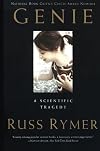
Author of Genie: A Scientific Tragedy
Works by Russ Rymer
Darien 1 copy
Associated Works
NOVA: Secret of the Wild Child: The Revealing Story of Genie [1994 TV episode] (2006) — Original book — 7 copies
Tagged
Common Knowledge
- Birthdate
- 20th Century
- Gender
- male
- Occupations
- journalist
author - Awards and honors
- Whiting Writers' Award (1995)
Guggenheim Fellowship (2002) - Relationships
- Faludi, Susan (wife)
- Nationality
- USA
- Associated Place (for map)
- USA
Members
Reviews
So, Blade Runner 2049 came out so I wanted to revisit the 1982 film Blade Runner and that made me wonder what else actress Sean Young had done, so that led me to the 2001 film Mockingbird Don't Sing where she played the role of Dr. Judy Bingham. Note a noteworthy movie, but it made me interested in the real-world case of the true story of Genie, a modern-day feral child forced into that state by forced isolation, starvation, and neglect from her dysfunctional parents. Genie entered into show more institutional care and government protection the year I was born -- 1970. Despite the documented history of missteps taken with similarly traumatized children, this one suffered much of the same as a football fought over by careerists, further abuse in foster care, and eventually defaulted back to the mother that failed her for her childhood. From being cast into a metaphorical oubliette from her family, she was forgotten and cast away through effective neglect by the state.
While the undeserved tribulations are moving, intellectually fascinating in this study is what this highly studied child can suggest about language because of the unique circumstances of this unfortunate "natural experiment." Susan Curtiss began her work on Genie's case as a graduate student in linguistics. Her analysis turned the concept of The Language Acquisition Device (LAD) -- a hypothetical module of the human mind posited to account for children's innate predisposition for language acquisition first proposed by Noam Chomsky in the 1960s – on its head. Rather than the brain organizing language acquisition, language acquisition organized the brain. Curtiss explained that “Genie's case suggests the possibility that normal cerebral organization may depend on language development occurring at the appropriate time.” As this author summarizes: "If Genie was any indication, we a physically formed by the influence of language. An essential part of our personal physical development is conferred on us by others, and comes in at the ear. The organization of our brain is as genetically ordained and as automatic as breathing, but, like breathing, it is initiated by the slap of a midwife, and the midwife is grammar.” (pages 169 - 170) This leads to such questions explored as “What is a language?” Is American Sign Language one? Apparently yes due to the way it evolves by the way its users grow it and it is a tool for additional studies. This included a deaf boy that learned ASL with flawed grammar but "developed proper ASL from the flawed model" suggesting the syntactic tooling came online from an innate source (p. 174). Fascinating stuff. show less
While the undeserved tribulations are moving, intellectually fascinating in this study is what this highly studied child can suggest about language because of the unique circumstances of this unfortunate "natural experiment." Susan Curtiss began her work on Genie's case as a graduate student in linguistics. Her analysis turned the concept of The Language Acquisition Device (LAD) -- a hypothetical module of the human mind posited to account for children's innate predisposition for language acquisition first proposed by Noam Chomsky in the 1960s – on its head. Rather than the brain organizing language acquisition, language acquisition organized the brain. Curtiss explained that “Genie's case suggests the possibility that normal cerebral organization may depend on language development occurring at the appropriate time.” As this author summarizes: "If Genie was any indication, we a physically formed by the influence of language. An essential part of our personal physical development is conferred on us by others, and comes in at the ear. The organization of our brain is as genetically ordained and as automatic as breathing, but, like breathing, it is initiated by the slap of a midwife, and the midwife is grammar.” (pages 169 - 170) This leads to such questions explored as “What is a language?” Is American Sign Language one? Apparently yes due to the way it evolves by the way its users grow it and it is a tool for additional studies. This included a deaf boy that learned ASL with flawed grammar but "developed proper ASL from the flawed model" suggesting the syntactic tooling came online from an innate source (p. 174). Fascinating stuff. show less

My copy of the book was subtitled "A Scientific Tragedy," which was a much more accurate description of the contents. Genie is the pseudonym given to a modern-day wild child who was discovered in 1970 at age thirteen. Since toddlerhood she had been kept alone in a back bedroom, tied to a potty chair and beaten if she made any noise. At the time Genie was discovered, scientists were embroiled in controversy over recent theories about how children learn language -- and her doctors were show more thrilled at the opportunity that had fallen into their laps to conduct experiments that would prove their theories. But after three years, countless tests and a large amount of grant money, despite great progress in Genie's personal development, her language abilities seemed to have come to a dead end. The government terminated the grant money, and Genie was left to a series of foster homes where she was abused even further and denied contact with the doctors she had come to trust. She withdrew, and now lives a shadowy life in a group home for the mentally disabled.
This tragic story is told from the point of view of the doctors who worked with Genie during those three years of progress. As opposed to details about how the doctors worked with Genie, there are long descriptions of the various linguistic schools of thought. The author seems reluctant to concentrate much on Genie herself, probably out of concern that his book will only be exploiting her further. No one seems to agree on what exactly the Genie case may have taught us about how language develops, but everyone acknowledges that a troubled young girl got lost somewhere in all the scientific competition. Still, there's no denying that the story is fascinating, even if the author does make us squirm a bit at our own interest in this young girl's sad life. show less
This tragic story is told from the point of view of the doctors who worked with Genie during those three years of progress. As opposed to details about how the doctors worked with Genie, there are long descriptions of the various linguistic schools of thought. The author seems reluctant to concentrate much on Genie herself, probably out of concern that his book will only be exploiting her further. No one seems to agree on what exactly the Genie case may have taught us about how language develops, but everyone acknowledges that a troubled young girl got lost somewhere in all the scientific competition. Still, there's no denying that the story is fascinating, even if the author does make us squirm a bit at our own interest in this young girl's sad life. show less
Many textbooks include a sentence or two about Genie, a girl who was completely isolated by an abusive father until after puberty. This book gives much more information on the case. Without any language skills, Genie became widely known in the field of language development and related fields. Rymer fairly presents an interesting story and reports on the successes and the failings of scientists who saw an opportunity to develop (or refute) Chomsky's theories of language development more show more important than the needs of a fellow human being. show less
In 1970 at the age of 13, Genie was discovered by social services in California. Strapped to a potty chair, she was raised in social isolation, hidden away from the world. When discovered she was emaciated, malnourished and had little, if any, speaking skills. Scientists immediately flocked around Genie, wanting to study her. For four years she lived with one of the scientists, until funding dried up and he dumped her into state foster care. This book provides a chronology of the scientists show more who studied her, the science of linguistics and Genie's story.
Overall, I was not impressed by the authors writing style. It was often boring and uninteresting. The author spoke at length about the science of linguistics and provided countless information about the scientists. I wanted to learn about Genie, not necessarily the science of linguistics and the scientists who mistreated her. I felt that the author also treated Genie as an object rather than as a person. show less
Overall, I was not impressed by the authors writing style. It was often boring and uninteresting. The author spoke at length about the science of linguistics and provided countless information about the scientists. I wanted to learn about Genie, not necessarily the science of linguistics and the scientists who mistreated her. I felt that the author also treated Genie as an object rather than as a person. show less
Awards


You May Also Like


Associated Authors
Statistics
- Works
- 5
- Also by
- 3
- Members
- 381
- Popularity
- #63,386
- Rating
- 4.0
- Reviews
- 7
- ISBNs
- 12
- Languages
- 3