

Scott G. Bruce
Author of The Penguin Book of Hell
Works by Scott G. Bruce
The Penguin Book of the Undead: Fifteen Hundred Years of Supernatural Encounters (2016) — Editor — 255 copies, 1 review
Silence and Sign Language in Medieval Monasticism: The Cluniac Tradition, c.900-1200 (2010) 25 copies
Cluny and the Muslims of La Garde-Freinet: Hagiography and the Problem of Islam in Medieval Europe (2015) 8 copies
Ecologies and Economies in Medieval and Early Modern Europe (Brill's Series in the History of the Environment) (2010) 7 copies
Associated Works
Cities, Texts, and Social Networks, 400-1500: Experiences and Perceptions of Medieval Urban Space (2017) — Contributor — 5 copies
Tagged
Common Knowledge
- Canonical name
- Bruce, Scott G.
- Birthdate
- 1967-09-13
- Gender
- male
- Education
- Princeton University (MA|1996|Ph.D|2000)
York University (BA|1994) - Occupations
- historian
professor - Organizations
- Fordham University
University of Colorado - Nationality
- Canada
- Associated Place (for map)
- Canada
Members
Reviews
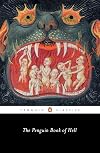
“The Simpsons” sits atop a 3000-year-old tradition. (Stick with me here.) In Treehouse of Horror IV, Homer sells his soul for a donut, and is tormented in hell’s Ironic Punishment Division by being force-fed all the donuts in the world. Of course, Homer being Homer, he confounds his demon by polishing them off and asking for more.
Strip this sketch of its subversive goofiness, and the ancient Greeks would recognize this ironically punitive afterlife. When you compress three millennia of show more Western speculation about eternal death into a single book, you discover an easy continuity between Homeric myth and medieval visions of horror.
And horrific those visions are. Although history professor Scott G. Bruce can’t escape interpretation by selection, he mostly allows the texts to speak for themselves with just a touch of contextual place-setting. He does allow himself some editorial distaste for Father John Furniss’s 19th-century pamphlet for kids, which describes in loving detail the endless tortures awaiting disobedient children.
But you can’t fault Father Furniss too greatly, since all he did was build upon centuries of grotesqueries. The holy terrors described in these pages are so visceral and exhausting that it’s a breath of heavenly air to reach the Protestant Reformation, with its concept of hell reduced to biblical limits of flame, darkness, and the endless lashings of unrelieved guilt.
That’s not to say this book is nothing but a guided tour for sadists; I found some molten gold in the brimstone. For example, hell’s critics typically dismiss it as a theocratic whip meant to oppress the gullible. And certainly by the time of the Reformation and the Jesuits, the Roman Church was doing all it could to crack it over the heads of an increasingly restive population.
However, I was surprised to find that earlier medieval visions of hell were typically aimed at the rich and powerful, not excepting the church hierarchy. From a sociological angle, it seems to me that monks burnt the violent delights of hell into the European imagination less to dominate the illiterate poor than to blunt the rapacity of the literate rich.
Be that as it may, this is not a book for the squeamish. Since Bruce rounds out his book with modern “hells on Earth” such as Treblinka and Hiroshima, I’m reminded of Dan Carlin’s “Painfotainment” episode of Hardcore History — another tour de force of human inventiveness when it comes to suffering. I find that each of these works throws a dim and unwelcome light into sick corners of the human psyche, corners caked with cruelty as bottomless as hell itself.
And this brings up a bit of a Faustian bargain we moderns don’t always recognize. The enlightened post-Christian West might be pleased enough to demythologize Satan; but whether in monkish imagination or industrial death camps, our hells must come from somewhere. For all our rosy faith in the upward arc of history, the cost of sending the devil into retirement is discovering him in our own mirrors — and that’s a hell no one can escape. show less
Strip this sketch of its subversive goofiness, and the ancient Greeks would recognize this ironically punitive afterlife. When you compress three millennia of show more Western speculation about eternal death into a single book, you discover an easy continuity between Homeric myth and medieval visions of horror.
And horrific those visions are. Although history professor Scott G. Bruce can’t escape interpretation by selection, he mostly allows the texts to speak for themselves with just a touch of contextual place-setting. He does allow himself some editorial distaste for Father John Furniss’s 19th-century pamphlet for kids, which describes in loving detail the endless tortures awaiting disobedient children.
But you can’t fault Father Furniss too greatly, since all he did was build upon centuries of grotesqueries. The holy terrors described in these pages are so visceral and exhausting that it’s a breath of heavenly air to reach the Protestant Reformation, with its concept of hell reduced to biblical limits of flame, darkness, and the endless lashings of unrelieved guilt.
That’s not to say this book is nothing but a guided tour for sadists; I found some molten gold in the brimstone. For example, hell’s critics typically dismiss it as a theocratic whip meant to oppress the gullible. And certainly by the time of the Reformation and the Jesuits, the Roman Church was doing all it could to crack it over the heads of an increasingly restive population.
However, I was surprised to find that earlier medieval visions of hell were typically aimed at the rich and powerful, not excepting the church hierarchy. From a sociological angle, it seems to me that monks burnt the violent delights of hell into the European imagination less to dominate the illiterate poor than to blunt the rapacity of the literate rich.
Be that as it may, this is not a book for the squeamish. Since Bruce rounds out his book with modern “hells on Earth” such as Treblinka and Hiroshima, I’m reminded of Dan Carlin’s “Painfotainment” episode of Hardcore History — another tour de force of human inventiveness when it comes to suffering. I find that each of these works throws a dim and unwelcome light into sick corners of the human psyche, corners caked with cruelty as bottomless as hell itself.
And this brings up a bit of a Faustian bargain we moderns don’t always recognize. The enlightened post-Christian West might be pleased enough to demythologize Satan; but whether in monkish imagination or industrial death camps, our hells must come from somewhere. For all our rosy faith in the upward arc of history, the cost of sending the devil into retirement is discovering him in our own mirrors — and that’s a hell no one can escape. show less

This works better as an audiobook than you might expect. It traces Christians' fascination with imagining all the suffering god will inflict on those who don't believe in him, conceptions which show the true sickness of the Christian mind. Not satisfied with creating hell as a concept, however, Christians have also tried to create it on Earth, with the very Christian Nazis being a good example. The visions of hell presented here would be amusing and laughable if not for the human failings show more and hatred they represent. show less
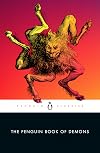
One of a series of anthologies on the literature of imaginative dark phenomena (demons, dragons, exorcisms, the undead, hell, witches, magic), 'The Penguin Book of Demons' is an exemplary guide to the Western tradition mostly drawn from the Abrahamanic faiths with side journeys elsewhere.
One of the great virtues of the selection is that it does not patronise the reader. The anthologist, Scott G. Bruce, a Professor at Fordham University, is quite prepared to include quite large tracts of show more demon lore in order to educate us into what is truly important.
For example, there is the entire sequence of Solomonic encounters with entities. This is entirely appropriate because it is the story of Solomon that shapes much of early and late medieval visions of the demonic. This story enters via Judaism into both Islam and Western magical lore.
He begins with the relevant parts of the Old Testament (and does not forget the New), draws a distinction between the Judaeo-Christian and the Hellenic (where the 'daimon' is a very different being) and proceeds with case after case of the demonic's subsequent use for moralistic ends.
Some of the material, notably the descriptions of Hell, is truly sadistic and horrific, indicating that the medieval mind was as much in in thrall to horror as ours. Others indicate how much intellectual labour went into trying to understand the implications of human-demon interaction.
It will be no surprise that the demonic in the early and medieval imagination was bound up with the sexual. There was interest in such arcane matters as whether children of demon seed could go to heaven or how it was possible for physical threats to frighten immaterial demonic spirits.
The impression here is that the fear was not merely invented to frighten young monks into sexual compliance but was sincerely believed in. This is not as crazy as it sounds today once you slip back in time and forget scientific or psychological explanations for illness or abnormal human behaviours.
The terror of demonic harm to women in childbirth and to their infants (well known from ancient Mesopotamia) must be at the back of some of the representations of evil that appear in later folklore and literature. The Byzantine material on the gelloudes is particularly interesting in this context.
Possession or temptation by immaterial spirits alongside a cogent religious back story (whether of fallen or craven angels) will be a better explanation than none at all for a species that craves explanation and meaning. If there is no other explanation, the demonic will have to serve.
Bruce extends the exploration both geographically along the silk road to East Asia and to the Americas, with decent representation for indigenous Americans and African-Americans, and forward in time to the weird fiction of the early twentieth century.
The Chinese tales of life-sucking fox demons are also sexual. The normality of men asking for support from their wives when they get too deep in with very nubile young fox girls is culturally very far from Judaeo-Christian assumptions and yet just as representative of similar young male sexual anxieties.
Bruce is an intelligent anthologist, choosing his material with care to show how each relates to the other in order to create a tradition. Of course, Milton's maginificent evocation of the fallen angels under their charismatic and defiant master is given more than adequate space.
A book can only hold so much material. Bruce is right to concentrate on the roots of the demonic tradition and to emphasise the Judaeo-Christian but he does make space to connect later literature to the older mythos and to folklore (whether Dartmoor devil hounds or cannibal Wendigo).
There is a Walter Scott poem, MR James' 'Canon Alberich's Scrap-Book' and a closing Lovecraft poem amongst other items to round off the collection but the emphasis is fully on the construction of the mythos rather than global anthropology or the use of the demonic in the modern age.
Truth to tell, there is plenty of material out there already on the latter, especially with the high level of academic interest in Gothick Studies and public interest in weird fiction so this attempt at literary archaeology is all the better for sticking largely although not excusively to origins.
What is admirable about the book is its intellectual integrity and coherence. By the end, you will have (as a non-specialist) a much clearer idea of the use, abuse and appropriation of demons (including the necessary passing but important reference to the witch trials) in Western culture.
Today, popular culture is still fascinated by the demonic as much as it is by serial killers, sometimes merging the two as in the 'Millennium' TV series in the late 1990s. There are some in the American boondocks who still believe in them. Not to understand demons is not to understand ourselves. show less
One of the great virtues of the selection is that it does not patronise the reader. The anthologist, Scott G. Bruce, a Professor at Fordham University, is quite prepared to include quite large tracts of show more demon lore in order to educate us into what is truly important.
For example, there is the entire sequence of Solomonic encounters with entities. This is entirely appropriate because it is the story of Solomon that shapes much of early and late medieval visions of the demonic. This story enters via Judaism into both Islam and Western magical lore.
He begins with the relevant parts of the Old Testament (and does not forget the New), draws a distinction between the Judaeo-Christian and the Hellenic (where the 'daimon' is a very different being) and proceeds with case after case of the demonic's subsequent use for moralistic ends.
Some of the material, notably the descriptions of Hell, is truly sadistic and horrific, indicating that the medieval mind was as much in in thrall to horror as ours. Others indicate how much intellectual labour went into trying to understand the implications of human-demon interaction.
It will be no surprise that the demonic in the early and medieval imagination was bound up with the sexual. There was interest in such arcane matters as whether children of demon seed could go to heaven or how it was possible for physical threats to frighten immaterial demonic spirits.
The impression here is that the fear was not merely invented to frighten young monks into sexual compliance but was sincerely believed in. This is not as crazy as it sounds today once you slip back in time and forget scientific or psychological explanations for illness or abnormal human behaviours.
The terror of demonic harm to women in childbirth and to their infants (well known from ancient Mesopotamia) must be at the back of some of the representations of evil that appear in later folklore and literature. The Byzantine material on the gelloudes is particularly interesting in this context.
Possession or temptation by immaterial spirits alongside a cogent religious back story (whether of fallen or craven angels) will be a better explanation than none at all for a species that craves explanation and meaning. If there is no other explanation, the demonic will have to serve.
Bruce extends the exploration both geographically along the silk road to East Asia and to the Americas, with decent representation for indigenous Americans and African-Americans, and forward in time to the weird fiction of the early twentieth century.
The Chinese tales of life-sucking fox demons are also sexual. The normality of men asking for support from their wives when they get too deep in with very nubile young fox girls is culturally very far from Judaeo-Christian assumptions and yet just as representative of similar young male sexual anxieties.
Bruce is an intelligent anthologist, choosing his material with care to show how each relates to the other in order to create a tradition. Of course, Milton's maginificent evocation of the fallen angels under their charismatic and defiant master is given more than adequate space.
A book can only hold so much material. Bruce is right to concentrate on the roots of the demonic tradition and to emphasise the Judaeo-Christian but he does make space to connect later literature to the older mythos and to folklore (whether Dartmoor devil hounds or cannibal Wendigo).
There is a Walter Scott poem, MR James' 'Canon Alberich's Scrap-Book' and a closing Lovecraft poem amongst other items to round off the collection but the emphasis is fully on the construction of the mythos rather than global anthropology or the use of the demonic in the modern age.
Truth to tell, there is plenty of material out there already on the latter, especially with the high level of academic interest in Gothick Studies and public interest in weird fiction so this attempt at literary archaeology is all the better for sticking largely although not excusively to origins.
What is admirable about the book is its intellectual integrity and coherence. By the end, you will have (as a non-specialist) a much clearer idea of the use, abuse and appropriation of demons (including the necessary passing but important reference to the witch trials) in Western culture.
Today, popular culture is still fascinated by the demonic as much as it is by serial killers, sometimes merging the two as in the 'Millennium' TV series in the late 1990s. There are some in the American boondocks who still believe in them. Not to understand demons is not to understand ourselves. show less
This is not a book to enjoy as much as it is to learn from.
I don't believe in any of the 4000 or so gods that man has invented, nor do I believe in any of their places of afterlife. But I'm always interested in learning more about them.
I was actually hoping this would be more of a guided tour through the various Hells instead of a lot of direct quotes, but still they served the purpose.
What I learned from this is that Christians really want to scare the bejeezus out of anyone of their faith show more so they'll all be good...but damned if you're not sentenced to Hell for the lightest of infractions. There was a point when, hearing of the millions and millions of souls in Hell, I wondered, damn, is Heaven just three or four people hanging around bored out of their skulls?
I learned that a document created for Christian children to read and understand the intense, unending pain they would go through was utterly horrifying.
But it was the final passages, especially the Nazi deathcamp at Treblinka that taught me that, no matter what infernal demon or Satanic figure we can imagine, we can always come up with a more horrifying way of torturing each other.
I learned more than I actually wanted to. show less
I don't believe in any of the 4000 or so gods that man has invented, nor do I believe in any of their places of afterlife. But I'm always interested in learning more about them.
I was actually hoping this would be more of a guided tour through the various Hells instead of a lot of direct quotes, but still they served the purpose.
What I learned from this is that Christians really want to scare the bejeezus out of anyone of their faith show more so they'll all be good...but damned if you're not sentenced to Hell for the lightest of infractions. There was a point when, hearing of the millions and millions of souls in Hell, I wondered, damn, is Heaven just three or four people hanging around bored out of their skulls?
I learned that a document created for Christian children to read and understand the intense, unending pain they would go through was utterly horrifying.
But it was the final passages, especially the Nazi deathcamp at Treblinka that taught me that, no matter what infernal demon or Satanic figure we can imagine, we can always come up with a more horrifying way of torturing each other.
I learned more than I actually wanted to. show less
Lists
el (3)
You May Also Like


Associated Authors
Statistics
- Works
- 11
- Also by
- 2
- Members
- 848
- Popularity
- #30,160
- Rating
- 3.3
- Reviews
- 8
- ISBNs
- 25