
Walter S. Gibson (1932–2018)
Author of Hieronymus Bosch
About the Author
Walter S. Gibson is Andrew W. Mellon Professor of the Humanities Emeritus at Case Western Reserve University.
Works by Walter S. Gibson
Tagged
Common Knowledge
- Legal name
- Gibson, Walter Samuel
- Birthdate
- 1932-03-31
- Date of death
- 2018-11-18
- Gender
- male
- Education
- Harvard University (M.A.|1960|Ph.D|1969)
Ohio State University (B.F.A.|1957) - Occupations
- ISNI 0000 0001 1580 208X
professor
art historian - Organizations
- Case Western Reserve University
- Relationships
- Scott, Sarah Ann (wife)
- Nationality
- USA
- Birthplace
- Columbus, Ohio, USA
- Place of death
- Saratoga Springs, New York, USA
- Associated Place (for map)
- USA
Members
Reviews
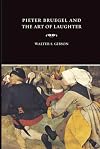
Pieter Bruegel (ca. 1525–1569), generally considered the greatest Flemish painter of the sixteenth century, was described in 1604 by his earliest biographer as a supremely comic artist, few of whose works failed to elicit laughter. Today, however, we approach Bruegel’s art as anything but a laughing matter. His paintings and drawings are thought to conceal profound allegories best illuminated with scholarly erudition. In this delightfully engaging book, Walter S. Gibson takes a new look show more at Bruegel, arguing that the artist was no erudite philosopher, but a man very much in the world, and that a significant part of his art is best appreciated in the context of humor. In his illuminating examination of the witty and amusing elements in Bruegel’s paintings, prints, and drawings in relation to the sixteenth century European culture of laughter, Gibson reminds us exactly why Bruegel was one of the most original artists of his time.
In a series of engrossing chapters, Gibson explores the function and production of laughter in the sixteenth century, examines the ways in which Bruegel exploited the comic potential of Hieronymus Bosch, and traces how the artist developed his remarkable gift for physiognomy in his work, culminating in three paintings of festive peasants he produced during the 1560s: the Wedding Dance, the Kermis, and the Wedding Banquet. Gibson also takes a detailed look at the Dulle Griet, Bruegel’s most complex evocation of Bosch. show less
In a series of engrossing chapters, Gibson explores the function and production of laughter in the sixteenth century, examines the ways in which Bruegel exploited the comic potential of Hieronymus Bosch, and traces how the artist developed his remarkable gift for physiognomy in his work, culminating in three paintings of festive peasants he produced during the 1560s: the Wedding Dance, the Kermis, and the Wedding Banquet. Gibson also takes a detailed look at the Dulle Griet, Bruegel’s most complex evocation of Bosch. show less
I picked this up inspired by Michael Frayn's book 'Headlong' where the narrator enters into a possibly hairbrained pursuit after a possibly Breugel painting.
This study is very readable, and helpful on detail. It's a pity that the format of the book and the printing mean that the colour plates are hard to make out, and some more historical contextual background would have been very welcome indeed. However, Gibson is being careful that unsubstantiated ideas that Breugel's paintings were full show more of heavy political comment are not repeated as though they are proven fact.
His love of Breugel's treatment of landscape, Flemish and Italian tradition and his inspiration from his Alpine travels come over strongly, and it's delightful to walk with Gibson through the paintings he explores. show less
This study is very readable, and helpful on detail. It's a pity that the format of the book and the printing mean that the colour plates are hard to make out, and some more historical contextual background would have been very welcome indeed. However, Gibson is being careful that unsubstantiated ideas that Breugel's paintings were full show more of heavy political comment are not repeated as though they are proven fact.
His love of Breugel's treatment of landscape, Flemish and Italian tradition and his inspiration from his Alpine travels come over strongly, and it's delightful to walk with Gibson through the paintings he explores. show less


Goede introductie tot leven en werk van de Vlaamse schilder uit de 16de eeuw. Goed geïllustreerd.
Lists
You May Also Like


Associated Authors
Statistics
- Works
- 11
- Members
- 514
- Popularity
- #48,283
- Rating
- 3.6
- Reviews
- 4
- ISBNs
- 23
- Languages
- 4