
Peter Murray (1) (1920–1992)
Author of A Dictionary of Art and Artists
For other authors named Peter Murray, see the disambiguation page.
About the Author
Image credit: Wiley.com
Works by Peter Murray
Living Bridges: The Inhabited Bridge, Past, Present and Future (Architecture) (1996) 22 copies, 1 review
The Saga of Sydney Opera House: The Dramatic Story of the Design and Construction of the Icon of Modern Australia (2003) 17 copies, 1 review
Figure and Ground: Rembrandt to Mondrian Landscape and People in Netherlands Art 1520-1920 (2005) 7 copies, 1 review
Bramante's Tempietto 1 copy
Associated Works
Classic Art: An Introduction to the Italian Renaissance (1899) — Translator, some editions — 200 copies, 2 reviews
Tagged
Common Knowledge
- Canonical name
- Murray, Peter
- Legal name
- Murray, Peter John
- Birthdate
- 1920-04-23
- Date of death
- 1992-04-20
- Gender
- male
- Education
- Slade School of Fine Art, University of London (BA|1940)
Courtauld Institute of Art, University of London (BA | 1947 | Ph.D | 1956) - Occupations
- art historian
professor
librarian - Organizations
- University of London (Birkbeck College)
Society of Architectural Historians of Great Britain
Walpole Society - Relationships
- Murray, Linda (wife)
- Nationality
- UK
- Birthplace
- London, Middlesex, England, UK
- Places of residence
- London, Middlesex, England, UK
- Place of death
- Farnborough, Warwickshire, England, UK
- Map Location
- England, UK
Members
Reviews
The Saga of Sydney Opera House: The Dramatic Story of the Design and Construction of the Icon of Modern Australia by Peter Murray
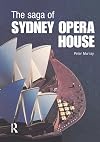
Peter Murray started out as an admirer of the SOH's architect Jorn Utzon, thinking, along with many others that he was the tragic hero of this famous building's tale. Uzton, the competition-winning designer who came up with the SOH's unique and iconic form, eventually resigned from the job under pressure from the Australian government, after years of argument and controversy.
Murray has interviewed many of the people involved in the project, and extensively researched the archives, to tell show more the true tale of how Utzon was appointed and how he eventually fell from grace. For anyone involved in the interface between architects and their clients, or between architects and engineers, it's a very informative tale.
Utzon was something of a megalomaniac, determined to control every aspect of the project down to the last detail. However, he had no experience of building projects on this scale, and little sympathy for the client's need to control costs and meet a programme. He seems very much in the tradition of architect as a romantic artist, a visionary, a genius, but someone almost entirely lacking the organisational and political skills required to actually get anything as complex as the SOH built.
The book paints a very sympathetic portrayal of the building's structural engineers, Arup, who were often the piggy-in-the-middle while the client fought to get Utzon to ever produce any working drawings.
Although the book contradicts other published accounts, it seems well-researched and certainly rings true to me. The writing style is often dry - this certainly isn't a flashy, exaggerated dramatisation of what actually happened. show less
Murray has interviewed many of the people involved in the project, and extensively researched the archives, to tell show more the true tale of how Utzon was appointed and how he eventually fell from grace. For anyone involved in the interface between architects and their clients, or between architects and engineers, it's a very informative tale.
Utzon was something of a megalomaniac, determined to control every aspect of the project down to the last detail. However, he had no experience of building projects on this scale, and little sympathy for the client's need to control costs and meet a programme. He seems very much in the tradition of architect as a romantic artist, a visionary, a genius, but someone almost entirely lacking the organisational and political skills required to actually get anything as complex as the SOH built.
The book paints a very sympathetic portrayal of the building's structural engineers, Arup, who were often the piggy-in-the-middle while the client fought to get Utzon to ever produce any working drawings.
Although the book contradicts other published accounts, it seems well-researched and certainly rings true to me. The writing style is often dry - this certainly isn't a flashy, exaggerated dramatisation of what actually happened. show less
Ottimo testo, divulgativo e tecnico a un tempo, ottima introduzione ai capisaldi dell'architettura rinascimentale.

The authors have "restricted the scope to the arts of painting, sculpture, and engraving in Western Europe and North America, and to a period beginning about the year 1300 and continuing up to the present day," because they are "almost totally ignorant of the arts of other periods and places." In that case, a different title would have been preferable. The emphasis is on technical terms, processes, and movements, rather than biographies, though there are many of these, which include a useful show more list of museums holding the artist's work. The Penguin edition contains "substantially the same" text as the fully illustrated 1965 Thames & Hudson edition. Entries contain succinct remarks, like this one about Edvard Munch: "He was friendly with Strindberg, and his art, though sometimes powerful, is always neurotic and frequently hysterical." show less
Provides you with some good info but pretty dry. Wouldn't recommend this as a fun read but good for brushing up on the subject.
You May Also Like


Associated Authors
Statistics
- Works
- 20
- Also by
- 3
- Members
- 2,139
- Popularity
- #12,032
- Rating
- 3.6
- Reviews
- 14
- ISBNs
- 274
- Languages
- 8