
Douglas Keister
Author of Stories in Stone: A Field Guide to Cemetery Symbolism and Iconography
About the Author
Works by Douglas Keister
Associated Works
Painted Ladies Revisited: San Francisco's Resplendent Victorians Inside and Out (1989) — Photographer, some editions — 111 copies, 1 review
Tagged
Common Knowledge
- Birthdate
- 20th century
- Gender
- male
- Occupations
- photographer
- Nationality
- USA
- Places of residence
- Chico, California, USA
- Associated Place (for map)
- California, USA
Members
Reviews

I am the lonely one-star reviewer on this book. It's a nicely produced little hardback that could fit into your pocket on the way to a cemetery trip; unfortunately, it has very limited usefulness for actually understanding the significance of the symbols you're seeing on cemetery markers.
The material culture of cemetery markers - at least during the period before markers became almost entirely mass-produced, generic catalog items - is a hugely complex topic. Books upon books have been show more published just to deal with local symbolism used in one area during one particular time period, not to mention ethnic and racial differences, but Keister claims to be taking on the whole subject of symbolism in all cemetery markers, ever, worldwide.
Some of his facts he gets more or less correct; but there are no endnotes or sources given for the information in this book, and the 'explanations" for some of the symbolism described just seems to have been pulled out of thin air, or possibly based on a quick Google search or some other source not specific to cemeteries. (For instance, many of his explanations of the symbolism of certain flowers seem to have been lifted from some kind of "Language of Flowers" book, bearing no necessary relation to the ways in which flower images might have been used on grave markers specifically.)
There are a lot of pictures and excessive discussion of the more astounding sculptural cemeteries of Europe, like the Cimiterio Monumentale in Milan and Pére-Lachaise in Paris, which certainly make for good photo ops, but aren't really suited to a "field guide" that an American cemetery enthusiast might want to have with them when visiting a typical American cemetery.
I wish I had a better book to recommend for general readers on this topic, but if I find one, I'll update this review. show less
The material culture of cemetery markers - at least during the period before markers became almost entirely mass-produced, generic catalog items - is a hugely complex topic. Books upon books have been show more published just to deal with local symbolism used in one area during one particular time period, not to mention ethnic and racial differences, but Keister claims to be taking on the whole subject of symbolism in all cemetery markers, ever, worldwide.
Some of his facts he gets more or less correct; but there are no endnotes or sources given for the information in this book, and the 'explanations" for some of the symbolism described just seems to have been pulled out of thin air, or possibly based on a quick Google search or some other source not specific to cemeteries. (For instance, many of his explanations of the symbolism of certain flowers seem to have been lifted from some kind of "Language of Flowers" book, bearing no necessary relation to the ways in which flower images might have been used on grave markers specifically.)
There are a lot of pictures and excessive discussion of the more astounding sculptural cemeteries of Europe, like the Cimiterio Monumentale in Milan and Pére-Lachaise in Paris, which certainly make for good photo ops, but aren't really suited to a "field guide" that an American cemetery enthusiast might want to have with them when visiting a typical American cemetery.
I wish I had a better book to recommend for general readers on this topic, but if I find one, I'll update this review. show less
First, this is a great size to take traveling. And the color photos are also lovely, especially when so many other books are stuck in black and white. This book is especially good if you're looking up symbols on tombs and finding out what they mean - from animals to Greek letters to societies (there's a multiple page listing of acronyms and what they mean).
This isn't the first book I'd recommend for scholarship - but I have spent many hours on airplanes reading or just looking at the photos.
This isn't the first book I'd recommend for scholarship - but I have spent many hours on airplanes reading or just looking at the photos.
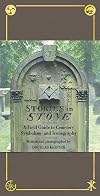
A neat little book, but not quite as comprehensive as I might have hoped.
Has some amazing photographs and interesting historical tidbits, but isn’t quite as useful as it could be. The descriptions of various motifs are often accompanied by photographs that don’t show all of the elements described; having multiple examples would have been nice.
Heavily concentrated on U.S. funerary art, with occasional examples drawn from major European cemeteries.
Much more about gravestones and smaller show more monuments than mausolea and other larger cemetery structures. (For which James Stevens Curl’s A Celebration of Death: Introduction to Some of the Buildings, Monuments and Settings of Funerary Architecture in the Western European Tradition (B.T. Batsford, 1993) is a better resource.) show less
Has some amazing photographs and interesting historical tidbits, but isn’t quite as useful as it could be. The descriptions of various motifs are often accompanied by photographs that don’t show all of the elements described; having multiple examples would have been nice.
Heavily concentrated on U.S. funerary art, with occasional examples drawn from major European cemeteries.
Much more about gravestones and smaller show more monuments than mausolea and other larger cemetery structures. (For which James Stevens Curl’s A Celebration of Death: Introduction to Some of the Buildings, Monuments and Settings of Funerary Architecture in the Western European Tradition (B.T. Batsford, 1993) is a better resource.) show less
As a person who spends vacation time learning about history of places, I often find myself in cemeteries. This is a wonderful guide about the markings found there. It touches first on the architectural style of the grave and later on the symbols found on the stone itself.
I was disappointed that there wasn't anything specific about cadaver stones. I realize there are very few of them left in the world, but at least a mention would have been neat. They are so very fascinating.
And as someone show more else mentioned, having an edition that has more gravestones from around the world would be nice, since most of those pictured were from the US. show less
I was disappointed that there wasn't anything specific about cadaver stones. I realize there are very few of them left in the world, but at least a mention would have been neat. They are so very fascinating.
And as someone show more else mentioned, having an edition that has more gravestones from around the world would be nice, since most of those pictured were from the US. show less
Lists
Awards


You May Also Like


Statistics
- Works
- 24
- Also by
- 1
- Members
- 1,328
- Popularity
- #19,368
- Rating
- 4.0
- Reviews
- 17
- ISBNs
- 32
- Favorited
- 1