

Marilyn Yalom (1932–2019)
Author of A History of the Wife
About the Author
Marilyn Yalom is a senior scholar at the Institute for Women and Gender at Stanford University
Disambiguation Notice:
(yid) VIAF:24633545
Image credit: Reid Yalom
Works by Marilyn Yalom
The American Resting Place: 400 Years of History Through Our Cemeteries and Burial Grounds (2008) 193 copies, 6 reviews
How the French Invented Love: Nine Hundred Years of Passion and Romance (2012) 136 copies, 11 reviews
Rođenje šahovske kraljice 1 copy
Memenin Tarihi 1 copy
A Historia da Esposa 1 copy
História do seio 1 copy
Associated Works
Tagged
Common Knowledge
- Canonical name
- Yalom, Marilyn
- Legal name
- Yalom, Marilyn Koenick
- Other names
- Koenick, Marilyn (birth name)
- Birthdate
- 1932-03-10
- Date of death
- 2019-11-20
- Gender
- female
- Education
- Johns Hopkins University (Ph.D|1963)
Harvard University (M.A.T.|1956)
Wellesley College (B.A.|1954)
Sorbonne University (Diplôme de Littérature Contemporaine, 1953) - Occupations
- scholar of gender studies
scholar of French literature
university professor - Organizations
- Stanford University
California State University, Hayward
University of Hawaii at Manoa - Awards and honors
- Officier des Palmes Académiques (1992)
American Library in Paris Book Award (2013) - Relationships
- Yalom, Irvin (husband)
Yalom, Reid S. (son) - Short biography
- Marilyn Yalom, a gender studies scholar and author, died at her home in Palo Alto, California, on November 20. She was 87 years old and had suffered from cancer.
Dr. Yalom was born in Chicago and later grew up in Washington D.C. She earned a bachelor's degree in French from Wellesley College in Massachusetts. She held a master's degree in French and German from Harvard University and a Ph.D. in comparative literature from Johns Hopkins University.
After a brief stint at the University of Hawaii, Dr. Yalom taught at California State University, Hayward (now CSU, East Bay) from 1963 to 1976. In 1976, she was hired as deputy director of the Center for Research on Women at Stanford University. Later, she was a senior scholar at the Clayman Institute for Gender Research at Stanford, where she served as director from 1984 to 1985. - Cause of death
- multiple myeloma
- Nationality
- USA
- Birthplace
- Chicago, Illinois, USA
- Places of residence
- Washington, D.C., USA
Palo Alto, California, USA - Place of death
- Palo Alto, California, USA
- Disambiguation notice
- VIAF:24633545
- Associated Place (for map)
- USA
Members
Reviews

I’d first like to thank ‘Blood Sisters’ for distracting me from feeling like crap today. It is a fascinating, well-written, and thoughtful synthesis of women’s memoirs that survive from the time of the French Revolution. The women writing range from the royal children’s final governess to a peasant woman who crossdressed to fight in the Vendée civil war, via Robespierre’s sister and Germaine de Staël, the famous woman of letters. Yalom summarises and extracts from these memoirs show more to present the variety of women’s experience during the revolution, in their own words. This is especially useful as the eighty or so accounts include many that are obscure and/or largely forgotten. Although famous figures are included, the unknown (to me) women also provide powerful and illuminating perspectives.
Yalom’s analysis includes interesting commentary on the attitudes and roles women were allowed and expected to play during the time of the revolution. Many of the memoirists display incredible courage, intelligence, resourcefulness, and strength, but are nearly always limited to the domestic sphere. Admittedly, that sphere expanded in some ways during the revolution, to include pleading for the lives of relatives, protesting against high bread prices, and supporting soldiers fighting in the civil war. Despite this, women were generally cast as protectors, carers, and peacemakers. Women were considered ‘passive citizens’, not entitled to political rights. Some, such as Olympe de Gouges and Théroigne de Méricourt, sought to break out of this and suffered severely for it (de Gouges was guillotined and de Méricourt locked in a mental institution). One of the most politically powerful women of the time, Germaine de Staël, seems to have been ambivalent about her own role. Yalom notes the popularity of Rousseau’s views on women as belonging securely in the home; de Staël greatly esteemed Rousseau yet was surely frustrated by the limitations placed on her intelligence and political acumen by lesser minds who happened to be male.
That reminds me, I must look for de Staël’s [b:Considerations on the Principal Events of the French Revolution|3994260|Considerations on the Principal Events of the French Revolution|Germaine de Staël|https://images.gr-assets.com/books/1328775373s/3994260.jpg|4040334], in which she combines historical analysis with personal recollections. I’ve been meaning to read it for ages. 'Blood Sisters' also complements [b:City of Darkness, City of Light|862108|City of Darkness, City of Light|Marge Piercy|https://images.gr-assets.com/books/1320479678s/862108.jpg|1230592], a novel of the French Revolution with particularly strong female viewpoints. show less
Yalom’s analysis includes interesting commentary on the attitudes and roles women were allowed and expected to play during the time of the revolution. Many of the memoirists display incredible courage, intelligence, resourcefulness, and strength, but are nearly always limited to the domestic sphere. Admittedly, that sphere expanded in some ways during the revolution, to include pleading for the lives of relatives, protesting against high bread prices, and supporting soldiers fighting in the civil war. Despite this, women were generally cast as protectors, carers, and peacemakers. Women were considered ‘passive citizens’, not entitled to political rights. Some, such as Olympe de Gouges and Théroigne de Méricourt, sought to break out of this and suffered severely for it (de Gouges was guillotined and de Méricourt locked in a mental institution). One of the most politically powerful women of the time, Germaine de Staël, seems to have been ambivalent about her own role. Yalom notes the popularity of Rousseau’s views on women as belonging securely in the home; de Staël greatly esteemed Rousseau yet was surely frustrated by the limitations placed on her intelligence and political acumen by lesser minds who happened to be male.
That reminds me, I must look for de Staël’s [b:Considerations on the Principal Events of the French Revolution|3994260|Considerations on the Principal Events of the French Revolution|Germaine de Staël|https://images.gr-assets.com/books/1328775373s/3994260.jpg|4040334], in which she combines historical analysis with personal recollections. I’ve been meaning to read it for ages. 'Blood Sisters' also complements [b:City of Darkness, City of Light|862108|City of Darkness, City of Light|Marge Piercy|https://images.gr-assets.com/books/1320479678s/862108.jpg|1230592], a novel of the French Revolution with particularly strong female viewpoints. show less
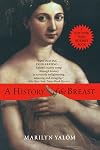
Yalom presents us with an engaging look at the history of the breast. The arrangement is roughly chronological, but she breaks away from the straight chronological presentation to divide the chapters thematically, subsequently exploring the breast as sacred, erotic, domestic, political, psychological, commercial, medicalized, and liberated.
To a large degree, the story of the breast is the story of women. Thus, if you've read much along those lines, much of that will be familiar. Even so, I show more found much that was new to me. The chapter the medicalized breast, which included a history of breast cancer treatments, was educational (and heart wrenching, at times).
My main criticism of this book is that it is primarily a history of the western and mostly upper class breast as seen by men. The second and third criticism -- upper class and the male gaze -- are hardly Yalom's fault. In fact, one of her themes throughout the book is how it is only in recent decades that women's voices have been able to openly speak about the breast. Before that men often defined the societal meaning of the breast, just as they defined women. And since much of that definition was through art, paintings and poetry in particular, that vision tended to focuses on upper class women.
But I am surprised at the lack of non-western perspective, beyond a couple scattered remarks. Just as it was an "ah hah" moment for my really feeling that attractiveness is socially constructed when I learned that the ideal French medieval breast was small and high, it would have been even more perspective stretching to see views of the breast in cultures I am less familiar with.
Overall, this was an engaging read. show less
To a large degree, the story of the breast is the story of women. Thus, if you've read much along those lines, much of that will be familiar. Even so, I show more found much that was new to me. The chapter the medicalized breast, which included a history of breast cancer treatments, was educational (and heart wrenching, at times).
My main criticism of this book is that it is primarily a history of the western and mostly upper class breast as seen by men. The second and third criticism -- upper class and the male gaze -- are hardly Yalom's fault. In fact, one of her themes throughout the book is how it is only in recent decades that women's voices have been able to openly speak about the breast. Before that men often defined the societal meaning of the breast, just as they defined women. And since much of that definition was through art, paintings and poetry in particular, that vision tended to focuses on upper class women.
But I am surprised at the lack of non-western perspective, beyond a couple scattered remarks. Just as it was an "ah hah" moment for my really feeling that attractiveness is socially constructed when I learned that the ideal French medieval breast was small and high, it would have been even more perspective stretching to see views of the breast in cultures I am less familiar with.
Overall, this was an engaging read. show less
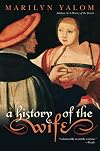
I enjoyed this book for it's historical content and contrasts to present day roles of being a wife. I admire the research that the Author did, but I felt there was a lost opportunity towards the end to expand on how the religious, cultural and society roles influenced the modern ways.
She touches lightly on some, but not at the depth of what she did in the earlier chapters. The pace changed a bit towards it's conclusion.
I really appreciated the light she shined on many of the issues that are show more often not spoken about. She provided a voice for many relationships and wives who did not and do not have the opportunity to do so. For that I'm grateful to her.
I learned alot, was surprised and overall would recommend if you love history. show less
She touches lightly on some, but not at the depth of what she did in the earlier chapters. The pace changed a bit towards it's conclusion.
I really appreciated the light she shined on many of the issues that are show more often not spoken about. She provided a voice for many relationships and wives who did not and do not have the opportunity to do so. For that I'm grateful to her.
I learned alot, was surprised and overall would recommend if you love history. show less
The American Resting Place: 400 Years of History Through Our Cemeteries and Burial Grounds by Marilyn Yalom

I bought this book because, well, I have to buy all books about cemeteries. It didn't look that great, though, until I started reading. It's fascinating. She starts out with the history of cemeteries in the New England colonies. I'm sure I learned in school but was not paying attention and somehow missed that Rhode Island was founded as a place of religious tolerance. This meant that were early cemeteries there for Quakers, Jews, etc.
In later chapters she and her son travel all over the show more country visiting cemeteries and describing their unique features and local history. For example, Hawaii has cemeteries for Catholics, Buddhists, Congregationalists, and ancient burial grounds, reflecting the many peoples who make up that state. There have been controversies when resort owners have tried to build on areas considered sacred by native people. All of this is interesting, and my only criticism is that I wish there were more pictures. show less
In later chapters she and her son travel all over the show more country visiting cemeteries and describing their unique features and local history. For example, Hawaii has cemeteries for Catholics, Buddhists, Congregationalists, and ancient burial grounds, reflecting the many peoples who make up that state. There have been controversies when resort owners have tried to build on areas considered sacred by native people. All of this is interesting, and my only criticism is that I wish there were more pictures. show less
Lists
Awards


You May Also Like


Associated Authors
Statistics
- Works
- 22
- Also by
- 1
- Members
- 2,060
- Popularity
- #12,487
- Rating
- 3.7
- Reviews
- 46
- ISBNs
- 75
- Languages
- 13
- Favorited
- 3