
Joanne Rendell
Author of Sky Without Stars
Series
Works by Joanne Rendell
Associated Works
Tagged
Common Knowledge
- Gender
- female
- Nationality
- UK
- Places of residence
- New York, New York, USA
Members
Reviews
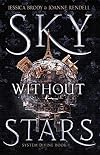
Yes, Sky Without Stars is a retelling of Les Misérables set in space. Yes, it has your Jean Valjean, your Javert, your Marius, your Cosette, and your Eponine characters. Yes, it has an infamous criminal hiding from the police, a clueless adopted daughter, a member of the upper class questioning everything he knows about class, and a female street urchin caught up among all their stories. But what starts as a retelling becomes so much more.
What it becomes is a reminder of the power of the show more printed word. It is a call to remember history as accurately as possible because when you forget the past, you allow those who have not to gain control over you. It is the ease with which the monied exploit the poor and the many ways those in the middle ignore the exploitation. It is another example of how often history repeats itself without proper education and diligence.
It is a story about resources – people, money, food, and natural – and the dangers of having too much or too little. It is the lengths people will go to survive when desperate. It is the relationships that bind us to one another, whether we want them to do so or not. It is about secrets and political machinations that run deeper than anyone knows and the dangers of uncovering such plots.
Lastly, it is a space opera. Set in a different universe, on a plant that never sees the light of a sun, the permanent darkness plays a significant role in the mood of the people and the tone of the novel. Survival on a planet with limited resources is an aspect of the story that did not exist in the original. Nor did space travel, computer systems, embedded technology, androids, and other space elements. These add their own twist to the novel that makes it even larger and more spectacular than Hugo’s masterpiece.
Jessica Brody and Joanne Rendell do an excellent job taking Hugo’s story and making it their own. I like that they focus on the three younger characters rather than on the dynamic between hunter and hunted. I particularly like how they flesh out each of those characters, making them less insipid, more complex, more morally ambiguous, more human. I also enjoy how they downplayed the love story to focus on the political interplay. Best of all, by the time the novel ends, the story is heading in directions Hugo never went, making it original and providing enough unanswered questions to make anyone anticipate the sequel. show less
What it becomes is a reminder of the power of the show more printed word. It is a call to remember history as accurately as possible because when you forget the past, you allow those who have not to gain control over you. It is the ease with which the monied exploit the poor and the many ways those in the middle ignore the exploitation. It is another example of how often history repeats itself without proper education and diligence.
It is a story about resources – people, money, food, and natural – and the dangers of having too much or too little. It is the lengths people will go to survive when desperate. It is the relationships that bind us to one another, whether we want them to do so or not. It is about secrets and political machinations that run deeper than anyone knows and the dangers of uncovering such plots.
Lastly, it is a space opera. Set in a different universe, on a plant that never sees the light of a sun, the permanent darkness plays a significant role in the mood of the people and the tone of the novel. Survival on a planet with limited resources is an aspect of the story that did not exist in the original. Nor did space travel, computer systems, embedded technology, androids, and other space elements. These add their own twist to the novel that makes it even larger and more spectacular than Hugo’s masterpiece.
Jessica Brody and Joanne Rendell do an excellent job taking Hugo’s story and making it their own. I like that they focus on the three younger characters rather than on the dynamic between hunter and hunted. I particularly like how they flesh out each of those characters, making them less insipid, more complex, more morally ambiguous, more human. I also enjoy how they downplayed the love story to focus on the political interplay. Best of all, by the time the novel ends, the story is heading in directions Hugo never went, making it original and providing enough unanswered questions to make anyone anticipate the sequel. show less

I couldn't make myself finish this book, but I gave it a fair chance, laboring through more than a hundred pages. I tried it because of its jacket copy mentioning Sylvia Plath and academia, but there's really precious little of either here. This is pure unadulterated chick lit, and not much more. It's Betty (Rachel) and Veronica (Diana) with Ph.D.'s, competing for the attention of an old-money Harvard-educated playboy-prof Reggie (Carson). Archie's probably in there somewhere too, maybe in show more the university computer geek, Mikey. The plot is just so high school Harlequin, however, that I couldn't stick with it.
Here's a sample of its chickie purple prose, from a passage where Diana has tried unsucessfully to end her friends with benefits relationship with Mikey -
"Diana looked into Mikey's face and scanned his dark eyes, which were somehow both lost and puppylike yet also reassuring and fearless, and couldn't bring herself to say the words. Each time, her desire took over. Her body yearned to be close to his, and inside she ached to have his soft voice near her ear and his lilting laugh in her bed."
And Diana is the one presented as the aloof sort, an "ice princess." Rachel's inner thoughts and roiling emotions are even purpler and blechh-ier than the above.
I don't think I'm a complete snob about popular women's fiction, because I have enjoyed numerous books by LaVyrle Spencer, Elizabeth Berg and others of their ilk in years past. But maybe I'm past that phase of my reading life. In any case, CROSSING WASHINGTON SQUARE is the stuff that Lifetime TV movies, and I'm sure plenty of women would/do love this book. As for me, despite its supposed trappings of academia and books, I just couldn't handle it. It's just too damn, well, high school all over again. show less
Here's a sample of its chickie purple prose, from a passage where Diana has tried unsucessfully to end her friends with benefits relationship with Mikey -
"Diana looked into Mikey's face and scanned his dark eyes, which were somehow both lost and puppylike yet also reassuring and fearless, and couldn't bring herself to say the words. Each time, her desire took over. Her body yearned to be close to his, and inside she ached to have his soft voice near her ear and his lilting laugh in her bed."
And Diana is the one presented as the aloof sort, an "ice princess." Rachel's inner thoughts and roiling emotions are even purpler and blechh-ier than the above.
I don't think I'm a complete snob about popular women's fiction, because I have enjoyed numerous books by LaVyrle Spencer, Elizabeth Berg and others of their ilk in years past. But maybe I'm past that phase of my reading life. In any case, CROSSING WASHINGTON SQUARE is the stuff that Lifetime TV movies, and I'm sure plenty of women would/do love this book. As for me, despite its supposed trappings of academia and books, I just couldn't handle it. It's just too damn, well, high school all over again. show less
“‘What good would it do to send you back there? You’ll only escape again. I’ve chased you across Laterre. Hunted you down for far too long. You’ve evaded me one too many times, LeGrand.’ Limier clicked his neck to the side, and Alouette could swear she heard metal parts grinding. ‘I’m done chasing you. This is where the hunt ends.’”
There are a lot of similarities between the Les Miserables and Sky Without Stars, but enough of a change so you don’t feel like you’re show more just reading the same book in a different setting, which is a big leap forward when compared without retellings. Where Les Miserables seems more centered around Jean ValJean (LeGrand) and Javert (Limier), Sky Without Starts is more centered around Chatine (Eponine), Alouette (Cosette), and Marcellus (Marius).
In this book, the revolution hasn’t really started. It sets up all the characters’ pasts, they reveal secrets about themselves, and like pieces on a chess board, they’re put in position for the revolution to begin.
Chatine is the character that really makes the story take flight. Much like the Les Mis version of Eponine, she’s hard and streetsmart. She definitely has a deep grey area when it comes to morals, but unlike her parents, she does seem to have a line that she won’t cross.
Marcellus is much like Marius in that I don’t care for him much. Maybe I have a thing against love-sick rich kids. I do have to give props to the authors for giving Marellus a deep back story with his father and grandfather.
I feel about Alouette much as I do Marcellus. She seems to have a stronger personality than I remember Cosette having in the book, and she’s more inquisitive instead of just accepting things as they are; but she also just has that love-sick personality that grates on my nerves.
The world building in this book is amazing! Laterre the planet where the story takes place. It’s widely influenced by French culture, but spun so there’s no doubt you’re in a sci-fi setting. There are three suns in the sky that no one has seen for years due to thick grey clouds, making the setting even more dark and dismal.
There are three estates (and classes); the first estate consists of the monarchs, the second is the government, and the third is the workers. Most of this book takes place in the third estate where the conditions are deplorable. Luckily for them, once a year The Ascension allows one worker to move up in class. Workers accumulate points for going to their jobs. The more points, the more chances they have in being chosen at The Ascension. Hard workers, like Chatine’s sister, strive to be that one lucky person, while Chatine herself sees it as a fantasy.
The second estate governs and policies the third; police being composed of large robots with tasers, and beings such as Inspector Limier, who is some sort of cyborg. I loved this addition because it gives Limier a stoic personality, but it also hints that the character may not have human feelings and was designed that way to better do his job.
For those that only watched the Les Mis musical, there are a few easter-eggs that you won’t quite understand that the book-readers will drool over. In Hugo’s book, Eponine has three brothers one being Gavroche, the little boy of the barricades, and a sister, Azelma. The musical tends to skip that information, but Sky Without Stars gives Eponine (or at least her dopple in this book) her sister and at least one brother back.
Though most of the readers are probably going to be picking up Sky Without Stars because of their interest in Les Mis, you don’t have to be a fan in order to enjoy this story. Overall, I can’t wait to get the next book not only to see the differences in the story compared to Hugo’s original work but to also keep following this space opera on its own. show less
There are a lot of similarities between the Les Miserables and Sky Without Stars, but enough of a change so you don’t feel like you’re show more just reading the same book in a different setting, which is a big leap forward when compared without retellings. Where Les Miserables seems more centered around Jean ValJean (LeGrand) and Javert (Limier), Sky Without Starts is more centered around Chatine (Eponine), Alouette (Cosette), and Marcellus (Marius).
In this book, the revolution hasn’t really started. It sets up all the characters’ pasts, they reveal secrets about themselves, and like pieces on a chess board, they’re put in position for the revolution to begin.
Chatine is the character that really makes the story take flight. Much like the Les Mis version of Eponine, she’s hard and streetsmart. She definitely has a deep grey area when it comes to morals, but unlike her parents, she does seem to have a line that she won’t cross.
Marcellus is much like Marius in that I don’t care for him much. Maybe I have a thing against love-sick rich kids. I do have to give props to the authors for giving Marellus a deep back story with his father and grandfather.
I feel about Alouette much as I do Marcellus. She seems to have a stronger personality than I remember Cosette having in the book, and she’s more inquisitive instead of just accepting things as they are; but she also just has that love-sick personality that grates on my nerves.
The world building in this book is amazing! Laterre the planet where the story takes place. It’s widely influenced by French culture, but spun so there’s no doubt you’re in a sci-fi setting. There are three suns in the sky that no one has seen for years due to thick grey clouds, making the setting even more dark and dismal.
There are three estates (and classes); the first estate consists of the monarchs, the second is the government, and the third is the workers. Most of this book takes place in the third estate where the conditions are deplorable. Luckily for them, once a year The Ascension allows one worker to move up in class. Workers accumulate points for going to their jobs. The more points, the more chances they have in being chosen at The Ascension. Hard workers, like Chatine’s sister, strive to be that one lucky person, while Chatine herself sees it as a fantasy.
The second estate governs and policies the third; police being composed of large robots with tasers, and beings such as Inspector Limier, who is some sort of cyborg. I loved this addition because it gives Limier a stoic personality, but it also hints that the character may not have human feelings and was designed that way to better do his job.
For those that only watched the Les Mis musical, there are a few easter-eggs that you won’t quite understand that the book-readers will drool over. In Hugo’s book, Eponine has three brothers one being Gavroche, the little boy of the barricades, and a sister, Azelma. The musical tends to skip that information, but Sky Without Stars gives Eponine (or at least her dopple in this book) her sister and at least one brother back.
Though most of the readers are probably going to be picking up Sky Without Stars because of their interest in Les Mis, you don’t have to be a fan in order to enjoy this story. Overall, I can’t wait to get the next book not only to see the differences in the story compared to Hugo’s original work but to also keep following this space opera on its own. show less
Settle in friends, because this is going to be a fairly long review. I was deeply excited for Sky Without Stars, since Les Miserables is one of my favorite stories of all time. While there were a lot of portions of this story that caught me up in their magic, there were also a fair amount of issues I had that kept me from really loving story. Once again, I find myself with a book that has me sitting right on that proverbial fence. So bear with me while I sort it all out.
First, let's talk show more setting. Laterre is an an absolutely fascinating setting for this story to talk place. Imagine the dregs of a world that was supposed to be a new start for the masses. A place that promises a fair chance for fair work, but in reality just enslaves over half of its population for the benefit of the wealthy. That on its own is already an amazing setting for a retelling of this nature, but add in the fact that there are science fiction elements galore and you have a space that truly amazed me. Les Miserables in space is a perfect description, and you're in for a treat when you visit Laterre.
In terms of the story line, it actually sticks fairly closely to the original subject matter that it is pulling from. Of course there are differences, since this is a YA book that is set in space, but I enjoyed the fact that Brody and Rendell honored the original story so well. You can see glimpses of Jean Valjean, Eponine, and Inspector Javert. I could see the story unfolding in a similar manner to the original story. A revolt. A rebellion. Unfolding love. Terrible tragedies.
So what made this a three star read? First off, the characters were rough to love. While I saw their counterparts firmly in my head, all of them but Chatine had no depth for me. Marcellus is frustratingly unsure of himself throughout this whole book. Alouette is just that lost little girl who needs people to save her over and over again. I found myself skimming their chapters because they were just so slow. If this whole book had revolved around Chatine (which yes, I know it wouldn't make any sense that way) I would have loved it. She was the fierce peasant, the wily street rat. In other words, my favorite kind of character. Her chapters are what helped me make it through this story.
Which leads to the fact that, yes, this story is lengthy. While the writing is well done, and not too flowery, there are definite portions that felt like they dragged well beyond what they needed to be. This is a tome, to be honest. I completely understand that the source material is also this long, having read both the book and watched the musical, but there's something that's a bit lost in translation in Sky Without Stars. It doesn't feel like the length adds to anything, but more tends to slowly pull the reader out of the story being laid out in front of them. I think if this book had been just a little shorter, focusing more on character development, I would have loved it that much more.
As it stands, I rate this a solid three star read. It wasn't my favorite book, but it does have potential. Since this is the first in a series, I'll probably pick up the next book to see how things evolve. Perhaps my characters will pick themselves up a bit, and things will move along at a quicker pace. show less
First, let's talk show more setting. Laterre is an an absolutely fascinating setting for this story to talk place. Imagine the dregs of a world that was supposed to be a new start for the masses. A place that promises a fair chance for fair work, but in reality just enslaves over half of its population for the benefit of the wealthy. That on its own is already an amazing setting for a retelling of this nature, but add in the fact that there are science fiction elements galore and you have a space that truly amazed me. Les Miserables in space is a perfect description, and you're in for a treat when you visit Laterre.
In terms of the story line, it actually sticks fairly closely to the original subject matter that it is pulling from. Of course there are differences, since this is a YA book that is set in space, but I enjoyed the fact that Brody and Rendell honored the original story so well. You can see glimpses of Jean Valjean, Eponine, and Inspector Javert. I could see the story unfolding in a similar manner to the original story. A revolt. A rebellion. Unfolding love. Terrible tragedies.
So what made this a three star read? First off, the characters were rough to love. While I saw their counterparts firmly in my head, all of them but Chatine had no depth for me. Marcellus is frustratingly unsure of himself throughout this whole book. Alouette is just that lost little girl who needs people to save her over and over again. I found myself skimming their chapters because they were just so slow. If this whole book had revolved around Chatine (which yes, I know it wouldn't make any sense that way) I would have loved it. She was the fierce peasant, the wily street rat. In other words, my favorite kind of character. Her chapters are what helped me make it through this story.
Which leads to the fact that, yes, this story is lengthy. While the writing is well done, and not too flowery, there are definite portions that felt like they dragged well beyond what they needed to be. This is a tome, to be honest. I completely understand that the source material is also this long, having read both the book and watched the musical, but there's something that's a bit lost in translation in Sky Without Stars. It doesn't feel like the length adds to anything, but more tends to slowly pull the reader out of the story being laid out in front of them. I think if this book had been just a little shorter, focusing more on character development, I would have loved it that much more.
As it stands, I rate this a solid three star read. It wasn't my favorite book, but it does have potential. Since this is the first in a series, I'll probably pick up the next book to see how things evolve. Perhaps my characters will pick themselves up a bit, and things will move along at a quicker pace. show less
Lists
Awards


You May Also Like


Associated Authors
Statistics
- Works
- 6
- Also by
- 1
- Members
- 1,012
- Popularity
- #25,473
- Rating
- 3.8
- Reviews
- 23
- ISBNs
- 36
- Languages
- 1
- Favorited
- 1