
Pavel Kohout
Author of The Widow Killer: A Novel
About the Author
Image credit: Pavel Kohout und Jaroslav Rudiš stellen ihre Neuerscheinungen auf der Leipziger Buchmesse 2019 vor. Gastland ist dieses Jahr Tschechien. By Amrei-Marie - Own work, CC BY-SA 4.0, https://commons.wikimedia.org/w/index.php?curid=77529994
Works by Pavel Kohout
Niisugune armastus 3 copies
Tři knihy veršů : Verše a písně z let 1945-1952 : Dobrá píseň 1951: Čas lásky a boje 1952-1954 2 copies, 1 review
Tři hry 1 copy
Executrix, (1.del) 1 copy
Executrix (2. del) 1 copy
Vitamíny pro ekonomický růst 1 copy
Liefde 1 copy
Úsvit 1 copy
So eine Liebe. Reise um die Erde in 80 Tagen. August August, August. [3 Theaterstücke]. Mit Prolog, Epilog und Intermezzi (1969) 1 copy
Finance po krizi 1 copy
Dramata a frašky ekonomie 1 copy
Cesta kolem světa za 80 dní 1 copy
Associated Works
Hebbes 2 — Contributor — 4 copies
Tagged
Common Knowledge
- Birthdate
- 1928-07-20
- Gender
- male
- Awards and honors
- Austrian State Prize for European Literature (1975)
- Nationality
- Czech Republic
Austria - Birthplace
- Prague, Czechoslovakia
Members
Reviews
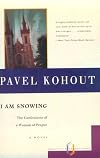
Like Milan Kundera, Pavel Kohout writes about the trauma, pain, and messy aftermath of the Russian occupation of Czechoslovakia although almost a decade later. We follow Petra Marova, a believing Catholic, whose lively love life gets her entangled in figuring if her former husband or her former lover have separately or jointly lied to her about their darker associations with the Russian communists and its security apparatus. We get to see an ugly side of this association past and present show more and, of course, how it fouls the air of the Czech people and state. There is building suspense that leads to an interesting denouement. The constant use of a tight fast moving dialogue followed immediately by equally tight and fast moving afterthoughts makes you examine every word and thought. It is fun to see Kohout confidently create this complex woman.
Quotes: (pages 48 and 59) “Years later (I hadn't found the slightest traces of a woman's presence at his place; was he a hermit returning to worldly life?), he confessed his love and proposed—to me. And I, the eternally fleeing weasel, who told her lawful husband, 'Take everything but our daughter and get lost, I don't want you anymore!' Yes, I who fled even my beloved not only to make him love me more, but because I intrinsically valued freedom over everything else---I shivered with delight that a last I was in strong hands. (Today I know that for the first time I'd heard the tolling of old age.)”
(page 190) “The struggle with the Moloch of the party and government sometimes so preoccupied him that I became a burden, He was never able to handle it the way I expected him to (and as he always promised anew to do all that was holy), couldn't learn to give his work what it required and love what it deserved; he would simply begin to slip away from me. When his desertion got out of hand, I would defend myself ( defend both of us!) with one method that worked on him: I would ostentatiously find myself a stand-in ( most of the time someone he knew).”
(page 281) “What a conversion! 'Now he's building up my father's will to live, and I am starting to ask if I have the right to keep his condition secret from him anymore. Maybe he'd want to do something, if he knew...'
What would I want? I don't know yet. 'Truth and falsehood aren't like light and darkness. How do you figure what's what?]
'You're seeing how right now. I sanctioned lying up to a certain point, and where did it lead? Truth disappeared in it like green frass among the weeds. I don't know in the outside world, but here we get used to considering whatever served our purposes to be the truth.'” show less
Quotes: (pages 48 and 59) “Years later (I hadn't found the slightest traces of a woman's presence at his place; was he a hermit returning to worldly life?), he confessed his love and proposed—to me. And I, the eternally fleeing weasel, who told her lawful husband, 'Take everything but our daughter and get lost, I don't want you anymore!' Yes, I who fled even my beloved not only to make him love me more, but because I intrinsically valued freedom over everything else---I shivered with delight that a last I was in strong hands. (Today I know that for the first time I'd heard the tolling of old age.)”
(page 190) “The struggle with the Moloch of the party and government sometimes so preoccupied him that I became a burden, He was never able to handle it the way I expected him to (and as he always promised anew to do all that was holy), couldn't learn to give his work what it required and love what it deserved; he would simply begin to slip away from me. When his desertion got out of hand, I would defend myself ( defend both of us!) with one method that worked on him: I would ostentatiously find myself a stand-in ( most of the time someone he knew).”
(page 281) “What a conversion! 'Now he's building up my father's will to live, and I am starting to ask if I have the right to keep his condition secret from him anymore. Maybe he'd want to do something, if he knew...'
What would I want? I don't know yet. 'Truth and falsehood aren't like light and darkness. How do you figure what's what?]
'You're seeing how right now. I sanctioned lying up to a certain point, and where did it lead? Truth disappeared in it like green frass among the weeds. I don't know in the outside world, but here we get used to considering whatever served our purposes to be the truth.'” show less
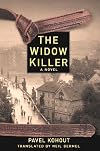
Kohout is a Czech writer who was one of the leaders of the 1968 Prague Spring revolt. His work was ruthlessly suppressed for twenty years. This mystery of his is set in Prague during the later years of W.W. II.
The complexities of wartime Czechoslovakia are rendered as an engrossing mystery story. A psychopathic killer is murdering widows. The Gestapo take little interest until a German resident is killed and the investigation begins to show a pattern and links to other killings. Erwin show more Buback, until now an unquestioning Gestapo agent and Jan Morava, a Czech police detective, are determined to track down the killer. Buback’s wife and daughter had been killed in a stray bombing of the farm where they had been sent to prevent just such an occurrence. He had his wife had always been loyal Nazis with little reason to question Hitler’s judgment until his invasion of Russia and Hilda, a teacher, brings home a map showing the vast expanses of Russia compared to tiny Europe. “A cartographic anomaly,” is Buback’s response.
But in the midst of the investigation, Buback become haunted by the deviant thought. “Could Hitler somehow derive some perverted satisfaction from the worldwide butchery he’d unleashed as the unknown murderer did from his slaughter of women?” The story becomes an allegory for the poisonous influence of ideology as the killer's motives become revealed as being committed in the name of a higher calling. The hunt for the killer breaks down in the chaos of the Allies’ inexorable pressure from the east and west. The world is turned upside down as right becomes wrong and evil becomes good as “the need for retribution clashed with the fear of becoming just like the men who so recently murdered their loved ones.” show less
The complexities of wartime Czechoslovakia are rendered as an engrossing mystery story. A psychopathic killer is murdering widows. The Gestapo take little interest until a German resident is killed and the investigation begins to show a pattern and links to other killings. Erwin show more Buback, until now an unquestioning Gestapo agent and Jan Morava, a Czech police detective, are determined to track down the killer. Buback’s wife and daughter had been killed in a stray bombing of the farm where they had been sent to prevent just such an occurrence. He had his wife had always been loyal Nazis with little reason to question Hitler’s judgment until his invasion of Russia and Hilda, a teacher, brings home a map showing the vast expanses of Russia compared to tiny Europe. “A cartographic anomaly,” is Buback’s response.
But in the midst of the investigation, Buback become haunted by the deviant thought. “Could Hitler somehow derive some perverted satisfaction from the worldwide butchery he’d unleashed as the unknown murderer did from his slaughter of women?” The story becomes an allegory for the poisonous influence of ideology as the killer's motives become revealed as being committed in the name of a higher calling. The hunt for the killer breaks down in the chaos of the Allies’ inexorable pressure from the east and west. The world is turned upside down as right becomes wrong and evil becomes good as “the need for retribution clashed with the fear of becoming just like the men who so recently murdered their loved ones.” show less
Tři knihy veršů : Verše a písně z let 1945-1952 : Dobrá píseň 1951: Čas lásky a boje 1952-1954 by Pavel Kohout

This is wrong on so many levels...
Lists
You May Also Like


Associated Authors
Statistics
- Works
- 59
- Also by
- 2
- Members
- 613
- Popularity
- #41,001
- Rating
- 3.5
- Reviews
- 14
- ISBNs
- 120
- Languages
- 11
- Favorited
- 2

