

Jaroslav Hašek (1883–1923)
Author of The Good Soldier Švejk
About the Author
Even though Jaroslav Hasek wrote a large number of short stories, his fame rests mainly on his satirical novel The Good Soldier Schweik (1920--23), in which he created the fat and cowardly dog-catcher-gone-to-war who personified Czech bitterness toward Austria in World War I. The humorous show more complications in which Schweik becomes involved derive from Hasek's own experience; his work as a journalist was interrupted by war and, like Schweik, he became a soldier. Eventually, he was taken prisoner by the Russians. Later he returned to Prague as a communist to work as a free-lance writer. At his death he had completed only four "Schweik" novels of a projected six. Martin Esslin has said, "Schweik is more than a mere character; he represents a basic human attitude. Schweik defeats the powers that be, the whole universe in its absurdity, not by opposing but by complying with them. . . In the end the stupidity of the authorities, the idiocy of the law are ruthlessly exposed." The character of Schweik made a tremendous impression on Bertolt Brecht, who transformed his name to use him afresh in the play Schweyk in the Second World War. (Bowker Author Biography) show less
Disambiguation Notice:
(yid) VIAF:4931097
The Good Soldier Svejk (Schweik, Schwejk, Svejkin...) was written as 4 volumes. Modern editions are often a selection from all of them, but let's try to keep those published as the original volumes separate.
Image credit: Jaroslav Hašek in his twenties
Series
Works by Jaroslav Hašek
The Fateful Adventures of the Good Soldier Svejk During the World War, Book One (1921) 168 copies, 2 reviews
Fateful Adventures of the Good Soldier Svejk During The World War, Book Two (1922) 115 copies, 1 review
Historia del partido del progreso moderado dentro de los límites de la ley ; Comandante de la ciudad de Bulgumá (2015) 9 copies, 1 review
Il peccato del parroco Andrea 7 copies
The Good Soldier Svejk Vol 3 6 copies
Il tuono viola e altri racconti 5 copies
vejk contro l’Italia 4 copies
Böhmische Küche. 40 Humoresken 3 copies
Satiry a humoresky 3 copies
e Ancora botte da orbi 3 copies
Osudy dobrého vojáka Švejka za světové války. Vol. 2 Díl 3., 4., V zázemí. Na frontě (1999) 2 copies
Den Tappre Soldaten Svejks Äventyr I 2 copies
Der Tolpatsch und andere Erzählungen 2 copies
O Valente Soldado Chveik 2 copies
Il Buon soldato Sc'vèik 2 copies
Собрание сочинений в 6-ти томах. Том 5. Книга памфлетов: Политическая и социальная история партии… 1 copy
SUPLIMENT VESEL DUMINICAL 1 copy
Собрание сочинений в 6-ти томах. Том 6. Похождения бравого солдата Швейка во время мировой войны:… 1 copy
Исповедь старого холостяка 1 copy
Ярослав Гашек в 5-ти томах 1 copy
Die Ausrottung der Praktikanten der Speditionsfirma Kobkán Geschichten und kurze Texte (2015) 1 copy
Svejk I. 1 copy
Svejk II. 1 copy
Рассказы 1 copy
Dole i niedole dzielnego żołnierza Szwejka podczas wojny światowej. T. 1, T. 2, [Na tyłach]. [Na froncie] (1991) 1 copy
Meine Beichte 1 copy
Fialový hrom : povídky 1 copy
Собрание сочинений в 6 томах 1 copy
Рассказы и фельетоны 1 copy
Рассказы и фельетоны 1 copy
By Jaroslav Hasek The Red Commissar: Including Further Adventures of the Good Soldier Svejk and Other Stories (New edition) (2003) 1 copy
Abeceda humoru 1 copy
Dole sloboda štampe 1 copy
Ushtari i mire shvejk 2 1 copy
Για τα πανηγύρια 1 copy
Για γέλια και για κλάματα 1 copy
Ομορφος κόσμος ηθικός 1 copy
Ενας δολοφόνος καταζητείται 1 copy
Galerie karikatur 1 copy
Razgovor s cenzorom 1 copy
Ushtari i mire Shvejk 1 1 copy
Fialový hrom 1 copy
Cuentos de Hasek 1 copy
Góði dátinn Svejk 1 copy
O valente soldado Chveik 1 copy
Ο καλός στρατιώτης Σβέϊκ 1 copy
Hörcsög a díványban 1 copy
Fialový hrom 1 copy
Dobri vojak Švejk (knj. 1) 1 copy
Der lila Blitz 1 copy
Povídky 1 1 copy
Povídky 2 1 copy
Ένας δολοφόνος καταζητείται 1 copy
Abeceda humoru A/L 1 copy
Hur det gick till när jag dog och hur jag träffade författaren till min nekrolog (Fenix 1:1/2) 1 copy
La vera storia e il programma originale del Partito del Progresso Moderato nei Limiti della Legge 1 copy
Dobri vojak Švejk (knj. 3) 1 copy
Nešťastný policejní ředitel 1 copy
Trampoty pana Tenkráta 1 copy
Kaptenens arméhund : Jaroslav Hasek berättar fyra historier ur Reelní podník : grotesky a mystifikace : tretí dekameron, 1977 (1996) 1 copy
Min zoologiske have 1 copy
Idylky z pekla 1 copy
Moje zpověď 1 copy
Školní čítanky a jiné satiry 1 copy
Jak se máme chovati 1 copy
Associated Works
Piirakkasota; valikoima huumoria — Contributor — 3 copies
Tagged
Common Knowledge
- Canonical name
- Hašek, Jaroslav
- Birthdate
- 1883-04-30
- Date of death
- 1923-01-03
- Gender
- male
- Education
- Czech-Slavonic Business Academy
- Occupations
- druggist
bank clerk
dog salesman
journalist
soldier
humorist (show all 7)
satirist - Short biography
- Czech writer and humorist Jaroslav Hašek became internationally known for his novel The Good Soldier Svejk and His Fortunes in the World War (1923). He was also the author of approximately fifteen hundred stories, sketches, and newspaper columns; in addition, he wrote plays for cabarets. Hašek's work was closely linked to his unconventional lifestyle, which became the subject of many stories and legends that Hašek himself helped to create. In his best works, the spontaneity of his storytelling and overall ironic detachment indicate his belief in unpretentiousness and tolerance.
- Cause of death
- heart failure
- Nationality
- Czech Republic
Austria-Hungary - Birthplace
- Prague, Czech Republic
- Places of residence
- Prague, Czech Republic (then Bohemia)
Lipnice, Czech Republic (then Czechoslovakia) - Place of death
- Lipnice nad Sázavou, Czech Republic
- Burial location
- Lipnice, Czech Republic
- Map Location
- Czech Republic
- Disambiguation notice
- The Good Soldier Svejk (Schweik, Schwejk, Svejkin...) was written as 4 volumes. Modern editions are often a selection from all of them, but let's try to keep those published as the original volumes separate.
Members
Discussions
Fine editions of Hesse or Hašek? in Fine Press Forum (October 2022)
Group Read, April 2017: The Good Soldier Svejk in 1001 Books to read before you die (May 2017)
Reviews
The Good Soldier Svejk and His Fortunes in the World War (Penguin Modern Classics) by Jaroslav Hašek
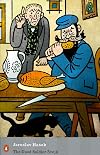
It takes a writer of great gifts to create characters who take on an independent life of their own after the reader has completed the book; it takes a writer of special genius to create characters that are so life-full that they actually enter the folklore of the nation that gives rise to them. Dickens was one such, Hasek is another. From his first appearance in sketches, stories and feuilletons in the first years of the 20th century, to his more fully developed manifestation in this huge show more novel, the character Svejk has come to embody the folk character of those lands in central Europe previously part of the Austro Hungarian empire: Czech, Slovakia, Bohemia.
An anonymous, modest hero, shabbily dressed, Svejk embodies the little man who lives by the creed that if you cannot fight against the Empire, you can at least make its servants wish they’d never been born. Svejk’s weapons in this unequal war are cunning and guile hiding under a mask of innocence and idiocy, the propensity to land himself and his superiors in trouble, and the ability to spin tales that alternately and simultaneously enthral and appal the listener.
Hasek’s target in this satire is the Austro Hungarian Empire, especially its Army, and the Church which bolstered it up. But although the book is firmly located in time and place, and although its satire is directed at something long gone, the book still has enormous, mythic, resonance...
Read the full review on The Lectern. show less
An anonymous, modest hero, shabbily dressed, Svejk embodies the little man who lives by the creed that if you cannot fight against the Empire, you can at least make its servants wish they’d never been born. Svejk’s weapons in this unequal war are cunning and guile hiding under a mask of innocence and idiocy, the propensity to land himself and his superiors in trouble, and the ability to spin tales that alternately and simultaneously enthral and appal the listener.
Hasek’s target in this satire is the Austro Hungarian Empire, especially its Army, and the Church which bolstered it up. But although the book is firmly located in time and place, and although its satire is directed at something long gone, the book still has enormous, mythic, resonance...
Read the full review on The Lectern. show less
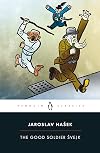
Not quite as satisfying on a reread, but still one of the great 20th Century picaresques and a seminal war satire, passing the baton directly from Simplicissimus to the likes of Heller and Eastlake. The characters are indelible: the terminally uptight Lt Dub, the apelike, arm-swinging glutton Baloun, the long-suffering but essentially noble Lt Lukáš, and of course Švejk himself with his inexhaustible fund of pointless anecdotes and reductio ad absurdums, a kind of super-moronic Sancho show more Panza (to Lukáš' Quixote?) whose response to the idiocy of endless war is to meet it on its own idiotic, interminable terms.
Hašek's disgust for the role of the Church in war is extremely palpable. Here he is describing some prayer-cards, penned by the Archbishop of Budapest and distributed to the men by a couple of well-meaning old ladies:
And although the plot, such as it is, never makes it to any actual combat (I wonder if it would have done had the author lived to complete it?), the horror of the front is never far away. Here's an anonymous character in a discussion on the prevalence of shit on the battlefield:
Ultimately though, Švejk is a pre-postmodern work, the theatre of war meeting the theatre of the absurd. Exchanges like this, very near the end of the book, capture the spirit of it, I think:
And at its heart, amid all the inanity, the tedium, the degradations, if you squint very hard, there's a kernel of something decent:
Hašek's disgust for the role of the Church in war is extremely palpable. Here he is describing some prayer-cards, penned by the Archbishop of Budapest and distributed to the men by a couple of well-meaning old ladies:
According to the venerable archbishop the merciful Lord ought to cut the Russians, British, Serbs, French and Japanese into mincemeat, and make a paprika goulash out of them. The merciful Lord ought to bathe in the blood of the enemies and murder them all, as the ruthless Herod had done with the Innocents.
His Eminence, the Archbishop of Budapest, used in his prayers such beautiful sentences as for instance: 'God bless your bayonets that they may pierce deeply into your enemies' bellies. May the most just Lord direct the artillery fire onto the heads of the enemy staffs. May merciful God grant that all your enemies choke in their own blood from the wounds which you will deal them!'
And although the plot, such as it is, never makes it to any actual combat (I wonder if it would have done had the author lived to complete it?), the horror of the front is never far away. Here's an anonymous character in a discussion on the prevalence of shit on the battlefield:
'And a dead man, who lay on top of the cover with his legs hanging down and half of whose head had been torn off by shrapnel, just as though he'd been cut in half, he too in the last moment shitted so much that it ran from his trousers over his boots into the trenches mixed with blood. And half his skull together with his brains lay right underneath. A chap doesn't even notice how it happens to him.'
Ultimately though, Švejk is a pre-postmodern work, the theatre of war meeting the theatre of the absurd. Exchanges like this, very near the end of the book, capture the spirit of it, I think:
Vaněk asked with interest:
'How long do you think the war will go on, Švejk?'
'Fifteen years,' answered Švejk. 'That's obvious because once there was a thirty years' war and now we're twice as clever as they were before.'
And at its heart, amid all the inanity, the tedium, the degradations, if you squint very hard, there's a kernel of something decent:
Lieutenant Lukáš walked along the track thinking: 'I ought to have given him a few on the jaw, but instead I've been gossiping with him as though he were a friend.'show less
Well, we read this for one of our f2f book groups, and I got about 2/3 of the way through before my eyes glazed over and I found myself falling asleep and dreaming the end of each sentence. Classic though it might be, it wore out its welcome with me. Schwiek is a con-man and otherwise a cypher at the start of WWI in the Czech-speaking part of the Austro-Hungarian empire, and the book is a series of escapes from a bureaucratic, idiotic and mismanaged army and surrounding society. No one show more actually gets into battle by the book's ending, but the cruelty and mismanagement the erstwhile hero keeps subverting is a sarcastic look at a rotting system. Glad I peeked at it, not sorry I didn't finish it. show less

The Švejk Prequels and Other Stories
Review of the Loomingu Raamatukogu Kuldsari nr. 1 paperback edition (2020) reissue of the Estonian translations Geniaalne idioot (1983) & Huumori kool (1958) translated from the original Czech language books Dobrý voják Švejk před válkou a jiné podivné historky (The Good Soldier Švejk Before the War and Other Strange Stories) (1912), Dobrý voják Švejk v zajetí (The Good Soldier Švejk in Captivity) (1917), Škola humoru: povídky (School of show more Humour) and various other sources (1911-1921)
The main draw here is definitely the early Švejk stories which predate the classic The Good Soldier Švejk (1923). I actually could not find an English translation of those or of many of the other stories that appear in this Estonian translation anthology edition. The Bachura Scandal and Other Stories and Sketches (2004) is probably the closest equivalent, based on the descriptions I’ve read, but I don’t think it has the Švejk stories.
The stories contained in Geniaalne idioot / Huumori kool (An Ingenious Idiot / The School of Humour) continue Hašek’s dominant theme of parodying the incompetence of authority and bureaucracy, not only in the Austro-Hungarian military, but also in the areas of politics, the judiciary and business. The publisher Loomingu Raamatukogu maintains its usual high standards of editorial commentary by reproducing the original translators’ Inserts and Afterwords and by adding an additional afterword Kuidas Hašek Švejki julgestusel Eesti vallutas (How Hašek conquered Estonia with the security of Švejk) by Toomas Kall. The introduction by Geniaalne idioot translator Lembit Remmelgas records the birth of the concept of Švejk by Hašek’s wife Jarmila.
Review of the Loomingu Raamatukogu Kuldsari nr. 1 paperback edition (2020) reissue of the Estonian translations Geniaalne idioot (1983) & Huumori kool (1958) translated from the original Czech language books Dobrý voják Švejk před válkou a jiné podivné historky (The Good Soldier Švejk Before the War and Other Strange Stories) (1912), Dobrý voják Švejk v zajetí (The Good Soldier Švejk in Captivity) (1917), Škola humoru: povídky (School of show more Humour) and various other sources (1911-1921)
The main draw here is definitely the early Švejk stories which predate the classic The Good Soldier Švejk (1923). I actually could not find an English translation of those or of many of the other stories that appear in this Estonian translation anthology edition. The Bachura Scandal and Other Stories and Sketches (2004) is probably the closest equivalent, based on the descriptions I’ve read, but I don’t think it has the Švejk stories.
The stories contained in Geniaalne idioot / Huumori kool (An Ingenious Idiot / The School of Humour) continue Hašek’s dominant theme of parodying the incompetence of authority and bureaucracy, not only in the Austro-Hungarian military, but also in the areas of politics, the judiciary and business. The publisher Loomingu Raamatukogu maintains its usual high standards of editorial commentary by reproducing the original translators’ Inserts and Afterwords and by adding an additional afterword Kuidas Hašek Švejki julgestusel Eesti vallutas (How Hašek conquered Estonia with the security of Švejk) by Toomas Kall. The introduction by Geniaalne idioot translator Lembit Remmelgas records the birth of the concept of Švejk by Hašek’s wife Jarmila.
One night in May, Hašek came home bone-tired, but he still had enough perseverance and will that he wrote down in a few words a creative idea that later occupied him relentlessly. He had barely opened his eyes in the morning when he began to look for the small sheet of paper on which he had, as he asserted, written his original idea, but which he had forgotten by the morning. In the meantime, I had thrown the paper away into the garbage. Hašek stormed through it, and was blissfully happy when he found the crumpled piece of paper. He carefully pried it open, read through it, scrunched it together again and threw it away. I picked it up again and kept it. The octavo sheet has the clearly legible and underlined title of the story: "The Company Idiot". Below that is a sentence from which one can read "He puts himself to the test to see if he can perform properly as a soldier..." This is followed by several confusing words. - translated from pg. 7 of Geniaalne idioot / Huumori koolshow less
Lists
. (1)
Favourite Books (1)
Best War Stories (1)
Awards


You May Also Like


Associated Authors
Statistics
- Works
- 271
- Also by
- 4
- Members
- 5,054
- Popularity
- #4,952
- Rating
- 4.0
- Reviews
- 92
- ISBNs
- 328
- Languages
- 27
- Favorited
- 25


