
Eckhart Tolle
Author of The Power of Now: A Guide to Spiritual Enlightenment
About the Author
Spiritual author and teacher Eckhart Tolle was born in Germany on February 16, 1948. He lived in Spain and England before settling in Vancouver, Canada in 1995. He received his education at the Universities of London and Cambridge. Following several sustained periods of depression, at the age of 29 show more he experienced an enlightenment that dramatically changed the course of his life. His subsequent spiritual teachings have focused on awareness of the present moment, freedom from negativity, and the attainment of inner peace. He does not align himself with any specific religion or tradition. He has written numerous books including The Power of Now; A New Earth; Stillness Speaks; and Practicing the Power of Now. He is a public speaker who teaches and travels throughout the world. In January 2008, A New Earth was selected for Oprah Winfrey's book club. (Bowker Author Biography) show less
Image credit: Kyle Hoobin
Series
Works by Eckhart Tolle
Eckhart Tolle's Findhorn Retreat: Stillness Amidst the World: A Book and 2 DVD Set (2005) 144 copies, 4 reviews
Milton's Secret: An Adventure of Discovery through Then, When, and the Power of Now (2008) 80 copies, 3 reviews
The Realization of Being: A Guide to Experiencing Your True Identity (Power of Now) (2001) 27 copies, 1 review
Lebendige Beziehungen JETZT!: Aus "Jetzt! Die Kraft der Gegenwart": Aus "Jetzt! Die Kraft der Gegenwart" (2005) 6 copies
Eckhart Tolle en Barcelona: La nueva conciencia. DVD de la conferencia y seleccion de citas. Libro DVD (Spanish Edition) (2009) 4 copies
AAAAAA 3 copies
Sức mạnh của tĩnh lặng 2 copies
Lasting Happiness 2 copies
La nueva conciencia: La conferencia en español impartida en Barcelona (Espiritualidad) (Spanish Edition) (2016) 2 copies
Miltons Geheimnis: Eine abenteuerliche Entdeckungsreise durch Damals und Demnächst in das Wunder dieses Moments (2009) 1 copy
Meditations for New Ea 1 copy
FUQIA E SË TASHMES 1 copy
CV77 - O Poder do Silêncio 1 copy
ThePowerofNow 1 copy
NJE TOKE E RE 1 copy
FUQIA E SE TASHMES 1 copy
Ư Ơ ♭ ʺ ʹ ® 1 copy
Για μια νέα ζωή!: Το κλειδί για την ευτυχία, την εσωτερική γαλήνη, την ανακάλυψη και κορύφωση των… 1 copy
The Secret of Self-Realization: Teachings to Access the Arising New Consciousness (Intensive) 1 copy
Living Your True Purpose 1 copy
Moc přítomného okamžiku 1 copy
Le pouvoir du moment présent - Guide d'éveil spirituel - Version intégrale - Livre audio CD MP3 (2017) 1 copy
The Simple Truth : An In-Depth Interview with Eckhart Tolle [video recording] (2015) — Interviewee — 1 copy
End Self-seeking 1 copy
Calendar (EPHEMERA) 1 copy
Creating a New Earth: Teachings to Awaken Consciousness - The Best of Eckhart Tolle TV - Season One (2011) 1 copy
You Be the Master 1 copy
A Changed World 1 copy
Wer ist ICH?: Auf der Suche nach dem wahren Selbst: Auf der Suche nach dem wahren Selbst - Buch mit DVD im Schuber (2018) 1 copy
Ein neues Denken - ein neuer Mensch - eine neue Welt: Texte, Begegnungen und Gespräche mit A.S. Dalal (2nd Edition) (2012) 1 copy
The Power of Now, The Dalai Lamas Book of Wisdom, The Art of Happiness 3 Books Collection Set (2019) 1 copy
මේ මොහොත සමග මිත්රවීම 1 copy
¿Qué es la meditación? 1 copy
Oneness with All Life 1 copy
Stillness Speaks 1 copy
Sustaining Presence in the Face of Catastrophe: Teachings on Awakening to Our Essential Nature (2016) 1 copy
Associated Works
Tagged
Common Knowledge
- Canonical name
- Tolle, Eckhart
- Legal name
- Tolle, Ulrich Leonard
- Birthdate
- 1948-02-16
- Gender
- male
- Education
- University of London
University of Cambridge - Occupations
- teacher (spirituality)
writer (spirituality) - Relationships
- Eng, Kim (wife)
- Nationality
- Germany (birth)
- Birthplace
- Lünen, Germany
- Places of residence
- Germany (birth)
Spain
London, Middlesex, England, UK
Vancouver, British Columbia, Canada - Map Location
- Canada
Members
Reviews
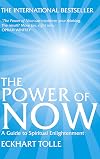
Nope, I’m calling it; this is the most turgid, self-absorbed, sanctimonious, and poorly-written drivel I have read for years. Tolle manages to propose a rather beautiful and simple concept, and then drown it in cosmic psycho-babble about rocks having consciousness.
The realisation that you have control over neither your past nor your future is stark and powerful. That depression comes from a focus on the past, and anxiety from a focus on the future, is an acute observation. There are show more comments in the opening chapters upon which I will ruminate. But the power of them was significantly lessened when he started going on about conscious rocks, and the universe, and cosmic being.
Also, the literary conceit of writing with two voices was irritating. Especially when the “author’s voice” starts belittling the “reader’s voice”. Nobody likes to be patronised, especially the reader.
It might be a famous book, and Tolle might be a well-respected writer. But I thought it was a load of old cobblers. show less
The realisation that you have control over neither your past nor your future is stark and powerful. That depression comes from a focus on the past, and anxiety from a focus on the future, is an acute observation. There are show more comments in the opening chapters upon which I will ruminate. But the power of them was significantly lessened when he started going on about conscious rocks, and the universe, and cosmic being.
Also, the literary conceit of writing with two voices was irritating. Especially when the “author’s voice” starts belittling the “reader’s voice”. Nobody likes to be patronised, especially the reader.
It might be a famous book, and Tolle might be a well-respected writer. But I thought it was a load of old cobblers. show less
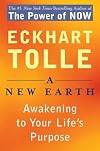
It would be easy to belittle this book, with its sixties feel and its you-can-do-it attitude and its mystical all-religions-are-one philosophy. It is easy to be cynical in the face of such idealism. Let’s hope Tolle doesn’t disappoint us later with tell-all revelations.I found much to like in this book, if one can overlook its flaws. Tolle is just a person, not a prophet, for one. I’d like to take the good parts from this book, just like I take from Socrates, not as if he is Moses show more carrying the Ten Commandments.And here is what I took away: Ego is killing our world. We must step back and look at the world from a bigger perspective. We must set aside our thoughts of taking everything we can get as what is due to us. We must live in the now, not in the anxiety-filled world of what has already happened or the fear-filled world of what might happen. show less
The mind and our ability to think is one of the greatest vanguards against tyranny and evil of all kinds, be it political, intellectual, or spiritual. Therefore, have an abundance of caution, or dare I say, fly with all your might from those who will tell you that the mind is out to enslave you, that the mind is the enemy, and that thought is dangerous. Yet that is the premise of the opening chapter of The Power of Now.
Tolle frames his arguments, for whatever they're worth, in terms of show more extreme either/or statements. "You are not your mind." Very few people would have said that we were. Most people recognize the common sense notion that we are both mind and body. Likewise, he states that because thoughts can be compulsive and harmful (no argument there), that indicates there is something wrong with thought and the mind itself. That is like saying that cancer proves the body is evil.
Just as groups like the gnostics and Manicheans of the past taught that matter and the body is evil, Tolle goes to the opposite extreme in claiming the mind itself is evil.
He references Descartes' statement, "I think therefore I am." and says this means that Descartes' thought that the only thing in the universe is the mind. This is a gross misinterpretation of Descartes. It is true that the rationalist philosophers placed great emphasis on the power of the mind and innate ideas (something almost universally rejected today), but Descartes was trying to prove that he existed, but he also used this same line of argumentation to prove that others things besides him existed. Descartes' concern was epistemology, not ontology.
All these criticisms are from the first chapter. I stopped listening when, early in the second chapter, he said something to the effect that true love would never want someone to suffer. If by this he means that love would not take pleasure in suffering, that is of course correct. Love is not sadistic. But that is not what he said. The truth is that love is often the cause of our suffering. Consider a stark contrast in Catholicism. The sufferings of Mary, the mother of Jesus, were very great, but they were great because of her love for her son. If she failed to love her son, she would not suffer. If it was Mary rather than Judas (God forbid!) who betrayed Jesus, she, like Judas, would weep only for herself, and not for her son.
The only redeeming factor that takes this book from 1/2 to 1 star is some of the practical meditation techniques, but those can be found in numerous other locations. show less
Tolle frames his arguments, for whatever they're worth, in terms of show more extreme either/or statements. "You are not your mind." Very few people would have said that we were. Most people recognize the common sense notion that we are both mind and body. Likewise, he states that because thoughts can be compulsive and harmful (no argument there), that indicates there is something wrong with thought and the mind itself. That is like saying that cancer proves the body is evil.
Just as groups like the gnostics and Manicheans of the past taught that matter and the body is evil, Tolle goes to the opposite extreme in claiming the mind itself is evil.
He references Descartes' statement, "I think therefore I am." and says this means that Descartes' thought that the only thing in the universe is the mind. This is a gross misinterpretation of Descartes. It is true that the rationalist philosophers placed great emphasis on the power of the mind and innate ideas (something almost universally rejected today), but Descartes was trying to prove that he existed, but he also used this same line of argumentation to prove that others things besides him existed. Descartes' concern was epistemology, not ontology.
All these criticisms are from the first chapter. I stopped listening when, early in the second chapter, he said something to the effect that true love would never want someone to suffer. If by this he means that love would not take pleasure in suffering, that is of course correct. Love is not sadistic. But that is not what he said. The truth is that love is often the cause of our suffering. Consider a stark contrast in Catholicism. The sufferings of Mary, the mother of Jesus, were very great, but they were great because of her love for her son. If she failed to love her son, she would not suffer. If it was Mary rather than Judas (God forbid!) who betrayed Jesus, she, like Judas, would weep only for herself, and not for her son.
The only redeeming factor that takes this book from 1/2 to 1 star is some of the practical meditation techniques, but those can be found in numerous other locations. show less
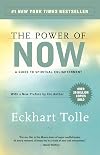
Reading The Power of Now by Eckhart Tolle was a surprisingly grounding experience. The book encourages you to focus on the present moment and step away from constant overthinking, which is easier said than done. As I read, I found myself pausing and really reflecting on my own thoughts and habits. Tolle’s writing has a calm, almost meditative quality, and at times it genuinely made me feel lighter and more aware of my surroundings.
That said, the book can be a bit challenging to get show more through. Some passages feel repetitive, and Tolle often uses abstract or philosophical language that can be hard to fully grasp on the first read. I found myself re-reading certain sections to really understand what he meant, which was sometimes a bit frustrating but also rewarding once the ideas clicked.
Overall, The Power of Now is both inspiring and thought-provoking. It’s not a book you read for entertainment, but for reflection and personal growth. While parts of it can feel dense or repetitive, the core message about living in the present and letting go of mental noise is powerful and lasting. It’s a book I think anyone struggling with stress, overthinking, or self criticism could benefit from, even if it requires patience to work through. show less
That said, the book can be a bit challenging to get show more through. Some passages feel repetitive, and Tolle often uses abstract or philosophical language that can be hard to fully grasp on the first read. I found myself re-reading certain sections to really understand what he meant, which was sometimes a bit frustrating but also rewarding once the ideas clicked.
Overall, The Power of Now is both inspiring and thought-provoking. It’s not a book you read for entertainment, but for reflection and personal growth. While parts of it can feel dense or repetitive, the core message about living in the present and letting go of mental noise is powerful and lasting. It’s a book I think anyone struggling with stress, overthinking, or self criticism could benefit from, even if it requires patience to work through. show less
Lists
Awards


You May Also Like


Associated Authors
Statistics
- Works
- 179
- Also by
- 3
- Members
- 20,960
- Popularity
- #1,033
- Rating
- 4.0
- Reviews
- 332
- ISBNs
- 616
- Languages
- 30
- Favorited
- 37
