
Qanta Ahmed
Author of In the Land of Invisible Women
About the Author
Works by Qanta Ahmed
Associated Works
Tagged
Common Knowledge
- Legal name
- Ahmed, Qanta A.
- Birthdate
- 20th Century
- Gender
- female
- Education
- University of Nottingham Medical School
- Occupations
- doctor
- Organizations
- Medical University of South Carolina
- Nationality
- UK
- Birthplace
- UK
- Places of residence
- New York, New York, USA
Riyadh, Saudi Arabia
London, England, UK
South Carolina, USA
Members
Reviews
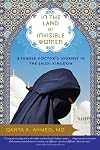
In one of the worst countries in the world for women, Pakistani Dr. Qanta discovers what's under the veil (lots of spirit and makeup) and what's in her heart (a newfound love of Islam). She takes a two year assignment at a hospital for royalty in Saudi Arabia, where, like all women, she is not permitted to leave her home without a abaya (full length robe), headscarf, and a male escort, and where Sharia law is strictly enforced.
Dr. Qanta makes a point of meeting other female medical show more professionals, both native and ex-pats, and comparing notes. She's roused by the strong feminism she finds but discouraged at the impossibly slow pace of change, and intimidated by the brutal religious police, who patrol even the female only areas and seem to also have the even Saudi royals running scared. And then there's the oil wealthy idle scions/dudebros who race their expensive sports cars down every street, killing themselves others in crashes with nary a regret or a penalty.
During her assignment, she falls in love with a Saudi doctor and makes the Hajj to Mecca twice. The passages on Hajj reminded me of the only other description of the solemn ritual I've ever read, that of Malcolm X in his autobiography. They both found incredible love and solidarity with other Muslims, but Dr. Qatar also is scorned by ultra conservative fellow female pilgrims, until she ministers to an ill woman who is one of the masses who cannot afford the luxury of a first class (complete with an air conditioned tent) pilgrimage experience.
In general, the doctor never encounters any poor Saudis, and in fact, does not seek out anyone like the Filipinas and Indonesian women who comprise the servant classes. This is a weakness in the narrative. Perhaps her position is that Saudi life is miserable enough for wealthy women - even with their luxury autos and goods - that there's no reason to meet anyone who'd make her feel even more, or less, privileged.
This is a valuable look at an awful place, swamped with the tribalism that seems forever married to Islam in a Wahhabi world. show less
Dr. Qanta makes a point of meeting other female medical show more professionals, both native and ex-pats, and comparing notes. She's roused by the strong feminism she finds but discouraged at the impossibly slow pace of change, and intimidated by the brutal religious police, who patrol even the female only areas and seem to also have the even Saudi royals running scared. And then there's the oil wealthy idle scions/dudebros who race their expensive sports cars down every street, killing themselves others in crashes with nary a regret or a penalty.
During her assignment, she falls in love with a Saudi doctor and makes the Hajj to Mecca twice. The passages on Hajj reminded me of the only other description of the solemn ritual I've ever read, that of Malcolm X in his autobiography. They both found incredible love and solidarity with other Muslims, but Dr. Qatar also is scorned by ultra conservative fellow female pilgrims, until she ministers to an ill woman who is one of the masses who cannot afford the luxury of a first class (complete with an air conditioned tent) pilgrimage experience.
In general, the doctor never encounters any poor Saudis, and in fact, does not seek out anyone like the Filipinas and Indonesian women who comprise the servant classes. This is a weakness in the narrative. Perhaps her position is that Saudi life is miserable enough for wealthy women - even with their luxury autos and goods - that there's no reason to meet anyone who'd make her feel even more, or less, privileged.
This is a valuable look at an awful place, swamped with the tribalism that seems forever married to Islam in a Wahhabi world. show less

This lengthy book is not a story as such, but a series of experiences; essays describing the author’s stay in Saudi Arabia. As a result of the format there is some duplication of details. A very long section relating a pilgrimage to Mecca was long enough to have been published as a separate work. The narrative, in the early chapters especially, does not flow easily, sounds somewhat stilted, and includes many passages of purple prose. Tighter writing would have produced a book that comes show more across as more spontaneous, candid, and less pretentious.
I found the author’s sympathy with Saudi men hard to understand considering their oppression toward women. In places prejudice was viewed as if it merely amounted to dainty Victorian-style manners. Repeated remarks about ultra-expensive brand names gave a shallow, materialistic quality throughout. (Yes, I know Saudis are incredibly rich but can you really identify Graff diamonds from any other – and under a black muslin veil to boot?) The overall impression I got from Ahmed’s book was not complimentary. show less
I found the author’s sympathy with Saudi men hard to understand considering their oppression toward women. In places prejudice was viewed as if it merely amounted to dainty Victorian-style manners. Repeated remarks about ultra-expensive brand names gave a shallow, materialistic quality throughout. (Yes, I know Saudis are incredibly rich but can you really identify Graff diamonds from any other – and under a black muslin veil to boot?) The overall impression I got from Ahmed’s book was not complimentary. show less
This book was received from LibraryThing under the Early Reviewers program. The story begins with Qanta Ahmed, a British-born physician who has spent several years in New York training in her field. When she is denied an extension of her American visa, Ahmed accepts a two year temporary position in a royal hospital in Saudi Arabia.
Even though Ahmed was raised in the Muslim religion by her Pakistani parents, she is not prepared for the world of repression that women must live under in Saudi. show more Right from the start, she must dress in a head-to-toe black shroud (abbayah) and be escorted from the airport by a male chaperone. She is exposed to the authority of the religious police (mutawaeen), the extreme lifestyles of the Saudi women and men, the separation of men and women in this culture.
Reading about her hajj or her pilgrimage to Mecca, which every Muslim is obligated to do at least once, was an eye opening adventure for me. I continued to follow online each of the places she visited and viewed photos of Muslim participants circling the famous Ka’aba. I understood why she was draw closer to her faith during her stay in the Kingdom.
As 9/11 takes place when Ahmed is in Saudi, she is shocked into the realization that her fellow colleagues are overjoyed about this tragedy and learns that maybe some Saudis are responsible. Qanta was further distraught when colleagues she considers her friends make vicious anti-Semitic comments about Jews killed in the Twin Towers. She learns that even though some of her fellow medical associates were trained by Jewish doctors, they still consider the rest of the Jewish race as vile and hate their (Israel’s) handling of Palestinians.
This book appealed to me because the author was honest and fore right in expressing her feelings about the unfamiliar life she was forced to live during her two years in Saudi Arabia. Her pilgrimage to Mecca was the most interesting section of the narrative. As she states in the afterword, many of the rules for women have been eased under the new King. show less
Even though Ahmed was raised in the Muslim religion by her Pakistani parents, she is not prepared for the world of repression that women must live under in Saudi. show more Right from the start, she must dress in a head-to-toe black shroud (abbayah) and be escorted from the airport by a male chaperone. She is exposed to the authority of the religious police (mutawaeen), the extreme lifestyles of the Saudi women and men, the separation of men and women in this culture.
Reading about her hajj or her pilgrimage to Mecca, which every Muslim is obligated to do at least once, was an eye opening adventure for me. I continued to follow online each of the places she visited and viewed photos of Muslim participants circling the famous Ka’aba. I understood why she was draw closer to her faith during her stay in the Kingdom.
As 9/11 takes place when Ahmed is in Saudi, she is shocked into the realization that her fellow colleagues are overjoyed about this tragedy and learns that maybe some Saudis are responsible. Qanta was further distraught when colleagues she considers her friends make vicious anti-Semitic comments about Jews killed in the Twin Towers. She learns that even though some of her fellow medical associates were trained by Jewish doctors, they still consider the rest of the Jewish race as vile and hate their (Israel’s) handling of Palestinians.
This book appealed to me because the author was honest and fore right in expressing her feelings about the unfamiliar life she was forced to live during her two years in Saudi Arabia. Her pilgrimage to Mecca was the most interesting section of the narrative. As she states in the afterword, many of the rules for women have been eased under the new King. show less
This book is very uneven and would benefit from some serious editorial attention. The style sometimes attempts self-consciously to be 'literary', and even allowing for the fact it is aimed at the American market, there are some strange turns of phrase employed. The constant references to designer labels and premium brands are a lazy form of description and assume a common interest in high-ticket price consumerism.
These concerns aside, Ahmed gives a surprisingly vivid and accessible glimpse show more of what life in Saudi Arabia was like at the end of the 20th century and in the immediate aftermath of 9/11. While the book will appeal more to women than men, it seems clear that the only way for a Westerner to begin to understand Saudi culture is through the eyes and experiences of women. At its best, the book portrays warm and engaging characters who are well rounded and frequently betray any stereotypes that might be assumed by the reader.
The book contains a thorough if personal critique of Islam from the perspective of one of its adherents, and does much to encourage an understanding of moderate Islam. The author's own religious experience brings an emotional and spiritual depth to her faith which is challenging to those of us who tend to see Islam as a rather dry and legalistic religion.
One hopes that this book will encourage Westerners of whatever religious background to engage with their Muslim neighbours and colleagues, and that greater understanding and acceptance will result on both sides.
Despite the reservations I have about some aspects of this book, I would recommend everyone to read it so they can appreciate that Islam comprises a wide range of beliefs and practices, most of which are moderate, compassionate and inculcate values many of us share. show less
These concerns aside, Ahmed gives a surprisingly vivid and accessible glimpse show more of what life in Saudi Arabia was like at the end of the 20th century and in the immediate aftermath of 9/11. While the book will appeal more to women than men, it seems clear that the only way for a Westerner to begin to understand Saudi culture is through the eyes and experiences of women. At its best, the book portrays warm and engaging characters who are well rounded and frequently betray any stereotypes that might be assumed by the reader.
The book contains a thorough if personal critique of Islam from the perspective of one of its adherents, and does much to encourage an understanding of moderate Islam. The author's own religious experience brings an emotional and spiritual depth to her faith which is challenging to those of us who tend to see Islam as a rather dry and legalistic religion.
One hopes that this book will encourage Westerners of whatever religious background to engage with their Muslim neighbours and colleagues, and that greater understanding and acceptance will result on both sides.
Despite the reservations I have about some aspects of this book, I would recommend everyone to read it so they can appreciate that Islam comprises a wide range of beliefs and practices, most of which are moderate, compassionate and inculcate values many of us share. show less
Lists
Women in Islam (1)
You May Also Like


Associated Authors
Statistics
- Works
- 1
- Also by
- 1
- Members
- 782
- Popularity
- #32,554
- Rating
- 3.7
- Reviews
- 91
- ISBNs
- 11
- Languages
- 1
