
Ali Eteraz
Author of Children of Dust: A Memoir of Pakistan
About the Author
Ali Eteraz was born in Pakistan and has lived in the Middle East, the Caribbean, and the United States. A graduate of Emory University and Temple Law School, he was selected for the Outstanding Scholar's Program at the United States Department of Justice and later worked in corporate litigation in show more Manhattan. He has published articles in Dissent, Foreign Policy, AlterNet, and altMuslim; and is a regular contributor to The Guardian UK. Visit the author online at www.alieteraz.com. show less
Works by Ali Eteraz
Tagged
Common Knowledge
- Birthdate
- 1980
- Gender
- male
- Education
- Emory University (Philosophy, magna cum laude). (Philosophy ∙ magna cum laude)
Temple University - Occupations
- writer
- Nationality
- USA
- Birthplace
- Lahore, Pakistan
Members
Reviews
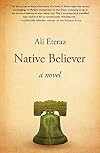
M. is a first generation American, born in the American South and a Muslim by heritage, not belief. In fact, M. identifies as non-religious and perhaps an atheist.
But…non-Muslim Americans don’t see him that way. He’s seen as Muslim because of his name and his skin color. He is fired from his job because his boss sees the Koran his mother put high on his bookshelf. A book he didn’t even know he owned.
So goes M’s luck until he finds friends among the Philadelphia Muslim community who show more are happy and willing to introduce him to local Muslim practices along with a little Muslim pornography.
This is a story of one man’s journey to finding himself. As an outsider in “mainstream” America and as an outsider in a community of which most Americans consider him to be a member, M. winds his way to finding what he believes in and re-imagining his marriage and his future.
The last chapter - no, the last few pages will leave you gasping. This is a page turner and a grand testimony to Eli Eteraz’s gift as a story teller.
I won this book as an early reviewer. show less
But…non-Muslim Americans don’t see him that way. He’s seen as Muslim because of his name and his skin color. He is fired from his job because his boss sees the Koran his mother put high on his bookshelf. A book he didn’t even know he owned.
So goes M’s luck until he finds friends among the Philadelphia Muslim community who show more are happy and willing to introduce him to local Muslim practices along with a little Muslim pornography.
This is a story of one man’s journey to finding himself. As an outsider in “mainstream” America and as an outsider in a community of which most Americans consider him to be a member, M. winds his way to finding what he believes in and re-imagining his marriage and his future.
The last chapter - no, the last few pages will leave you gasping. This is a page turner and a grand testimony to Eli Eteraz’s gift as a story teller.
I won this book as an early reviewer. show less
 This review was written for LibraryThing Early Reviewers.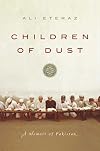
Ali Eteraz’s coming of age memoir takes us from his upbringing immersed in conservative Islam in Pakistan, to his education in philosophy and postmodernism in the West, to his epiphany about who he is when he is back in the Muslim world.
Eteraz has no qualms about showing us all his wavering, flaws and warts. It’s a big risk with a memoir, because readers might not like him enough to continue. But we get something valuable if we stay the course: Eteraz is without a doubt an interesting show more person, and moreover shares with us an inside look at a childhood overshadowed by Islamic teachings and religious madrassas (schools), and some plain language elucidation about the Quran and Islam.
I loved learning more about Islam. I had no idea, for example, that the Prophet Sulayman is none other than who we in the West call Solomon, son of King David (Daud), or that Isa, son of Maryam is the same as Jesus, son of Mary. I had thought that the Quran is considered holy in the same way the Bible is considered holy, but I learned differently. Eteraz explains:
"The Quran existed jointly with God. Timeless, immutable, perfect, the Quran was all Allah (though not all of Allah was the Quran). Allah had poured it through the mouth of Muhammad, and as it existed on paper now was how Allah intended for the Quran to look, taste, and sound. The Quran was the Islamic equivalent of Christ. The act of repeating the Arabic words, as they passed through the mouth and throat and echoed in the chest, was a form of transubstantiation: a way of making what was divine enter the human body.”
Well, you can certainly see why mistreatment of the Quran at Guatanamo by Western soldiers was such anathema to the prisoners there.
Eteraz’s memories about madrassas are pretty frightening. Young boys were physically abused – beaten, humiliated, harangued, even in one case raped. He doesn’t claim all madrassas are like this, but the ones in his experience certainly were. (The beatings were justified as helping to prepare the boys to serve Allah later in a greater capacity by being prepared for life’s pain.) No wonder this boy grew up to change his name to Ali Eteraz (“noble protest”) and to challenge the authority of ultraconservative Islam.
And yet, Eteraz has trouble escaping fundamentalist Islam’s noose. His friend Ziad observed:
"You have to ask yourself what you’re fighting for, Ali. Are you an enemy of Islamic fundamentalism simply because it pisses you off, or do you actually support liberty? If it’s the latter, why do you have to talk about Islam all day? If it’s the former, you have to ask yourself why you let your life be controlled by being pissed off. Or…maybe you’re just desperate to be relevant.”
Talks with Ziad, many as emotionally charged as this one, eventually lead Eteraz to understand what it is he believes.
Evaluation: The press release on this book characterizes it as “astonishingly honest” and “darkly comic.” I would agree with the former, but with the latter I would only accept the word “darkly.” I thought it was a sad book. I found many elements of what happened to Eteraz to be horrific. Even his parents, who seemed very loving, instilled fears and expectations in him about religion that I thought tended toward the abusive. This book reminds me of Foreskin’s Lament by Shalom Auslander. Auslander also decries the deleterious and pervasive effects of an orthodox religious upbringing. No matter how he tries to reject it, it continues to inform his existence. I would say that Auslander’s book is more accurately described as “comic” however. But both of these books teach by example that bringing up children to fear God by issuing threats and inculcating stories of the harm their sins will bring upon the world is destructive to the human spirit. show less
Eteraz has no qualms about showing us all his wavering, flaws and warts. It’s a big risk with a memoir, because readers might not like him enough to continue. But we get something valuable if we stay the course: Eteraz is without a doubt an interesting show more person, and moreover shares with us an inside look at a childhood overshadowed by Islamic teachings and religious madrassas (schools), and some plain language elucidation about the Quran and Islam.
I loved learning more about Islam. I had no idea, for example, that the Prophet Sulayman is none other than who we in the West call Solomon, son of King David (Daud), or that Isa, son of Maryam is the same as Jesus, son of Mary. I had thought that the Quran is considered holy in the same way the Bible is considered holy, but I learned differently. Eteraz explains:
"The Quran existed jointly with God. Timeless, immutable, perfect, the Quran was all Allah (though not all of Allah was the Quran). Allah had poured it through the mouth of Muhammad, and as it existed on paper now was how Allah intended for the Quran to look, taste, and sound. The Quran was the Islamic equivalent of Christ. The act of repeating the Arabic words, as they passed through the mouth and throat and echoed in the chest, was a form of transubstantiation: a way of making what was divine enter the human body.”
Well, you can certainly see why mistreatment of the Quran at Guatanamo by Western soldiers was such anathema to the prisoners there.
Eteraz’s memories about madrassas are pretty frightening. Young boys were physically abused – beaten, humiliated, harangued, even in one case raped. He doesn’t claim all madrassas are like this, but the ones in his experience certainly were. (The beatings were justified as helping to prepare the boys to serve Allah later in a greater capacity by being prepared for life’s pain.) No wonder this boy grew up to change his name to Ali Eteraz (“noble protest”) and to challenge the authority of ultraconservative Islam.
And yet, Eteraz has trouble escaping fundamentalist Islam’s noose. His friend Ziad observed:
"You have to ask yourself what you’re fighting for, Ali. Are you an enemy of Islamic fundamentalism simply because it pisses you off, or do you actually support liberty? If it’s the latter, why do you have to talk about Islam all day? If it’s the former, you have to ask yourself why you let your life be controlled by being pissed off. Or…maybe you’re just desperate to be relevant.”
Talks with Ziad, many as emotionally charged as this one, eventually lead Eteraz to understand what it is he believes.
Evaluation: The press release on this book characterizes it as “astonishingly honest” and “darkly comic.” I would agree with the former, but with the latter I would only accept the word “darkly.” I thought it was a sad book. I found many elements of what happened to Eteraz to be horrific. Even his parents, who seemed very loving, instilled fears and expectations in him about religion that I thought tended toward the abusive. This book reminds me of Foreskin’s Lament by Shalom Auslander. Auslander also decries the deleterious and pervasive effects of an orthodox religious upbringing. No matter how he tries to reject it, it continues to inform his existence. I would say that Auslander’s book is more accurately described as “comic” however. But both of these books teach by example that bringing up children to fear God by issuing threats and inculcating stories of the harm their sins will bring upon the world is destructive to the human spirit. show less

This book spoke to me powerfully, disturbingly and eloquently. Although unique in its narrative style, it's early chapters invited me in with the graphic ease of, say, Mao's Last Dancer. The story of Abir ul' Islam is compelling from the first page, despite portraying a terrifying picture of a religious interpretation that appears to be based entirely on superstition and human power. The young Abir is portrayed as closely as possible as though the events are occurring in the present, without show more benefit of adult hindsight. Then, when he moves to America, the mood changes abruptly, and the story is penned with a retrospective bitterness against his parents. Later, his cynical irony is turned on himself, and then, finally, in the fifth "book", Abir-Amir-Ali begins a painful, unintentional and beautifully depicted journey into love and wisdom. The character of Ziad, his reluctant teacher, is wonderfully realised, and the language becomes poetic in its beauty in places. The brutal honesty, combined with the changing narrative voice and the seductive simplicity and beauty of the text combine to make this one of the more extraordinary books I have ever read. What a privilege. show less
Eteraz’s very timely novel is thought-provoking, inventive, amusing in tone and a little crass as it explores the complex issues of identity against the destiny we desire. The narrator known as M. is a second-generation secular Muslim raised in the South who was well on his way of solidifying his Americanization until he loses his job because his boss finds out M. has a Koran in his home. All the paranoia of the post 9/11 America and The War of Terror are now placed on his shoulders as he show more has been labeled a Muslim”, an identity he never assigned to himself. In his despondent state, M. wrestles with the political, social and personal tensions as he works through who he is. I liked that the book is set in Philadelphia which has a set known identity associated with liberty and freedom and how it is upended as the author writes of an underground Philadelphia. The scenes of violence and disrespectful behavior towards women made me uncomfortable.
Overall, I thought the writing was fresh as it explores issues of identity, religion, and stereotypes.
I look forward of reading future books by the author.
This book was provided by the publisher in exchange for an honest review. show less
Overall, I thought the writing was fresh as it explores issues of identity, religion, and stereotypes.
I look forward of reading future books by the author.
This book was provided by the publisher in exchange for an honest review. show less
Lists
2017 Goal (1)
Awards


You May Also Like


Statistics
- Works
- 5
- Members
- 293
- Popularity
- #79,899
- Rating
- 3.6
- Reviews
- 27
- ISBNs
- 15
- Languages
- 1
