
Arjun Raj Gaind
Author of A Very Pukka Murder
About the Author
Series
Works by Arjun Raj Gaind
The Mighty Yeti 1 copy
The Missing Memsahib 1 copy
Associated Works
Tagged
Common Knowledge
- Canonical name
- Gaind, Arjun Raj
- Gender
- male
- Occupations
- graphic novelist
novelist - Agent
- Kanishka Gupta
- Short biography
- Arjun Raj Gaind is one of India's best known comic book writers. He is the creator and author of the critically acclaimed, best-selling graphic novels. A Very Pukka Murder is his debut novel.
- Nationality
- India
- Places of residence
- Punjab, India
- Associated Place (for map)
- Punjab, India
Members
Reviews
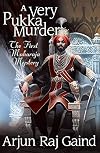
This mystery was sent to me by the publisher Poisoned Pen Press via Net Galley. Thank you.
A Very Pukka Murder is a take on the classic mysteries of the Golden Age. It’s all about the puzzle with the amateur sleuth uncovering the clues, following the trail of red herrings, and finally revealing all to the suspects in the drawing room/dining room/train car. However, this 21st century historical mystery set in 1909 has a unique twist. The location is the Raj in India and the sleuth is none show more other than the Maharaja of Rajpore Sikander Singh.
Sikander, the absolute ruler of his kingdom, is a Renaissance man, educated in the finest English schools, a connoisseur of the finest wines, an accomplished pianist and art collector. He also has an analytical mind which draws him to puzzles and he exercises his abilities with the most challenging puzzles, the solving of murders. To hone his natural skills he has studied the emerging field of criminology with the finest French criminologists and has become an expert in all types of poisons.
This does not endear him to the British enclave in Rajpore who consider themselves innately superior to the Maharaja because they are white. When Sikander decides to involve himself in solving the murder of the highest British official in his capitol he is met with opposition, derision, and downright racism at all levels of the colonial society. He endures veiled and blatant insults during his investigation from stupid young lieutenants all the way up to the Magistrate. The British want a swift, painless solution: if suicide does not work then the culprit must have been one of Major Russell’s servants who did the despicable man in.
Sikander, quite aware of his superiority on all levels, manages, most of the time, to dismiss the ignorant biases of the occupiers. Only a few times does he let their actions get under his skin. He is a fascinating man because he has his own flaws; he drinks too much and insults his staff even though the insults seem to be more affection than ire. In the end, with a very satisfying conclusion to the murder, he asserts his position, shows compassion to some individuals, and utterly destroys others.
This novel is the first of a trilogy. Besides being a very good mystery, it shows the Raj from the Indian point of view. I am looking forward to the remaining books. show less
A Very Pukka Murder is a take on the classic mysteries of the Golden Age. It’s all about the puzzle with the amateur sleuth uncovering the clues, following the trail of red herrings, and finally revealing all to the suspects in the drawing room/dining room/train car. However, this 21st century historical mystery set in 1909 has a unique twist. The location is the Raj in India and the sleuth is none show more other than the Maharaja of Rajpore Sikander Singh.
Sikander, the absolute ruler of his kingdom, is a Renaissance man, educated in the finest English schools, a connoisseur of the finest wines, an accomplished pianist and art collector. He also has an analytical mind which draws him to puzzles and he exercises his abilities with the most challenging puzzles, the solving of murders. To hone his natural skills he has studied the emerging field of criminology with the finest French criminologists and has become an expert in all types of poisons.
This does not endear him to the British enclave in Rajpore who consider themselves innately superior to the Maharaja because they are white. When Sikander decides to involve himself in solving the murder of the highest British official in his capitol he is met with opposition, derision, and downright racism at all levels of the colonial society. He endures veiled and blatant insults during his investigation from stupid young lieutenants all the way up to the Magistrate. The British want a swift, painless solution: if suicide does not work then the culprit must have been one of Major Russell’s servants who did the despicable man in.
Sikander, quite aware of his superiority on all levels, manages, most of the time, to dismiss the ignorant biases of the occupiers. Only a few times does he let their actions get under his skin. He is a fascinating man because he has his own flaws; he drinks too much and insults his staff even though the insults seem to be more affection than ire. In the end, with a very satisfying conclusion to the murder, he asserts his position, shows compassion to some individuals, and utterly destroys others.
This novel is the first of a trilogy. Besides being a very good mystery, it shows the Raj from the Indian point of view. I am looking forward to the remaining books. show less

In 1911, while elaborate preparations are being completed for the Durbar, to celebrate the coronation of King George V and Queen Mary, a dancing girl is found murdered. Maharaja Sikander Singh, a self-styled detective, is commandeered to investigate and find the culprit quickly before the arrival of the King and Queen.
This is an excellent book, filled with details of India’s elite and the British colonial rulers. I knew when I recognized names that there was a good deal of truth in the show more tale - connected to the Durbar and characters, not the murder - which was confirmed by the author’s note at the end. It was a terrific portrayal of the colourful Indian history during the Raj. I particularly enjoyed descriptions of the cars used, as well as the denouement. A wonderful story and writing style. I will be on the look out for more by Gaind. show less
This is an excellent book, filled with details of India’s elite and the British colonial rulers. I knew when I recognized names that there was a good deal of truth in the show more tale - connected to the Durbar and characters, not the murder - which was confirmed by the author’s note at the end. It was a terrific portrayal of the colourful Indian history during the Raj. I particularly enjoyed descriptions of the cars used, as well as the denouement. A wonderful story and writing style. I will be on the look out for more by Gaind. show less

The tale is entertaining enough, but I had quite a few issues with the book. The US spelling is jarring in a context that is so decidedly British. A glossary for the many Anglo-Indian terms is sadly lacking. Having read my fair share of books about the Raj, from Flashman to the Jewel in the Crown, I knew a lot of them, but not all. The style is over-the-top, flowery and piling one metaphor upon the other. The descriptions read like a catalogue for luxury merchandise, the cologne is not show more simple eau de cologne, but has to be Farina etc. It is riddled with clichés, from the resident gone native, over the stiff-upper-lip murdered resident, to the incompetent native servants and the loyal family retainer.
Finally, there are too many plain mistakes. Having a resident spend four decades on the station from the Mutiny onwards puts him in 1897, not 1904. Geographical distances would not have been measured in kilometres. The French words are usually mis-spelled, etc etc etc. And most disappointing of all: in a book written presumably by an Indian I hoped for an Indian point-of-view on life in a small princely state. Instead we get the same arrogance and prejudice the British displayed. Okay, so he was educated at Eton and Oxford, but at the time this is set, wouldn’t he have met with serious racism and picked up a healthy skepticism of the superiority of the white race? In fact, he is treated with disdain on the occasion of a visit to the club, and demonstrates the same submission and kow-towing he berates his own subjects for. Not to mention a truly ludicrous solution to the case. To say more would be spoilering, but it is truly inept show less
Finally, there are too many plain mistakes. Having a resident spend four decades on the station from the Mutiny onwards puts him in 1897, not 1904. Geographical distances would not have been measured in kilometres. The French words are usually mis-spelled, etc etc etc. And most disappointing of all: in a book written presumably by an Indian I hoped for an Indian point-of-view on life in a small princely state. Instead we get the same arrogance and prejudice the British displayed. Okay, so he was educated at Eton and Oxford, but at the time this is set, wouldn’t he have met with serious racism and picked up a healthy skepticism of the superiority of the white race? In fact, he is treated with disdain on the occasion of a visit to the club, and demonstrates the same submission and kow-towing he berates his own subjects for. Not to mention a truly ludicrous solution to the case. To say more would be spoilering, but it is truly inept show less
Death at the Durbar: The Second Maharaja Mystery (The Maharajah Mysteries Book 2) by Arjun Raj Gaind
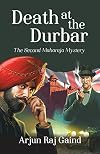
Thanks to Netgalley and the publisher for providing me a copy of the book to review.
This is a historical murder mystery set during the time of the Raj when the British were in control of India.
The King of England, George V, who is also Emperor of India, is visiting India. He is the first British king to do so. Huge celebrations have been scheduled to mark the visit and all the Indian maharajas have come to Delhi to pay homage to the king. The Durbar is a lavish tent city which has been show more constructed for them. Shortly before the king's arrival the body of a native dancer is found hanging near the king's quarters in the Durbar.
Sakinder Singh, the Maharaja of Raypole, is well known among the British ruling class and his peer maharajas for being a curious busybody. He is therefore assigned the task of solving the murder mystery, but has only a couple of days before the arrival of the king to do it. His trusty manservant is there to assist him, but he is saddled with a British army officer to supposedly keep an eye on him.
There is no shortage of suspects. It seems the dancer had many visitors during the days before her death -- someone actually maintained a list of them. As Sakinder goes about interviewing those on the list, even more visitors are discovered and questioned. Several of these visitors are unpleasant or just plain nasty people but Sakinder thinks none of them is the killer. Finally, a chance discovery provides the missing clue to Sakinder.
Sakinder is the star of the show -- he's a unique mixture of tradition and modern man. Similarly, there's an ambivalence about the British rule. The one nationalist character is a power-hungry weasel, while the British characters (except for a gang of young nobles) are cast in a generally favourable light. The story is set in 1911, when British power was at its height and the old order was yet to be swept aside by World War 1. It's a snapshot of the times.
Among the British there is an arrogance towards the Indians. The book portrays the class distinctions prevalent in both Indian and British society. Among the maharajas there is distinction between a thirteen gun maharaja and a seventeen gun one; that's based on the number of guns in the salute they are given at events. There's similar distinctions among the various regiments of the British army: the Coldstream Guards outrank the Black Watch.
This is the second book in what I hope becomes a series.
Recommended. show less
This is a historical murder mystery set during the time of the Raj when the British were in control of India.
The King of England, George V, who is also Emperor of India, is visiting India. He is the first British king to do so. Huge celebrations have been scheduled to mark the visit and all the Indian maharajas have come to Delhi to pay homage to the king. The Durbar is a lavish tent city which has been show more constructed for them. Shortly before the king's arrival the body of a native dancer is found hanging near the king's quarters in the Durbar.
Sakinder Singh, the Maharaja of Raypole, is well known among the British ruling class and his peer maharajas for being a curious busybody. He is therefore assigned the task of solving the murder mystery, but has only a couple of days before the arrival of the king to do it. His trusty manservant is there to assist him, but he is saddled with a British army officer to supposedly keep an eye on him.
There is no shortage of suspects. It seems the dancer had many visitors during the days before her death -- someone actually maintained a list of them. As Sakinder goes about interviewing those on the list, even more visitors are discovered and questioned. Several of these visitors are unpleasant or just plain nasty people but Sakinder thinks none of them is the killer. Finally, a chance discovery provides the missing clue to Sakinder.
Sakinder is the star of the show -- he's a unique mixture of tradition and modern man. Similarly, there's an ambivalence about the British rule. The one nationalist character is a power-hungry weasel, while the British characters (except for a gang of young nobles) are cast in a generally favourable light. The story is set in 1911, when British power was at its height and the old order was yet to be swept aside by World War 1. It's a snapshot of the times.
Among the British there is an arrogance towards the Indians. The book portrays the class distinctions prevalent in both Indian and British society. Among the maharajas there is distinction between a thirteen gun maharaja and a seventeen gun one; that's based on the number of guns in the salute they are given at events. There's similar distinctions among the various regiments of the British army: the Coldstream Guards outrank the Black Watch.
This is the second book in what I hope becomes a series.
Recommended. show less
You May Also Like
Associated Authors
Statistics
- Works
- 8
- Also by
- 1
- Members
- 95
- Popularity
- #197,645
- Rating
- 3.6
- Reviews
- 8
- ISBNs
- 16