
Arthur Herzog (1927–2010)
Author of The Swarm
About the Author
Works by Arthur Herzog
Associated Works
Reader's Digest Condensed Books 1975 v04: Where Are the Children? / Earthsound / The Eagle Has Landed / Daylight Must Come / The Wind at Morning (1975) 40 copies
Selecciones Reader's Digest: (libros condensados) El Gran Robo del Tren. Un Hombre Contra un Crucero. La Canción de Bernadette. Habla la Tierra (1977) — Contributor — 6 copies
Tagged
Common Knowledge
- Birthdate
- 1927-04-06
- Date of death
- 2010-05-26
- Gender
- male
- Occupations
- novelist
non-fiction writer
journalist - Nationality
- USA
- Associated Place (for map)
- USA
Members
Reviews
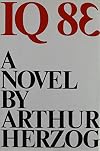
By the end of the 20th century, psychologists had discovered something called the Flynn Effect. This meant that intelligence levels had been rising steadily and rapidly over the past century. If we fast forward to the 2020s, psychologists have discovered an alarming trend. Over the past two decades, the Flynn Effect has been reversed and intelligence levels are now dropping at an alarming rate. There is no consensus to why this is happening; the most obvious causal indicator appears to be show more the introduction of the internet, but as of yet, this connection is inconclusive. One thing is for sure: with the immediate problems of climate change, economic instability, a collapsing educational system, and the threat of political totalitarianism working in conjunction with AI systems, this is not a good time for all the intellectual and scientific progress we have achieved over the centuries to retreat.
If we backtrack a bit, there were artists who saw this trend coming before anyone else. The dystopian 2006 movie Idiocracy porrayed a world where popular culture has made people so stupid that their existence is threatened because they forget how to grow food. It’s a silly comedy that mocks the kinds of people who would find it funny. Maybe it’s worth watching once. 1968’s Planet Of the Apes was a more serious science-fiction dystopia that showed human evolution going in reverse, with an upsurge in religion and despotism, after the banning and forbidding of science. Then there is Arthur Herzog’s overlooked novel IQ 83. Written in the 1970s, it is a hard science-fiction story showing what happens when an experimental virus escapes from a laboratory, spreads throughout the whole population, and makes everybody’s intelligence level decline rapidly.
James Heaaley is the central character. The story is divided between his family life in their New York City apartment and his employment as the head of a research team in a hospital in Central Manhattan. The research team is trying to save a girl named Cathy who is a permanent patient in the children’s ward. She should be of normal intelligence, yet she contracted a disease that caused her IQ to drop. As the biologists’ work brings them closer to a cure, experimental gene editing brings Cathy’s intelligence level back up to normal. But just when Healey makes plans for Cathy’s discharge so that she can attend public schools, everything goes to hell.
Wallon is a Belgian lab technician working on Healey’s project. Since creating a vaccine for the disease involves the use of a virus as a vector, precautions are imperative. Yet Wallon thinks the safety regulations are too stringent so he cuts corners during his work, doesn’t follow safety procedures, and accidentally takes the airborne virus out of the lab and begins spreading it throughout New York by coughing and sneezing.
After Wallon visits the Healey family for dinner, James Healey begins noticing some unwanted changes in everybody, including himself. He has problems with his memory and nonsensical thoughts from his childhood intrude into his thoughts, disrupting his concentration and making it difficult to work as a scientist. His wife Ruth becomes hypersexual and his two academically gifted children start struggling at school.
As Healey grows more aware that something isn’t right, he meets with Orenstein, the hospital psychiatrist. They discuss the possibilities and potential consequences of a sudden drop in intelligence across the whole world. Of course, the prognosis is not good. They agree to test their hypothesis by administering IQ tests to all the members of the research team. To their dismay, they find that everybody’s IQ had dropped and that it will continue to drop with the progression of time.
Healey contacts the hospital director, a doctor with an IQ of 200 and the curious name of Herman Hermann. The director, by this point, has already begun to succumb to the virus. Rather than expressing grave concern over the crisis, his defenses drop and he sees this as an opportunity to conquer the world, becoming a totalitarian leader who enslaves all those who he decides are inferior to him. But since the virus has taken hold, he resembles Healey in the way nonsense intrudes into his thoughts. Only with Hermann, the nonsense intrudes into his speech as well. As he holds meetings and conferences laying out his plan to dominate the world, he constantly interrupts himself in Turrette Syndrome-like attacks where he belches out obscene limericks and makes a fool of himself. This is not only a little comic relief, but also one instance of the author making social commentary. There is no doubt that Arthur Herzog believes fascism to be a form of politics for fools and clowns.
Subplots and social commentary run throughout the whole novel. There is a wide range of characters and each offers their own angle on society. What happens with most of them is that, like Herman Hermann, their inhibitions drop and their true motivations are revealed. James and Ruth Healey’s marriage is falling apart while Wallon is sexually pursuing Ruth. Healey’s son drops out of high school, takes up a marijuana habit, and becomes a biker. In Healey’s nuclear family unit, his bourgeois lifestyle sinks into the hedonistic excesses of the American counter-culture scene. Also the once harmonious multi-ethnic lab technicians become irritable and make racist comments towards each other. Rather than addressing this issue constructively, they bicker and match insults with insults. Similar things happen with the female nurses on the children’s ward. Before the virus struck they were dedicated, honest, and nurturing in the way good nurses should be, but afterwards they fall into petty man-hating and irresponsibility. Feminists start complaining in the letters column of a scientific magazine about the word “helix”, insisting this is sexist and should be changed to “herlix”. Herzog’s message in all this is that the social reforms of the 1960s are legitimate, but when approached without intelligence and proper analytical thinking, these issues of social justice can’t be approached in a meaningful way. Notice how he anticipated the childish arguments surrounding politics we find on the internet these days.
This social commentary is most developed in the character of Vergil Buck, a labor union leader and ambulance driver who makes impossible demands on the hospital management during a strike that happens just as the low-IQ virus begins attacking all of New York. During collective bargaining sessions, Buck demands that hospital employees get paid massive amounts of money without being obligated to do any work. He is inflexible in his proposal and refuses to negotiate. Later when James Healey goes to a rural retreat to develop a vaccine for rhe virus, Vergil Buck kidnaps him. Buck is the kind of person who thinks the world owes him something because he was born white, dumb, ugly, and poor (thanks to the Butthole Surfers for that description). He is also an annoyingly arbitrary character, more of a literary device than a meaningful symbol of the socially discontent. Herzog uses him to inject some action and suspense into a novel that doesn’t have much of either.
Herzog brings real science into this fictional story. The process of editing DNA to cure the disease that Cathy suffers from is described in detail early in the story. If your knowledge of genetics and virology are limited, these passages might be off-putting. Even with some knowledge of these disciplines, they are still clunky and out of place as though the author just wants to show off how much he knows about science. Some of the information does become relevant at the end when James Healey is struggling to find a cure for the idiot disease his team has created.
Of greater significance to the story, and your own education as well, is the chapter where Healey and Dr. Ornstein discuss the science of intelligence. Ornstein gives a detailed explanation of what an IQ test measures, what it doesn’t measure, and why it isn’t the most important metric for human intelligence and human worth there is. Still, a class of people with higher intelligence and expertise are necessary to maintain the stability and progress of a society. A decline in the average collective intelligence level could make a population barely functional and constantly on the verge of collapse if they survive at all. Then Dr. Ornstein and Healey have a discussion about their high IQ’s. Honestly though, listening to two men comparing their IQ scores is a lot like listening to two men comparing the length of their johnsons. It doesn’t impress anybody except the dumbest people who get preoccupied with things like that.
But the story recovers ground when Healey takes an IQ test to see if his intelligence quotient has dropped. What’s clever about this passage is that we see the test through his eyes while being aware of our own ability to answer the questions. We see Healey, a man with a higher than average IQ struggling to answer test questions that most readers would be able to answer. But you can’t feel too superior over this since as the test gets harder and Healey gets more and more answers wrong, we get hit with a vocabulary question that is so difficult it would be impossible for most intelligent people to answer. So the reader gets humbled and can only sympathize with Healey as we realize our own intellectual limitations. It’s a unique and effective way of harmonizing the reader with the main character through the use of scientific methodology.
Otherwise James Healey is out of step with the logic of the novel. Herzog does well in depicting the rapid decline of intelligence in the other characters while this stripping away of their higher intellectual functioning reveals their inner personality cores. Healey doesn’t follow this path to such an extent though. While other subjective symptoms of the illness are shown, he doesn’t display such a big drop in intellectual functioning as the other characters do. His character remains stable throughout the whole story which feels like a serious flaw in the narrative.
The novel is also flawed in that it is such a formulaic work of writing. It’s the story of a hero who is racing against time to save the world from imminent disaster. It’s a basic story-telling template that has been used seemingly forever. But at least half of the material used to fill in that template is interesting enough to carry the whole novel. The only other major problem is some of the dialogue. You’ve heard of hammy acting before, but some of the conversations here are like hammy writing. You know a writer has made a mistake when their dialogue is so over the top that it is unintentionally funny. Occasionally that happens here.
IQ 83 was published in 1978. It’s been almost three decades since scientists have learned that the Flynn Effect is operating in reverse while digital technology and AI appear to be infecting the minds of the young. If you look at the way people interact on social media, you get a clear sense that Arthur Herzog knew what he was talking about when explaining what the effects of a drop in the collective intelligence level could result in. On top of that, it’s only been a short time since the COVID pandemic hit and that certainly brought out a lot of stupidity in people, spawning all kinds of conspiracy theories, social dislocation, and a noticeable decline in critical thinking skills. Add in the election of a mentally challenged president twice with the fanatical devotion of his followers and the future of humanity is looking pretty grim at the moment. Arthur Herzog had no way of predicting any of this. He was writing a book based on observations of the time he was living in. IQ 83 has its many flaws, but when he gets things right, he really gets them right. This is an underrated novel that should be given reconsideration despite its weaknesses. It certainly feels relevant to the times we live in, even if it does depend on formulas and cliches to get its message across. show less
If we backtrack a bit, there were artists who saw this trend coming before anyone else. The dystopian 2006 movie Idiocracy porrayed a world where popular culture has made people so stupid that their existence is threatened because they forget how to grow food. It’s a silly comedy that mocks the kinds of people who would find it funny. Maybe it’s worth watching once. 1968’s Planet Of the Apes was a more serious science-fiction dystopia that showed human evolution going in reverse, with an upsurge in religion and despotism, after the banning and forbidding of science. Then there is Arthur Herzog’s overlooked novel IQ 83. Written in the 1970s, it is a hard science-fiction story showing what happens when an experimental virus escapes from a laboratory, spreads throughout the whole population, and makes everybody’s intelligence level decline rapidly.
James Heaaley is the central character. The story is divided between his family life in their New York City apartment and his employment as the head of a research team in a hospital in Central Manhattan. The research team is trying to save a girl named Cathy who is a permanent patient in the children’s ward. She should be of normal intelligence, yet she contracted a disease that caused her IQ to drop. As the biologists’ work brings them closer to a cure, experimental gene editing brings Cathy’s intelligence level back up to normal. But just when Healey makes plans for Cathy’s discharge so that she can attend public schools, everything goes to hell.
Wallon is a Belgian lab technician working on Healey’s project. Since creating a vaccine for the disease involves the use of a virus as a vector, precautions are imperative. Yet Wallon thinks the safety regulations are too stringent so he cuts corners during his work, doesn’t follow safety procedures, and accidentally takes the airborne virus out of the lab and begins spreading it throughout New York by coughing and sneezing.
After Wallon visits the Healey family for dinner, James Healey begins noticing some unwanted changes in everybody, including himself. He has problems with his memory and nonsensical thoughts from his childhood intrude into his thoughts, disrupting his concentration and making it difficult to work as a scientist. His wife Ruth becomes hypersexual and his two academically gifted children start struggling at school.
As Healey grows more aware that something isn’t right, he meets with Orenstein, the hospital psychiatrist. They discuss the possibilities and potential consequences of a sudden drop in intelligence across the whole world. Of course, the prognosis is not good. They agree to test their hypothesis by administering IQ tests to all the members of the research team. To their dismay, they find that everybody’s IQ had dropped and that it will continue to drop with the progression of time.
Healey contacts the hospital director, a doctor with an IQ of 200 and the curious name of Herman Hermann. The director, by this point, has already begun to succumb to the virus. Rather than expressing grave concern over the crisis, his defenses drop and he sees this as an opportunity to conquer the world, becoming a totalitarian leader who enslaves all those who he decides are inferior to him. But since the virus has taken hold, he resembles Healey in the way nonsense intrudes into his thoughts. Only with Hermann, the nonsense intrudes into his speech as well. As he holds meetings and conferences laying out his plan to dominate the world, he constantly interrupts himself in Turrette Syndrome-like attacks where he belches out obscene limericks and makes a fool of himself. This is not only a little comic relief, but also one instance of the author making social commentary. There is no doubt that Arthur Herzog believes fascism to be a form of politics for fools and clowns.
Subplots and social commentary run throughout the whole novel. There is a wide range of characters and each offers their own angle on society. What happens with most of them is that, like Herman Hermann, their inhibitions drop and their true motivations are revealed. James and Ruth Healey’s marriage is falling apart while Wallon is sexually pursuing Ruth. Healey’s son drops out of high school, takes up a marijuana habit, and becomes a biker. In Healey’s nuclear family unit, his bourgeois lifestyle sinks into the hedonistic excesses of the American counter-culture scene. Also the once harmonious multi-ethnic lab technicians become irritable and make racist comments towards each other. Rather than addressing this issue constructively, they bicker and match insults with insults. Similar things happen with the female nurses on the children’s ward. Before the virus struck they were dedicated, honest, and nurturing in the way good nurses should be, but afterwards they fall into petty man-hating and irresponsibility. Feminists start complaining in the letters column of a scientific magazine about the word “helix”, insisting this is sexist and should be changed to “herlix”. Herzog’s message in all this is that the social reforms of the 1960s are legitimate, but when approached without intelligence and proper analytical thinking, these issues of social justice can’t be approached in a meaningful way. Notice how he anticipated the childish arguments surrounding politics we find on the internet these days.
This social commentary is most developed in the character of Vergil Buck, a labor union leader and ambulance driver who makes impossible demands on the hospital management during a strike that happens just as the low-IQ virus begins attacking all of New York. During collective bargaining sessions, Buck demands that hospital employees get paid massive amounts of money without being obligated to do any work. He is inflexible in his proposal and refuses to negotiate. Later when James Healey goes to a rural retreat to develop a vaccine for rhe virus, Vergil Buck kidnaps him. Buck is the kind of person who thinks the world owes him something because he was born white, dumb, ugly, and poor (thanks to the Butthole Surfers for that description). He is also an annoyingly arbitrary character, more of a literary device than a meaningful symbol of the socially discontent. Herzog uses him to inject some action and suspense into a novel that doesn’t have much of either.
Herzog brings real science into this fictional story. The process of editing DNA to cure the disease that Cathy suffers from is described in detail early in the story. If your knowledge of genetics and virology are limited, these passages might be off-putting. Even with some knowledge of these disciplines, they are still clunky and out of place as though the author just wants to show off how much he knows about science. Some of the information does become relevant at the end when James Healey is struggling to find a cure for the idiot disease his team has created.
Of greater significance to the story, and your own education as well, is the chapter where Healey and Dr. Ornstein discuss the science of intelligence. Ornstein gives a detailed explanation of what an IQ test measures, what it doesn’t measure, and why it isn’t the most important metric for human intelligence and human worth there is. Still, a class of people with higher intelligence and expertise are necessary to maintain the stability and progress of a society. A decline in the average collective intelligence level could make a population barely functional and constantly on the verge of collapse if they survive at all. Then Dr. Ornstein and Healey have a discussion about their high IQ’s. Honestly though, listening to two men comparing their IQ scores is a lot like listening to two men comparing the length of their johnsons. It doesn’t impress anybody except the dumbest people who get preoccupied with things like that.
But the story recovers ground when Healey takes an IQ test to see if his intelligence quotient has dropped. What’s clever about this passage is that we see the test through his eyes while being aware of our own ability to answer the questions. We see Healey, a man with a higher than average IQ struggling to answer test questions that most readers would be able to answer. But you can’t feel too superior over this since as the test gets harder and Healey gets more and more answers wrong, we get hit with a vocabulary question that is so difficult it would be impossible for most intelligent people to answer. So the reader gets humbled and can only sympathize with Healey as we realize our own intellectual limitations. It’s a unique and effective way of harmonizing the reader with the main character through the use of scientific methodology.
Otherwise James Healey is out of step with the logic of the novel. Herzog does well in depicting the rapid decline of intelligence in the other characters while this stripping away of their higher intellectual functioning reveals their inner personality cores. Healey doesn’t follow this path to such an extent though. While other subjective symptoms of the illness are shown, he doesn’t display such a big drop in intellectual functioning as the other characters do. His character remains stable throughout the whole story which feels like a serious flaw in the narrative.
The novel is also flawed in that it is such a formulaic work of writing. It’s the story of a hero who is racing against time to save the world from imminent disaster. It’s a basic story-telling template that has been used seemingly forever. But at least half of the material used to fill in that template is interesting enough to carry the whole novel. The only other major problem is some of the dialogue. You’ve heard of hammy acting before, but some of the conversations here are like hammy writing. You know a writer has made a mistake when their dialogue is so over the top that it is unintentionally funny. Occasionally that happens here.
IQ 83 was published in 1978. It’s been almost three decades since scientists have learned that the Flynn Effect is operating in reverse while digital technology and AI appear to be infecting the minds of the young. If you look at the way people interact on social media, you get a clear sense that Arthur Herzog knew what he was talking about when explaining what the effects of a drop in the collective intelligence level could result in. On top of that, it’s only been a short time since the COVID pandemic hit and that certainly brought out a lot of stupidity in people, spawning all kinds of conspiracy theories, social dislocation, and a noticeable decline in critical thinking skills. Add in the election of a mentally challenged president twice with the fanatical devotion of his followers and the future of humanity is looking pretty grim at the moment. Arthur Herzog had no way of predicting any of this. He was writing a book based on observations of the time he was living in. IQ 83 has its many flaws, but when he gets things right, he really gets them right. This is an underrated novel that should be given reconsideration despite its weaknesses. It certainly feels relevant to the times we live in, even if it does depend on formulas and cliches to get its message across. show less

While some people living in places regularly rocked by earthquakes may give the chance of a quake a fleeting thought every now and then, others living in areas not known to this type of disaster will never give it a thought. Unless they had had some previous experience or knowledge of earthquakes.
The book starts with a fairly innocent episode of Harry Vail falling off a ladder. He cannot imagine how that could have happened, except that the ladder was shook by an earthquake, but dismisses show more the idea as highly unlikely, as New England is not the kind of place where that would happen. In the following chapters Harry, a former geologist, keeps wondering, as more and more signs seem to point into the direction of that unlikely possibility. However, doubt and disbelief are towering high, and the sense of paranoia spreads as Harry starts wondering about his own sanity. Nonetheless, his persistence leads to the gradual discovery that tension is building up, and that an earthquake is imminent.
This was an enjoyable read, with tension gradually building, while the psychology of overcoming disbelief was an interesting motive. Technical information about Earthquakes and the geology of New England, including some illustrations, included to make the story more believable was not entirely successfully integrated in the story, and merely show the reader that the author has done some research.
The book could be classified as science fiction. In the early chapters, Harry's wife says that Harry thinks of the earth as being alive, an organism. This seems a reference to Sir Arthur Conan Doyle's excellent short story When the World Screamed (1928). However, the story does not develop into that direction, and should be much more regarded as a psychological novel, against the background of a likely / unlikely event of an earthquake in New England.
I am surprised only 23 copies of this novel are registered on LT. I thought Arthur Herzog (1927–2010) was a fairly well-known science-fiction author, as I had some interest to obtain The Swarm, but even that book is only owned by 83 people on LT, despite the fact that both of these books were turned into films. show less
The book starts with a fairly innocent episode of Harry Vail falling off a ladder. He cannot imagine how that could have happened, except that the ladder was shook by an earthquake, but dismisses show more the idea as highly unlikely, as New England is not the kind of place where that would happen. In the following chapters Harry, a former geologist, keeps wondering, as more and more signs seem to point into the direction of that unlikely possibility. However, doubt and disbelief are towering high, and the sense of paranoia spreads as Harry starts wondering about his own sanity. Nonetheless, his persistence leads to the gradual discovery that tension is building up, and that an earthquake is imminent.
This was an enjoyable read, with tension gradually building, while the psychology of overcoming disbelief was an interesting motive. Technical information about Earthquakes and the geology of New England, including some illustrations, included to make the story more believable was not entirely successfully integrated in the story, and merely show the reader that the author has done some research.
The book could be classified as science fiction. In the early chapters, Harry's wife says that Harry thinks of the earth as being alive, an organism. This seems a reference to Sir Arthur Conan Doyle's excellent short story When the World Screamed (1928). However, the story does not develop into that direction, and should be much more regarded as a psychological novel, against the background of a likely / unlikely event of an earthquake in New England.
I am surprised only 23 copies of this novel are registered on LT. I thought Arthur Herzog (1927–2010) was a fairly well-known science-fiction author, as I had some interest to obtain The Swarm, but even that book is only owned by 83 people on LT, despite the fact that both of these books were turned into films. show less

Somewhere in a secret underground laboratory, Lawrence Pick - an engineer who predicted and analyzed large-scale calamities that might affect the national security of the United States - gathers startling evidence that the world's weather may be rapidly changing, as a prelude to a fundamental alteration in global climate. They call him an alarmist - a gloomy, anxious pessimist. Lawrence resented the label, but for himself and a team of equally skilled scientists, the evidence is show more irrefutable.
When the evidence of a carbon dioxide buildup was first brought to his attention, the idea seemed ludicrous, too far-fetched. Until nature itself breathed life into the theory. Now, as freakish weather conditions prevail: extraordinary tornadoes and hurricanes, droughts, violent hailstorms and windstorms, as well as savage waterspouts - Lawrence's various 'over-reactive' weather predictions become a stunning reality.
"Condition Green" is no longer a theory as destruction runs rampant, but still neither the government of the United States nor the people will listen. Too late, the results of man's indifference is everywhere...with only one hope for survival.
I must say that while I ultimately ended up enjoying this book, I found reading it was a bit of a slog for me in certain places. In my opinion, the writing was too technically involved - the author used a little too much scientific jargon - and as a result, reading the story was slightly beyond me at times.
It was still a very good book, but for me, the thing that saved Heat by Arthur Herzog being rated a B+! or even a B! was that the action picked up appreciably towards the end. I give this story an A! This is certainly a book that makes you think - and worry! show less
When the evidence of a carbon dioxide buildup was first brought to his attention, the idea seemed ludicrous, too far-fetched. Until nature itself breathed life into the theory. Now, as freakish weather conditions prevail: extraordinary tornadoes and hurricanes, droughts, violent hailstorms and windstorms, as well as savage waterspouts - Lawrence's various 'over-reactive' weather predictions become a stunning reality.
"Condition Green" is no longer a theory as destruction runs rampant, but still neither the government of the United States nor the people will listen. Too late, the results of man's indifference is everywhere...with only one hope for survival.
I must say that while I ultimately ended up enjoying this book, I found reading it was a bit of a slog for me in certain places. In my opinion, the writing was too technically involved - the author used a little too much scientific jargon - and as a result, reading the story was slightly beyond me at times.
It was still a very good book, but for me, the thing that saved Heat by Arthur Herzog being rated a B+! or even a B! was that the action picked up appreciably towards the end. I give this story an A! This is certainly a book that makes you think - and worry! show less

Parts of this book are interesting, if you like to learn new facts.
After losing his wife in a California earthquake, Vail, a former seismologist, has moved to New England because he can't stand the strain of anticipating another quake. Now he thinks the earth at his new home has tremors--or is it just his phobia? His new wife thinks the house is haunted by spirits who want them to leave. The local villagers think that God resides in the ground under Vail's house, and is making His show more displeasure known. Interesting presentation of different points of view to explain the same phenomena, and the impossibility of getting someone to change their point of view when their faith is so heavily invested in it.
All the supporting characters are pretty wooden, and just present to give Vail some conversation. Pages 169-174 give us enough background in seismology so we can understand what's going on in the earth, and why Vail takes some actions to try to dissipate the quake's force.
Herzog's philosophy seems to be summed up here: "The earth wasn't made for living things, he thought, but rather the shapes and forms of life--elemental, on its own--had to find their place upon it and, in the last reckoning, take it as it came, survive the vicissitudes that were visited, endure." (p. 239) show less
After losing his wife in a California earthquake, Vail, a former seismologist, has moved to New England because he can't stand the strain of anticipating another quake. Now he thinks the earth at his new home has tremors--or is it just his phobia? His new wife thinks the house is haunted by spirits who want them to leave. The local villagers think that God resides in the ground under Vail's house, and is making His show more displeasure known. Interesting presentation of different points of view to explain the same phenomena, and the impossibility of getting someone to change their point of view when their faith is so heavily invested in it.
All the supporting characters are pretty wooden, and just present to give Vail some conversation. Pages 169-174 give us enough background in seismology so we can understand what's going on in the earth, and why Vail takes some actions to try to dissipate the quake's force.
Herzog's philosophy seems to be summed up here: "The earth wasn't made for living things, he thought, but rather the shapes and forms of life--elemental, on its own--had to find their place upon it and, in the last reckoning, take it as it came, survive the vicissitudes that were visited, endure." (p. 239) show less
Lists
Awards


You May Also Like


Associated Authors
Statistics
- Works
- 33
- Also by
- 6
- Members
- 944
- Popularity
- #27,222
- Rating
- 3.6
- Reviews
- 31
- ISBNs
- 94
- Languages
- 7