
Peter Benchley (1940–2006)
Author of Jaws
About the Author
Peter Benchley was born on May 8, 1940, in New York into one of America's most celebrated literary families. His grandfather was the humorist Robert Benchley and his father the novelist Nathaniel Benchley. A 1961 Harvard graduate, Peter Benchley started out as a reporter for the Washington Post show more before going on to work as an associate editor for Newsweek. From 1967 to 1969 he was a speechwriter for President Lyndon Johnson. Benchley's interest in the sea, stemming from childhood summers spent on the coast of Nantucket, led to his meticulously researching the subject of sharks and writing such bestselling and critically acclaimed novels as The Deep, Whiteshark, and Jaws. Jaws was later adapted into a blockbuster movie (1975). Two of his other books were turned into the made-for-TV movies, The Beast and The Creature. He has also written numerous reviews and articles for magazines and newspapers, and has appeared in more than a dozen television documentaries about marine life and oceans. Benchley died from pulmonary fibrosis on February 12, 2006 at the age of 65. (Bowker Author Biography) show less
Works by Peter Benchley
The Peter Benchley Collection: Reader's Digest Condensed Books Premium Editions (Reader's Digest Select Edition Condensed Books) (2012) 24 copies
Libros condensados de Selecciones del Reader´s Digest. TIBURÓN. LOS JINETES. COMO DIOS LOS CRIÓ. (1977) 2 copies
L'ISOLA 2 copies
New Zealand's Bountiful South Island 2 copies
O Fundo do Mar 2 copies
O munstro (77) 1 copy
Mélység jobb, mint a cápa 1 copy
Sharks! And Other Behemoths 1 copy
Jaws: The Iconic Bestseller and Spielberg Classic 50th Anniversary Edition with Bonus Material 1 copy
الفك المفترس 1 copy
A fehér cápa 1 copy
اعماق 1 copy
Das Riff (German Edition) 1 copy
Associated Works
Reader's Digest Condensed Books 1974 v02: A Member of the Family / The Kappillan of Malta / In Darkness / Jaws (1974) — Author — 42 copies
Reader's Digest Condensed Books 1983 vM: The Girl of the Sea of Cortez / Jedder's Land / Run Before the Wind / Impressionist (1983) — Author — 9 copies
Reader's Digest Condensed Books: Jaws • A Palm for Mrs. Pollifax • The Fearful Void • Pied Piper • End Play (1974) 7 copies
Reader's Digest Condensed Books: Young Locksley • The Brea File • No Moon Tonight • The Girl of the Sea of Cortez (1983) 4 copies
Reader's Digest Auswahlbücher, Bestseller-Sonderband - Der weisse Hai. Nehmen Sie Platz. Der Turm. Die Baskenmütze (1977) — Contributor — 4 copies
Reader's Digest Condensed Books: Jaws 2 • A Dangerous Magic • The Forest Dwellers • Talk Down (1978) 3 copies
Dødens gab / Ørnen er landet ; af Jack Higgins ; Høgebakken ; Allan W. Eckert. Min kloge mor ; af Dorothy Scannell (1976) 3 copies
Reader's Digest Condensed Books: The Flight of Flamingo • Beast • Lightning in July • Night of Reunion — Author — 3 copies
RDCBLP Mrs. Pollifax on the China Station | The Last Gas Station | The Girl of the Sea of Cortez 2 copies
Livros Condensados: A Firma | O Voo dos Cisnes | O Monstro | Paisagem de Mentiras (1993) — Author — 2 copies
Het Beste Boek: Ada Harris gaat naar Moskou / In de schaduw der eeuwen / Opstand tegen Hitler / De zomer van de witte haai 2 copies, 1 review
Reader's Digest 4 in 1 Jaws etc. (Need Other TItles) — Contributor — 1 copy
Jaws / Eagle in the Sky — Author — 1 copy
Tagged
Common Knowledge
- Birthdate
- 1940-05-08
- Date of death
- 2006-02-11
- Gender
- male
- Education
- Harvard University
- Occupations
- reporter
television critic
speechwriter
author - Organizations
- The Washington Post
Newsweek - Relationships
- Benchley, Nathaniel (father)
Benchley, Robert (grandfather)
Benchley, Nat (brother) - Nationality
- USA
- Birthplace
- New York, New York, USA
- Places of residence
- New York, New York, USA
Washington, D.C., USA
Princeton, New Jersey, USA - Associated Place (for map)
- USA
Members
Reviews

4.5 stars. I enjoyed this immensely despite only reading it because I thought it was a shark book (whoops). In fact, I didn’t even notice until I was well over halfway through that - wait a minute - there weren’t any sharks yet. Huh.
Sure, this book has its flaws, but if I was rating in pure terms of my enjoyment, 5 stars. It was a quick binge read where I wasn’t invested in any of the characters too deeply (pun intended). Three cheers for buried treasure!
Sure, this book has its flaws, but if I was rating in pure terms of my enjoyment, 5 stars. It was a quick binge read where I wasn’t invested in any of the characters too deeply (pun intended). Three cheers for buried treasure!

Jaws by Peter Benchley is not the creature feature I expected. In fact, the shark plays a surprisingly small role in the novel and could almost be replaced by any natural disaster, crisis, or threat facing the town. The real focus of the book is Martin Brody. Everything in the story, from the town politics to the relationships to the shark itself, is filtered through how it affects Brody and his life.
As a first novel, Jaws is an interesting read because you can almost watch Benchley grow as show more a writer over the course of the book. The writing becomes stronger as it goes along, and there is a noticeable difference between the early and later sections. Part One and Part Two often feel like entirely different novels. The first half is largely concerned with establishing the town, its social structure, and Brody's personal life, while the shark frequently fades into the background.
Readers should also remember that this novel was published in 1974. Many of the attitudes, expectations, and character dynamics reflect that era and may feel dated or unusual to a modern audience. Some character motivations, particularly regarding relationships and gender roles, felt more rooted in the early 1970s than timeless human behavior.
What ultimately kept this from being a higher-rated book for me was its structure. Benchley introduces a number of interesting ideas and plot threads, including town politics, economic pressures, corruption, marriage, class differences, and the shark itself, but many of them are left unresolved or only partially explored. By the end, I found myself asking "That's it?" rather than feeling that the story had reached a satisfying conclusion. The ending feels abrupt, and for a novel so focused on Brody's character, I was surprised by how little emotional or thematic resolution he receives.
There is certainly value here, particularly as a snapshot of a first-time novelist finding his voice and as a fascinating companion piece to the much more famous film adaptation. Just don't go into it expecting the novel version of the movie. This is far more of a character study and small-town drama than a traditional shark thriller.
**Rating: 3.5/5** show less
As a first novel, Jaws is an interesting read because you can almost watch Benchley grow as show more a writer over the course of the book. The writing becomes stronger as it goes along, and there is a noticeable difference between the early and later sections. Part One and Part Two often feel like entirely different novels. The first half is largely concerned with establishing the town, its social structure, and Brody's personal life, while the shark frequently fades into the background.
Readers should also remember that this novel was published in 1974. Many of the attitudes, expectations, and character dynamics reflect that era and may feel dated or unusual to a modern audience. Some character motivations, particularly regarding relationships and gender roles, felt more rooted in the early 1970s than timeless human behavior.
What ultimately kept this from being a higher-rated book for me was its structure. Benchley introduces a number of interesting ideas and plot threads, including town politics, economic pressures, corruption, marriage, class differences, and the shark itself, but many of them are left unresolved or only partially explored. By the end, I found myself asking "That's it?" rather than feeling that the story had reached a satisfying conclusion. The ending feels abrupt, and for a novel so focused on Brody's character, I was surprised by how little emotional or thematic resolution he receives.
There is certainly value here, particularly as a snapshot of a first-time novelist finding his voice and as a fascinating companion piece to the much more famous film adaptation. Just don't go into it expecting the novel version of the movie. This is far more of a character study and small-town drama than a traditional shark thriller.
**Rating: 3.5/5** show less

About a year ago, I watched the Steven Spielberg movie Jaws for the first time in over a decade. Expecting mostly a nostalgia rush or some cud to chew on, I found myself thinking, with some surprise, "this is actually a damn good movie". A rather obvious thing to think, you might say, but it's easy to take Jaws, and other childhood staples like it, for granted. Particularly as, in our contemporary CGI-superhero-reboot-dumb-it-down-and-sell-it-to-China era, structure and storytelling don't show more seem to be much of a priority among Hollywood filmmakers. I had a similar response to Peter Benchley's Jaws, the source novel for Spielberg's film (Benchley was also a co-writer for the script). I didn't expect much, but I wasn't that far into it before I found myself thinking, with some surprise, "this is actually a damn good story".
It is, I admit, deservedly overshadowed by its film adaptation, which is superior in just about every way. Even leaving aside those things Benchley cannot compete with (such as John Williams' iconic score), the film scores higher. Spielberg said he didn't like any of the book's characters – Brody, Hooper or Quint – and so fleshed them out for the film. He also kept the shark hidden from the audience, building suspense (famously, this was done out of necessity, because the mechanical shark prop kept breaking during filming). None of the film's iconic lines (such as the "bigger boat" one) come from Benchley's novel – though the equally iconic book cover/movie poster does.
The film also omits some of the novel's pointless subplots, such as the mayor's dealings with the mafia and Hooper's affair with Brody's wife. The latter is a particularly unwelcome presence in the novel, not only because Ellen Brody's long inner monologue keeps us from the shark action, but because Hooper's side-smirk cuckolding of Brody sours any later shark-hunting camaraderie they might have had. That camaraderie is particularly well done in the film, in no small part due to Spielberg's altering of the characters, but also because of incredible scenes like the Indianapolis monologue – a conspicuous absence here. In the novel, Brody, Hooper and Quint are too much at each other's throats.
Jaws the novel is by no means a masterpiece, but it is tight. The writing isn't literary, but it's clean and easy to read. The characters aren't astonishing, but they keep us engaged. The plot is direct and thrilling – and well-paced. The novel commits more to the effect the shark attacks have on the Amity townspeople, which is welcome from a literary perspective, and if the novel's cod-Moby Dick ending is inferior to the film version, it still comes across well in print. Benchley allows his talent to come through in bursts; the opening scene in particular is great writing. At no point was I wanting to read anything else, or even do anything else.
Jaws looks and sounds like a crummy potboiler, but – and you might laugh – this was one of the most intelligent novels I've read in a good while. It doesn't have any literary pretensions, and though it has literary potential, Benchley doesn't sound those depths. By intelligent, I mean: situation, character, pace and prose. The story follows three varied characters in a thrilling situation and tells it with good pace and a clean, easy writing style. That's intelligent, to me – particularly as most 'crowd-pleasers' and 'thrillers' tend to be obsessively curated and manipulated, choking out any originality. Jaws is different: Benchley didn't expect it to be much of a success, so he just wrote a good story and it was a hit – a natural hit. I've realised that Jaws would have been a great read, even memorable, had the film never existed – as hard as it is to imagine a world without the world's first summer blockbuster and enduring pop-culture phenomenon. It's just one of those stories that hits a sweet spot, and it's hard to imagine what dull, unpromising roads we would have taken had Benchley not written it. show less
It is, I admit, deservedly overshadowed by its film adaptation, which is superior in just about every way. Even leaving aside those things Benchley cannot compete with (such as John Williams' iconic score), the film scores higher. Spielberg said he didn't like any of the book's characters – Brody, Hooper or Quint – and so fleshed them out for the film. He also kept the shark hidden from the audience, building suspense (famously, this was done out of necessity, because the mechanical shark prop kept breaking during filming). None of the film's iconic lines (such as the "bigger boat" one) come from Benchley's novel – though the equally iconic book cover/movie poster does.
The film also omits some of the novel's pointless subplots, such as the mayor's dealings with the mafia and Hooper's affair with Brody's wife. The latter is a particularly unwelcome presence in the novel, not only because Ellen Brody's long inner monologue keeps us from the shark action, but because Hooper's side-smirk cuckolding of Brody sours any later shark-hunting camaraderie they might have had. That camaraderie is particularly well done in the film, in no small part due to Spielberg's altering of the characters, but also because of incredible scenes like the Indianapolis monologue – a conspicuous absence here. In the novel, Brody, Hooper and Quint are too much at each other's throats.
Jaws the novel is by no means a masterpiece, but it is tight. The writing isn't literary, but it's clean and easy to read. The characters aren't astonishing, but they keep us engaged. The plot is direct and thrilling – and well-paced. The novel commits more to the effect the shark attacks have on the Amity townspeople, which is welcome from a literary perspective, and if the novel's cod-Moby Dick ending is inferior to the film version, it still comes across well in print. Benchley allows his talent to come through in bursts; the opening scene in particular is great writing. At no point was I wanting to read anything else, or even do anything else.
Jaws looks and sounds like a crummy potboiler, but – and you might laugh – this was one of the most intelligent novels I've read in a good while. It doesn't have any literary pretensions, and though it has literary potential, Benchley doesn't sound those depths. By intelligent, I mean: situation, character, pace and prose. The story follows three varied characters in a thrilling situation and tells it with good pace and a clean, easy writing style. That's intelligent, to me – particularly as most 'crowd-pleasers' and 'thrillers' tend to be obsessively curated and manipulated, choking out any originality. Jaws is different: Benchley didn't expect it to be much of a success, so he just wrote a good story and it was a hit – a natural hit. I've realised that Jaws would have been a great read, even memorable, had the film never existed – as hard as it is to imagine a world without the world's first summer blockbuster and enduring pop-culture phenomenon. It's just one of those stories that hits a sweet spot, and it's hard to imagine what dull, unpromising roads we would have taken had Benchley not written it. show less
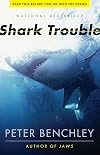
This little treasure is part nature guide and part memoir. Peter Benchley talks about different kinds of sharks, what makes them special, and how they interact with their environments and ecosystems. He also talks about several different diving experiences in which he has encountered sharks. The educational bits about sharks are informative and even sad at times, but the writing is not dry (no pun intended). The memoir segments are everything from funny to scary, and I can see why Benchley show more is so loved as a writer; he certainly knows how to tell a story. That these stories are taken from his own life makes them that much more terrifying. I was deeply moved by one section in particular, when he was talking about a dive he’d made with this wife and son. When the sharks came, he and his wife tried to stay on either side of him, to put themselves between the child and the sharks. That was easily the scariest part of the whole book. Adventures aside, this book is a highly informative guide to sharks and their importance to our planet. If you think of sharks as monsters, then Benchley’s explanation of their necessity might cause you to reconsider. show less
Lists
Awards


You May Also Like


Associated Authors
Statistics
- Works
- 54
- Also by
- 25
- Members
- 10,129
- Popularity
- #2,343
- Rating
- 3.5
- Reviews
- 268
- ISBNs
- 319
- Languages
- 16
- Favorited
- 8

