
Elizabeth Ross (1)
Author of Belle Epoque
For other authors named Elizabeth Ross, see the disambiguation page.
Works by Elizabeth Ross
Tagged
Common Knowledge
- Gender
- female
Members
Reviews

This was a wonderful scenario and character set that never quite came together with the intricacy it promised, but that was nevertheless a very enjoyable read. I was absolutely delighted with the first half, where our narrator gets mired in all sorts of trouble through a mix of all-too-understandable motivations and wonderfully outrageous situations. The resolutions of those troubles were a little too glib and underbaked for my tastes, but it's still a pretty charming look at modernity, at show more the self-image of girls, at expectations and dreams. Good fun. show less
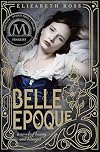
Belle Epoque is based on Emile Zola's 1866 short story "Les Repoussoirs" about the fictional agency of Durandeau. Ross launches off from this story to write the compelling tale of Maude Pichon, a girl struggling to write the story of her own life by moving to Paris in the late 1880s in the midst of the changes to society brought by France's Industrial Revolution and Belle Epoque.
Maude is one of the most candid and realistic heroines I have encountered in a while. There's romantic interest, show more but it doesn't override the main story, and Maude's slight attraction to multiple boys before one begins to stand out seems much more true to real life than the usual insta-love. While she gets caught up in the opulence of her feigned fashionable life with the Duberns more than would be thought prudent, it fits with Maude's characterization as a provincial girl with overly-romanticized and cheery notions of what her life in Paris will be like. There is no fairy-tale, rather historically-anachronistic instant rise to fame, fortune, or love; the plot seems to take its natural course and suit both the characterizations of the book's key figures and what is realistic for the time period. At the same time, the issues with self-image and self-worth faced by Maude are things that any girl of today's time can easily identify with, making Belle Epoque an engrossing read for both fans of historical fiction and those who prefer more connections to contemporary life. show less
Maude is one of the most candid and realistic heroines I have encountered in a while. There's romantic interest, show more but it doesn't override the main story, and Maude's slight attraction to multiple boys before one begins to stand out seems much more true to real life than the usual insta-love. While she gets caught up in the opulence of her feigned fashionable life with the Duberns more than would be thought prudent, it fits with Maude's characterization as a provincial girl with overly-romanticized and cheery notions of what her life in Paris will be like. There is no fairy-tale, rather historically-anachronistic instant rise to fame, fortune, or love; the plot seems to take its natural course and suit both the characterizations of the book's key figures and what is realistic for the time period. At the same time, the issues with self-image and self-worth faced by Maude are things that any girl of today's time can easily identify with, making Belle Epoque an engrossing read for both fans of historical fiction and those who prefer more connections to contemporary life. show less
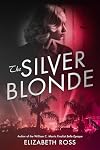
Satisfying and very well crafted historical mystery. Clara/Klara fled Nazi Germany with her parents in 1938. Now that the war is over, she's about to be promoted at the movie studio where she works when her parents announce they're about to return to Germany so her dad can take a professorship. Clara is devastated and angry at their obliviousness to her newly established life, complete with a budding friendship, and maybe more with Gil, a recently returned war veteran who is employed as a show more screen writer at the studio.
When Clara stays late one evening and sees blonde hair caught in a film vault door, it's the beginning of an intricate murder mystery that involves plenty of historical detail, many red herrings and a dandy climax at the end. It's a great choice for libraries where teens, and adults enjoy history and mystery blended together. show less
When Clara stays late one evening and sees blonde hair caught in a film vault door, it's the beginning of an intricate murder mystery that involves plenty of historical detail, many red herrings and a dandy climax at the end. It's a great choice for libraries where teens, and adults enjoy history and mystery blended together. show less
Maude Pichon has run away from her home in the French province of Brittany to escape an arranged marriage. But life in Paris is far harder, and much more expensive, than she ever dreamed. Desperate for work, she takes a job with an agency that offers an unusual service. The company hires plain, unattractive young women to act as foils for high society women. The idea is that the comparison of being next to someone ugly will make the client appear more attractive.
Maude is selected by the show more Countess Dubern to be a companion for her daughter, Isabelle, during her debutante season. The catch – Isabelle doesn’t know that Maude is hired help. Soon Maude is thrown into the whirl and intrigue of a Parisian aristocratic social season. But as her friendship with Isabelle grows, Maude faces increasing pressure from the Countess to go beyond the role of beauty foil to spy on Isabelle and influence her actions.
The first thing I loved about this this book is the setting, 1880′s Paris. I enjoyed the glimpses of the bohemian lifestyle of artists and musicians and cafes in contrast to the glittering aristocratic society all against the backdrop of the building of the Eiffel Tower. The second thing that appealed to me was that this enjoyable story really does a great job of exploring the concept of beauty. Does being seen next to someone who is less beautiful really enhance someone’s appearance? Plus, the toll the job takes on the employees’ self-esteem is appalling. They are constantly being judged only by, and openly reminded of, those traits that others perceive as faults.
Then there is the economic pressure on the girls, forcing them to put up with the humiliation of the position. What other options do they really have? The desire to maintain both the illusion of a place in aristocratic society and maintain a decent standard of living influence Maude’s decisions regarding her friendship with Isabelle and others. She may not agree with what the Countess is doing, but what choice does she have if she doesn’t want to be fired and end up destitute?
I have a few small quibbles with the story. Maude, the country grocer’s daughter with the provincial accent and manners is able to fit in with the aristocrats too easily. The end also seems to wrap up a bit too neatly. But overall, this was a very good book that I really enjoyed reading. It would make an excellent choice for a book discussion group, exploring as it does the ideas of beauty and social class. Those looking for a good story won’t be disappointed while those who appreciate a bit more social commentary will definitely enjoy Belle Epoque.
I read Belle Epoque as part of The Hub’s 2014 Morris Award Challenge. show less
Maude is selected by the show more Countess Dubern to be a companion for her daughter, Isabelle, during her debutante season. The catch – Isabelle doesn’t know that Maude is hired help. Soon Maude is thrown into the whirl and intrigue of a Parisian aristocratic social season. But as her friendship with Isabelle grows, Maude faces increasing pressure from the Countess to go beyond the role of beauty foil to spy on Isabelle and influence her actions.
The first thing I loved about this this book is the setting, 1880′s Paris. I enjoyed the glimpses of the bohemian lifestyle of artists and musicians and cafes in contrast to the glittering aristocratic society all against the backdrop of the building of the Eiffel Tower. The second thing that appealed to me was that this enjoyable story really does a great job of exploring the concept of beauty. Does being seen next to someone who is less beautiful really enhance someone’s appearance? Plus, the toll the job takes on the employees’ self-esteem is appalling. They are constantly being judged only by, and openly reminded of, those traits that others perceive as faults.
Then there is the economic pressure on the girls, forcing them to put up with the humiliation of the position. What other options do they really have? The desire to maintain both the illusion of a place in aristocratic society and maintain a decent standard of living influence Maude’s decisions regarding her friendship with Isabelle and others. She may not agree with what the Countess is doing, but what choice does she have if she doesn’t want to be fired and end up destitute?
I have a few small quibbles with the story. Maude, the country grocer’s daughter with the provincial accent and manners is able to fit in with the aristocrats too easily. The end also seems to wrap up a bit too neatly. But overall, this was a very good book that I really enjoyed reading. It would make an excellent choice for a book discussion group, exploring as it does the ideas of beauty and social class. Those looking for a good story won’t be disappointed while those who appreciate a bit more social commentary will definitely enjoy Belle Epoque.
I read Belle Epoque as part of The Hub’s 2014 Morris Award Challenge. show less
Awards


You May Also Like


Statistics
- Works
- 2
- Members
- 353
- Popularity
- #67,813
- Rating
- 3.7
- Reviews
- 19
- ISBNs
- 31
- Languages
- 2