
Ruta Sepetys
Author of Between Shades of Gray
About the Author
Ruta Sepetys is the award-winning, bestselling author of Between Shades of Gray, Out of the Easy and Salt to the Sea, for which she won the 2017 Carnegie Medal. From the Hardcover edition. (Bowker Author Biography)
Works by Ruta Sepetys
Adio, New Orleans 2 copies
Крадци и проститутки 1 copy
TURIU TAVE IŠDUOTI 1 copy
Tagged
Common Knowledge
- Legal name
- Šepetys, Rūta
- Birthdate
- 1967-11-19
- Gender
- female
- Education
- Hillsdale College (BS|International Finance)
- Occupations
- novelist
business manager
nonprofit director - Organizations
- Make a Noise Foundation
Mike Curb College of Entertainment
Sepetys Entertainment Group, Inc. - Awards and honors
- Cross of the Knight of the Order (Lithuania)
Rockefeller Bellagio fellow
First American writer of young adult literature to speak at the European Parliament - Short biography
- Ruta Sepetys is a Lithuanian-American whose parents' history inspired her to research and then write about the Lithuanian deportation by the Soviets in the 1930s and 1940s.Ruta Sepetys (born November 19, 1967) is a Lithuanian-American writer of historical fiction. As an author, she is a #1 New York Times bestseller, international bestseller, and winner of the Carnegie Medal.
She is a Rockefeller Foundation Bellagio Fellow and the first American writer of young adult literature to speak at the European Parliament and NATO. Her work is published in over sixty countries and forty languages and is currently in development for film and television.
Born in Detroit, Sepetys is the daughter of a Lithuanian refugee. She earned a B.S. in International Finance from Hillsdale College. While overseas, she studied at the Centre d’études Européennes in Toulon, France and at the ICN Graduate Business School in Nancy, France.
Following graduation Sepetys moved to Los Angeles. In 1994, she launched Sepetys Entertainment Group, Inc., an entertainment management firm representing Grammy-award-winning guitarist Steve Vai, multi-platinum songwriter Desmond Child, Orange County modern rockers Lit, and Emmy-nominated film composer Niels Bye Nielsen.
In 2002, Sepetys was featured in Rolling Stone magazine's "Women in Rock" special issue as a woman driven to make a difference. Sepetys is on the Board of Advisors for the Mike Curb College of Entertainment and Music Business at Belmont University and is also a director of the Make a Noise Foundation, a national non-profit that raises money for music education. Sepetys published her first novel in 2011 and currently resides in Nashville, Tennessee. She has been described as a "seeker of lost stories" who hopes to give voice to those who weren't able to tell their story. - Nationality
- USA
- Birthplace
- Detroit, Michigan, USA
- Places of residence
- Hillsdale, Michigan, USA
Los Angeles, California, USA
Nashville, Tennessee, USA - Associated Place (for map)
- USA
Members
Reviews
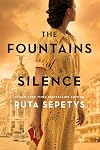
THE FOUNTAINS OF SILENCE is a powerful volume of historical fiction about the after effects of the Spanish Civil War (1936-9) during the brutal, decades-long dictatorship of Francisco Franco (1936-75). But it's not full of battles and government decrees. Instead it's about the lives of ordinary people, many poor, powerless, and afraid.
Central to the novel is a true story that only came to light about 10 years ago. For 60 years, beginning early in Franco's Fascist reign and continuing until show more the 1990s, as many of 300,000 Spanish babies were stolen from their parents and trafficked, through a complex network involving nuns, priests, and doctors. Thousands of mothers, who had recently given birth, were then told their babies died when, in reality, these children were passed on to adoptive parents, sometimes at exorbitant costs. Franco's government supposedly sponsored this trafficking, in part to punish parents who advocated Republicanism and in part because the government believed ALL children NEEDED to be raised by individuals loyal to the Fascist regime. Otherwise, they too might grow up to become Republicans.
Author Ruta Sepetys is ingenious with the construction of the book, which covers a period from the mid 1950s to 2018. Central in the plot is Texas-born Daniel Matheson, an 18 year old would-be photojournalist who travels to Madrid with his parents, as his father works to win oil-related business contracts from Franco's government.
Daniel and his camera wind up coming into contact with a wide variety of people from vastly different strata of Spanish society: wealthy Americans from his own social circle, a handful of diplomats, members of the Guardia Civil (Franco's national police force), desperately poor workers employed by his hotel, even a seasoned journalist. Using the interplay of these different characters is how Sepetys weaves her story, slowly and carefully, leading to an intense, page-turning finale.
The extensive research Sepetys incorporates (explained in the Author's Note) is impressive. She offers pages and pages of resources (at the end of the novel) that she read. She visited slaughterhouses, orphanages, and a large Madrid hotel wealthy Americans frequented - all to capture details needed to create convincing settings in the book. She interviewed diplomats, photographers, healthcare providers, survivors who were haunted by memories and others who were desperate to speak. And she spoke with people involved in the myriad of agencies now working to heal the wounds from Spain's past.
The book is an original, compelling AND devastating tale of Spain, war, dictatorship, family, friendship, and love. And the devastating effects of silence. All brought home by the stories of individual Spaniards. It's also an excellent example of why I love reading historical fiction. show less
Central to the novel is a true story that only came to light about 10 years ago. For 60 years, beginning early in Franco's Fascist reign and continuing until show more the 1990s, as many of 300,000 Spanish babies were stolen from their parents and trafficked, through a complex network involving nuns, priests, and doctors. Thousands of mothers, who had recently given birth, were then told their babies died when, in reality, these children were passed on to adoptive parents, sometimes at exorbitant costs. Franco's government supposedly sponsored this trafficking, in part to punish parents who advocated Republicanism and in part because the government believed ALL children NEEDED to be raised by individuals loyal to the Fascist regime. Otherwise, they too might grow up to become Republicans.
Author Ruta Sepetys is ingenious with the construction of the book, which covers a period from the mid 1950s to 2018. Central in the plot is Texas-born Daniel Matheson, an 18 year old would-be photojournalist who travels to Madrid with his parents, as his father works to win oil-related business contracts from Franco's government.
Daniel and his camera wind up coming into contact with a wide variety of people from vastly different strata of Spanish society: wealthy Americans from his own social circle, a handful of diplomats, members of the Guardia Civil (Franco's national police force), desperately poor workers employed by his hotel, even a seasoned journalist. Using the interplay of these different characters is how Sepetys weaves her story, slowly and carefully, leading to an intense, page-turning finale.
The extensive research Sepetys incorporates (explained in the Author's Note) is impressive. She offers pages and pages of resources (at the end of the novel) that she read. She visited slaughterhouses, orphanages, and a large Madrid hotel wealthy Americans frequented - all to capture details needed to create convincing settings in the book. She interviewed diplomats, photographers, healthcare providers, survivors who were haunted by memories and others who were desperate to speak. And she spoke with people involved in the myriad of agencies now working to heal the wounds from Spain's past.
The book is an original, compelling AND devastating tale of Spain, war, dictatorship, family, friendship, and love. And the devastating effects of silence. All brought home by the stories of individual Spaniards. It's also an excellent example of why I love reading historical fiction. show less
THE FOUNTAINS OF SILENCE is a powerful volume of historical fiction about the after effects of the Spanish Civil War (1936-9) during the brutal, decades-long dictatorship of Francisco Franco (1936-75). But it's not full of battles and government decrees. Instead it's about the lives of ordinary people, many poor, powerless, and afraid.
Central to the novel is a true story that only came to light about 10 years ago. For 60 years, beginning early in Franco's Fascist reign and continuing until show more the 1990s, as many of 300,000 Spanish babies were stolen from their parents and trafficked, through a complex network involving nuns, priests, and doctors. Thousands of mothers, who had recently given birth, were then told their babies died when, in reality, these children were passed on to adoptive parents, sometimes at exorbitant costs. Franco's government supposedly sponsored this trafficking, in part to punish parents who advocated Republicanism and in part because the government believed ALL children NEEDED to be raised by individuals loyal to the Fascist regime. Otherwise, they too might grow up to become Republicans.
Author Ruta Sepetys is ingenious with the construction of the book, which covers a period from the mid 1950s to 2018. Central in the plot is Texas-born Daniel Matheson, an 18 year old would-be photojournalist who travels to Madrid with his parents, as his father works to win oil-related business contracts from Franco's government.
Daniel and his camera wind up coming into contact with a wide variety of people from vastly different strata of Spanish society: wealthy Americans from his own social circle, a handful of diplomats, members of the Guardia Civil (Franco's national police force), desperately poor workers employed by his hotel, even a seasoned journalist. Using the interplay of these different characters is how Sepetys weaves her story, slowly and carefully, leading to an intense, page-turning finale.
The extensive research Sepetys incorporates (explained in the Author's Note) is impressive. She offers pages and pages of resources (at the end of the novel) that she read. She visited slaughterhouses, orphanages, and a large Madrid hotel wealthy Americans frequented - all to capture details needed to create convincing settings in the book. She interviewed diplomats, photographers, healthcare providers, survivors who were haunted by memories and others who were desperate to speak. And she spoke with people involved in the myriad of agencies now working to heal the wounds from Spain's past.
The book is an original, compelling AND devastating tale of Spain, war, dictatorship, family, friendship, and love. And the devastating effects of silence. All brought home by the stories of individual Spaniards. It's also an excellent example of why I love reading historical fiction. show less
Central to the novel is a true story that only came to light about 10 years ago. For 60 years, beginning early in Franco's Fascist reign and continuing until show more the 1990s, as many of 300,000 Spanish babies were stolen from their parents and trafficked, through a complex network involving nuns, priests, and doctors. Thousands of mothers, who had recently given birth, were then told their babies died when, in reality, these children were passed on to adoptive parents, sometimes at exorbitant costs. Franco's government supposedly sponsored this trafficking, in part to punish parents who advocated Republicanism and in part because the government believed ALL children NEEDED to be raised by individuals loyal to the Fascist regime. Otherwise, they too might grow up to become Republicans.
Author Ruta Sepetys is ingenious with the construction of the book, which covers a period from the mid 1950s to 2018. Central in the plot is Texas-born Daniel Matheson, an 18 year old would-be photojournalist who travels to Madrid with his parents, as his father works to win oil-related business contracts from Franco's government.
Daniel and his camera wind up coming into contact with a wide variety of people from vastly different strata of Spanish society: wealthy Americans from his own social circle, a handful of diplomats, members of the Guardia Civil (Franco's national police force), desperately poor workers employed by his hotel, even a seasoned journalist. Using the interplay of these different characters is how Sepetys weaves her story, slowly and carefully, leading to an intense, page-turning finale.
The extensive research Sepetys incorporates (explained in the Author's Note) is impressive. She offers pages and pages of resources (at the end of the novel) that she read. She visited slaughterhouses, orphanages, and a large Madrid hotel wealthy Americans frequented - all to capture details needed to create convincing settings in the book. She interviewed diplomats, photographers, healthcare providers, survivors who were haunted by memories and others who were desperate to speak. And she spoke with people involved in the myriad of agencies now working to heal the wounds from Spain's past.
The book is an original, compelling AND devastating tale of Spain, war, dictatorship, family, friendship, and love. And the devastating effects of silence. All brought home by the stories of individual Spaniards. It's also an excellent example of why I love reading historical fiction. show less
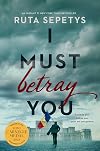
Trigger Warnings: blackmailing, manipulation, revolution, shooting, police brutality, government oppression
Set in late 1989 communist Romania, 17-year-old Cristian is forced to become an informer by the secret police in exchange to help his family. While he deals with the guilt and paranoia of being an informer, Cristian also risks everything to let the world know what is happening in Romania. But what is the cost of the revolution?
As usual, another section of history I didn’t really know show more anything about until Ruta Sepetys wrote a book about it and now I’ll be doing a ton of research about it this weekend. I was in middle school and high school in the 2000s, so I kind of understand why I probably never really learned much about this if they didn’t unseal files for 15 years… though I do remember learning about Nadia Comăneci leaving the country? But I don’t remember Nicolae Ceaușescu or the horrors of his regime.
Rita Sepetys is one of my favorite authors - if she writes it, I know I’m going to read it, get immersed in a new part of history I probably wasn’t aware of, and learn something new. I know Sepetys does a ton of research on each of her books, and this one is no different. She lets you know it is a work of fiction, but that a ton of research went into the novel and then she lists resources at the end of the book. Knowing how much research was done for this and matching it with a narrator who captivates the readers - I couldn’t put this book down.
The chapters were mostly short and a quick read, but that matched with the franticness of Cristian’s life. You slowly see his eyes opening to the fact that what his country is doing to him and his countrymen is not right and how much they had been lied to to keep them in line. You felt the same suspension he felt as he tried to figure out who he could really trust.
Please read this book (and other titles by Sepetys as well) and learn about an aspect of history that most likely wasn’t taught much in school in a way that’s well written and well researched. show less
Set in late 1989 communist Romania, 17-year-old Cristian is forced to become an informer by the secret police in exchange to help his family. While he deals with the guilt and paranoia of being an informer, Cristian also risks everything to let the world know what is happening in Romania. But what is the cost of the revolution?
As usual, another section of history I didn’t really know show more anything about until Ruta Sepetys wrote a book about it and now I’ll be doing a ton of research about it this weekend. I was in middle school and high school in the 2000s, so I kind of understand why I probably never really learned much about this if they didn’t unseal files for 15 years… though I do remember learning about Nadia Comăneci leaving the country? But I don’t remember Nicolae Ceaușescu or the horrors of his regime.
Rita Sepetys is one of my favorite authors - if she writes it, I know I’m going to read it, get immersed in a new part of history I probably wasn’t aware of, and learn something new. I know Sepetys does a ton of research on each of her books, and this one is no different. She lets you know it is a work of fiction, but that a ton of research went into the novel and then she lists resources at the end of the book. Knowing how much research was done for this and matching it with a narrator who captivates the readers - I couldn’t put this book down.
The chapters were mostly short and a quick read, but that matched with the franticness of Cristian’s life. You slowly see his eyes opening to the fact that what his country is doing to him and his countrymen is not right and how much they had been lied to to keep them in line. You felt the same suspension he felt as he tried to figure out who he could really trust.
Please read this book (and other titles by Sepetys as well) and learn about an aspect of history that most likely wasn’t taught much in school in a way that’s well written and well researched. show less
Intense and Impactful
This historical YA novel will stick with me for a long time--I will be thinking about the characters and the horrific mind games and physical abuses that they had to endure under a cruel dictatorship. I did not know anything about this time and place in history until reading this powerful and emotional novel and my perspective has forever changed. Not only did I enjoy this engaging writing and story, but now have a deeper appreciation for my life and the freedoms I have show more and take for granted every day.
This is my second novel by the talented author and I enjoyed it even more than the first. The author immediately engaged me and put me into the point of view character's shoes from the first sentence: "Fear arrived at five o'clock." This is one of the most impactful, unforgettable opening lines and set the foreboding tone in just five words. The setting became an integral character--a living, breathing cold monster lurking in the shadows always.
The friendships and family relationships are depicted so well, with each character having both good and flawed traits. The plot twists and danger they faced everyday kept me reading. The choices these characters were forced to make are gut-wrenching and made me think about my own life and personality. Would I be able to make the same sacrifices? Would I have the strength to continue on or would my hopes be crushed?
I already know this is a novel I will be recommending (already have!) to everyone and one that will definitely be a top book for 2022 for me. show less
This historical YA novel will stick with me for a long time--I will be thinking about the characters and the horrific mind games and physical abuses that they had to endure under a cruel dictatorship. I did not know anything about this time and place in history until reading this powerful and emotional novel and my perspective has forever changed. Not only did I enjoy this engaging writing and story, but now have a deeper appreciation for my life and the freedoms I have show more and take for granted every day.
This is my second novel by the talented author and I enjoyed it even more than the first. The author immediately engaged me and put me into the point of view character's shoes from the first sentence: "Fear arrived at five o'clock." This is one of the most impactful, unforgettable opening lines and set the foreboding tone in just five words. The setting became an integral character--a living, breathing cold monster lurking in the shadows always.
The friendships and family relationships are depicted so well, with each character having both good and flawed traits. The plot twists and danger they faced everyday kept me reading. The choices these characters were forced to make are gut-wrenching and made me think about my own life and personality. Would I be able to make the same sacrifices? Would I have the strength to continue on or would my hopes be crushed?
I already know this is a novel I will be recommending (already have!) to everyone and one that will definitely be a top book for 2022 for me. show less
Lists
Absolute Power (1)
Awards


You May Also Like


Associated Authors
Statistics
- Works
- 20
- Members
- 16,785
- Popularity
- #1,337
- Rating
- 4.2
- Reviews
- 897
- ISBNs
- 255
- Languages
- 20
- Favorited
- 12


