
Thomas Jefferson (1743–1826)
Author of The Declaration of Independence and The Constitution of the United States
About the Author
Politician, philosopher, farmer, architect, and author, Jefferson was born to Peter and Jane Randolph Jefferson on April 13, 1743, in Tuckahoe, Virginia. As Jefferson observed in his autobiography, his parents could "trace their pedigree far back in England and Scotland." At the age of 16, Thomas show more Jefferson entered William and Mary College; at age 24, Jefferson was admitted to the bar; at 25, he was elected to the Virginia Assembly. Renowned for his political contributions to the American colonies, and later, to the embryonic Republic, Jefferson published in 1774 A Summary View of the Rights of British America, celebrating the inalienable natural rights claimed by the colonialists. In 1775 Jefferson was elected to the Continental Congress; in 1776 he joined the five-person committee responsible for drafting the Declaration of Independence---a document that is widely regarded as being largely Jefferson's own work. In 1779 Jefferson was elected governor of the state of Virginia, and in subsequent years he distinguished himself both as a cosmopolitan international politician and as a man committed to the future of Virginia. In 1789 he was appointed U.S. secretary of state, in 1797 he served as vice president under President John Adams, and in 1801 he was elected third president of the United States. Jefferson's literary career was no less stellar than his political accomplishments. He authored tracts and books on such diverse subjects as gardening, the life of Jesus, the history of Virginia, and the practices of farming. The precise descriptions of nature that inform his Notes on the State of Virginia (1787) are frequently credited with foreshadowing the Hudson River school of aesthetics. Thomas Jefferson died on the fourth of July. His grave marker, engraved with words of his own choosing, states, "Here lies Thomas Jefferson, Author of the Declaration of American Independence, of the Statute of Virginia for Religious Freedom and Father of the University of Virginia." (Bowker Author Biography) show less
Image credit: Via Wikimedia Commons
Series
Works by Thomas Jefferson
The Declaration of Independence and The Constitution of the United States (1776) 2,358 copies, 17 reviews
Writings: Autobiography / Notes on the State of Virginia / Public and Private Papers / Addresses / Letters (1967) 1,689 copies, 8 reviews
The Adams-Jefferson Letters: The Complete Correspondence Between Thomas Jefferson and Abigail and John Adams (1959) 616 copies, 4 reviews
Light and Liberty: Reflections on the Pursuit of Happiness (Modern Library Classics) (2004) 99 copies
Declaration Of Independence, Constitution Of The United States Of America, Bill Of Rights And Constitutional Amendments (Including Images Of Original Historical American… (2007) — Author — 80 copies, 2 reviews
The Republic of Letters: The Correspondence Between Thomas Jefferson and James Madison (1995) 59 copies
Jefferson's extracts from the Gospels : "The philosophy of Jesus" and "The life and morals of Jesus" (1983) 34 copies
Thomas Jefferson, Monticello, Virginia, USA: In celebration of the American Revolution Bicentennial (1975) 31 copies, 1 review
Jefferson's parliamentary writings : "Parliamentary pocket-book" and A manual of parliamentary practice (1988) 21 copies
Memoirs, Correspondence And Private Papers Of Thomas Jefferson, Ed. By T.J. Randolph (1) (2007) 19 copies
Memoir, Correspondence, And Miscellanies, From The Papers Of Thomas Jefferson, Volume 3 (2007) 17 copies
Memoir, Correspondence, And Miscellanies, From The Papers Of Thomas Jefferson, Volume 2 (2007) 17 copies
The Writings of Thomas Jefferson. Selections from the Personal, Political, Philosophical Writings of Thomas Jefferson (1967) 16 copies
The Great Books First Year Volume One Declaration of Independence/Plato: Apology; Crito/Sophocles: Antigone (1955) 15 copies
The Papers of Thomas Jefferson, Retirement Series: Volume 5: 1 May 1812 to 10 March 1813 (2009) 12 copies
Foundations of Freedom: Common Sense, The Declaration of Independence, The Articles of Confederation, The Federalist Papers, The U.S. Constitution (2008) 11 copies
The Papers of Thomas Jefferson, Retirement Series: Volume 4: 18 June 1811 to 30 April 1812 (2008) 11 copies
The Papers of Thomas Jefferson, Volume 2: 1777-18 June, 1779, including the Revisal of the laws, 1776-1786 (1950) 10 copies
Jefferson's memorandum books : accounts, with legal records and miscellany, 1767-1826 (1997) 10 copies
The Papers of Thomas Jefferson, Retirement Series: Volume 11: 19 January to 31 August 1817 (2015) 10 copies
Jefferson's Western Explorations: Discoveries made in exploring the Missouri, Red River and Washita....The Natchez Edition, 1806. A Facsimile. (2004) 9 copies
The Papers of Thomas Jefferson, Retirement Series: Volume 8: 1 October 1814 to 31 August 1815 (2012) 9 copies
The Papers of Thomas Jefferson, Retirement Series: Volume 7: 28 November 1813 to 30 September 1814 (2011) 9 copies
The Papers of Thomas Jefferson, Retirement Series: Volume 2: 16 November 1809 to 11 August 1810 (2006) 9 copies
The Papers of Thomas Jefferson, Retirement Series: Volume 6: 11 March to 27 November 1813 (2010) 8 copies
The Papers of Thomas Jefferson, Retirement Series: Volume 10: May 1816 to January 1817 (2014) 8 copies
The Papers of Thomas Jefferson, Retirement Series, Volume 3: 12 August 1810 to 17 June 1811 (Papers of Thomas Jefferson: Retirement Series) (2007) 8 copies
The Declaration of Independence and United States Constitution with Bill of Rights and all Amendments (Annotated) (2017) 7 copies
Th. Jefferson and Bolling V. Bolling: Law and the Legal Profession in Pre-Revolutionary America (1997) 7 copies
The Papers of Thomas Jefferson, Volume 41: 11 July to 15 November 1803 (The Papers of Thomas Jefferson, 82) (2015) 6 copies
The Literary Bible of Thomas Jefferson: His Commonplace Book of Philosophers and Poets (1970) 6 copies
The papers of Thomas Jefferson 5 copies
Democracy 5 copies
The Papers of Thomas Jefferson, Retirement Series: Volume 1: 4 March 1809 to 15 November 1809 (2005) 5 copies
The Declaration of Independence, The Constitution of the United States of America (with Amendments), and other Important American Documents (2005) 5 copies
The Constitution of the United States, Bill of Rights, Declaration of Independence, and Articles of Confederation: The Essential American Papers (2009) 5 copies
A Compilation of the Messages and Papers of the PresidentsVolume 1, part 3: Thomas Jefferson 4 copies
La declaracion de la independencia / The Declaration of Independence (Spanish Edition) (2009) 4 copies
Escritos políticos / Political Writings: Declaración De Independencia, Autobiografía, Epistolario ... (Spanish Edition) (2014) 4 copies
Federalismo e democrazia 4 copies
Correspondence between Thomas Jefferson and Pierre Samuel du Pont de Nemours, 1798-1817 (1970) 3 copies
Common Sense, A Summary View of the Rights of British America, Thoughts on Government and the Speeches of Washington: Important Early American Political ... and the U.S.… (2010) — Author — 3 copies
Washington: a reader; the National Capital as seen through the eyes of Thomas Jefferson (1967) 3 copies
Thomas Jefferson: an anthology 3 copies
The Writings of Thomas Jefferson Library Edition; Containing His Autobiography ... (Vol. XIX) (1905) 3 copies
The Papers of Thomas Jefferson, Volume 42: 16 November 1803 to 10 March 1804 (The Papers of Thomas Jefferson, 83) (2016) 3 copies
The Papers of Thomas Jefferson, Volume 45: 11 November 1804 to 8 March 1805 (The Papers of Thomas Jefferson, 84) (2021) 3 copies
Thomas Jefferson correspondence : printed from the originals in the collections of William K. Bixby 3 copies
Papers 3 copies
Observations on the whale-fishery 3 copies
Memoir, Correspondence, and Miscellanies, from the Papers of Thomas Jefferson, Volume IV (2008) 3 copies
Autobiography of Thomas Jefferson & The Jefferson Bible: The Life and Morals of Jesus of Nazareth (2007) 3 copies
The Papers of Thomas Jefferson: Retirement Series, Volume 13: 22 April 1818 to 31 January 1819 (2017) 2 copies
Jefferson's Memorandum Books, Volume 1 : Accounts, with Legal Records and Miscellany, 1767-1826 2 copies
Monticello 2 copies
Thomas Jefferson 2 copies
On Democracy 2 copies
The Papers of Thomas Jefferson, Retirement Series, Volume 19: 16 September 1822 to 30 June 1823 (Papers of Thomas Jefferson: Retirement Series) (2023) 2 copies
The Patriot from Virginia 2 copies
Writings 2 copies
The Papers of Thomas Jefferson: Retirement Series, Volume 12: 1 September 1817 to 21 April 1818 (2016) 2 copies
Un bon exemple de PRÉVOYANCE 2 copies
The United States Constitution 2 copies
Thomas Jefferson's Monticello 2 copies
Constitution, Jefferson's manual, and Rules of the House of Representatives of the United States (2015) 2 copies
Debtor's letter 1 copy
The Complete Works: Autobiography, Correspondence, Messages, Speeches and Other Official and Private Writings (2018) 1 copy
Thomas Jefferson, architect 1 copy
The Declaration of Independence and the Us Constitution with Bill of Rights & Amendments Plus the Articles of Confederation (2010) 1 copy
Thomas Jefferson, architect original designs in the collection of Thomas Jefferson Coolidge, junior 1 copy
The Papers of Thomas Jefferson, Volume 46: 9 March to 5 July 1805 (The Papers of Thomas Jefferson, 46) (2022) 1 copy
The Life and Morals of Jesus of Nazareth--Extracted Textually from the Gospels: Jefferson's Bible 1 copy
Jefferson's Mound 1 copy
Memoir, Correspondence And Miscellanies V2: From The Papers Of Thomas Jefferson (1829) (2008) 1 copy
Virginia State Capitol 1 copy
Sayings of Thomas Jefferson 1 copy
Jefferson on Plato 1 copy
Penguin 60s 1 copy
Reading recommendations 1 copy
Un Américain à Paris, l'Ambassade de Thomas Jefferson (1785-1789) : Un témoignage historique précieux (2017) 1 copy
Freedom and the State 1 copy
Reports of Cases Determined in the General Court of Virginia from 1730-1740, 1768-1772 (1981) 1 copy
Thomas Jefferson : historische Bedeutung und politische Aktualität : zum 250. Geburtstag des "Weisen von Monticello" (1995) 1 copy
Tradition 1 copy
The Cloud of Unknowing & The Jefferson Bible: Contrasting and Complementary Ways to Know God (2011) 1 copy
The book of Genesis : the common version revised for the American Bible union with explanatory notes 1 copy
A Decalogue of Canons 1 copy
The Republic of Letters, the Correspondence Between Thomas Jefferson and James Madison 1776-1826 1 copy
The Papers of Thomas Jefferson: Retirement Series, Volume 14: 1 February to 31 August 1819 (2018) 1 copy
The Writings of Thomas Jefferson; Volume 6 Jefferson as a Tactician - The Original Classic Edition (2012) 1 copy
Notre Dame De Paris 1 copy
The Papers of Thomas Jefferson, Volume 44: 1 July to 10 November 1804 (The Papers of Thomas Jefferson, 44) (2019) 1 copy
Replies to Public Addresses 1 copy
The Batture at New Orleans 1 copy
Associated Works
America (The Book): A Citizen's Guide to Democracy Inaction (2004) — Foreword — 7,788 copies, 64 reviews
The Constitution of the United States with the Declaration of Independence and the Articles of Confederation (2002) — Contributor — 755 copies, 8 reviews
The American Revolution: Writings from the War of Independence (2001) — Contributor — 712 copies, 3 reviews
The Debate on the Constitution, Part Two: January 1788 to August 1788 (1993) — Contributor — 710 copies, 4 reviews
The Debate on the Constitution, Part One: September 1787 to February 1788 (1993) — Contributor — 654 copies, 6 reviews
The Declaration of Independence and Other Great Documents of American History 1775-1865 (2000) — Contributor — 519 copies, 3 reviews
Choice Cuts: A Savory Selection of Food Writing from Around the World and Throughout History (2002) — Contributor — 369 copies, 2 reviews
The Journals of Lewis and Clark {abridged, Bergon-1989} (1989) — Contributor, some editions — 354 copies
Social and Political Philosophy: Readings From Plato to Gandhi (1963) — Contributor — 275 copies, 1 review
The Heath Anthology of American Literature, Volume 1 (1990) — Contributor, some editions — 252 copies, 1 review
Teaching with Fire: Poetry That Sustains the Courage to Teach (2003) — Contributor — 225 copies, 1 review
The American Intellectual Tradition, A Sourcebook: Volume I, 1630-1865 (1989) — Contributor, some editions — 204 copies
The Origins of the American Constitution (1986) — Contributor; Contributor; Contributor — 197 copies, 2 reviews
The Glorious American Essay: One Hundred Essays from Colonial Times to the Present (2020) — Contributor — 119 copies
The American Revolution: Writings from the Pamphlet Debate 1773-1776: (Library of America #266) (2015) — Contributor — 103 copies
The Heath Anthology of American Literature, Concise Edition (2003) — Contributor — 73 copies, 1 review
Major Problems in the History of the American West: Documents and Essays (1989) — Contributor — 66 copies
American Literature: The Makers and the Making (In Two Volumes) (1973) — Contributor, some editions — 25 copies
The Best Bibliograph I Have Met With: George Ticknor Visits Monticello, 1815 — Contributor — 3 copies, 1 review
American Bible Vol. XII (Selected Writings of Elbert Hubbard, XII American Bible) (1998) — Contributor — 2 copies
Tagged
Common Knowledge
- Birthdate
- 1743-04-13
- Date of death
- 1826-07-04
- Gender
- male
- Education
- College of William and Mary (BA|1762)
- Occupations
- diplomat
lawyer
politician
slave owner
slave trader
governor (Virginia|1779-1781) (show all 9)
Secretary of State (United States of America|1789-1793)
vice president (United States of America|1797-1801)
president (United States of America|1801-1809) - Organizations
- State Bar of Virginia (1767)
- Relationships
- Adams, John (friend)
Adams, Abigail (friend)
Freneau, Philip (friend) - Nationality
- USA
- Birthplace
- Shadwell Plantation, Colony of Virginia, British America
- Places of residence
- Charlottesville, Virginia, USA
Paris, Île-de-France, France
Washington, D.C., USA
Richmond, Virginia, USA
Williamsburg, Virginia, USA
New York, New York, USA (show all 7)
Philadelphia, Pennsylvania, USA - Place of death
- Charlottesville, Virginia, USA
- Burial location
- Monticello, Charlottesville, Virginia, USA
- Associated Place (for map)
- USA
Members
Discussions
Jefferson active again? in Legacy Libraries (January 8)
3 - Thomas Jefferson in US Presidents Challenge (USPC) (April 2019)
Misquoting Thomas Jefferson in Happy Heathens (December 2011)
Reviews

Finally, I have finished The Jefferson Bible, only took me two years to read a 169 page book. It's not for the lack on content or boring subject, I just kept losing my place over and over and over again... It's hard to find any organization that the original text had since Jefferson literally did a cut and paste job to produce this book, so I kept getting lost trying to follow the chapter verse layout.
Thomas Jefferson worked for a couple restless nights in Washington carefully extracting show more bible passages from the gospels to revile the true essence of religion; collecting them into a single common sense gospel narrative. A brilliant and enlightening take on the essential heart of the teachings of Jesus of absolute love and service to others. Mr. Jefferson eliminated the virgin birth, the miraculous healings, and the resurrection, leaving only the essential teachings and a very human biography of Jesus.
I found it fascinating to see which passages Jefferson felt were the correct telling of Jesus's life and what could be discarded. Then to try to piece those passages into a coherent biography. I think Jefferson did an admirable job, but parts still don't seem to fit quite right, often redundant information is conveyed in several places. I think that has far more to do with the structure of the gospels themselves then with Jefferson's edits. Overall, I feel this is one of the best ways to understand and grasp the true teachings of Jesus of Nazareth. show less
Thomas Jefferson worked for a couple restless nights in Washington carefully extracting show more bible passages from the gospels to revile the true essence of religion; collecting them into a single common sense gospel narrative. A brilliant and enlightening take on the essential heart of the teachings of Jesus of absolute love and service to others. Mr. Jefferson eliminated the virgin birth, the miraculous healings, and the resurrection, leaving only the essential teachings and a very human biography of Jesus.
I found it fascinating to see which passages Jefferson felt were the correct telling of Jesus's life and what could be discarded. Then to try to piece those passages into a coherent biography. I think Jefferson did an admirable job, but parts still don't seem to fit quite right, often redundant information is conveyed in several places. I think that has far more to do with the structure of the gospels themselves then with Jefferson's edits. Overall, I feel this is one of the best ways to understand and grasp the true teachings of Jesus of Nazareth. show less
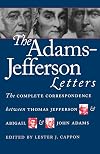
Quite possibly the best book of history I've ever read - the American Revolution, the Enlightenment, the French Revolution, shopping lists, child care instructions, treaty negotiations, rumination on religion, book reviews, art criticism, and too many more subjects to list. The complete correspondence between three of the founders (Abigail Adam's letters to and from Jefferson are included) constitutes in my humble opinion the best of history in the raw, the very stuff that still weaves it's show more way through our world two hundred years later. I cannot recommend this highly enough. show less
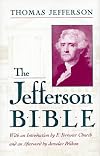
Only mildly interesting and less "enlightened" than moralistic. Jefferson's selections of "truth" are alternately redundant or contradictory, and his English translation of some words ill-chosen (e.g., "straight" when the context calls for "narrow"). The God of his Deism and his definition of morality are straight from the patriarchal Old Testament of the Jewish faith, despite his concentration on only the gospels, which is consistent with the fact that Jesus was a Jew but not necessarily show more with his message. show less
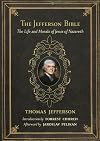
Raised by agnostics, I never had much of a religious education. This book, which was written to focus on the actions and words of Jesus which did not appear to be miraculous, seemed to be a good way to learn about the doctrine of someone who is arguably the most influential people in history. Stripping away the divine acts, the reader is left with a narrative about a man seeking to reform the morality of his time.
Some elements of his philosophy resonate more than others. I wasn't show more particularly moved by Jesus' proclamations on divorce and adultery. As one who has never has been compelled to change my behavior in the Sabbath, his early counsels not to refrain from doing good works on Sunday seem as a matter of course. Other ideas I appreciated more, such as his precepts to love - to love one's neighbor, to love one's enemy. If the world were occupied by more people who sought the betterment of the conditions of others, we would be doing better, I think. To the extent that he talks about money (and I was surprised to discover how much money was discussed), Jesus seemed to favor the rich over the poor, and believe in lifting up those who had the least. In this sense, I think I would have agreed with the person whose creed has become such a world-shaping force.
Ultimately, I was surprised at how brief the read was. Sans miracles, divinity, and awe, the Gospels are a remarkably brief text on a someone who appears to have been an influential, respected man of his time. I'm glad to have read the book, but I have to admit I wasn't much moved by it. show less
Some elements of his philosophy resonate more than others. I wasn't show more particularly moved by Jesus' proclamations on divorce and adultery. As one who has never has been compelled to change my behavior in the Sabbath, his early counsels not to refrain from doing good works on Sunday seem as a matter of course. Other ideas I appreciated more, such as his precepts to love - to love one's neighbor, to love one's enemy. If the world were occupied by more people who sought the betterment of the conditions of others, we would be doing better, I think. To the extent that he talks about money (and I was surprised to discover how much money was discussed), Jesus seemed to favor the rich over the poor, and believe in lifting up those who had the least. In this sense, I think I would have agreed with the person whose creed has become such a world-shaping force.
Ultimately, I was surprised at how brief the read was. Sans miracles, divinity, and awe, the Gospels are a remarkably brief text on a someone who appears to have been an influential, respected man of his time. I'm glad to have read the book, but I have to admit I wasn't much moved by it. show less
Lists
John Adams Books (1)
Awards


You May Also Like


Associated Authors
Statistics
- Works
- 420
- Also by
- 50
- Members
- 12,780
- Popularity
- #1,834
- Rating
- 4.1
- Reviews
- 106
- ISBNs
- 615
- Languages
- 8
- Favorited
- 25


