
Molly Smith (4)
Author of Revolting Prostitutes: The Fight for Sex Workers' Rights
For other authors named Molly Smith, see the disambiguation page.
Works by Molly Smith
Tagged
Common Knowledge
- Birthdate
- 20th century
- Gender
- female
- Occupations
- sex worker
activist - Organizations
- SCOT-PEP
SWARM (Sex Worker Advocacy and Resistance Movement) - Nationality
- UK
- Map Location
- Scotland, UK
Members
Reviews

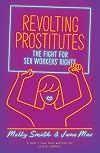
A friend whose taste in non-fiction I respect recommended [b:Revolting Prostitutes: The Fight for Sex Workers’ Rights|36424668|Revolting Prostitutes The Fight for Sex Workers’ Rights|Molly Smith|https://i.gr-assets.com/images/S/compressed.photo.goodreads.com/books/1544365737l/36424668._SY75_.jpg|58122917], so I decided to give it a try. I knew nothing about the law and politics around sex work so had no opinions about it, just awareness that sex work and poverty are linked. This clearly show more written and well-structured book provides a thorough introduction to the systematic problems that different legal regimes cause for sex workers. The authors are sex workers and take a pragmatic view: most people working in the sex industry would rather not do so, but their alternative is destitution or even worse work:
Sex workers need safe working conditions and freedom from police harassment now, in the absence of a social safety net that genuinely guards everyone against absolute poverty. Unfortunately law and policy around sex work is shaped by a history of moral panics, rather than practical concern for the wellbeing of sex workers. At present, there is particular panic about trafficking which, as the book explains, is used as cover for the rise of racist anti-immigration politics and militarisation of national borders:
The way to prevent trafficking is to allow legal free movement across borders. I found this chapter on the interconnection between migrant-hostile policies and sex work especially enlightening, with wider implications beyond the sex industry. More than half of the book conducts a detailed comparison of legal regimes around sex work. Drawing upon accounts from a range of different countries, the authors demonstrate the effect laws have on sex workers and how the results differ from the stated aims. In this case, the Nordic model of making it legal to sell sex but not to buy it:
The book also makes a strong arguments against carceral feminism that are highly salient to sex work but apply beyond it:
The analysis of legal regimes builds up a systematic and powerful indictment of how laws, institutions, politicians, and campaigners fail to protect sex workers from harm. The authors argue firmly and with conviction for decriminalisation and reform based on what sex workers actually want - protection from violence, imprisonment, harassment, and deportation:
[b:Revolting Prostitutes: The Fight for Sex Workers’ Rights|36424668|Revolting Prostitutes The Fight for Sex Workers’ Rights|Molly Smith|https://i.gr-assets.com/images/S/compressed.photo.goodreads.com/books/1544365737l/36424668._SY75_.jpg|58122917] does not just provide an excellent introduction to the variety of legal regimes around sex work and the changes that sex workers are fighting for. It also connects their advocacy with immigration policies, the war on drugs, sexism, and poverty. I found it original and deeply thought-provoking. show less
To say that prostitution is work is not to say it is good work, or that we should be uncritical of it. To be better than poverty or a lower paid job is an abysmally low bar, especially for anyone who claims to be part of any movement towards liberation. People who sell or trade sex are among the world's least powerful people, the people often forced to do the worst jobs. But that is precisely why anti-prostitution campaigners should take seriously the fact that sex work is a way people get the resources they need. [...]
People with relatively little are right to be fearful when their means of survival is taken away. British miners in the 1980s didn't strike on the basis that mining was the most wonderful job - they were simply correct in their belief that, once mining was taken away from them, Thatcher's government would abandon their communities to desperate poverty. Likewise, few sex workers would object if you sought to abolish the sex industry by ensuring that they got the resources they need without having to sell sex.
Sex workers need safe working conditions and freedom from police harassment now, in the absence of a social safety net that genuinely guards everyone against absolute poverty. Unfortunately law and policy around sex work is shaped by a history of moral panics, rather than practical concern for the wellbeing of sex workers. At present, there is particular panic about trafficking which, as the book explains, is used as cover for the rise of racist anti-immigration politics and militarisation of national borders:
Hard-right politicians are keen to enact anti-trafficking agendas. [...] Theresa May is positioning the 2015 Modern Slavery Act (passed when she was home secretary) as central to her image and legacy. Uncritical use of the term trafficking is doing the ideological work required for these contradictions to 'make sense'; it hides how anti-migrant policies produce the harm that we call trafficking, enabling anti-migrant politicians to posture as anti-trafficking heroes even as they enact their anti-migrant policies.
The way to prevent trafficking is to allow legal free movement across borders. I found this chapter on the interconnection between migrant-hostile policies and sex work especially enlightening, with wider implications beyond the sex industry. More than half of the book conducts a detailed comparison of legal regimes around sex work. Drawing upon accounts from a range of different countries, the authors demonstrate the effect laws have on sex workers and how the results differ from the stated aims. In this case, the Nordic model of making it legal to sell sex but not to buy it:
Those who advocate for the Nordic model are correct that the client benefits from a huge power imbalance; what they miss is that client criminalisation worsens this power imbalance. This can seem surprising; as human rights lawyer Wendy Lyon writes, 'The criminalisation of only one party to a transaction might intuitively be expected to benefit the other party.' However, this overlooks that crucial fact - which cannot be repeated enough! - that the sex worker needs to sell sex much more than the client 'needs' to buy it. This 'asymmetry of need' is essential to understanding the actual impact of the Nordic model. [...] [The sex worker] will take on the burden of [the client's] need for safety from arrest, which will entail compromising any safety strategies she might otherwise seek to deploy. After all, he is safer from arrest when he is more anonymous, and when their rendezvous is more clandestine. [...] She needs his custom more than he needs to buy sex, right? The Norwegian government itself acknowledges that the situation for sex workers is now a 'buyer's market'.
The book also makes a strong arguments against carceral feminism that are highly salient to sex work but apply beyond it:
We can work towards a more feminist world by making women less poor - but not through bolstering the patriarchal power of the carceral state. [...] When journalists write that the Nordic model 'decriminalises women who sell sex' and campaigning organisations repeat the claim that Sweden's law 'completely decriminalises all those who are prostituted', it's hard to draw any other conclusion than mainstream feminism simply doesn't count the criminalisation or deportation of mostly Black migrant sex workers in Nordic countries.
[...]
Time and again, sex workers watch as mainstream feminist intervention and commentary neglects workplace power relations and the need to earn a living. In these analyses, forced health examinations are nothing to worry about, and making sex workers carry an ID around that reveals their real name to potential predators is fine.
The analysis of legal regimes builds up a systematic and powerful indictment of how laws, institutions, politicians, and campaigners fail to protect sex workers from harm. The authors argue firmly and with conviction for decriminalisation and reform based on what sex workers actually want - protection from violence, imprisonment, harassment, and deportation:
Real, daily violence against sex workers happening all over the world today cannot be held up for comparison with a feminist forecast of a yet-to-happen future. Compare these concerns to the reality under prohibition, in which criminalising sex work has come nowhere near eradicating commercial sex, and violence is seen as a hazard of the job. The criminalisation of sex work and the 'messaging' flowing from it - that 'women's bodies are not for sale' - clearly has not prevented people from Stockholm to New York to Harare from selling sex. It should be obvious that the real message of criminalisation is that people who sell sex exist outside of safety, rights, or justice.
[b:Revolting Prostitutes: The Fight for Sex Workers’ Rights|36424668|Revolting Prostitutes The Fight for Sex Workers’ Rights|Molly Smith|https://i.gr-assets.com/images/S/compressed.photo.goodreads.com/books/1544365737l/36424668._SY75_.jpg|58122917] does not just provide an excellent introduction to the variety of legal regimes around sex work and the changes that sex workers are fighting for. It also connects their advocacy with immigration policies, the war on drugs, sexism, and poverty. I found it original and deeply thought-provoking. show less
A sprawling and unclear book that should have been about a hundred pages shorter. The authors deploy and rely heavily on the overused argument that prohibiting something merely makes it more “dangerous” or that people will keep doing it regardless of the prohibition. This is a ridiculous argument if you take more than three seconds to think about it: it could be made against literally any law. Behold: Prohibiting murder for hire won’t stop people from hiring people to commit murder; if show more we want to reduce harm, perhaps the best approach is to legalize and regulate it!
The use of this argument always belies and obscures a substantive disagreement about the ethics of the thing prohibited. Yet the authors of the book never really engage in any serious way with the MacKinnon-esque arguments about the harm of sex work. The result is a very thin treatment of the debate over sex work and a completely unconvincing response to sex critical feminism. show less
The use of this argument always belies and obscures a substantive disagreement about the ethics of the thing prohibited. Yet the authors of the book never really engage in any serious way with the MacKinnon-esque arguments about the harm of sex work. The result is a very thin treatment of the debate over sex work and a completely unconvincing response to sex critical feminism. show less
I knocked off a star because it does get repetitive. This is a dense, heavy, important read. I recommend it highly.
Lists
Sapph-Lit (1)
Immer Autonom (1)
Awards

You May Also Like


Associated Authors
Statistics
- Works
- 1
- Members
- 326
- Popularity
- #72,686
- Rating
- 4.4
- Reviews
- 3
- ISBNs
- 73
- Languages
- 2