
Cinzia Arruzza
Author of Feminism for the 99 Percent: A Manifesto
About the Author
Image credit: from New School faculty page, accessed 2/2022
Works by Cinzia Arruzza
Associated Works
Social Reproduction Theory: Remapping Class, Recentring Oppression (2017) — Contributor — 117 copies
Plato Revived Essays on Ancient Platonism in Honour of Dominic J. O’Meara (2013) — Contributor — 4 copies
Tagged
Common Knowledge
- Birthdate
- 1976
- Gender
- female
- Education
- University of Rome Tor Vergata (PhD)
- Occupations
- philosophy professor, New School, New York, NY, USA
- Nationality
- Italy
- Map Location
- Italy
Members
Reviews
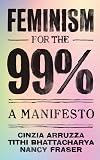
Run, don't walk, to your nearest book seller or library and get a copy of this slim, salient study of the specific evils of capitalism and the actionable ways that anticapitalist feminism proposes to redress them.
Arrruzza, et al, quickly sketch the bankruptcy of liberal feminism that "confuses feminism with the assent of individual women," and "steadfastly refuses to address the socioeconomic constraints that make freedom and empowerment impossible for the majority of women."
The writers also show more address issues of reproduction of labor, gender violence, and the environment.
This is one to own, underline, re-read and discuss with your book group. show less
Arrruzza, et al, quickly sketch the bankruptcy of liberal feminism that "confuses feminism with the assent of individual women," and "steadfastly refuses to address the socioeconomic constraints that make freedom and empowerment impossible for the majority of women."
The writers also show more address issues of reproduction of labor, gender violence, and the environment.
This is one to own, underline, re-read and discuss with your book group. show less

This book should really be divided into two parts, as the blurb suggests – the first two chapters provide a concise history of various workers' struggles (and revolutions) and their relationships to women's movements; the latter two (which are much shorter) provide an equally concise overview of various schools of feminist theory and Arruzza's opinions on the merits of each. I was mostly in agreement with those opinions – I found her takedown of Luce bloody Irigaray's "difference theory" show more particularly satisfying – and so I would certainly recommend this.
I did have a couple of points of scepticism, mostly in that Arruzza seems to feel that "patriarchal structures" or "male structures" have a more solid existence than I would argue. It's hard to say this for sure because given the nature of the book, she tended to describe trains of thought that weren't her own and wasn't always that hard on them, so perhaps this exaggerated the impression I got. Nonetheless… I felt she gave too much credence to the idea that there are these parallel structures of capitalism and patriarchy, when "patriarchy" is really more of an ideology that justifies the oppression of women that's been going on since the rise of class society. "Patriarchy" in that sense is not a structure in and of itself, but an ideology borne of structures that is used to reinforce those (and other) structures. They're not "dual systems" but different things – different types of thing – that interact with one another.
One thing that Arruzza said again and again was that she didn't feel it was "useful" to argue for a hierarchy of oppressions, although class is not an oppression. I still agree that trying to subsume class into gender or gender into class is undesirable and unhelpful, but there were these kinds of theoretical statements I disagreed with, I guess.
Even so… this was an excellent overview of history and theory surrounding the question of how these two movements intersect, regardless of how Arruzza's theory ever so subtly differed from my own. It's very readable, concise and well-structured too, so no impenetrable academic language to struggle through and give you a headache. I knocked it off in an afternoon! Good stuff. show less
I did have a couple of points of scepticism, mostly in that Arruzza seems to feel that "patriarchal structures" or "male structures" have a more solid existence than I would argue. It's hard to say this for sure because given the nature of the book, she tended to describe trains of thought that weren't her own and wasn't always that hard on them, so perhaps this exaggerated the impression I got. Nonetheless… I felt she gave too much credence to the idea that there are these parallel structures of capitalism and patriarchy, when "patriarchy" is really more of an ideology that justifies the oppression of women that's been going on since the rise of class society. "Patriarchy" in that sense is not a structure in and of itself, but an ideology borne of structures that is used to reinforce those (and other) structures. They're not "dual systems" but different things – different types of thing – that interact with one another.
One thing that Arruzza said again and again was that she didn't feel it was "useful" to argue for a hierarchy of oppressions, although class is not an oppression. I still agree that trying to subsume class into gender or gender into class is undesirable and unhelpful, but there were these kinds of theoretical statements I disagreed with, I guess.
Even so… this was an excellent overview of history and theory surrounding the question of how these two movements intersect, regardless of how Arruzza's theory ever so subtly differed from my own. It's very readable, concise and well-structured too, so no impenetrable academic language to struggle through and give you a headache. I knocked it off in an afternoon! Good stuff. show less
Great polemic against liberal, neoliberal feminism which sustains existing inequalities and a call for an anti-capitalist, more inclusionary form of feminism.

Wow, yet again I'm struck by my ignorance and apathy in not fully understanding the systems at work in my country. (The last time was in 2017 after I watched Ava DuVernay 's The 13th. Whew! I mean, I knew the "justice" system was messed up, and I was already on the fence about prisons, but that doc showed me how effed it truly is.) In all the social studies and history and government classes I've had in my lifetime, I only ever thought of capitalism as economics. Never did I really ever see show more it as a political system and definitely not a sustaining (or even a driving) force in patriarchy, racism, sexism... Probably my distaste for politics in general is a major contributing factor to that ignorance -- a factor, not an excuse to be sure.
"We write not to sketch an imagined utopia, but to mark out the road that must be traveled to reach a just society."
Feminism for the 99% is a solid primer. It's not an in-depth work and, for anyone already educated on the subject, it may only function as a quick reference for guiding theses and principles. For others, like me, it will serve as a catalyst to learn more. But don't let its page count fool ya -- I spent over a month reading and re-reading it.
Notes to self:
corporate feminism
p. 5 p. "We write not to sketch an imagined utopia, but to mark out the road that must be traveled to reach a just society."
p. 5 "new wave of militant feminist activism"
liberal feminism
p. 11 "Its real aim is not equality, but meritocracy."
p. 11 "liberal feminism outsources oppression"
p. 21 social reproduction
p. 22 "Far from being valued in its own right, the making of people is treated as a mere means to the making of profit."
p. 30 femocrats
p. 55 "Struggle is both an opportunity and a school. It can transform those who particpate in it, challenging our prior understandings of ourselves and reshaping our views of the world."
p. 75 "In comparison with postwar era, the number of hours of waged work per household has skyrocketed, cutting deep into the time available to replenish ourselves, care for our families and friends, and maintain our homes and communities."
p. 79 "...it is no wonder that struggles over social reproduction have exploded over recent years. Northern feminists often describe their focus as 'the balance between family and work."
p. 80 "A true resolution requires nothing less than an entirely new form of social organization."
"We write not to sketch an imagined utopia, but to mark out the road that must be traveled to reach a just society."
Feminism for the 99% is a solid primer. It's not an in-depth work and, for anyone already educated on the subject, it may only function as a quick reference for guiding theses and principles. For others, like me, it will serve as a catalyst to learn more. But don't let its page count fool ya -- I spent over a month reading and re-reading it.
Notes to self:
corporate feminism
p. 5 p. "We write not to sketch an imagined utopia, but to mark out the road that must be traveled to reach a just society."
p. 5 "new wave of militant feminist activism"
liberal feminism
p. 11 "Its real aim is not equality, but meritocracy."
p. 11 "liberal feminism outsources oppression"
p. 21 social reproduction
p. 22 "Far from being valued in its own right, the making of people is treated as a mere means to the making of profit."
p. 30 femocrats
p. 55 "Struggle is both an opportunity and a school. It can transform those who particpate in it, challenging our prior understandings of ourselves and reshaping our views of the world."
p. 75 "In comparison with postwar era, the number of hours of waged work per household has skyrocketed, cutting deep into the time available to replenish ourselves, care for our families and friends, and maintain our homes and communities."
p. 79 "...it is no wonder that struggles over social reproduction have exploded over recent years. Northern feminists often describe their focus as 'the balance between family and work."
p. 80 "A true resolution requires nothing less than an entirely new form of social organization."
Lists
Awards

You May Also Like


Associated Authors
Statistics
- Works
- 10
- Also by
- 4
- Members
- 449
- Popularity
- #54,621
- Rating
- 4.1
- Reviews
- 7
- ISBNs
- 37
- Languages
- 10