
John Wray (1) (1971–)
Author of Lowboy
For other authors named John Wray, see the disambiguation page.
About the Author
John Wray lives in Brooklyn. (Bowker Author Biography)
Image credit: Author John Wray at the 2018 Texas Book Festival in Austin, Texas, United States. By Larry D. Moore, CC BY-SA 4.0, https://commons.wikimedia.org/w/index.php?curid=74265682
Works by John Wray
Associated Works
The Decameron Project: 29 New Stories from the Pandemic (2020) — Contributor — 160 copies, 5 reviews
Significant Objects: 100 Extraordinary Stories about Ordinary Things (2012) — Contributor — 65 copies, 1 review
Tagged
Common Knowledge
- Legal name
- Henderson, John
- Other names
- Wray, John (pseudonym)
- Birthdate
- 1971
- Gender
- male
- Nationality
- USA
- Birthplace
- Washington, D.C., USA
- Map Location
- USA
Members
Reviews
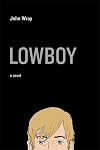
John Wray's dizzyingly seductive "Lowboy" is a tale told by a schizophrenic teenager. (Farrar Straus Giroux, $25). Wray's protagonist is on the lam from a mental institution, loose among the commuters and winos and rolling thunder of the Manhattan subway. Making your central character deeply insane is, of course, a risky and ambitious trick, but Wray carries it off with a fluid, inventive style that rises at times to a frightening pitch. Lowboy is an amplified hero for our times; despite his show more violence and craziness and incoherence, he is fundamentally sweet and in search of love. show less
“The beauty of austerity. The beauty of no quarter. She felt its pull and saw no earthly end to it.”
“She’d hoped for grace and dignity and unity of purpose.”
John Wray’s compelling novel focuses on the physical and spiritual journey of an 18-year-old American girl, Aden Grace Sawyer. Initially, Aden travels from San Francisco to a madrasa in Peshawar, on the northwest frontier of Pakistan. She then moves on to two jihadi training camps—finding herself ever closer to the front show more where the Taliban fight the warlords of the northern Afghanistan. Weary of caring for her alcoholic mother and entirely disillusioned with her unfaithful, “apostate”, university professor father, an Islamic studies scholar, Aden has turned to Islam, apparently in a desire for clarity and purity. An outcast at school who is snickered at by her peers, Aden has attended a mosque for a little over a year and has been radicalized. Wearing a shalwar kameez and a boyish haircut (and swallowing a daily dose of menstrual-cycle-altering hormones), she has her erstwhile boyfriend, Decker, traveling with her. Decker, who is of Pashtun heritage and fluent in the languages of the region, has a number of family connections overseas. However, he does not have Aden’s drive for meaning, purpose, and certainty. He’s along for the ride as protector and adventurer, with hopes that sexual benefits might be the reward for loyalty.
Aden’s father believes she is taking a gap year to find herself. A detached figure, he avoids discussing the psychological conflicts that may be fuelling his daughter’s journey and the ideology that guides her, even when she refers to her trip as a “jihad. It’s unclear what her mother thinks, lost as she generally is in an alcoholic fog. She has turned the family photos to face the wall, indicating that she regards Aden’s departure as a kind of death.
Wray makes some interesting authorial choices. A significant portion of his novel consists of dialogue, but he eschews the usual punctuation marks and speaker tags, employing introductory dashes instead to mark the switch from one to another speaker. I’m not sure why he’s done this, though it may be that the dash suggests a sort of urgency. In any case, substituting this unconventional punctuation for the more common marks does not interfere with meaning. Wray’s writing is clean and limber, often hushed and beautiful in its simplicity. He effectively tells as often as he shows, but that telling is nuanced.
As might be expected, much of the tension in this novel arises from Aden’s disguise. I don’t believe any young American woman entering Afghanistan would be as successful at male impersonation and for such a duration of time as Aden is. If readers are unwilling to suspend disbelief around this and are unprepared for a certain vagueness around how Aden became so fluent in Arabic, how she converted and became radicalized, the novel might be problematic for them. I agreed to Wray’s terms, accepting that what he was really interested in was exploring a female jihadi’s experience, and the novel worked for me. In some ways, Aden’s story made me recall Joan of Arc’s.
Additional tension is created when Decker and Aden’s relationship threatens to break down. Is it possible that he will attempt to return to America without her? Will he reveal her true identity to those running the training camp? Might a young boy recruit who has seen Aden squatting and noted her missing parts accept her explanation, or could he mention to someone that she is not like them?
Aden’s devotion to Ziar Khan, a recruiter who is a decade older than she, also propels the plot. There is a simmering passion here, and many of the men suspect that Aden, or “Suleyman” (as she now calls herself), is his “dancing boy”. Does Ziar suspect that this devout warrior for God, in Afghanistan to protect a Muslim nation, is actually a girl? What will happen if and when he does?
For the better part of the novel, there is some uncertainty about when it is set. Wray eventually reveals this.
To this point, I’ve deliberately avoided looking at critical reviews and author interviews. However, I’m certainly curious to know more about how Wray came to write this unusual and fascinating novel and how he conducted his research. show less
“She’d hoped for grace and dignity and unity of purpose.”
John Wray’s compelling novel focuses on the physical and spiritual journey of an 18-year-old American girl, Aden Grace Sawyer. Initially, Aden travels from San Francisco to a madrasa in Peshawar, on the northwest frontier of Pakistan. She then moves on to two jihadi training camps—finding herself ever closer to the front show more where the Taliban fight the warlords of the northern Afghanistan. Weary of caring for her alcoholic mother and entirely disillusioned with her unfaithful, “apostate”, university professor father, an Islamic studies scholar, Aden has turned to Islam, apparently in a desire for clarity and purity. An outcast at school who is snickered at by her peers, Aden has attended a mosque for a little over a year and has been radicalized. Wearing a shalwar kameez and a boyish haircut (and swallowing a daily dose of menstrual-cycle-altering hormones), she has her erstwhile boyfriend, Decker, traveling with her. Decker, who is of Pashtun heritage and fluent in the languages of the region, has a number of family connections overseas. However, he does not have Aden’s drive for meaning, purpose, and certainty. He’s along for the ride as protector and adventurer, with hopes that sexual benefits might be the reward for loyalty.
Aden’s father believes she is taking a gap year to find herself. A detached figure, he avoids discussing the psychological conflicts that may be fuelling his daughter’s journey and the ideology that guides her, even when she refers to her trip as a “jihad. It’s unclear what her mother thinks, lost as she generally is in an alcoholic fog. She has turned the family photos to face the wall, indicating that she regards Aden’s departure as a kind of death.
Wray makes some interesting authorial choices. A significant portion of his novel consists of dialogue, but he eschews the usual punctuation marks and speaker tags, employing introductory dashes instead to mark the switch from one to another speaker. I’m not sure why he’s done this, though it may be that the dash suggests a sort of urgency. In any case, substituting this unconventional punctuation for the more common marks does not interfere with meaning. Wray’s writing is clean and limber, often hushed and beautiful in its simplicity. He effectively tells as often as he shows, but that telling is nuanced.
As might be expected, much of the tension in this novel arises from Aden’s disguise. I don’t believe any young American woman entering Afghanistan would be as successful at male impersonation and for such a duration of time as Aden is. If readers are unwilling to suspend disbelief around this and are unprepared for a certain vagueness around how Aden became so fluent in Arabic, how she converted and became radicalized, the novel might be problematic for them. I agreed to Wray’s terms, accepting that what he was really interested in was exploring a female jihadi’s experience, and the novel worked for me. In some ways, Aden’s story made me recall Joan of Arc’s.
Additional tension is created when Decker and Aden’s relationship threatens to break down. Is it possible that he will attempt to return to America without her? Will he reveal her true identity to those running the training camp? Might a young boy recruit who has seen Aden squatting and noted her missing parts accept her explanation, or could he mention to someone that she is not like them?
Aden’s devotion to Ziar Khan, a recruiter who is a decade older than she, also propels the plot. There is a simmering passion here, and many of the men suspect that Aden, or “Suleyman” (as she now calls herself), is his “dancing boy”. Does Ziar suspect that this devout warrior for God, in Afghanistan to protect a Muslim nation, is actually a girl? What will happen if and when he does?
For the better part of the novel, there is some uncertainty about when it is set. Wray eventually reveals this.
To this point, I’ve deliberately avoided looking at critical reviews and author interviews. However, I’m certainly curious to know more about how Wray came to write this unusual and fascinating novel and how he conducted his research. show less
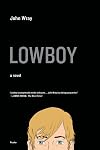
Lowboy is fluidly written with evocative descriptions, particularly of the city and the subway. Wray successfully navigates the reader from viewing the main character as a confused innocent, grappling to make his way in a threatening world--the paranoid part of paranoid schizophrenia that at it's more benign end hits on something almost universal, to seeing him as the dark psycho in a creepy suspense (this part of the book flirts with the feel of a mainstream suspense flick), and finally to show more some sad combination of the points along this continuum. He is part victim, all disturbed. The side of the story that revolves around his mother is a bit unsatisfying. The payoff is a sort of a "yeah, and...??" It's obvious. You know it all along and you're expecting some more concrete, new, and shocking revelation. If there were more to that end of the story, it would enrich the book overall. show less
I found Lowboy to be a compelling read. It switched back and forth between the mostly unreliable point of view of the schizophrenic, off-his-meds, main character, and the detective who is trying to find him before he hurts himself, or anyone else. I agree with other readers that there was no real "secret" revealed at the end. (That was just a marketing ploy in the book description.) But it is an interesting, off-kilter story that focuses on the marginalized people of society (the mentally show more ill, the homeless) and on two people (Ali and Emily) who, I got the impression, had been somehow damaged by life and are drawn to the mother and son who temporarily offer them a different view of the world. show less
 This review was written for LibraryThing Early Reviewers.
Lists
Awards


You May Also Like


Associated Authors
Statistics
- Works
- 9
- Also by
- 4
- Members
- 1,414
- Popularity
- #18,191
- Rating
- 3.3
- Reviews
- 72
- ISBNs
- 80
- Languages
- 7

