
Rivka Galchen
Author of Atmospheric Disturbances: A Novel
About the Author
Image credit: Photo by Nigel Beale / Flickr
Works by Rivka Galchen
Associated Works
The Double Death of Quincas Water-Bray (1959) — Introduction, some editions — 461 copies, 19 reviews
The Decameron Project: 29 New Stories from the Pandemic (2020) — Introduction — 160 copies, 5 reviews
And We Came Outside and Saw the Stars Again: Writers from Around the World on the COVID-19 Pandemic (2020) — Contributor — 16 copies
Tagged
Common Knowledge
- Canonical name
- Galchen, Rivka
- Birthdate
- 1976-04-19
- Gender
- female
- Education
- Princeton University
Mount Sinai School of Medicine (MD|Psychiatry)
Columbia University (MFA) - Organizations
- Harper's Magazine
- Awards and honors
- Rona Jaffe Foundation Writers’ Award (Fiction, 2006)
- Nationality
- Canada (birth)
USA - Places of residence
- Norman, Oklahoma, USA
- Associated Place (for map)
- Oklahoma, USA
Members
Reviews
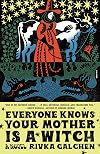
Life feels fragile in the German Duchy of Württemberg, for it’s 1618, and not only does plague stalk the land, the Thirty Years War brings the passage of armies and their attendant depredations. But in the village of Leonberg, these afflictions only lap around the edges. What really matters is that Katharina Kepler is accused of witchcraft.
Katharina is an old woman, a grandmother who puts more faith in her beloved cow, Chamomile, than in people, young children excepted. Known for herbal show more remedies and her strange way of talking — she seldom answers a question directly, and asks in turn those that nobody else would dream of — she’s a busybody. She thinks nothing of bursting into someone’s house, whether to bring a gift or tell them how they should be living. The Yiddish word “nudnik” comes to mind.
She’s the sort who has an opinion about everything, and if you’re really lucky, you’ll get to hear it. She has a way of summing people up in insulting terms: “The crowd of them looked like a pack of dull troubadours who, come morning, have made off with all the butter.” Finally, her son, Johannes, is Imperial Mathematician, and Katharina’s neighbors are always asking her if he’ll cast their horoscopes. Apparently, he knows things about the heavens and writes books. These are suspicious activities, especially if the desired horoscope isn’t forthcoming.
From this eccentric yet harmless profile emerges the most incredible folklore. The good citizens of Leonberg believe, or come to believe, that Katharina has the power to poison, make people lame, pass through locked doors, cause livestock to sicken and die, and consort with the devil. How they arrive at these fancies — and why — makes a brilliant narrative, at once chilling and hilarious, absurd, yet with the ring of absolute truth.
In a novel like this, especially in the first-person narratives Galchen deploys, voice matters greatly, and you might suppose, as I did at first, that she owes a debt to Kafka. Not quite. In Kafka’s bureaucratic nightmares, the hand that wields power remains obscure, sometimes invisible. Here, you see the workings, or many of them; more importantly, you see their paranoid, angry underpinnings. Kafka is said to have read his work out loud to friends, causing general laughter. I’ve never laughed at Kafka — maybe that says something about me — but I did at Galchen. Until, that is, the accusations gather steam.
Everyone Knows is a feminist statement, for we have a free-thinking woman blamed for heresies, mostly by other women, interestingly. It’s as though they resent her for doing what they’ve never let themselves even think of. But though misogyny, including the self-inflicted variety, has historically fed attempts to suppress witchcraft, there’s much more here. Galchen has delved into the paranoia that produces conspiracy theories, and her reconstruction of their origins is spot on. Life has disappointed them, hasn’t granted what the conspiracy theorist assumes he or she deserves and, by God, someone will pay. If that’s not a diagnosis of a sickness that threatens this country’s social, cultural, and political fabric, I don’t know what is.
Some readers will find that this novel ends abruptly, and maybe it does. But that doesn’t trouble me. Galchen’s less concerned with what happens than its origins and legacy; she’s not so focused on the plot, and I accept that. More bothersome is the language, entirely brilliant, yet with occasional lapses in diction. Images like troubadours stealing butter or an otter in a doublet strike my ear perfectly, so I’m not prepared for modern idioms like okay, open up (meaning reveal), be fine with, or share your story. If Galchen, a careful writer, is trying to suggest that these seventeenth-century Germans are just like us, she’s proven that in other, deeper ways. show less
Katharina is an old woman, a grandmother who puts more faith in her beloved cow, Chamomile, than in people, young children excepted. Known for herbal show more remedies and her strange way of talking — she seldom answers a question directly, and asks in turn those that nobody else would dream of — she’s a busybody. She thinks nothing of bursting into someone’s house, whether to bring a gift or tell them how they should be living. The Yiddish word “nudnik” comes to mind.
She’s the sort who has an opinion about everything, and if you’re really lucky, you’ll get to hear it. She has a way of summing people up in insulting terms: “The crowd of them looked like a pack of dull troubadours who, come morning, have made off with all the butter.” Finally, her son, Johannes, is Imperial Mathematician, and Katharina’s neighbors are always asking her if he’ll cast their horoscopes. Apparently, he knows things about the heavens and writes books. These are suspicious activities, especially if the desired horoscope isn’t forthcoming.
From this eccentric yet harmless profile emerges the most incredible folklore. The good citizens of Leonberg believe, or come to believe, that Katharina has the power to poison, make people lame, pass through locked doors, cause livestock to sicken and die, and consort with the devil. How they arrive at these fancies — and why — makes a brilliant narrative, at once chilling and hilarious, absurd, yet with the ring of absolute truth.
In a novel like this, especially in the first-person narratives Galchen deploys, voice matters greatly, and you might suppose, as I did at first, that she owes a debt to Kafka. Not quite. In Kafka’s bureaucratic nightmares, the hand that wields power remains obscure, sometimes invisible. Here, you see the workings, or many of them; more importantly, you see their paranoid, angry underpinnings. Kafka is said to have read his work out loud to friends, causing general laughter. I’ve never laughed at Kafka — maybe that says something about me — but I did at Galchen. Until, that is, the accusations gather steam.
Everyone Knows is a feminist statement, for we have a free-thinking woman blamed for heresies, mostly by other women, interestingly. It’s as though they resent her for doing what they’ve never let themselves even think of. But though misogyny, including the self-inflicted variety, has historically fed attempts to suppress witchcraft, there’s much more here. Galchen has delved into the paranoia that produces conspiracy theories, and her reconstruction of their origins is spot on. Life has disappointed them, hasn’t granted what the conspiracy theorist assumes he or she deserves and, by God, someone will pay. If that’s not a diagnosis of a sickness that threatens this country’s social, cultural, and political fabric, I don’t know what is.
Some readers will find that this novel ends abruptly, and maybe it does. But that doesn’t trouble me. Galchen’s less concerned with what happens than its origins and legacy; she’s not so focused on the plot, and I accept that. More bothersome is the language, entirely brilliant, yet with occasional lapses in diction. Images like troubadours stealing butter or an otter in a doublet strike my ear perfectly, so I’m not prepared for modern idioms like okay, open up (meaning reveal), be fine with, or share your story. If Galchen, a careful writer, is trying to suggest that these seventeenth-century Germans are just like us, she’s proven that in other, deeper ways. show less

"She was a frighteningly intelligent woman--also a fool."
Simon Satler, friend of Katharina Kepler
I love this book! But I am disheartened. It has, in GR standards, a lowly rating of 3.39. That's unfathomable to me. So I am here to try to convince you to read this one in spite of its rating.
Especially if you are an old broad like me who enjoys reading about old kickass broads.
Author Rivka Galchen created a living, breathing woman reconstituted from the dry pages of 17c European history, show more seventy-something year old Katharina, the real mother of early astronomer Johannes Kepler (his work was crucial to Sir Isaac Newton's own). Once when Johannes was six years old, Katharina brought him to an elevated point in order to view the major comet in 1577.
Already you gotta love her, right?
Between the years of 1615-1621 she was on trial for her life, after being accused of being a witch by a woman whose name has gone down in history as the disingenuous perpetrator of lies that could result in Katharina being burned or beheaded. A deception that caught like wildfire, playing into the deep superstitions of villagers whose lives are epitomized by the expression "nasty, brutish and short." Their hearsay evidence, recounted fictionally (but realistically), was an eye-opener of the incredible variety of transparent and terrible reasons a person might convince themselves they knew Katharina (or any woman or man) to be a witch.
Katharina's real crime? She was old. She also was a widow. She possessed some modest property. That is, she was society's vulnerable. She sold herbal packets to help fever, skin ailments, stomach troubles--herbs being mankind's early medicines, sometimes helpful, sometimes not, always fodder for witch accusations. Worse, she could be seen out and about during daylight not acting demure, not invisible enough to suit some.
I loved her for that independence, her lack of kowtowing, not out of pride but out of just getting on with life. You know that saying, "Dance as if no one was watching?" That's the way Katharina lived her life, perhaps foolishly as her sons and her friend Simon thought. I don't mean she lived in exuberance--far from it, she could be quite dour and cynical--but that she lived her life going about her business, helping others, showing compassion, having an opinion, speaking up, as if no one was watching. But they were.
She was a woman of her time and had her own silly superstitions as well--she didn't approve of strawberries because they grew too close to the earth's foul vapors. She had secret nicknames for people she disliked--werewolf, fake unicorn, and my favorite of the nicknames, cabbage.
She loved Martin Luther. She loved her children, her grandchildren, and her cow, Chamomile who she said had the eyes of her father and the soul of a favorite young granddaughter who died of an unidentified and sudden disease, a death she bore but grieved for a long time.
She also loved her friend and socially reclusive/awkward neighbor, Simon. The first words of the novel are Katharina's, written down by Simon for her, as her "truest testimony" she calls it. From the get-go we know we are meeting a person worth meeting. In the end, the friendship is strained by the trial, by Simon's own woes, and the burden their friendship had on him. Later, she says to him, so wisely, so compassionately, "You've been a friend to me. In the ways that were available to you."
Back to even that first written testimony, she knows herself and her predicament, how alone she truly is in a way that old crones do:
"There are two things a woman must do alone; she does her own believing and her own dying."
I love this book! show less
Simon Satler, friend of Katharina Kepler
I love this book! But I am disheartened. It has, in GR standards, a lowly rating of 3.39. That's unfathomable to me. So I am here to try to convince you to read this one in spite of its rating.
Especially if you are an old broad like me who enjoys reading about old kickass broads.
Author Rivka Galchen created a living, breathing woman reconstituted from the dry pages of 17c European history, show more seventy-something year old Katharina, the real mother of early astronomer Johannes Kepler (his work was crucial to Sir Isaac Newton's own). Once when Johannes was six years old, Katharina brought him to an elevated point in order to view the major comet in 1577.
Already you gotta love her, right?
Between the years of 1615-1621 she was on trial for her life, after being accused of being a witch by a woman whose name has gone down in history as the disingenuous perpetrator of lies that could result in Katharina being burned or beheaded. A deception that caught like wildfire, playing into the deep superstitions of villagers whose lives are epitomized by the expression "nasty, brutish and short." Their hearsay evidence, recounted fictionally (but realistically), was an eye-opener of the incredible variety of transparent and terrible reasons a person might convince themselves they knew Katharina (or any woman or man) to be a witch.
Katharina's real crime? She was old. She also was a widow. She possessed some modest property. That is, she was society's vulnerable. She sold herbal packets to help fever, skin ailments, stomach troubles--herbs being mankind's early medicines, sometimes helpful, sometimes not, always fodder for witch accusations. Worse, she could be seen out and about during daylight not acting demure, not invisible enough to suit some.
I loved her for that independence, her lack of kowtowing, not out of pride but out of just getting on with life. You know that saying, "Dance as if no one was watching?" That's the way Katharina lived her life, perhaps foolishly as her sons and her friend Simon thought. I don't mean she lived in exuberance--far from it, she could be quite dour and cynical--but that she lived her life going about her business, helping others, showing compassion, having an opinion, speaking up, as if no one was watching. But they were.
She was a woman of her time and had her own silly superstitions as well--she didn't approve of strawberries because they grew too close to the earth's foul vapors. She had secret nicknames for people she disliked--werewolf, fake unicorn, and my favorite of the nicknames, cabbage.
She loved Martin Luther. She loved her children, her grandchildren, and her cow, Chamomile who she said had the eyes of her father and the soul of a favorite young granddaughter who died of an unidentified and sudden disease, a death she bore but grieved for a long time.
She also loved her friend and socially reclusive/awkward neighbor, Simon. The first words of the novel are Katharina's, written down by Simon for her, as her "truest testimony" she calls it. From the get-go we know we are meeting a person worth meeting. In the end, the friendship is strained by the trial, by Simon's own woes, and the burden their friendship had on him. Later, she says to him, so wisely, so compassionately, "You've been a friend to me. In the ways that were available to you."
Back to even that first written testimony, she knows herself and her predicament, how alone she truly is in a way that old crones do:
"There are two things a woman must do alone; she does her own believing and her own dying."
I love this book! show less
This was a random selection from the library shelves & I hit a winner. The cool, clinical tone was perfect for the story of mental derailment from reality. The story brought up some provoking thoughts about reality (what it is vs. what we perceive), how we rationalize things, how we engage or detach from the world around us, how we cope. I'd recommend it to some, but I realize it is not a book that will appeal to others.
Katharina Kepler finds herself in hot water when Ursula Reinbold accuses her of witchcraft, namely, of giving her poisoned wine that makes her sick. Frau Kepler then turns around and accuses Ursula of slander - but instead of her charge being taken seriously, more and more neighbors come out of the woodwork to say that the old woman has harmed them or their children or their animals in some way.
Told primarily as Katharina's telling her literate neighbor and court guardian, Simon, her side of show more the story, interspersed with Simon's comments and transcripts of trial testimony, this historical fiction tale imagines what the full story behind Johannes Kepler's mother might have been. Galchen seamlessly blends real and imagined figures to tell a compelling tale of an opinionated old woman and the misunderstandings, friendships, jealousies and more that arise in her small community in Wurttemberg. Compelling and maddening reading. show less
Told primarily as Katharina's telling her literate neighbor and court guardian, Simon, her side of show more the story, interspersed with Simon's comments and transcripts of trial testimony, this historical fiction tale imagines what the full story behind Johannes Kepler's mother might have been. Galchen seamlessly blends real and imagined figures to tell a compelling tale of an opinionated old woman and the misunderstandings, friendships, jealousies and more that arise in her small community in Wurttemberg. Compelling and maddening reading. show less
Lists
Feminism (1)
Awards


You May Also Like


Associated Authors
Statistics
- Works
- 14
- Also by
- 13
- Members
- 2,229
- Popularity
- #11,503
- Rating
- 3.6
- Reviews
- 95
- ISBNs
- 74
- Languages
- 8
- Favorited
- 4