
About the Author
Image credit: via Amazon.com
Works by Jonathan Mahler
Ladies and Gentlemen, the Bronx Is Burning: 1977, Baseball, Politics, and the Battle for the Soul of a City (2005) 488 copies, 7 reviews
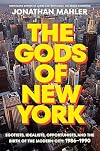
The Gods of New York: Egotists, Idealists, Opportunists, and the Birth of the Modern City: 1986-1990 (2025) 85 copies, 1 review
Death Comes to Happy Valley: Penn State and the Tragic Legacy of Joe Paterno (Kindle Single) (2012) 5 copies, 2 reviews
Associated Works
Tagged
Common Knowledge
- Canonical name
- Mahler, Jonathan
- Birthdate
- 1969-04-14
- Gender
- male
- Education
- Northwestern University
- Occupations
- journalist
- Organizations
- The New York Times Magazine
- Nationality
- USA
- Associated Place (for map)
- USA
Members
Reviews
Rating: ?5*?1*?
The Publisher Says: A sweeping chronicle of four years in 1980s New York, a crucible that would transform the city and leave it more divided than ever—a rollicking, real-life Bonfire of the Vanities featuring larger-than-life personalities of Donald Trump, Spike Lee, Ed Koch, Al Sharpton, Rudy Giuliani, and countless others
New York City entered 1986 as a city reborn, with record profits on Wall Street sending waves of money splashing across Manhattan and bringing a show more once-bankrupt, reeling city back to life.
But it also entered 1986 as a city divided. Nearly one-third of the city’s Black and Hispanic residents were living below the federal poverty line. Thousands of New Yorkers were sleeping in the streets—and in many cases addicted to drugs, dying of AIDS, or suffering from mental illness. The manufacturing jobs that had once sustained a thriving middle class had vanished. Long-simmering racial tensions threatened to boil over.
Over the next four years, a singular confluence of events—involving a cast of outsized, unforgettable characters—would widen those divisions into chasms. Ed Koch. Donald Trump. Al Sharpton. The Central Park Five. Spike Lee. Rudy Giuliani. Howard Beach. Tawana Brawley. The Preppy Murder. Jimmy Breslin. Do the Right Thing, Wall Street, crack, the AIDS epidemic, and, of course, ready to pour gasoline on every fire—the tabloids. In The Gods of New York, Jonathan Mahler tells the story of these convulsive, defining years.
The Gods of New York is an exuberant, kaleidoscopic, and deeply immersive portrait of a city in transformation, one whose long-held identity was suddenly up for Could it be both the great working-class city, lifting up immigrants from around the world and the money-soaked capital of global finance? Could it retain a civic culture—a common idea of what it meant to be a New Yorker—when the rich were building a city of their own and vast swaths of its citizens were losing faith in the very systems intended to protect them? New York City was one thing at the dawn of 1986; it would be something very different as 1989 came to a close. This book is the story of how that happened.
I RECEIVED A DRC FROM THE PUBLISHER VIA NETGALLEY. THANK YOU.
My Review: That was the Manhattan I fell in love with. Not the one where St. Vincent's is a yuppie hutch. I watched the enshittification happen then; I was apparently ineffective in resisting it; now it's the entire country it's happening to, and I still feel ineffective.
Still slugging, though.
Michael Stewart, he of The Man Nobody Killed, kicks us off on our journey through the world that grew Felonious Yam into a cultural icon (mostly spite-driven because we all laughed at him then). After Ed Koch's second term ended, Giuliani became mayor, and shit went downhill fast.
If you know, you know.
The times were a-changin' and the seeds of the political hellscape of today were there and scaring some of us. I still feel bad we didn't stop it. Reading this year-by-year, carefully non-partisan reminder of my generation's abject failures on stages large and small did not fill me with ebullient glee. Fauci's horrific inaction during the AIDS crisis, lack of empathy and flexibility, reminded me of how loud the haters got when he was doing a much better job during COVID. If they'd been around for the ACT UP years....
This isn't history to me, the way it will be to all y'all who didn't live it; it's my past retold. I'm glad I read it. I got closure-sobs for things I'd forgotten I'd forgotten. It's not fun to live in interesting times...but who ever does not? The way the world works is upheaval and change and rage and hate simmer, then boil, then simmer...eternal cycles of it.
I'm so sorry we did not do better when there was a chance to stop the scum from rising above their capacity to understand basic morality. Mea culpa. show less
The Publisher Says: A sweeping chronicle of four years in 1980s New York, a crucible that would transform the city and leave it more divided than ever—a rollicking, real-life Bonfire of the Vanities featuring larger-than-life personalities of Donald Trump, Spike Lee, Ed Koch, Al Sharpton, Rudy Giuliani, and countless others
New York City entered 1986 as a city reborn, with record profits on Wall Street sending waves of money splashing across Manhattan and bringing a show more once-bankrupt, reeling city back to life.
But it also entered 1986 as a city divided. Nearly one-third of the city’s Black and Hispanic residents were living below the federal poverty line. Thousands of New Yorkers were sleeping in the streets—and in many cases addicted to drugs, dying of AIDS, or suffering from mental illness. The manufacturing jobs that had once sustained a thriving middle class had vanished. Long-simmering racial tensions threatened to boil over.
Over the next four years, a singular confluence of events—involving a cast of outsized, unforgettable characters—would widen those divisions into chasms. Ed Koch. Donald Trump. Al Sharpton. The Central Park Five. Spike Lee. Rudy Giuliani. Howard Beach. Tawana Brawley. The Preppy Murder. Jimmy Breslin. Do the Right Thing, Wall Street, crack, the AIDS epidemic, and, of course, ready to pour gasoline on every fire—the tabloids. In The Gods of New York, Jonathan Mahler tells the story of these convulsive, defining years.
The Gods of New York is an exuberant, kaleidoscopic, and deeply immersive portrait of a city in transformation, one whose long-held identity was suddenly up for Could it be both the great working-class city, lifting up immigrants from around the world and the money-soaked capital of global finance? Could it retain a civic culture—a common idea of what it meant to be a New Yorker—when the rich were building a city of their own and vast swaths of its citizens were losing faith in the very systems intended to protect them? New York City was one thing at the dawn of 1986; it would be something very different as 1989 came to a close. This book is the story of how that happened.
I RECEIVED A DRC FROM THE PUBLISHER VIA NETGALLEY. THANK YOU.
My Review: That was the Manhattan I fell in love with. Not the one where St. Vincent's is a yuppie hutch. I watched the enshittification happen then; I was apparently ineffective in resisting it; now it's the entire country it's happening to, and I still feel ineffective.
Still slugging, though.
Michael Stewart, he of The Man Nobody Killed, kicks us off on our journey through the world that grew Felonious Yam into a cultural icon (mostly spite-driven because we all laughed at him then). After Ed Koch's second term ended, Giuliani became mayor, and shit went downhill fast.
If you know, you know.
The times were a-changin' and the seeds of the political hellscape of today were there and scaring some of us. I still feel bad we didn't stop it. Reading this year-by-year, carefully non-partisan reminder of my generation's abject failures on stages large and small did not fill me with ebullient glee. Fauci's horrific inaction during the AIDS crisis, lack of empathy and flexibility, reminded me of how loud the haters got when he was doing a much better job during COVID. If they'd been around for the ACT UP years....
This isn't history to me, the way it will be to all y'all who didn't live it; it's my past retold. I'm glad I read it. I got closure-sobs for things I'd forgotten I'd forgotten. It's not fun to live in interesting times...but who ever does not? The way the world works is upheaval and change and rage and hate simmer, then boil, then simmer...eternal cycles of it.
I'm so sorry we did not do better when there was a chance to stop the scum from rising above their capacity to understand basic morality. Mea culpa. show less
Ladies and Gentlemen, the Bronx Is Burning: 1977, Baseball, Politics, and the Battle for the Soul of a City by Jonathan Mahler
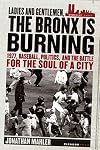
A readable, well-researched account of NYC in 1977, a year that NYC would probably rather forget. 1977: the year George Steinbrenner, Billy Martin, and Reggie Jackson kept sportswriters working overtime covering their many public disputes. The year a catastrophic power outage led to deadly riots and looting, destroying whole NYC neighborhoods. The year Studio 54 became a disco legend; SoHo, a quirky little artist community, was “discovered” (and arguably destroyed) by gentrification; and show more gays sunned themselves on abandoned peers, oblivious to the coming apocalypse of AIDS. The year Times Square gained notoriety not for its Broadway shows, but for its burgeoning, almost wholly unregulated porn industry. The year an obscure Australian media tycoon, Rupert Murdoch, bought the New York Post, marking the beginning of the Tabloid Era. The year rowdy Yankees fans regularly threw garbage on the field when they weren’t shouting obscenities at opposing teams or raining stale beer down on the heads of the patrons seated beneath them. The year a mysterious serial killer, dubbed Son of Sam, eluded a task force that at one point grew to include over 700 police officers. The year urban blight and housing projects created neighborhoods so bereft of hope, people torched their own unsellable houses for the insurance money. The year 3 living, breathing caricatures – Bella Abzug, Mario Cuomo and Abe Beame – battled for the right to run a city that was literally going up in smoke. The year NYC’s liberal legacy (rent-controlled apartments, generous municipal salaries and pensions, free higher education), already stretched and strained, finally broke. The year one of the greatest cities in the world skidded into fiscal chaos and officially declared bankruptcy.
In other words, Mahler has plenty of material to cover! And so he does, in the form of 67 brief, breezy, detail-filled chapters, replete with authentic eyewitness accounts and seeped in ‘70s “vibe”. Indeed, the narrative is so engaging and readable, I ended up enjoying parts of this I expected merely to endure. (Accounts of political campaigns and labor strikes not being my usually my cup of tea.)
Like many folks my age, I’ve spent much of my life trying to forget that I lived through this turbulent decade in America’s history. Yes, Mahler’s narrative serves as an unstinting, unapologetic reminder of everything that was awful about the 70s. But it also forced me to appreciate the remarkable adaptability and resiliency of American culture. Sure, we’ve faced challenges as a nation – poverty, racism, bigotry, violence, really bad music – but even in the depths of despair, our hope never completely fails, our empathy never entirely falters, our ingenuity endures, and we keeping finding ways to triumph over the forces of greed, intolerance, and general boorishness. A lesson I’m trying to take to heart as our country once against finds itself struggling to rise above our old, familiar demons. show less
In other words, Mahler has plenty of material to cover! And so he does, in the form of 67 brief, breezy, detail-filled chapters, replete with authentic eyewitness accounts and seeped in ‘70s “vibe”. Indeed, the narrative is so engaging and readable, I ended up enjoying parts of this I expected merely to endure. (Accounts of political campaigns and labor strikes not being my usually my cup of tea.)
Like many folks my age, I’ve spent much of my life trying to forget that I lived through this turbulent decade in America’s history. Yes, Mahler’s narrative serves as an unstinting, unapologetic reminder of everything that was awful about the 70s. But it also forced me to appreciate the remarkable adaptability and resiliency of American culture. Sure, we’ve faced challenges as a nation – poverty, racism, bigotry, violence, really bad music – but even in the depths of despair, our hope never completely fails, our empathy never entirely falters, our ingenuity endures, and we keeping finding ways to triumph over the forces of greed, intolerance, and general boorishness. A lesson I’m trying to take to heart as our country once against finds itself struggling to rise above our old, familiar demons. show less
Ladies and Gentlemen, the Bronx Is Burning: 1977, Baseball, Politics, and the Battle for the Soul of a City by Jonathan Mahler
Mahler revisits the tumultuous year of 1977 in New York City focusing on the clashes between Ed Koch and Mario Cuomo in the race for mayor, and Billy Martin and Reggie Jackson for dominance over the New York Yankees. In addition to this Mahler captures the essence of the city in politics, SoHo art galleries, punk rock, Studio 54, and the Son of Sam murders. The book moves along in illuminating if episodic chapters until the devastating central section where in clipped, police report style show more prose Mahler recreates the horror of the blackout of 1977 and the looting and arson that erupted in Bushwick and other neighborhoods. 1977 is a transformative year in New York history (and its hard to believe all of this happened in the same year), and definitely the moment when New York hit rock bottom. I found myself oddly nostalgic reading this book. Not that I miss the widespread violence and hopelessness of the time, but the names and places remind me of the old New York of my childhood and the good things that were lost in the yuppification of 80’s and 90’s. Definitely one of the best books I’ve read in a long while. show less
Ladies and Gentlemen, the Bronx Is Burning: 1977, Baseball, Politics, and the Battle for the Soul of a City by Jonathan Mahler
1977 was a pivotal year for New York City. Mayor Beame was seeking reelection in spite of record deficits, massive layoffs, and sky-rocketing crime rates. Also in the race were Mario Cuomo, who would later become governor, the future mayor Ed Koch, and firebrand feminist liberal Bella Abzug. 1977 was the Summer of Sam, David Berkowitz, a serial killer who terrorized the city for months. It was the year of the black-out, over 24 hours of largely uncontrolled looting that resulted in over show more 3,000 arrests and millions of dollars of property damaged that left a permanent mark on large sections of New York City. It was also the year Reggie Jackson came to play baseball for the New York Yankees in one of the first free-agent deals much to the consternation of team manager Billy Martin.
If you don't remember any of that, you may be wondering if there's anything in The Bronx is Burning for you. I was only 13 in 1977, too wrapped up in 8th grade to notice much of what was going on. From the opposite coast where I lived, New York City was a place to be avoided, too dangerous to ever consider visiting, an object lesson in what could go wrong. New York City was a punchline. Maybe having no solid preconceptions about New York in '77 is one reason why I liked The Bronx is Burning as much as I did; there's no reason for me to take exception to anything Mr. Mahler says one way or another.
Mr. Mahler says in his introduction that he set out to write a book about baseball, about the 1977 Yankees and Billy Martin's struggle with Reggie Jackson, maybe Reggie Jackson's struggle with Billy Martin. However, it soon became apparent to Mr. Mahler that he could not tell the story of the '77 Yankees without telling the larger story of New York City and those who lived there. The result is a fascinating look at a particular place at a particular time. The Bronx is Burning remains at heart a book about baseball, but it's a hybrid sort of book--a baseball, politics, true-crime piece of non-fiction that never ceases to entertain as it informs.
However, at its core, The Bronx is Burning is too conflicted to be a complete success. While Mr. Mahler tries to make his book an all encompassing portrait of New York City, one gets the sense that he really wants to write about baseball. The mayoral race is fascinating, judging from what is in The Bronx is Burning the 1977 race may have been one of the most interesting races in American politics, but it plays second fiddle to the on-going conflict between Reggie Jackson and Billy Martin. Between the two of them and team owner George Steinbrenner there is enough drama to fill the entire book which makes the inclusion of the Son of Sam investigation and Rupert Murdoch's takeover of the New York Post along with much of the story of the city's overall decline during the 1970's seem a bit of a footnote. In the end, I felt Mr. Mahler should have written two books, one about baseball and one about all the rest, so if I were still giving out stars, The Bronx is Burning would get four out of five. show less
If you don't remember any of that, you may be wondering if there's anything in The Bronx is Burning for you. I was only 13 in 1977, too wrapped up in 8th grade to notice much of what was going on. From the opposite coast where I lived, New York City was a place to be avoided, too dangerous to ever consider visiting, an object lesson in what could go wrong. New York City was a punchline. Maybe having no solid preconceptions about New York in '77 is one reason why I liked The Bronx is Burning as much as I did; there's no reason for me to take exception to anything Mr. Mahler says one way or another.
Mr. Mahler says in his introduction that he set out to write a book about baseball, about the 1977 Yankees and Billy Martin's struggle with Reggie Jackson, maybe Reggie Jackson's struggle with Billy Martin. However, it soon became apparent to Mr. Mahler that he could not tell the story of the '77 Yankees without telling the larger story of New York City and those who lived there. The result is a fascinating look at a particular place at a particular time. The Bronx is Burning remains at heart a book about baseball, but it's a hybrid sort of book--a baseball, politics, true-crime piece of non-fiction that never ceases to entertain as it informs.
However, at its core, The Bronx is Burning is too conflicted to be a complete success. While Mr. Mahler tries to make his book an all encompassing portrait of New York City, one gets the sense that he really wants to write about baseball. The mayoral race is fascinating, judging from what is in The Bronx is Burning the 1977 race may have been one of the most interesting races in American politics, but it plays second fiddle to the on-going conflict between Reggie Jackson and Billy Martin. Between the two of them and team owner George Steinbrenner there is enough drama to fill the entire book which makes the inclusion of the Son of Sam investigation and Rupert Murdoch's takeover of the New York Post along with much of the story of the city's overall decline during the 1970's seem a bit of a footnote. In the end, I felt Mr. Mahler should have written two books, one about baseball and one about all the rest, so if I were still giving out stars, The Bronx is Burning would get four out of five. show less
Awards


You May Also Like


Associated Authors
Statistics
- Works
- 6
- Also by
- 1
- Members
- 666
- Popularity
- #37,862
- Rating
- 4.0
- Reviews
- 10
- ISBNs
- 23