
Anne Harrington (1)
Author of Mind Fixers: Psychiatry's Troubled Search for the Biology of Mental Illness
For other authors named Anne Harrington, see the disambiguation page.
About the Author
Anne Harrington is the Franklin L. Ford Professor of the History of Science and faculty dean of Pforzheimer House at Harvard University. She is the author of four books, including The Cure Within. She lives in Cambridge, Massachusetts.
Image credit: Anne Harrington
Works by Anne Harrington
Mind Fixers: Psychiatry's Troubled Search for the Biology of Mental Illness (2019) 189 copies, 4 reviews
Visions of Compassion: Western Scientists and Tibetan Buddhists Examine Human Nature (2001) — Editor — 53 copies
Tagged
Common Knowledge
- Birthdate
- 20th Century
- Gender
- female
- Nationality
- UK
USA
Members
Reviews

I think this book was a really convincing take on the lack of a biological basis for mental illness. I've read a lot about the topic as I had a diagnosis several years ago due to what I now in hindsight can see wasn't an issue with my neurotransmitters, but a convergence of many huge life-altering events mixed with a horrible work environment.
I've always been ambivalent about books that are anti-psychiatry, as compelling as a lot of their arguments are, because medication does work for show more people. It worked for me, even though I strongly doubt there was any medical issue with me. But it was the kick start I needed to get me going, and therapy got me the rest of the way. Some folks need to be on medications for a long time or for the rest of their lives, and I think that throwing the baby away with the bath water would be an unfortunate overreaction to the (albeit modest) gains that some of the "biological revolution" in psychiatry have gotten us. This book is not anti-psychiatry per-se, which is definitely an approach that I appreciated. (And the author also concludes that medication does help people, which I think is an important point that needs to be stated and re-stated if we ever want to reduce the stigma of mental illness.)
I even more appreciated the fact that while the author does conclude that medications help some, she also exposes the absurdities, ironies, and cold hard capitalism surrounding many of them.
In reading this book I really thought about how arbitrary mental illness can be. If the diagnoses change, if society's interpretation of a disorder changes, if there is NO biology behind them, what are they? Yet they're here and they profoundly affect peoples lives and we can't brush aside or ignore them.
I think this book does a really great job in explaining what's at issue with the laser focus on the biological sources of mental illness. I was a little confused if the author was also pointing out the issues with Freudian / neo-Freudian analysis, or if my own bias against Freudian psychoanalysis was clouding my reading of the book. I would have preferred a little bit more focus on what is working for people. I liked the two sentences about CBT but a lot of more modern therapeutic approaches (that I found super effective personally, but would like more information about the efficacy of generally) were completely absent.
Anyway, if you're interested in mental illness, psychiatry, history, treatment, and what the heck is going on at the root of it all, then you should definitely read this book! show less
I've always been ambivalent about books that are anti-psychiatry, as compelling as a lot of their arguments are, because medication does work for show more people. It worked for me, even though I strongly doubt there was any medical issue with me. But it was the kick start I needed to get me going, and therapy got me the rest of the way. Some folks need to be on medications for a long time or for the rest of their lives, and I think that throwing the baby away with the bath water would be an unfortunate overreaction to the (albeit modest) gains that some of the "biological revolution" in psychiatry have gotten us. This book is not anti-psychiatry per-se, which is definitely an approach that I appreciated. (And the author also concludes that medication does help people, which I think is an important point that needs to be stated and re-stated if we ever want to reduce the stigma of mental illness.)
I even more appreciated the fact that while the author does conclude that medications help some, she also exposes the absurdities, ironies, and cold hard capitalism surrounding many of them.
In reading this book I really thought about how arbitrary mental illness can be. If the diagnoses change, if society's interpretation of a disorder changes, if there is NO biology behind them, what are they? Yet they're here and they profoundly affect peoples lives and we can't brush aside or ignore them.
I think this book does a really great job in explaining what's at issue with the laser focus on the biological sources of mental illness. I was a little confused if the author was also pointing out the issues with Freudian / neo-Freudian analysis, or if my own bias against Freudian psychoanalysis was clouding my reading of the book. I would have preferred a little bit more focus on what is working for people. I liked the two sentences about CBT but a lot of more modern therapeutic approaches (that I found super effective personally, but would like more information about the efficacy of generally) were completely absent.
Anyway, if you're interested in mental illness, psychiatry, history, treatment, and what the heck is going on at the root of it all, then you should definitely read this book! show less

The Cure Within
A History of Mind-Body Medicine
Anne Harrington
Aug 25, 2009 9:18 PM
An interesting history of psychological approaches to medical problems. I found that it resonated with my experience of caring for patients with psychophysiological complaints, and partially with my skepticism of many of the techniques of medical care by suggestion. It is organized by narratives representing different approaches to mindful techniques in medicine. The first is the power of suggestion, typified by show more hypnosis and Mesmer and the hysteria of Charcot, in which doctor-led rituals predominate and are skeptical of patients’ own ability to control and understand the experience of illness. There is the largely Freudian narrative that suggests the healing power of the examined life. There is the power of positive thinking that stems from skepticism of medical expertise as dominant in understanding symptoms. There is the concepts of stress, and the power of physiological recording to expose the damage done by modern life. Healing ties is a narrative of the power of community and social support to alleviate disease, and the Journey to the East suggests moral and health redemption in ancient Chinese techniques, supported interestingly by the political needs of Mao in opposing the Russian Soviet supply of medical benefits and doctors. This was a compelling story, well written, drawing me on to read it in about two days. The point that I highlighted was the “existential psychotherapy” first introduced by Irvin Yalom, and popularized by David Spiegel, encouraging patients to make sense of the fact that they would die soon, confronting the “primitive dread of death ... resides in the unconsciousness-a dread that is part of the fabric of being, that is formed early in life before the development of precise, conceptual formulation, a dread that is chilling, uncanny and inchoate, a dread that exists prior to and outside of language”
Once again I have read a book that touches on many of what I consider my private and unique interests and wish that I had written the text. show less
A History of Mind-Body Medicine
Anne Harrington
Aug 25, 2009 9:18 PM
An interesting history of psychological approaches to medical problems. I found that it resonated with my experience of caring for patients with psychophysiological complaints, and partially with my skepticism of many of the techniques of medical care by suggestion. It is organized by narratives representing different approaches to mindful techniques in medicine. The first is the power of suggestion, typified by show more hypnosis and Mesmer and the hysteria of Charcot, in which doctor-led rituals predominate and are skeptical of patients’ own ability to control and understand the experience of illness. There is the largely Freudian narrative that suggests the healing power of the examined life. There is the power of positive thinking that stems from skepticism of medical expertise as dominant in understanding symptoms. There is the concepts of stress, and the power of physiological recording to expose the damage done by modern life. Healing ties is a narrative of the power of community and social support to alleviate disease, and the Journey to the East suggests moral and health redemption in ancient Chinese techniques, supported interestingly by the political needs of Mao in opposing the Russian Soviet supply of medical benefits and doctors. This was a compelling story, well written, drawing me on to read it in about two days. The point that I highlighted was the “existential psychotherapy” first introduced by Irvin Yalom, and popularized by David Spiegel, encouraging patients to make sense of the fact that they would die soon, confronting the “primitive dread of death ... resides in the unconsciousness-a dread that is part of the fabric of being, that is formed early in life before the development of precise, conceptual formulation, a dread that is chilling, uncanny and inchoate, a dread that exists prior to and outside of language”
Once again I have read a book that touches on many of what I consider my private and unique interests and wish that I had written the text. show less
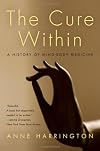
Harrington is chair of the History of Science Dept. at Harvard and this is a necessary, often skeptical look at what is currently called complimentary medicine. The chapter on meditation and the so-called "energy" modalities was valuable for me.
Author-physician-professors-researchers Hans Selye, Herbert Benson (of the Relaxation Response from the early 70s) and Jon Kabat-Zin (Full Catastrophe Living) are among the many "players" profiled and it's shown that it has been pretty much been show more scientifically proven that the ancient modality of meditation works, though you have to work it, diligently. There are no quick fixes. Charlatans abound in the alternative medicine field. There are several pages on QiQong as well, detailing its history and success in China, but the scientific jury is a long way from reaching a verdict there. This is a necessary sobering overview by an accomplished popularizer who has also written books about the placebo affect and has either authored or co-authored material on the Dalai Lama and the effects of meditation. One reviewer called her work, "necessary cultural cartography" which pretty much pegs it. The book also explores hypnosis, the Positive Thinking movement resurrected mass culturally in America by Norman Vincent Peale and the entire gamut throughout history here in America and elsewhere in the world.
As a helplessly brainwashed cradle Catholic, it was revealing to me (and a dose of self-knowledge and understanding) that Anne Harrington says that secular ideas about the power of positive thinking have their roots in New Testament accounts of healing through faith. And talk therapy has its origins in beliefs in the healing power of the ritual of confession. And for that personal insight alone into why I might be drawn to the mind-body modalities (though posessed of an analytical and skeptically trained mind), this was a valuable read for me. show less
Author-physician-professors-researchers Hans Selye, Herbert Benson (of the Relaxation Response from the early 70s) and Jon Kabat-Zin (Full Catastrophe Living) are among the many "players" profiled and it's shown that it has been pretty much been show more scientifically proven that the ancient modality of meditation works, though you have to work it, diligently. There are no quick fixes. Charlatans abound in the alternative medicine field. There are several pages on QiQong as well, detailing its history and success in China, but the scientific jury is a long way from reaching a verdict there. This is a necessary sobering overview by an accomplished popularizer who has also written books about the placebo affect and has either authored or co-authored material on the Dalai Lama and the effects of meditation. One reviewer called her work, "necessary cultural cartography" which pretty much pegs it. The book also explores hypnosis, the Positive Thinking movement resurrected mass culturally in America by Norman Vincent Peale and the entire gamut throughout history here in America and elsewhere in the world.
As a helplessly brainwashed cradle Catholic, it was revealing to me (and a dose of self-knowledge and understanding) that Anne Harrington says that secular ideas about the power of positive thinking have their roots in New Testament accounts of healing through faith. And talk therapy has its origins in beliefs in the healing power of the ritual of confession. And for that personal insight alone into why I might be drawn to the mind-body modalities (though posessed of an analytical and skeptically trained mind), this was a valuable read for me. show less
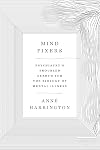
History of how psychiatrists and other doctors kept returning to a search for physical sources of mental illness, even during the age of Freud; the brain keeps being rediscovered as the problem instead of the mind, even as particular theories of why tend to fail in various ways and have historically supported various forms of discrimination.
Lists
Awards

You May Also Like


Associated Authors
Statistics
- Works
- 10
- Members
- 550
- Popularity
- #45,354
- Rating
- 3.6
- Reviews
- 9
- ISBNs
- 37
- Languages
- 3