
Quim Monzó
Author of El perquè de tot plegat
About the Author
Image credit: Quim Monzó a la Setmana del Llibre en català 2003
Works by Quim Monzó
Del tot indefens davant dels hostils imperis alienígenes (Biblioteca mínima) (Catalan Edition) (1998) 37 copies
Si la memòria no ens falla: Una conversa conduïda i editada per Julià Guillamon (Catalan Edition) 2 copies
Tot es mentida 2000 1 copy
Tusen dårar 1 copy
Self-Service 1 copy
El tema del dia 1 copy
I libri 1 copy
MATERIAL DE LECTURA 120 1 copy
Associated Works
Politically Correct Bedtime Stories: Modern Tales for Our Life and Times (1994) — Translator, some editions — 3,543 copies, 56 reviews
The Origins of Desire: Modern Spanish Short Stories (Modern European Short Stories) (1993) — Contributor — 14 copies
Tagged
Common Knowledge
- Canonical name
- Monzó, Quim
- Legal name
- Monzó i Gómez, Joaquim
- Birthdate
- 1952-03-24
- Gender
- male
- Occupations
- novelist
short story writer - Nationality
- Catalonia
Spain - Birthplace
- Barcelona, Catalonia, Spain
- Places of residence
- Barcelona, Spain
- Map Location
- Catalunya
- Associated Place (for map)
- Spain
Members
Reviews
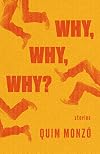
Quim Monzó has produced a fine collection of (very) short stories. Quirky, even bizarre, they focus on relationships, the choices we make in life, and how one seemingly small decision can snowball into something quite out of control.
The characters are often unnamed, and so become a symbol or general figure for us to explore: the man who never falls in love, the mushroom picker, a man and woman in a furtive telephone conversation, and so on. Some of the latter stories take a delightfully show more playful twist with fairy tales, including a prince kissing a frog, and Cinderella - now married to the prince who has since ascended to the throne - who is convinced her husband is having an affair and gets the shock of her life when she finds out the truth.
Coming in at no more than a few pages each, it is best to ration yourself to 2 or 3 at a time. The risk of them blending into one amorphous mass is real, and they deserve attention and time to reflect. As with all the best short stories they focus on particular moments, or read like fables.
Excellent and wryly comic, this deserves a wide audience for this well-respected Catalan author. Definitely recommended. show less
The characters are often unnamed, and so become a symbol or general figure for us to explore: the man who never falls in love, the mushroom picker, a man and woman in a furtive telephone conversation, and so on. Some of the latter stories take a delightfully show more playful twist with fairy tales, including a prince kissing a frog, and Cinderella - now married to the prince who has since ascended to the throne - who is convinced her husband is having an affair and gets the shock of her life when she finds out the truth.
Coming in at no more than a few pages each, it is best to ration yourself to 2 or 3 at a time. The risk of them blending into one amorphous mass is real, and they deserve attention and time to reflect. As with all the best short stories they focus on particular moments, or read like fables.
Excellent and wryly comic, this deserves a wide audience for this well-respected Catalan author. Definitely recommended. show less

Heribert is a renowned painter whose work is scheduled to be shown in a double exhibition in less than a month. However, he cannot find the motivation to create anything that pleases him. Instead of working on his paintings as the deadline draws near, he spends his mornings lying in bed for hours idly watching the second hand of his clock, and his afternoons and evenings in sex shops, restaurants, and in the company of lovers who bore him (and the reader), as he obsesses about his never show more present wife, Helena, who is seemingly having an affair of her own.
Our man is felled by an absurd accident which prevents him from completing his assignment, similar to a lazy child who claims that his dog ate his homework. Humbert, a young and unknown artist who happens to be his wife's lover, submits his paintings in his place, to rave reviews, as Heribert wallows in the muck of existential angst.
Gasoline was a thoroughly maddening read, as I found Heribert to be a useless, pathetic and intensely dislikable tortured artiste. This book was supposedly about the creative process in art, but none of its characters captured my attention or earned an ounce of sympathy from me. show less
Our man is felled by an absurd accident which prevents him from completing his assignment, similar to a lazy child who claims that his dog ate his homework. Humbert, a young and unknown artist who happens to be his wife's lover, submits his paintings in his place, to rave reviews, as Heribert wallows in the muck of existential angst.
Gasoline was a thoroughly maddening read, as I found Heribert to be a useless, pathetic and intensely dislikable tortured artiste. This book was supposedly about the creative process in art, but none of its characters captured my attention or earned an ounce of sympathy from me. show less
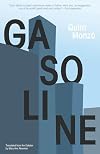
Gasoline, Quim Monzó’s latest novel to be translated into English, opens at a moment of crisis in Heribert’s career as a painter: he must paint enough canvases to fill two galleries in time for an imminent double show. Instead of working, however, Heribert wallows in indifference and boredom, wandering the city streets, drinking in random bars, and visiting sex shops. As Heribert’s career stagnates, another younger artist—Humbert (bizarrely, almost all characters’ names begin with show more the letter ‘H’ in Gasoline)—steps in to take advantage of Heribert’s artistic and romantic slump.
Gasoline explores the joys and pitfalls of creativity and obsession, alternating whimsy and humor with dark moments of doubt. Heribert’s dilemma is both heartbreaking and absurd, causing the reader’s feelings towards this unhappy artist to vacillate between pity and derision. During one bleak scene, for example, Heribert attempts to turn on every light and appliance in his house to drown out his sorrow over his estrangement from his wife. The touching scene shades into absurdity when Heribert is thwarted in his noise-making by a cassette player that refuses to play both the radio and a cassette tape at the same time, leading Heribert to conclude that the machine is nothing but “a lie.”
Gasoline is a sensitive portrayal of artistic creation and its often unstable personalities. Half cautionary tale, half tribute to the limitless capacity of the human imagination, Gasoline is wholly provocative and entertaining.
This review also appears on my blog Literary License. show less
Gasoline explores the joys and pitfalls of creativity and obsession, alternating whimsy and humor with dark moments of doubt. Heribert’s dilemma is both heartbreaking and absurd, causing the reader’s feelings towards this unhappy artist to vacillate between pity and derision. During one bleak scene, for example, Heribert attempts to turn on every light and appliance in his house to drown out his sorrow over his estrangement from his wife. The touching scene shades into absurdity when Heribert is thwarted in his noise-making by a cassette player that refuses to play both the radio and a cassette tape at the same time, leading Heribert to conclude that the machine is nothing but “a lie.”
Gasoline is a sensitive portrayal of artistic creation and its often unstable personalities. Half cautionary tale, half tribute to the limitless capacity of the human imagination, Gasoline is wholly provocative and entertaining.
This review also appears on my blog Literary License. show less
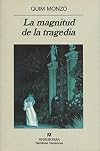
Un trompetista consigue el sueño que ha acariciado durante semanas: salir con la vedette del teatro donde trabaja. Durante la cena bebe demasiado, y se da cuenta de que está tan borracho que, si realmente consigue llevarse la vedette a la cama, lo más probable es que pegue gatillazo. Pero, a la mañana siguiente de cumplirse el temido fiasco, al trompetista le sobreviene una erección permanente, que no cesará en toda la novela. Esto es La magnitud de la tragedia, una novela sobre el show more amor, el odio, la soledad, el paso del tiempo y la inevitabilidad de la muerte. Las ambiciones y las enfermedades desmesuradamente expresionistas de los personajes son una caricatura grotesca y deshumanizada de los deseos,las pasiones y las contradicciones cotidianas. show less
Lists
Awards


You May Also Like


Associated Authors
Statistics
- Works
- 51
- Also by
- 8
- Members
- 2,315
- Popularity
- #11,092
- Rating
- 3.9
- Reviews
- 58
- ISBNs
- 125
- Languages
- 15
- Favorited
- 4