
Robert Axelrod (1) (1943–)
Author of The Evolution of Cooperation
For other authors named Robert Axelrod, see the disambiguation page.
About the Author
Robert Axelrod is Professor of Political Science and Public Policy at the University of Michigan.
Image credit: prof. Robert Axelrod http://www-personal.umich.edu/~axe/
Works by Robert Axelrod
The Complexity of Cooperation: Agent-Based Models of Competition and Collaboration (1997) 247 copies
Harnessing Complexity: Organizational Implications of a Scientific Frontier (2000) 168 copies, 5 reviews
Tagged
Common Knowledge
- Canonical name
- Axelrod, Robert
- Birthdate
- 1943-05-27
- Gender
- male
- Nationality
- USA
- Birthplace
- Chicago, USA
- Associated Place (for map)
- Chicago, USA
Members
Reviews
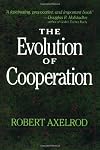
You've seen The Dark Knight and you're marvelling over the outcome of the scenario with the two ferries wired with explosives and each ferry given a control that will blow the other ferry out of the water. You watched as the tension grew with each passing second. Would someone push the button to blow the other guy out of the water or was there a way out of this?
It's a scenario referred to as the prisoner's dilemma.
This book explores that game scenario, how it came to be, how it became a show more winning strategy in computer gaming, and most importantly how this game is played out every day in myriad ways you never dreamed possible - especially in your own life, if you are willing to take a long, hard, honest look.
The book contains the most cogent argument for co-operation over ruthless competition as a strategy for survival and success. The might-is-right arguments of those who wield and abuse power for short-term gain are countered by proof that co-operation wins in the end and mercy triumphs over might.
"Do unto others as you would have them do unto you" is more than a platitude; it's a winning strategy - the ONLY winning strategy.
This book ought to be compulsory reading in every school, family, business, place of worship, and legislature. show less
It's a scenario referred to as the prisoner's dilemma.
This book explores that game scenario, how it came to be, how it became a show more winning strategy in computer gaming, and most importantly how this game is played out every day in myriad ways you never dreamed possible - especially in your own life, if you are willing to take a long, hard, honest look.
The book contains the most cogent argument for co-operation over ruthless competition as a strategy for survival and success. The might-is-right arguments of those who wield and abuse power for short-term gain are countered by proof that co-operation wins in the end and mercy triumphs over might.
"Do unto others as you would have them do unto you" is more than a platitude; it's a winning strategy - the ONLY winning strategy.
This book ought to be compulsory reading in every school, family, business, place of worship, and legislature. show less
I found this book interesting not so much for the ideas - I am fairly familiar with basic game theory - but for the way it explained how the ideas might be applied. I have always thought game theory is overrated as a discipline, but now I think that's because much of it has forgotten what its purpose is. I think it's most interesting when it is used to delineate the limits of possibility in an interesting strategic situation rather than when it is used to make questionable predictions or show more unconvincing explanations. These days much of economic game theory seems to have no relation to any strategic situation whatsoever, but just provides an extension of someone else's equally barren idea. This book has certainly inspired me to read more game theory, so I'll have the chance to be proven wrong about that opinion.
As with most non-fiction books, the second half was a bit repetitive and I skimmed through much of it, but the first four chapters were entertaining and engaging. show less
As with most non-fiction books, the second half was a bit repetitive and I skimmed through much of it, but the first four chapters were entertaining and engaging. show less
Nice book on how cooperation can emerge even in a world of egoists -- based on simple computer models! I love this stuff. Axelrod is very entertaining and accessible, and succinctly expresses the implications of all his academic findings in daily life.
Turns out that when cooperation benefits everyone but is hard to ensure, the secret of your own success can be found in these axioms: Be nice. Don't be envious. Be provocable, but forgive if the other apologizes meaningfully. Be clear. A show more tit-for-tat strategy that is initially cooperative and then automatically echoes whatever the other person did in the last round is one of the best strategies you can use (more successful than the Golden Rule) -- even though you may never beat your partner, it is still the way to do the best for yourself, and improves society simultaneously.
Though the biology chapter reads like picked-and-chosen evidence and the book is a bit repetitious (all the better for assigning to university students), this book gets a thumbs up from me. show less
Turns out that when cooperation benefits everyone but is hard to ensure, the secret of your own success can be found in these axioms: Be nice. Don't be envious. Be provocable, but forgive if the other apologizes meaningfully. Be clear. A show more tit-for-tat strategy that is initially cooperative and then automatically echoes whatever the other person did in the last round is one of the best strategies you can use (more successful than the Golden Rule) -- even though you may never beat your partner, it is still the way to do the best for yourself, and improves society simultaneously.
Though the biology chapter reads like picked-and-chosen evidence and the book is a bit repetitious (all the better for assigning to university students), this book gets a thumbs up from me. show less
This is everything a popularized account of science should be. It is clear, deep, practical as well as theoretical, and very relevant. I knew of the Prisoner's Dilemma, and I knew of Axelrod's computer tournament, so I thought I wouldn't get much out of this book. I was wrong: the discussion goes far beyond the game itself and into a grounded exposition of the growth of cooperation in a selfish environment. Fantastic.
Lists
Career (1)
Awards

You May Also Like


Associated Authors
Statistics
- Works
- 6
- Members
- 1,540
- Popularity
- #16,721
- Rating
- 4.1
- Reviews
- 25
- ISBNs
- 54
- Languages
- 8