
Robert Wright (1) (1957–)
Author of The Moral Animal : Why We Are the Way We Are: The New Science of Evolutionary Psychology
For other authors named Robert Wright, see the disambiguation page.
About the Author
Robert Wright is the bestselling author of The Evolution of God, The Moral Animal, and Nonzero. He has taught in the psychology department at the University of Pennsylvania and the religion department at Princeton University. He is currently Visiting Professor of Science and Religion at Union show more Theological Seminary in New York. show less
Works by Robert Wright
The Moral Animal : Why We Are the Way We Are: The New Science of Evolutionary Psychology (1994) 2,070 copies, 21 reviews
Why Buddhism is True: The Science and Philosophy of Meditation and Enlightenment (2017) 1,361 copies, 33 reviews
Associated Works
Tagged
Common Knowledge
- Birthdate
- 1957-01-15
- Gender
- male
- Education
- Princeton University
Texas Christian University - Occupations
- journalist
- Organizations
- The Sciences
The New Republic
The Wilson Quarterly
Bloggingheads.tv
New America Foundation - Awards and honors
- National Magazine Award for Essay and Criticism
- Short biography
- Wright is a contributing editor at the New Republic, Time, and Slate. He has also written for the Atlantic Monthly, the New Yorker. and the New York Times Magazine. He previously worked at The Sciences magazine where his column "The Information Age" won the National Magazine Award for Essay and Criticism. [adapted from Primates and Philosophers (2006)]
- Nationality
- USA
- Birthplace
- Lawton, Oklahoma, USA
- Places of residence
- Princeton, New Jersey, USA
San Francisco, California, USA - Associated Place (for map)
- USA
Members
Reviews
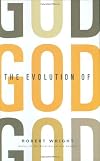
This is one of those books that shifted my perspective in a way that will last. The basic premise of the book is that religions -- especially the major monotheistic religions of Judaism, Christianity, and Islam -- have grown in universality over the years. Although the growth has not been monotonic, it has been persistent.
The underlying reason, in Wright's view, is that as human society becomes more complex, there is a need for the definition of "us" to broaden and include people who were show more formerly "them". Increasing complexity makes society increasingly non-zero sum. The positive consequences of cooperation multiple, and even more importantly, the negative consequences of animosity multiply. (One of the side comments I really appreciated was that lose-lose is just as much a non-zero sum state as win-win.) Before society operated by the acknowledged rule of law, religion was a primary source of the bond that expanded "us" beyond kin groups. As that need increased, religion continued to take on that role.
The cornerstone of Wright's case for that view is his analysis of the Bible. He shows that how in both Judaism and Christianity, the biblical text reaches out beyond the current conception of "us" when Jews and later Christians were in a non-zero sum relationship with those around them. Just as predictably, when the situation was seen as more zero sum -- often when the group was in power or was being exploited -- the biblical text reflects that by become more critical of those in the out-group.
The chapters on Islam were weaker, but still insightful. I would appreciate the same framework applied to non-monotheist religions (although I don't think it would make sense as a part of the same book). But all-in-all, this was an excellent book. show less
The underlying reason, in Wright's view, is that as human society becomes more complex, there is a need for the definition of "us" to broaden and include people who were show more formerly "them". Increasing complexity makes society increasingly non-zero sum. The positive consequences of cooperation multiple, and even more importantly, the negative consequences of animosity multiply. (One of the side comments I really appreciated was that lose-lose is just as much a non-zero sum state as win-win.) Before society operated by the acknowledged rule of law, religion was a primary source of the bond that expanded "us" beyond kin groups. As that need increased, religion continued to take on that role.
The cornerstone of Wright's case for that view is his analysis of the Bible. He shows that how in both Judaism and Christianity, the biblical text reaches out beyond the current conception of "us" when Jews and later Christians were in a non-zero sum relationship with those around them. Just as predictably, when the situation was seen as more zero sum -- often when the group was in power or was being exploited -- the biblical text reflects that by become more critical of those in the out-group.
The chapters on Islam were weaker, but still insightful. I would appreciate the same framework applied to non-monotheist religions (although I don't think it would make sense as a part of the same book). But all-in-all, this was an excellent book. show less
This book gets a lot of points for ambition. Wright tries to create a unified theory of "naturalistic" Buddhism and evolutionary psychology and does a very good job of selling it.
In some ways I am inclined to put this book in the same genre as the The Good Place on TV, I Heart Huckabees in film and some early Alain de Botton. The reason I love these texts is not so much the quality of the answers they provide, but the fact that they pose the question, "what if we took these sorts of show more questions seriously?" Wright asks the question whether science can inform our spiritual understanding and practice and grapples with it earnestly and wholeheartedly.
However, what raises the book even higher is the fact that some of the ideas seem pretty good. Wright has proposed a model of the human mind, as shaped by evolution, that accords with a certain reading of Vipassana mindfulness practice. On the whole it hangs together, giving a real sense of how it is that meditation operates - all the way from the first sitting to enlightenment.
There are some large and serious problems, but they belong more as a tribute to the ambition of the project than as damning evidence against Wright's case. The most important is a simplistic view of evolution in humans as a social species. Even our blind instincts are not devoted exclusively to furthering our own genes. There is ample evidence now that species have evolved to propagate not just their own genes, but the genes of their community, including other species in some cases. In order to support the notion of the selfish gene, Wright characterises every one of our first insincts as aggressive or selfish. In fact, we have many generous, communal instincts, like those that impel you toward someone who hurts themselves and not away from them or the fact that eating while someone hungry looks on is very unpleasant.
Despite this somewhat tendentious characterisation of natural selection and our inner lives, most of the descriptions of internal states rang fairly true for me. It is so common in a Buddhist text to read some ludicrous story about how we're all on the verge of blinding road rage at all times or completely incapable of compassion, that it's a nice change to find a representation of inner life that rang fairly true.
There is also a heteronormativity that's sort of tied to the model of natural selection used which erases the possibility of other modes of reproduction than the biological. Given how many people in the West are foregoing having children and how many have sexual and romantic lives that are not ever going to be genetically procreative, this error leaves out many potential readers. Hopefully these readers can fill in the blanks, though, because overall this book was inspiring and motivating as well as somewhat eye opening. show less
In some ways I am inclined to put this book in the same genre as the The Good Place on TV, I Heart Huckabees in film and some early Alain de Botton. The reason I love these texts is not so much the quality of the answers they provide, but the fact that they pose the question, "what if we took these sorts of show more questions seriously?" Wright asks the question whether science can inform our spiritual understanding and practice and grapples with it earnestly and wholeheartedly.
However, what raises the book even higher is the fact that some of the ideas seem pretty good. Wright has proposed a model of the human mind, as shaped by evolution, that accords with a certain reading of Vipassana mindfulness practice. On the whole it hangs together, giving a real sense of how it is that meditation operates - all the way from the first sitting to enlightenment.
There are some large and serious problems, but they belong more as a tribute to the ambition of the project than as damning evidence against Wright's case. The most important is a simplistic view of evolution in humans as a social species. Even our blind instincts are not devoted exclusively to furthering our own genes. There is ample evidence now that species have evolved to propagate not just their own genes, but the genes of their community, including other species in some cases. In order to support the notion of the selfish gene, Wright characterises every one of our first insincts as aggressive or selfish. In fact, we have many generous, communal instincts, like those that impel you toward someone who hurts themselves and not away from them or the fact that eating while someone hungry looks on is very unpleasant.
Despite this somewhat tendentious characterisation of natural selection and our inner lives, most of the descriptions of internal states rang fairly true for me. It is so common in a Buddhist text to read some ludicrous story about how we're all on the verge of blinding road rage at all times or completely incapable of compassion, that it's a nice change to find a representation of inner life that rang fairly true.
There is also a heteronormativity that's sort of tied to the model of natural selection used which erases the possibility of other modes of reproduction than the biological. Given how many people in the West are foregoing having children and how many have sexual and romantic lives that are not ever going to be genetically procreative, this error leaves out many potential readers. Hopefully these readers can fill in the blanks, though, because overall this book was inspiring and motivating as well as somewhat eye opening. show less
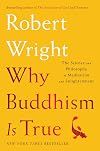
What would it be like to have an unfiltered, unfettered experience of the world around us, where we are relaxed and calm and not distracted by our usual worries and concerns? Maybe some readers have experienced that – a sunrise or sunset, a full moon, a sky full of stars, a sky full of rain and lightning – or some other moment of encompassing peace. Could we somehow train ourselves to have that kind of experience more often?
There's more to it, of course, but that is a big part of what show more Robert Wright addresses in the surprise NYTimes bestseller, Why Buddhism is True. "{T}he way it seems to work is some feelings actually get accentuated - first and foremost the sensation of beauty."
He has taught this subject at Princeton, and admirably maintains his focus. There are many flavors of Buddhism, as with other religions, and many intriguing aspects worthy of discussion. But he's very Western and pragmatic, and that suited me well. "I don't believe in reincarnation or related notions of karma, and I don't bow to the statue of Buddha before entering the meditation hall."
He calls himself a "laboratory rat" with ADD, figuring that, "if I could get much in the way of benefits out of meditation, just about anyone could." He does.
I loved his application of Darwinian theory: "Buddhism had been studying how the human mind is programmed to react to its environment, how exactly the 'conditioning' works. Now, with Darwin's theory, we understood what had done the programming." Many of our impulses, designed to help us pass on our genes, don't serve us well today. Our feelings and perceptions often end up leaving us misguided, unhappy and dissatisfied.
"Both our natural view of the world 'out there' and our natural view of the world 'in here' - the world inside our heads - are deeply misleading." He's convincing in explaining why. Through common sense examples, scientific studies, and his own experience, he explains how Buddhist practices successfully address our delusive way of living. He's not shy about bigger issues - e.g. how continuing tribalism is harming us. "I think the salvation of the world can be secured via the cultivation of calm, clear minds and the wisdom they allow." A big claim, but he's not alone in making it. Although he believes modest improvements via Buddhist practice are the practical goal, he also takes on explaining "nirvana", and does a good job of it.
I used to recommend more advanced books like Zen Mind, Beginner's Mind to people wanting a place to start on Buddhist principles - and that didn't work very well. From now on, I'm recommending this one. He has done his homework, but made the concepts accessible for those new to all this. show less
There's more to it, of course, but that is a big part of what show more Robert Wright addresses in the surprise NYTimes bestseller, Why Buddhism is True. "{T}he way it seems to work is some feelings actually get accentuated - first and foremost the sensation of beauty."
He has taught this subject at Princeton, and admirably maintains his focus. There are many flavors of Buddhism, as with other religions, and many intriguing aspects worthy of discussion. But he's very Western and pragmatic, and that suited me well. "I don't believe in reincarnation or related notions of karma, and I don't bow to the statue of Buddha before entering the meditation hall."
He calls himself a "laboratory rat" with ADD, figuring that, "if I could get much in the way of benefits out of meditation, just about anyone could." He does.
I loved his application of Darwinian theory: "Buddhism had been studying how the human mind is programmed to react to its environment, how exactly the 'conditioning' works. Now, with Darwin's theory, we understood what had done the programming." Many of our impulses, designed to help us pass on our genes, don't serve us well today. Our feelings and perceptions often end up leaving us misguided, unhappy and dissatisfied.
"Both our natural view of the world 'out there' and our natural view of the world 'in here' - the world inside our heads - are deeply misleading." He's convincing in explaining why. Through common sense examples, scientific studies, and his own experience, he explains how Buddhist practices successfully address our delusive way of living. He's not shy about bigger issues - e.g. how continuing tribalism is harming us. "I think the salvation of the world can be secured via the cultivation of calm, clear minds and the wisdom they allow." A big claim, but he's not alone in making it. Although he believes modest improvements via Buddhist practice are the practical goal, he also takes on explaining "nirvana", and does a good job of it.
I used to recommend more advanced books like Zen Mind, Beginner's Mind to people wanting a place to start on Buddhist principles - and that didn't work very well. From now on, I'm recommending this one. He has done his homework, but made the concepts accessible for those new to all this. show less
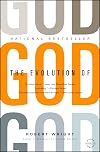
This latest book from Robert Wright extends and magnifies his continued use of non-zero sum games as a lens to view moral and social progress, with a focus on religion, specifically the 3 major Abrahamic religions of the West. Wright's writings have constantly placed him stuck between a rock and a hard place, being too irreligious for religious believers, and too accommodating towards religious ideas for the tastes of most modern secular and scientifically minded skeptics. I consider myself show more in the latter group, a secular scientist and skeptic by nature, but I've come to believe in the general thrust of Wright's ideas and have a lot of sympathy for his persistence in trying to make his views heard while acknowledging that proof of his explanations at the level which modern science requires is not yet available.
Wright is not an apologetic, he is not arguing for the truth of revealed religious doctrine the way theologians do, what he is arguing for is a more subtle approach to try and actually understand the motivations behind religious thought, the socioeconomic forces that engender such thought, and how they have and may continue to evolve through history. He keeps his focus on the Western faiths, but the ideas are equally applicable to the Eastern religions as well. Attempts at this type of secular reconciliation of religious or spiritual thinking have been done in the past, one notable example that comes to mind is Aldous Huxley's Perennial Philosophy, but Wright stays away from any hypothesizing about mystical or spiritual conscious states, his main concern is moral and social psychology and comes across as more pragmatic, trying to find a direction that may offer practical solutions to the 'clash of civilizations' that globalization has thrust us into, and saves any speculations about greater purpose or divinity to a small section at the end.
The problem with Wright's ideas in this book and in Non Zero is that they need more proof if more people are to be convinced, but if you grant him leeway with some of his assumptions, the overall perspective he argues for is, in my opinion, the more than sensible, and incredibly important. show less
Wright is not an apologetic, he is not arguing for the truth of revealed religious doctrine the way theologians do, what he is arguing for is a more subtle approach to try and actually understand the motivations behind religious thought, the socioeconomic forces that engender such thought, and how they have and may continue to evolve through history. He keeps his focus on the Western faiths, but the ideas are equally applicable to the Eastern religions as well. Attempts at this type of secular reconciliation of religious or spiritual thinking have been done in the past, one notable example that comes to mind is Aldous Huxley's Perennial Philosophy, but Wright stays away from any hypothesizing about mystical or spiritual conscious states, his main concern is moral and social psychology and comes across as more pragmatic, trying to find a direction that may offer practical solutions to the 'clash of civilizations' that globalization has thrust us into, and saves any speculations about greater purpose or divinity to a small section at the end.
The problem with Wright's ideas in this book and in Non Zero is that they need more proof if more people are to be convinced, but if you grant him leeway with some of his assumptions, the overall perspective he argues for is, in my opinion, the more than sensible, and incredibly important. show less
Lists
Awards


You May Also Like


Associated Authors
Statistics
- Works
- 6
- Also by
- 2
- Members
- 6,547
- Popularity
- #3,748
- Rating
- 4.0
- Reviews
- 115
- ISBNs
- 145
- Languages
- 13
- Favorited
- 6