
R. C. Sherriff (1896–1975)
Author of The Fortnight in September
About the Author
Works by R. C. Sherriff
Quartet, Trio, Encore 6 copies
A Shred of Evidence 3 copies
Famous Plays of 1935-1936 2 copies
Miss Mabel: A Play in Three Acts 2 copies
Due settimane in settembre 1 copy
Associated Works
Tagged
Common Knowledge
- Legal name
- Sherriff, Robert Cedric
- Other names
- Sherriff, Robert C.
- Birthdate
- 1896-06-06
- Date of death
- 1975-11-13
- Gender
- male
- Education
- Kingston Grammar School
University of Oxford (New College) - Occupations
- soldier
playwright
screenwriter
novelist
insurance adjuster - Organizations
- British Army (WWI)
- Awards and honors
- Military Cross
Royal Society of Literature (Fellow)
Society of Antiquaries of London (Fellow) - Cause of death
- renal failure
- Nationality
- UK
- Birthplace
- Hampton Wick, Surrey, England, UK
- Places of residence
- Hampton Wick, Surrey, England, UK (birth)
Esher, Surrey, England, UK - Place of death
- Kingston Hospital, London, England, UK
- Burial location
- St Wilfrid Churchyard Church Norton, Chichester District, West Sussex, England
- Associated Place (for map)
- England, UK
Members
Discussions
Zwei Wochen am Meer in German Library Thingers (June 2024)
Reviews

The Fortnight in September tells the story of the Stevens' family's annual summer holiday in Bognor Regis around 1930, probably the heyday of the traditional British seaside holiday. Mr and Mrs Stevens have been going to the same guesthouse in Bognor Regis for two weeks in September every year since their marriage, but what seems an unchanging ritual is on the brink of ending, as their two grown-up children talk of spending their holidays with friends. The Stevens are a very ordinary and show more quiet family, there are no dramas and very little happens, but the book is a satisfying read none the less.
What R.C.Sherriff does beautifully is to capture to perfection the whole idea of a holiday:
'The man on his holidays becomes the man he might have been, the man he could have been, had things worked out differently. All men are equal on their holidays: all are free to dream their castles without thought of expense, or skill of architect.'
And what he also captured beautifully were the worries and disappointments lurking underneath the surface of even a seemingly idyllic holiday: Mr Stevens brooding on his disappointments at work; Mrs Stevens hiding the fact that she found the sea terrifying and would actually prefer to be at home; and Dick's unhappiness in the job that his father is so proud of having found for him. Only the youngest child, Ernie, is untouched by the worries of the adult world. And even the guesthouse in which they stay, 'Seaview', has grown old along with its landlady, so that not even the rose-tinted glasses with which it is viewed by the Stevens can hide its gradual decline into dilapidation.
What is also lovely in this book is the period detail of the holidays of that era, something which particularly interests me having grown up in an old holiday resort myself. I was amazed that Mrs Stevens was expected to shop every day for the groceries that were cooked by their landlady. And I found even the little details of their journey fascinating. So overall a good read. show less
What R.C.Sherriff does beautifully is to capture to perfection the whole idea of a holiday:
'The man on his holidays becomes the man he might have been, the man he could have been, had things worked out differently. All men are equal on their holidays: all are free to dream their castles without thought of expense, or skill of architect.'
And what he also captured beautifully were the worries and disappointments lurking underneath the surface of even a seemingly idyllic holiday: Mr Stevens brooding on his disappointments at work; Mrs Stevens hiding the fact that she found the sea terrifying and would actually prefer to be at home; and Dick's unhappiness in the job that his father is so proud of having found for him. Only the youngest child, Ernie, is untouched by the worries of the adult world. And even the guesthouse in which they stay, 'Seaview', has grown old along with its landlady, so that not even the rose-tinted glasses with which it is viewed by the Stevens can hide its gradual decline into dilapidation.
What is also lovely in this book is the period detail of the holidays of that era, something which particularly interests me having grown up in an old holiday resort myself. I was amazed that Mrs Stevens was expected to shop every day for the groceries that were cooked by their landlady. And I found even the little details of their journey fascinating. So overall a good read. show less
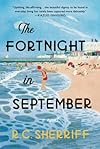
I am packing up to head home from my annual summer vacation and I picked up R.C. Sherriff's The Fortnight in September as a final read of the season. It turns out that this gentle look at an ordinary, middle class British family's yearly seaside vacation to the sea was the perfect accompaniment to the end of my own summer, capturing as he does, the anticipation and flurry of getting ready for vacation, the pleasure of the vacation itself, and the melancholy of leaving mixed with the show more rightness of being once again at home.
Centered on the Stevens family of five, Mr. and Mrs. Stevens, twenty year old Mary, seventeen year old Dick, and ten year old Ernie, this charming novel shows the small pleasures of daily holiday living in a happy, familiar place, bathing in the sea, walking on the boardwalk, playing cricket, flying a kite, and so on. The Stevens go to Bognor Regis every year for two weeks in September. They stay at the same guesthouse and cheerfully follow roughly the same schedule during their time there. There are, of course, small changes each year, like choosing to splurge on renting a bathing hut this year or the increasingly noticeable shabbiness of their chosen guesthouse, but their fondness for the place, loyalty, and pleasant memories of past years keep them coming back, especially this year when there was a question of whether Mary and Dick, both out of school now and working, would join the family again or if they'd go off with their friends. There are no large dramas here, only small ones easily (and for the most part happily) navigated.
The novel is almost entirely character driven with little plot to speak of but it captures the appeal of the familiar, comfortable everyday life in a place the characters love and look forward to all year. The writing is old fashioned (although likely not so when it was published in 1931) and nostalgic feeling, and the story is warm and engaging, following each of the five family members on their own and together, giving the reader more insight into each of their thoughts and hopes both on vacation and in their usual life. It's a slow, quiet novel of annual rituals and small, contained pleasures that makes for an enjoyable reading experience. show less
Centered on the Stevens family of five, Mr. and Mrs. Stevens, twenty year old Mary, seventeen year old Dick, and ten year old Ernie, this charming novel shows the small pleasures of daily holiday living in a happy, familiar place, bathing in the sea, walking on the boardwalk, playing cricket, flying a kite, and so on. The Stevens go to Bognor Regis every year for two weeks in September. They stay at the same guesthouse and cheerfully follow roughly the same schedule during their time there. There are, of course, small changes each year, like choosing to splurge on renting a bathing hut this year or the increasingly noticeable shabbiness of their chosen guesthouse, but their fondness for the place, loyalty, and pleasant memories of past years keep them coming back, especially this year when there was a question of whether Mary and Dick, both out of school now and working, would join the family again or if they'd go off with their friends. There are no large dramas here, only small ones easily (and for the most part happily) navigated.
The novel is almost entirely character driven with little plot to speak of but it captures the appeal of the familiar, comfortable everyday life in a place the characters love and look forward to all year. The writing is old fashioned (although likely not so when it was published in 1931) and nostalgic feeling, and the story is warm and engaging, following each of the five family members on their own and together, giving the reader more insight into each of their thoughts and hopes both on vacation and in their usual life. It's a slow, quiet novel of annual rituals and small, contained pleasures that makes for an enjoyable reading experience. show less

Another Persephone title, and much in the same style as others I've read. Having read about 8 now, I'm seeing that they tend to publish quiet, family-centered novels that often have drama simmering quietly under the surface.
This novel is about a middle class family who vacations to the British seaside town of Bognor every September. This year feels a little different because the children are older - the oldest two basically adults - and things seem to be shifting. They all realize that the show more boarding house they always stay in is looking more and more run down. We get a glimpse into each family member's internal thoughts; this isn't the sort of family that would share these thoughts out loud.
I liked this quiet book. But at the same time, I was waiting all the way through for things to come to a head or for some real conversations to happen and they didn't. I suppose that is true to life, but it didn't make for a particularly interesting book. Still, at this time of year, with all the bustle of the holidays, I enjoy a quiet book. This fit the bill. show less
This novel is about a middle class family who vacations to the British seaside town of Bognor every September. This year feels a little different because the children are older - the oldest two basically adults - and things seem to be shifting. They all realize that the show more boarding house they always stay in is looking more and more run down. We get a glimpse into each family member's internal thoughts; this isn't the sort of family that would share these thoughts out loud.
I liked this quiet book. But at the same time, I was waiting all the way through for things to come to a head or for some real conversations to happen and they didn't. I suppose that is true to life, but it didn't make for a particularly interesting book. Still, at this time of year, with all the bustle of the holidays, I enjoy a quiet book. This fit the bill. show less

The expedition from the Royal Society of Abyssinia was tremendously excited to discover what becomes known as the 'Hopkins Manuscript' hidden in a vacuum flask behind bricks in the ruins of what had once been London. After all, very little written text had survived from the island of Great Britain apart from an inscription on an iron tablet 'deciphered by Dr Shangul of Aduwa University as 'KEEP OFF THE GRASS'', and a rectangular column of stone inscribed 'PECKHAM 3 MILES'. London, and indeed show more the British Isles as a whole, clearly did not come to a happy end:
The scholars excitement is reduced when they realise that Edgar Hopkins, the author of the aforesaid Manuscript, was a man of 'unquenchable self-esteem and limited vision', obsessed with the breeding of prize-winning poultry, but still the Manuscript is the only eye witness document that exists to the feelings of an Englishman in the days of the 'Cataclysm'.
And what had caused the Cataclysm soon becomes clear as Edgar Hopkins begins his narrative. As a member of the British Lunar Society Mr Hopkins is one of the first people to hear the alarming news that the distance between the Earth and the Moon is rapidly reducing, and that the Moon is expected to strike the Earth in a few months time, rather precisely calculated to be the 3rd May 1946, at about 8 o'clock. (The book was published in 1939, before the outbreak of WWII). Once this becomes known to the general public, the panic is rather less than might be expected. Some people don't believe the scientists, many people have a rather hazy idea of the moon's size, and others are too involved in their day to day lives to read the papers. But the Moon gets bigger and bigger in the night sky and the fateful day approaches...
This isn't a book to read expecting a scientific explanation of why the moon's orbit changes, or of what eventually happens on the 3rd May. The reader just has to go with the flow on that. Rather, it's a novel about human nature in the event of unspeakable circumstances. Written in the 1930's, it's also a commentary on the populist and fascist political leaders of its time, and rather more worryingly seems to be quite appropriate for today's political climate as well.
A science-fiction novel written by a male author isn't the normal Persephone Books offering, but it's an interesting bridge between H.G.Wells and John Wyndham in the world of British science-fiction. Just don't be expecting too much of a cozy catastrophe - this is rather darker. show less
For nearly a thousand years, since its last wretched inhabitants starved to death amidst the ruins of their once noble cities, the Island remained a deserted ghost-haunted waste - its towns and villages buried ever deeper beneath encroaching forest and swamp
The scholars excitement is reduced when they realise that Edgar Hopkins, the author of the aforesaid Manuscript, was a man of 'unquenchable self-esteem and limited vision', obsessed with the breeding of prize-winning poultry, but still the Manuscript is the only eye witness document that exists to the feelings of an Englishman in the days of the 'Cataclysm'.
And what had caused the Cataclysm soon becomes clear as Edgar Hopkins begins his narrative. As a member of the British Lunar Society Mr Hopkins is one of the first people to hear the alarming news that the distance between the Earth and the Moon is rapidly reducing, and that the Moon is expected to strike the Earth in a few months time, rather precisely calculated to be the 3rd May 1946, at about 8 o'clock. (The book was published in 1939, before the outbreak of WWII). Once this becomes known to the general public, the panic is rather less than might be expected. Some people don't believe the scientists, many people have a rather hazy idea of the moon's size, and others are too involved in their day to day lives to read the papers. But the Moon gets bigger and bigger in the night sky and the fateful day approaches...
This isn't a book to read expecting a scientific explanation of why the moon's orbit changes, or of what eventually happens on the 3rd May. The reader just has to go with the flow on that. Rather, it's a novel about human nature in the event of unspeakable circumstances. Written in the 1930's, it's also a commentary on the populist and fascist political leaders of its time, and rather more worryingly seems to be quite appropriate for today's political climate as well.
A science-fiction novel written by a male author isn't the normal Persephone Books offering, but it's an interesting bridge between H.G.Wells and John Wyndham in the world of British science-fiction. Just don't be expecting too much of a cozy catastrophe - this is rather darker. show less
Lists
Persephone (3)
Five star books (1)
Favourite Books (1)
THE WAR ROOM (1)
Comfort Reads (1)
Schwob Nederland (1)
Awards


You May Also Like


Associated Authors
Statistics
- Works
- 33
- Also by
- 4
- Members
- 2,173
- Popularity
- #11,807
- Rating
- 4.0
- Reviews
- 69
- ISBNs
- 84
- Languages
- 6
- Favorited
- 4
