
Bernardo Atxaga
Author of Obabakoak
About the Author
Image credit: Bernardo Atxaga - 2009
Series
Works by Bernardo Atxaga
Las bambulisticas historias de Bambulo. La crisis [Paperback] [Jan 01, 1998] Bernardo Atxaga (1998) 6 copies
أوبا با كوآك 2 copies
Identitats 1 copy
Un burro en el hipódromo 1 copy
LOS POLLITOS Y BAKARTY JAMES 1 copy
℗O ℗homem so 1 copy
Yalniz Kadin 1 copy
Tilattu tarina 1 copy
Alemaniar literatura 1 copy
Diarios : [antología] . [I] 1 copy
Literatura fantastikoa 1 copy
Gogoetak euskal literaturaz 1 copy
De Gernika a GUERNICA 1 copy
20 cuentos de cine 1 copy
Associated Works
The Origins of Desire: Modern Spanish Short Stories (Modern European Short Stories) (1993) — Contributor — 14 copies
Tagged
Common Knowledge
- Canonical name
- Atxaga, Bernardo
- Legal name
- Irazu Garmendia, Joseba
- Other names
- Atxaga, Bernardo
- Birthdate
- 1951-07-27
- Gender
- male
- Education
- University of Bilbao (diploma, Economics)
University of Barcelona (Philosophy) - Occupations
- economist
bookseller
professor of Basque
publisher
writer, radio scriptwriter - Organizations
- Stanford University
- Short biography
- Bernardo Atxaga werd in 1951 geboren als José Irzu Garmendia in Asteasu, Guipúzcoa, in Spaans Baskenland. Hij studeerde economie aan de Universiteit van Bilbao en filosofie aan de Universiteit van Barcelona. Hij behoort tot de generatie schrijvers die in plaats van in het Spaans in het Baskisch (Euskera) begonnen te publiceren.
- Nationality
- Basque
Spain - Birthplace
- Asteasu, Gipuzkoa, Spain
- Places of residence
- Reno, Nevada, USA
- Map Location
- Spain
Members
Discussions
Group Read, August 2024: Obabakoak in 1001 Books to read before you die (August 2024)
Reviews
The Accordionist's Son: A Novel (Lannan Translation Selection (Graywolf Paperback)) by Bernardo Atxaga
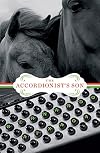
Couldn't finish this book, so this is only a partial review. Atxaga was recommended to me as the best contemporary Basque writer who has been translated into English. (The person who recommended him says Luisa Etxenike is actually the best.)
Annie Proulx's endorsement on the back cover kept me going until around page 100: her notion is that the novel "at first beguiles us with its leisurely flow like a late summer river, but it is a dark river with streaks of blood seeping from the muddy show more banks of the past."
What stopped me from finishing "The Accordionist's Son" was the first part of that sentence. The first 50 pages are like "a late summer river," but that's to say they are deeply sentimental, treacly, soporific, retrospective, ponderous, steeped in the passage of time, powdered and scented with loss and history, bathed in golden light, muzzily nostalgic.
For example there's a brief chapter describing a wondrous cord that the narrator sees as a boy. It's like a rosary, and it has objects tied to it: piece of coal, a piece of burnt wood, and some coins. The narrator describes how, as a boy, the man who made the cord explained it to him: it was a mnemonic for selling insurance. (The burnt wood reminds us that even stable things can go up in smoke, and so forth.) Then, after the salesman made his pitch using the cord as a mnemonic, he gave it to the boy, saying that he'd never need it again because even with its help he was losing his memory; then he got in a car and went back to his home, presumably for ever. That was really quite enough heavy-handed nostalgia for me, but there was more: the narrator then explains that he'd forgotten the cord until he came to write the book, and then he realized he could "go from subject to subject just as the fingers of the insurance salesman had gone from the piece of coal to the charred wood or the butterflies." (p. 44)
A hundred pages in, blood is seeping, as Proulx says, but it's done in such a gentle, gradual, and grandiose and self-involved way that it made me more nauseous than sympathetic.
One last thing: the entire book is founded on a premise that can only be described -- as far as I read -- as a mistake. The book begins slowly, with a framing story. (There's even an "Internal dedication" on page 45, when the book finally gets underway.) That in itself was hard to bear, because it's the sign of a much older kind of literature, where the reader's enchantment increases each time the story is reintroduced, reframed. Somehow, for some readers, stories within stories increase the realism. The notion here is that the writer was the best friend of the author of a memoir, written in Basque. The author of that memoir dies before "The Accordionist's Son" opens. The narrator of "The Accordionist's Son" takes the memoir written by his friend, and tells his friend's widow that he'll rewrite it, adding a voice the way someone might clarify a carving in a tree by deepening and sharpening its features. From that we understand that the book we're going to read is written twice over, and should have two voices in it. But the opening of the rewritten memoir, which occupies most of "The Accordionist's Son," is about the dead friend's children, and it's written as if the children belong to the friend. But they don't! And the next section is about how the author of the memoir courted his wife. It is written in the dead friend's voice, but we, as readers, know it's actually written, or re-written, by the friend. The effect is bizarre, as if the author of "The Accordionist's Son" has stepped into his dead friend's life and is courting his wife. Of course you're not supposed to think of it that way, but if you're paying attention to authorship, you simply have to.
Awful, sentimental, annoying, hopelessly old-fashioned. show less
Annie Proulx's endorsement on the back cover kept me going until around page 100: her notion is that the novel "at first beguiles us with its leisurely flow like a late summer river, but it is a dark river with streaks of blood seeping from the muddy show more banks of the past."
What stopped me from finishing "The Accordionist's Son" was the first part of that sentence. The first 50 pages are like "a late summer river," but that's to say they are deeply sentimental, treacly, soporific, retrospective, ponderous, steeped in the passage of time, powdered and scented with loss and history, bathed in golden light, muzzily nostalgic.
For example there's a brief chapter describing a wondrous cord that the narrator sees as a boy. It's like a rosary, and it has objects tied to it: piece of coal, a piece of burnt wood, and some coins. The narrator describes how, as a boy, the man who made the cord explained it to him: it was a mnemonic for selling insurance. (The burnt wood reminds us that even stable things can go up in smoke, and so forth.) Then, after the salesman made his pitch using the cord as a mnemonic, he gave it to the boy, saying that he'd never need it again because even with its help he was losing his memory; then he got in a car and went back to his home, presumably for ever. That was really quite enough heavy-handed nostalgia for me, but there was more: the narrator then explains that he'd forgotten the cord until he came to write the book, and then he realized he could "go from subject to subject just as the fingers of the insurance salesman had gone from the piece of coal to the charred wood or the butterflies." (p. 44)
A hundred pages in, blood is seeping, as Proulx says, but it's done in such a gentle, gradual, and grandiose and self-involved way that it made me more nauseous than sympathetic.
One last thing: the entire book is founded on a premise that can only be described -- as far as I read -- as a mistake. The book begins slowly, with a framing story. (There's even an "Internal dedication" on page 45, when the book finally gets underway.) That in itself was hard to bear, because it's the sign of a much older kind of literature, where the reader's enchantment increases each time the story is reintroduced, reframed. Somehow, for some readers, stories within stories increase the realism. The notion here is that the writer was the best friend of the author of a memoir, written in Basque. The author of that memoir dies before "The Accordionist's Son" opens. The narrator of "The Accordionist's Son" takes the memoir written by his friend, and tells his friend's widow that he'll rewrite it, adding a voice the way someone might clarify a carving in a tree by deepening and sharpening its features. From that we understand that the book we're going to read is written twice over, and should have two voices in it. But the opening of the rewritten memoir, which occupies most of "The Accordionist's Son," is about the dead friend's children, and it's written as if the children belong to the friend. But they don't! And the next section is about how the author of the memoir courted his wife. It is written in the dead friend's voice, but we, as readers, know it's actually written, or re-written, by the friend. The effect is bizarre, as if the author of "The Accordionist's Son" has stepped into his dead friend's life and is courting his wife. Of course you're not supposed to think of it that way, but if you're paying attention to authorship, you simply have to.
Awful, sentimental, annoying, hopelessly old-fashioned. show less
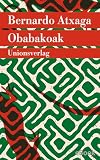
With Obabakoak, which has been translated into numerous languages, the Basque language has conquered its place in world literature.
The remote village of Obaba, somewhere in the Basque mountains, follows its own rules. Here, confused hearts, dead letters, and stubborn chickens live. Here, tomato paste piles up in Rosie's corner shop, and rumors about the shepherds' house and lizards creep into unwary ears. Those who aren't careful get lost on the mountain paths or behind the neighbor's show more door.
Bernardo Atxaga conjures a sensual labyrinth, narrating fantastically real things, searching for the final word and endless stories.
It is a novel of fabulation, in which the fantastic becomes real and the real becomes fantastic, and all the stories are essentially about storytelling. The fictional village of Obaba becomes an almost mythical place of universal significance, yet remains a small town lost in the Basque mountains. With a playful perspective that ranges from Germany to Baghdad to the Amazon, from Borges to Calvino to Queneau, Atxaga conjures up a bizarre cosmos, distorting and parodying, delightfully playing with words, sentences, and senses.
I highly recommend this book. show less
The remote village of Obaba, somewhere in the Basque mountains, follows its own rules. Here, confused hearts, dead letters, and stubborn chickens live. Here, tomato paste piles up in Rosie's corner shop, and rumors about the shepherds' house and lizards creep into unwary ears. Those who aren't careful get lost on the mountain paths or behind the neighbor's show more door.
Bernardo Atxaga conjures a sensual labyrinth, narrating fantastically real things, searching for the final word and endless stories.
It is a novel of fabulation, in which the fantastic becomes real and the real becomes fantastic, and all the stories are essentially about storytelling. The fictional village of Obaba becomes an almost mythical place of universal significance, yet remains a small town lost in the Basque mountains. With a playful perspective that ranges from Germany to Baghdad to the Amazon, from Borges to Calvino to Queneau, Atxaga conjures up a bizarre cosmos, distorting and parodying, delightfully playing with words, sentences, and senses.
I highly recommend this book. show less

Originally written and published in Euskera, or Basque, in 1995 as Xolok badu lehoien berri, and then translated by author Bernardo Atxaga into Spanish that same year, as Shola y los leones, Shola and the Lions was first translated into English in 2013, and included in The Adventures of Shola, published by the London-based Pushkin Children's Books. It was published separately, in this individual volume, in 2015. A delightfully quirky and charming tale, it follows the eponymous Shola, a show more little white mutt with a penchant for lying, as she convinces herself that she is a lion. Many hilarious conversations with her human companion, Señor Grogó, ensue, until finally Shola sets out for the "jungle" (AKA the park) to "hunt" (AKA dumpster dive) for food like a proper lion. Will Shola stick to her guns, and maintain her identity as a lion? Or will the rumbling in her tummy, and the memory of the tasty mince she left behind at Señor Grogó's convince her she is truly a mutt...?
Bernardo Atxaga's story here is an absolute delight, and illustrator Mikel Valverde's accompanying artwork only adds to the hilarity! There were moments when I had to chuckle aloud, as when Shola reads the book on lions, "eager to remember what she had been like before she had been deceived into thinking that she was a mere dog, a mutt." The droll sense of humor here, leavened by a feeling of sympathy for Shola and her shenanigans, makes for entertaining reading, while the artwork adeptly captures its canine (excuse me, leonine) character's saucy charm. I was eager to pick up Shola and the Lion, partly because I had never encountered a Basque children's book before, but I finished it with a true appreciation for the author and artist's work, irrespective of their origin, and a strong desire to seek out more. I think I will have to hunt down The Adventures of Shola, and read more about this dog and her long-suffering human! Recommended to anyone who appreciates amusing children's fiction, populated with quirky characters. show less
Bernardo Atxaga's story here is an absolute delight, and illustrator Mikel Valverde's accompanying artwork only adds to the hilarity! There were moments when I had to chuckle aloud, as when Shola reads the book on lions, "eager to remember what she had been like before she had been deceived into thinking that she was a mere dog, a mutt." The droll sense of humor here, leavened by a feeling of sympathy for Shola and her shenanigans, makes for entertaining reading, while the artwork adeptly captures its canine (excuse me, leonine) character's saucy charm. I was eager to pick up Shola and the Lion, partly because I had never encountered a Basque children's book before, but I finished it with a true appreciation for the author and artist's work, irrespective of their origin, and a strong desire to seek out more. I think I will have to hunt down The Adventures of Shola, and read more about this dog and her long-suffering human! Recommended to anyone who appreciates amusing children's fiction, populated with quirky characters. show less

Where to begin? The most inventive, thought-provoking, clever, and wise books I have read in a very long time. The book (I hesitate to call it a novel) opens with five standalone short stories, each one impressive and several of which share one of the themes tying the volume together: the experience and views of outsiders. Then follows a novella describing the narrator's year-long stay in Villamediana, paying attention to the society and personalities of the village. It feels realistic, show more possibly even autobiographical, and although enjoyable, I thought it the least satisfying portion of the book. The last half of the book, "In Search of the Last Word," comprises a dozen stories set in a framing narrative. This portion begins with the narrator looking at old school photos, one of which prompts a question that launches Atxaga on his quest, a series of partially interconnected stories including literary exchanges between the narrator, his uncle, and a friend who discuss writing and share their own stories (included in the book). Beginning with a retelling of a classic Persian fable about a man fleeing his home to escape Death, Atxaga recounts an Amazonian adventure; a magic liaison and murder; protagonists linked to dead siblings; a medieval vignette; and even a two short advice pieces: "How to write a story in five minutes" and "How to plagiarise," the latter a tour de force. This summary, however, barely scratches the surface of Atxaga’s enterprise, a brilliantly conceived postmodern mosaic that invokes far larger questions, including the question of how to understand and evaluate the history and state of Basque literature. show less
Lists
Awards


You May Also Like


Associated Authors
Statistics
- Works
- 127
- Also by
- 9
- Members
- 2,338
- Popularity
- #10,976
- Rating
- 3.7
- Reviews
- 96
- ISBNs
- 336
- Languages
- 20
- Favorited
- 3
