

Michael Bedard
Author of Emily
About the Author
Image credit: www.mbedard.com/Scripts/default.asp
Works by Michael Bedard
Associated Works
Tagged
Common Knowledge
- Canonical name
- Bedard, Michael
- Birthdate
- 1949-06-26
- Gender
- male
- Education
- University of Toronto
- Occupations
- librarian
- Awards and honors
- Governor General's Literary Award
- Nationality
- Canada
- Birthplace
- Windsor, Ontario, Canada
- Associated Place (for map)
- Ontario, Canada
Members
Reviews
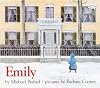
A lovingly written picture book tribute to Emily Dickinson. Bedard's prose imagery is like poetry: "We were still new to the house the day the letter dropped through the slot. I heard it whisper to the floor and ran to pick it up. I peeked through the narrow window in the door. There was no one there but winter, all in white." The white of winter alludes, I think, to Emily's habit of wearing only white clothing. On the same page, Bedard pays tribute to one of Emily's poems, "I'm Nobody" when show more the Mother in the story receives a letter. Her little girl asks who its from and she replies, "Nobody, dear." Further along, the father in the story sings to his daughter before bed, and Bedard's words flow like Emily's poetry: "Like flakes of flowers the words fell to the sheets. I listened to them fall and fell asleep." The little girl asks her father what poetry is. He replies: "Listen to Mother play. She practices and practices a piece, and sometimes magic happens and it seems the music starts to breathe. It sends a shiver through you. You can't explain it, really; it's a mystery. Well, when words do that, we call it poetry." What a perfect explanation! In the story, Emily writes a poem for the child in exchange for the child's gift of flower bulbs. show less
Review based on ARC.
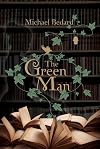
What a lovely teen fantasy. Bedard pays tribute to bookstores, creativity and poetry, and the Green Man himself in his aptly named book. The Green Man is the bookstore owned by Ophelia's ("O") aunt Emily, named after the legend of the Green Man, a protector who stands between the worlds and where life began. While O's father travels to research Ezra Pound, he sends O to Emily for the summer in a dual effort to ensure both are taken care of. Initially, fifteen-year-old O show more and seventy-year-old Emily clash in some to-be-expected ways, but eventually their similarities and common love of poetry and all things related thereto draw them into a very close relationship. Although each believes she is really taking care of the other, Bedard has deftly created an actual dual relationship that feels organic and true.
While visiting Emily at the Green Man, O learns about not only the magic of poetry and poets, but also about a recurring sinister plan that continues to plague her aunt and the town in which she lives. Saying much more about the plot would ruin it, so I won't.
What I will say is that I loved this little YA novel that is atmospheric, soft, and lovely. It has ghosts and books and hot summers. It lifts up jazz and pays homage to the receding world of used bookstores. There is also darkness and hard life, an acknowledgment of the deterioration of such a world and the effects it can and does have on real people. It is somewhat gothic and somewhat romantic. It is simple as a YA, but will appeal to book and bookstore lovers alike. To me, it gave just a little of a lot, just enough to satiate, just enough to squeeze your heart and then leave you for a peaceful night's sleep.
Highly recommended.
FOUR AND A HALF of five stars (boosted to 5 on sites w/o halves).
I note that I am *not* typically a fan of poetry. While this novel is about poets at its heart, and the power of poetry to those moved by it, and while this novel occasionally drops a poem here and there, it is not overdone and definitely did not turn me off, despite my natural disinclination to poetry. show less
What a lovely teen fantasy. Bedard pays tribute to bookstores, creativity and poetry, and the Green Man himself in his aptly named book. The Green Man is the bookstore owned by Ophelia's ("O") aunt Emily, named after the legend of the Green Man, a protector who stands between the worlds and where life began. While O's father travels to research Ezra Pound, he sends O to Emily for the summer in a dual effort to ensure both are taken care of. Initially, fifteen-year-old O show more and seventy-year-old Emily clash in some to-be-expected ways, but eventually their similarities and common love of poetry and all things related thereto draw them into a very close relationship. Although each believes she is really taking care of the other, Bedard has deftly created an actual dual relationship that feels organic and true.
While visiting Emily at the Green Man, O learns about not only the magic of poetry and poets, but also about a recurring sinister plan that continues to plague her aunt and the town in which she lives. Saying much more about the plot would ruin it, so I won't.
What I will say is that I loved this little YA novel that is atmospheric, soft, and lovely. It has ghosts and books and hot summers. It lifts up jazz and pays homage to the receding world of used bookstores. There is also darkness and hard life, an acknowledgment of the deterioration of such a world and the effects it can and does have on real people. It is somewhat gothic and somewhat romantic. It is simple as a YA, but will appeal to book and bookstore lovers alike. To me, it gave just a little of a lot, just enough to satiate, just enough to squeeze your heart and then leave you for a peaceful night's sleep.
Highly recommended.
FOUR AND A HALF of five stars (boosted to 5 on sites w/o halves).
I note that I am *not* typically a fan of poetry. While this novel is about poets at its heart, and the power of poetry to those moved by it, and while this novel occasionally drops a poem here and there, it is not overdone and definitely did not turn me off, despite my natural disinclination to poetry. show less
I am a real fan of Michael Bedard’s work. I discovered his books in my early 20s and was spellbound by the scariness of his Caledon series (A Darker Magic, Painted Devil, Stained Glass, The Green Man). In the Caledon books and Bedard’s standalone novel, Redwork, I was captivated by a family than closely resembled my own: working parents, an awareness that money needs to be watched, and an expectation that older children take on a share of household chores, including shopping and show more childcare. Throughout all, a sly sense of humour, characters that are messy and act like real people, and prose that imbues everyday objects with a poetic immediacy that sings you into a different awareness of what the world is about. And the very real, overlooked, and hard-won kinship that can grow between two marginalized groups of people: elders and teenagers.
So when I learned that Michael Bedard was bringing a new book out, and a friend alerted me to the book launch, I did something I’ve never done before. I emailed his wife, Martha, the organizer of the event, to introduce myself and ask if I could come. To my surprise and delight, she said yes! The launch was fantastic, a true fan experience. And I came away with a question: how do we talk about and share books that don’t neatly fit into current publishing trends or categories? What if a book is spiritual? (I’m not talking about a specific religion here—more of a contemplative or meditative reading experience.)
The Winter Vault is such a book.
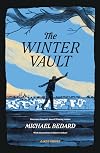
At 180 pages, it is a short read, but not a fast one. This is a reflective book, one that asks you to spend some time and take a second—and a third—look. It’s a character-driven narrative, with an atmosphere that is both specific and stark. Meals at Nan and Pa’s are hushed affairs. Peter’s tutor, Elvira, a young single mother who is estranged from her parents, is the only one who really talks to him. Nobody but Peter seems to notice the girl who sits on the street by day and climbs the cemetery wall every night. Unspoken miseries collect like dust on the stashed bottles of alcohol Peter finds in Nan and Pa’s house. Bedard paints a portrait of brokenness without the abuse, but with self-blame and an abiding inability to face pain that ensnares and paralyzes.
Twelve-year-old Peter is powerless against it. He does the only thing he can do: he retreats into a world of his own making, where he imagines an entirely different reality for himself. It is precisely this imaginative retreat that opens the story up. Or maybe pries it open, bit by bit, like a screwdriver wedged into the stuck edge of a garden door. The winter vault—a building in the cemetery where the dead were once stored over winter until they could be buried in the spring—functions as the perfect metaphor for the shut-in grief of Nan and Pa’s house, while the wall functions as a kind of limbo, a place suspended between worlds, where Peter soars. The stone wall beneath Peter’s feet becomes a piece of humming wire, and the ground below becomes a waterfall, a windy canyon, a storm raging between two towers of the Notre Dame Cathedral.
The imagined dangers of each walk awaken something in Peter. With his bird’s-eye view of the neighbouring cemetery, he can’t help but notice the comings and goings of the elderly caretaker as he goes about his work. Or the way that the cemetery seems to change with each passing day. During his lessons, he notices how cramped the apartment is for Elvira and baby Lizbet, whom Peter helps to soothe and feed. On his walks to and from lessons, he notices the girl he’s seen climbing over the cemetery wall. She’s sitting on a piece of flattened cardboard on the sidewalk. Peter begins skimming a few dollars off the money Nan sends to Elvira in order to buy her sandwiches and coffee. Instead of ratting him out, Elvira gives Peter a sweater to take to the girl. And one night when Peter is late getting home, a panicked Pa comes looking for him with a story spilling out of him. Peter can only walk on the tightrope for so long before he has to make a choice that will change everything.
The Winter Vault is a quietly spiritual book about brokenness and connection, how light can be spun and shared by people who are balanced between worlds. The prose is spare and detached when inside Peter’s POV, which can make it hard to get inside his character at times. On the other hand, it draws the details of the physical world into sharper focus. The Winter Vault is a meditative novel, one that does not rely on a fast-paced or traditional plot to make its point. And it’s a book without an easily recognizable target audience. Martha told me that Michael has never written for any age in particular; he writes what the book is. So, what audience is this book for?
If pressed, I would say it’s an upper middle grade/adult crossover book, something that an unusually introspective middle schooler might gravitate towards, but adults would likely make up a large part of the readership. (Martha confirmed that half of Bedard's readers are adults.) It’s an extremely accessible piece of literary fiction. Bedard’s prose has an immediacy that looks deceptively simple, but drills down into the heart of meaning. It’s also a piece of historical fiction, given that there are no cell phones or computers anywhere.
I would recommend this unique book for readers looking for a more reflective, contemplative reading experience. I would also highly recommend Bedard’s Stained Glass as a companion piece. Although The Winter Vault is not part of the Caledon series, both books are spiritual cousins. show less
So when I learned that Michael Bedard was bringing a new book out, and a friend alerted me to the book launch, I did something I’ve never done before. I emailed his wife, Martha, the organizer of the event, to introduce myself and ask if I could come. To my surprise and delight, she said yes! The launch was fantastic, a true fan experience. And I came away with a question: how do we talk about and share books that don’t neatly fit into current publishing trends or categories? What if a book is spiritual? (I’m not talking about a specific religion here—more of a contemplative or meditative reading experience.)
The Winter Vault is such a book.
At 180 pages, it is a short read, but not a fast one. This is a reflective book, one that asks you to spend some time and take a second—and a third—look. It’s a character-driven narrative, with an atmosphere that is both specific and stark. Meals at Nan and Pa’s are hushed affairs. Peter’s tutor, Elvira, a young single mother who is estranged from her parents, is the only one who really talks to him. Nobody but Peter seems to notice the girl who sits on the street by day and climbs the cemetery wall every night. Unspoken miseries collect like dust on the stashed bottles of alcohol Peter finds in Nan and Pa’s house. Bedard paints a portrait of brokenness without the abuse, but with self-blame and an abiding inability to face pain that ensnares and paralyzes.
Twelve-year-old Peter is powerless against it. He does the only thing he can do: he retreats into a world of his own making, where he imagines an entirely different reality for himself. It is precisely this imaginative retreat that opens the story up. Or maybe pries it open, bit by bit, like a screwdriver wedged into the stuck edge of a garden door. The winter vault—a building in the cemetery where the dead were once stored over winter until they could be buried in the spring—functions as the perfect metaphor for the shut-in grief of Nan and Pa’s house, while the wall functions as a kind of limbo, a place suspended between worlds, where Peter soars. The stone wall beneath Peter’s feet becomes a piece of humming wire, and the ground below becomes a waterfall, a windy canyon, a storm raging between two towers of the Notre Dame Cathedral.
The imagined dangers of each walk awaken something in Peter. With his bird’s-eye view of the neighbouring cemetery, he can’t help but notice the comings and goings of the elderly caretaker as he goes about his work. Or the way that the cemetery seems to change with each passing day. During his lessons, he notices how cramped the apartment is for Elvira and baby Lizbet, whom Peter helps to soothe and feed. On his walks to and from lessons, he notices the girl he’s seen climbing over the cemetery wall. She’s sitting on a piece of flattened cardboard on the sidewalk. Peter begins skimming a few dollars off the money Nan sends to Elvira in order to buy her sandwiches and coffee. Instead of ratting him out, Elvira gives Peter a sweater to take to the girl. And one night when Peter is late getting home, a panicked Pa comes looking for him with a story spilling out of him. Peter can only walk on the tightrope for so long before he has to make a choice that will change everything.
The Winter Vault is a quietly spiritual book about brokenness and connection, how light can be spun and shared by people who are balanced between worlds. The prose is spare and detached when inside Peter’s POV, which can make it hard to get inside his character at times. On the other hand, it draws the details of the physical world into sharper focus. The Winter Vault is a meditative novel, one that does not rely on a fast-paced or traditional plot to make its point. And it’s a book without an easily recognizable target audience. Martha told me that Michael has never written for any age in particular; he writes what the book is. So, what audience is this book for?
If pressed, I would say it’s an upper middle grade/adult crossover book, something that an unusually introspective middle schooler might gravitate towards, but adults would likely make up a large part of the readership. (Martha confirmed that half of Bedard's readers are adults.) It’s an extremely accessible piece of literary fiction. Bedard’s prose has an immediacy that looks deceptively simple, but drills down into the heart of meaning. It’s also a piece of historical fiction, given that there are no cell phones or computers anywhere.
I would recommend this unique book for readers looking for a more reflective, contemplative reading experience. I would also highly recommend Bedard’s Stained Glass as a companion piece. Although The Winter Vault is not part of the Caledon series, both books are spiritual cousins. show less
This ER YA novel features family bonding (particularly O, don't call her Ophelia, and her aunt Emily), a dusty used bookstore named The Green Man, some romance and danger, ghosts, a supernatural magician, and a love of poetry. Emily is an aging poet who owns The Green Man and recently suffered a heart attack. She's having trouble taking care of the store, and her brother, O's dad, sends 15 year old O to help Emily for the summer. The two take a while to get accustomed to each other, but with show more her mother long gone, O is used to cooking, shopping and cleaning, and she becomes critical to both the store's and Emily's rejuvenation.
There are benign supernatural presences in the store - Mallarme's ghost always sits on the stairs, so they automatically walk around him, and periodically Ezra Pound and Emily Dickinson and others apparently descend from photos on the wall to wander around the store. One young boy seen perched on an outside wall turns out to have ties both to the store's becoming Emily's years ago and to O's being there. Another good-looking but secretive boy with a "smouldering edge" is interested in poetry and in O, who reciprocates both. She struggles to find out more about him and determine his true nature. Meanwhile, tales of the malevolent magician thread through Emily's dreams and memories, with a dangerous anniversary of his last performance coming up. At the same time, O has returned order to the store and considers reviving the poetry reading series, "Tuesday at the Green Man." Emily also seems to have a chance to acquire a valuable book collection that would save her financially - but is it too good to be true?
These threads are well-woven by Bedard, and come to a satisfying conclusion. Early on I worried that I was in for a lot of cliches ("In the candlelight, his face appeared as pale as chalk, his lips as red as blood, his hair as dark as a raven'w wing"), but that passed quickly, the writing improved, the story got momentum, and I actually liked the poetry of O and others created for the book. For example, mulling over a "Garden Sculpture" in winter, O writes:
Winter has not been kind to you.
Frost has crept into the crevices
Of your features,
Worn the fine details dull.
From a distance you are snow,
Impossible survivor of the lost
Kingdom of zero.
Why The Green Man? His sometimes frightening, sometimes benevolent countenance is above the bookstore's doorway. Does he represent good or evil, life or death? Emily says, "Perhaps a little of both. He stands at the doorway between worlds. Life springs from him, all green and growing. But that life is rooted in darkness, as all life must be. And I imagine, sometimes, a bit of the dark world crosses over."
This is a solid, enjoyable outing. Three and a half stars. show less
There are benign supernatural presences in the store - Mallarme's ghost always sits on the stairs, so they automatically walk around him, and periodically Ezra Pound and Emily Dickinson and others apparently descend from photos on the wall to wander around the store. One young boy seen perched on an outside wall turns out to have ties both to the store's becoming Emily's years ago and to O's being there. Another good-looking but secretive boy with a "smouldering edge" is interested in poetry and in O, who reciprocates both. She struggles to find out more about him and determine his true nature. Meanwhile, tales of the malevolent magician thread through Emily's dreams and memories, with a dangerous anniversary of his last performance coming up. At the same time, O has returned order to the store and considers reviving the poetry reading series, "Tuesday at the Green Man." Emily also seems to have a chance to acquire a valuable book collection that would save her financially - but is it too good to be true?
These threads are well-woven by Bedard, and come to a satisfying conclusion. Early on I worried that I was in for a lot of cliches ("In the candlelight, his face appeared as pale as chalk, his lips as red as blood, his hair as dark as a raven'w wing"), but that passed quickly, the writing improved, the story got momentum, and I actually liked the poetry of O and others created for the book. For example, mulling over a "Garden Sculpture" in winter, O writes:
Winter has not been kind to you.
Frost has crept into the crevices
Of your features,
Worn the fine details dull.
From a distance you are snow,
Impossible survivor of the lost
Kingdom of zero.
Why The Green Man? His sometimes frightening, sometimes benevolent countenance is above the bookstore's doorway. Does he represent good or evil, life or death? Emily says, "Perhaps a little of both. He stands at the doorway between worlds. Life springs from him, all green and growing. But that life is rooted in darkness, as all life must be. And I imagine, sometimes, a bit of the dark world crosses over."
This is a solid, enjoyable outing. Three and a half stars. show less
 This review was written for LibraryThing Early Reviewers.
Lists
Awards


You May Also Like


Associated Authors
Statistics
- Works
- 23
- Also by
- 1
- Members
- 1,973
- Popularity
- #13,037
- Rating
- 4.0
- Reviews
- 76
- ISBNs
- 88
- Languages
- 4
