
Jo Harkin
Author of Tell Me an Ending
About the Author
Image credit: via Simon & Schuster
Works by Jo Harkin
Tagged
Common Knowledge
Members
Reviews
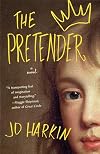
How does one live when nothing is certain, no firm ground?
History, Edward realized, is not what happened, but what some historians lied or guessed about, “and now nobody knows what’s true.” Edward has the same questions about the truth of his own identity and history. Is he a farmer’s son? Or heir to the throne?
He was ten years old when several splendid men came to the farm and took him away to be educated. His name went from John Collan to Lambert Simons. Then, he became Edward, show more Duke of Clarence, rightful heir to the throne. After the failed Yorkist takeover, he became Simnel, a servant in King Henry’s court. And finally, be was John Crossley, hopefully a world traveler.
It was a hard and lonely life, constantly losing his identity and family. He learned to live in high society by error and imitation. He enjoyed books and a Classical education, but learning who to trust was harder than Latin. He had no control over his own life, and when he fell in love, it brought only separation and loss.
When the Yorkist plot to put him on the throne failed, he was forgiven by the king who knew he was a helpless pawn, and put to work in the kitchen. He rose in favor and was elevated–to be a spy for the king, reporting those who plotted against him.
In the end, the young man had lost everything but his desire for revenge, determined to punish those who had lied to him, used him, took away his identity, and separated him from those he loved.
What a fantastic novel! The transformation of the boy into a young man meting out justice is expertly handled. There is humor and darkness, history and fiction, a splendid innocent encountering the treacherous world of politics and court intrigue. And eternal love, even if built on an uncertain foundation.
This is a must-read for readers of the highest order of historical fiction.
Thanks to the publisher for a free book. show less
History, Edward realized, is not what happened, but what some historians lied or guessed about, “and now nobody knows what’s true.” Edward has the same questions about the truth of his own identity and history. Is he a farmer’s son? Or heir to the throne?
He was ten years old when several splendid men came to the farm and took him away to be educated. His name went from John Collan to Lambert Simons. Then, he became Edward, show more Duke of Clarence, rightful heir to the throne. After the failed Yorkist takeover, he became Simnel, a servant in King Henry’s court. And finally, be was John Crossley, hopefully a world traveler.
It was a hard and lonely life, constantly losing his identity and family. He learned to live in high society by error and imitation. He enjoyed books and a Classical education, but learning who to trust was harder than Latin. He had no control over his own life, and when he fell in love, it brought only separation and loss.
When the Yorkist plot to put him on the throne failed, he was forgiven by the king who knew he was a helpless pawn, and put to work in the kitchen. He rose in favor and was elevated–to be a spy for the king, reporting those who plotted against him.
In the end, the young man had lost everything but his desire for revenge, determined to punish those who had lied to him, used him, took away his identity, and separated him from those he loved.
What a fantastic novel! The transformation of the boy into a young man meting out justice is expertly handled. There is humor and darkness, history and fiction, a splendid innocent encountering the treacherous world of politics and court intrigue. And eternal love, even if built on an uncertain foundation.
This is a must-read for readers of the highest order of historical fiction.
Thanks to the publisher for a free book. show less
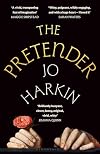
The Pretender by Jo Harkin is the story of a young boy raised as a commoner, completely unaware that he’s Edward Plantagenet, the Earl of Warwick. Or is he?
I absolutely loved this novel, and it helps that I'm fascinated by the historical account of Lambert Simnel who was allegedly a pretender to the throne of England. In 1487, it was claimed this 10 year old boy was Edward Plantagenet, the son of George, Duke of Clarence; who opted to be drowned in a barrel of wine for treason against his show more brother. Hidden for his safety after the princes in the Tower disappeared, the boy was tutored for years before the political climate favoured the beginning of a rebellion in his name.
After King Henry VII and his progeny, this pretender claimed to be the 17th Earl of Warwick and next in line to the throne but his cause was defeated. After the Yorkist rebellion failed to make him King later that year, the young boy received a pardon based on his youth and was sent to work in the kitchens as a servant.
I was wondering which line of history author Jo Harkin was going to take and she navigated the threads of history perfectly. In the beginning, we're introduced to a lively 6 year old John Collan being raised on a farm in a remote English village in 1483. Some of my favourite scenes were of young John on the farm, and the author has a terrific sense of humour:
"John!' calls small Mary. 'Is it true? That kings have a groom of the stool who watches them shit and then takes the shit and looks at it?'
'Of course it's true,' John says. 'There's a groom of the stool right here in the village.'
'Who!'
'Jack. He waits by the midden to collect everyone's turds. He's probably got one in his jerkin now.'" Page 24
Still enjoying John's childhood, a strange and unnamed nobleman visits the farm and John is swiftly taken from everything he's known. Taking on the name Lambert, a home-sick John undertakes years of tutoring in secrecy and wishes he wasn't a noble. Living in seclusion with his tutor and falling in love with reading and studying Ovid, Plutarch, Juvenal, John is a natural scholar.
Soon enough though, his life is drastically changed again and he is wrenched from his tutor to travel to Flanders. Each time he is moved like a political pawn from one country to another, he changes names but the author does an exceptional job of keeping us on track as his external identity shifts from Lambert to Simnel, Edward, Simnel and beyond.
Another favourite era was John's childhood friendship with Philip the Handsome (1478–1506), and later on his time in Ireland where in Dublin in 1487, he's proclaimed King Edward VI. I found John's internal musings on his fate to be convincing and his self doubt endearing as he attempts to negotiate the uncertainty and dangerous political climate in which he finds himself.
John realises he'll either be crowned King of England or be killed in the process and tries to make the most of his circumstances while plotting revenge for those who have hurt him along the way. You might imagine the novel ends when John is pardoned and sent to the kitchens, but this change of circumstances does nothing to dull the narrative.
"... there are so many layers of servant-tiers between them. Here there are larders, a pastry kitchen, buttery, cellar, waferers, larderers, sauciers, dessert cooks, undercooks, scullions. The hundreds of servants rushing around these demesnes wear no livery, being below eyesight." Page 309
Occasionally I was struck by an historical fact that gave me pause, like the fact that King Henry V invaded France in 1492 and according to the author, took 700 ships and 15,000 men to besiege Boulogne. It's hard to imagine the logistics involved in an invasion involving 700 ships.
I heartily enjoyed the witty dialogue and descriptions in The Pretender - one character has a face like a portcullis - and the writing style had me chuckling along as we accompany John as he enters adulthood.
"Don't worry, Jack. When I need a turd inspecting, I'll be sure to send for you!" Page 41
Some of you might know that John was later appointed to the position of falconer and we follow his life until he disappears into the history books in an extremely satisfying conclusion. I thoroughly enjoyed The Pretender and I can readily imagine it adapted for the big screen. I admire the author's ability to cater to both eventualities that John was indeed the legitimate Earl or a boy groomed to be a figurehead but a pretender nevertheless.
The Pretender by Jo Harkin is highly recommended for readers of historical fiction interested in the wars of the roses and is a contender for My Top 5 Books of 2025.
* Copy courtesy of Bloomsbury * show less
I absolutely loved this novel, and it helps that I'm fascinated by the historical account of Lambert Simnel who was allegedly a pretender to the throne of England. In 1487, it was claimed this 10 year old boy was Edward Plantagenet, the son of George, Duke of Clarence; who opted to be drowned in a barrel of wine for treason against his show more brother. Hidden for his safety after the princes in the Tower disappeared, the boy was tutored for years before the political climate favoured the beginning of a rebellion in his name.
After King Henry VII and his progeny, this pretender claimed to be the 17th Earl of Warwick and next in line to the throne but his cause was defeated. After the Yorkist rebellion failed to make him King later that year, the young boy received a pardon based on his youth and was sent to work in the kitchens as a servant.
I was wondering which line of history author Jo Harkin was going to take and she navigated the threads of history perfectly. In the beginning, we're introduced to a lively 6 year old John Collan being raised on a farm in a remote English village in 1483. Some of my favourite scenes were of young John on the farm, and the author has a terrific sense of humour:
"John!' calls small Mary. 'Is it true? That kings have a groom of the stool who watches them shit and then takes the shit and looks at it?'
'Of course it's true,' John says. 'There's a groom of the stool right here in the village.'
'Who!'
'Jack. He waits by the midden to collect everyone's turds. He's probably got one in his jerkin now.'" Page 24
Still enjoying John's childhood, a strange and unnamed nobleman visits the farm and John is swiftly taken from everything he's known. Taking on the name Lambert, a home-sick John undertakes years of tutoring in secrecy and wishes he wasn't a noble. Living in seclusion with his tutor and falling in love with reading and studying Ovid, Plutarch, Juvenal, John is a natural scholar.
Soon enough though, his life is drastically changed again and he is wrenched from his tutor to travel to Flanders. Each time he is moved like a political pawn from one country to another, he changes names but the author does an exceptional job of keeping us on track as his external identity shifts from Lambert to Simnel, Edward, Simnel and beyond.
Another favourite era was John's childhood friendship with Philip the Handsome (1478–1506), and later on his time in Ireland where in Dublin in 1487, he's proclaimed King Edward VI. I found John's internal musings on his fate to be convincing and his self doubt endearing as he attempts to negotiate the uncertainty and dangerous political climate in which he finds himself.
John realises he'll either be crowned King of England or be killed in the process and tries to make the most of his circumstances while plotting revenge for those who have hurt him along the way. You might imagine the novel ends when John is pardoned and sent to the kitchens, but this change of circumstances does nothing to dull the narrative.
"... there are so many layers of servant-tiers between them. Here there are larders, a pastry kitchen, buttery, cellar, waferers, larderers, sauciers, dessert cooks, undercooks, scullions. The hundreds of servants rushing around these demesnes wear no livery, being below eyesight." Page 309
Occasionally I was struck by an historical fact that gave me pause, like the fact that King Henry V invaded France in 1492 and according to the author, took 700 ships and 15,000 men to besiege Boulogne. It's hard to imagine the logistics involved in an invasion involving 700 ships.
I heartily enjoyed the witty dialogue and descriptions in The Pretender - one character has a face like a portcullis - and the writing style had me chuckling along as we accompany John as he enters adulthood.
"Don't worry, Jack. When I need a turd inspecting, I'll be sure to send for you!" Page 41
Some of you might know that John was later appointed to the position of falconer and we follow his life until he disappears into the history books in an extremely satisfying conclusion. I thoroughly enjoyed The Pretender and I can readily imagine it adapted for the big screen. I admire the author's ability to cater to both eventualities that John was indeed the legitimate Earl or a boy groomed to be a figurehead but a pretender nevertheless.
The Pretender by Jo Harkin is highly recommended for readers of historical fiction interested in the wars of the roses and is a contender for My Top 5 Books of 2025.
* Copy courtesy of Bloomsbury * show less
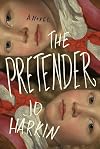
I finished Jo Harkin's The Pretender last night. I was so, so close to the end and wanted to finish, but kept drifting off and almost dropping my ereader each time I woke up with a judder. The Pretender is one of those books that's wonderful from the start, the kind where one wants to whisper "Please stay this good. Please stay this good." over and over while reading. And it did stay that good. It may even have gotten better.
The Pretender is full of the sorts of elements I love: a pretender show more to the English throne (no real surprise there); language close enough to modern to make it a comfortable read, but also with some great period vocabulary that I found delightful; lots of humor—some straightforward, some cruel, some heartbreaking; and questions of goodness and goals and power in a time so far from ours that it's completely different and familiar all at once.
The novel begins in the lead-up to the battle between Richard III and Henry VI that ends with Richard's tragic death ("A horse, a horse, my kingdom for a horse!") and Henry's ascent to the throne. Unlike Shakespeare's Richard III, The Pretender isn't a story of one hero and one villain. It's a story of many, many characters, including a few women—some in beyond their depth, others expert in the political machinations of the time.
And then there's the Pretender himself, who goes through a number of name changes during the book, but I'm going to stay with Lambert Simnel, since that's the name most familiar to me. Raised on a farm (and known as John at the time), Simnel finds himself handed over by the man he thought was his father to a minor cleric who is entrusted with educating him in both scholarly and courtly knowledge. Simnel is told he's the real son of George, Duke of Clarence, (brother to Edward IV and Richard III), and he's being prepared to rise to his rightful rank, triumphing over Richard or Henry, whichever one of them is in power when Simnel is ready to be revealed and crowned as Edward VI. (Edward V was one of the two princes who died in the Tower of London.)
There is however another potential Edward VI, the boy who has been raised as Clarence's legitimate son. Simnel has been told the two of them were switched at birth, with the "real" Edward actually being a decoy of sorts. In fact, Simnel never knows who he truly is. Is he royalty? Is he a usurper being manipulated by anti-Henry VI Yorkists? Is he just another expendable decoy in what could be a long line of such boys?
We readers have the pleasure of watching Simnel emerge from unsophistication and innocence to a young man deeply troubled by all he's learning about politics and war to a... and I'll stop here because I don't want to deprive anyone of the pleasure of reading the book in their own sort of lectorish innocence.
I know without a doubt that The Pretender will be on my list of best books of 2025. It's just that good.
I received a free electronic review copy of this title from the publisher via NetGalley; the opinions are my own. show less
The Pretender is full of the sorts of elements I love: a pretender show more to the English throne (no real surprise there); language close enough to modern to make it a comfortable read, but also with some great period vocabulary that I found delightful; lots of humor—some straightforward, some cruel, some heartbreaking; and questions of goodness and goals and power in a time so far from ours that it's completely different and familiar all at once.
The novel begins in the lead-up to the battle between Richard III and Henry VI that ends with Richard's tragic death ("A horse, a horse, my kingdom for a horse!") and Henry's ascent to the throne. Unlike Shakespeare's Richard III, The Pretender isn't a story of one hero and one villain. It's a story of many, many characters, including a few women—some in beyond their depth, others expert in the political machinations of the time.
And then there's the Pretender himself, who goes through a number of name changes during the book, but I'm going to stay with Lambert Simnel, since that's the name most familiar to me. Raised on a farm (and known as John at the time), Simnel finds himself handed over by the man he thought was his father to a minor cleric who is entrusted with educating him in both scholarly and courtly knowledge. Simnel is told he's the real son of George, Duke of Clarence, (brother to Edward IV and Richard III), and he's being prepared to rise to his rightful rank, triumphing over Richard or Henry, whichever one of them is in power when Simnel is ready to be revealed and crowned as Edward VI. (Edward V was one of the two princes who died in the Tower of London.)
There is however another potential Edward VI, the boy who has been raised as Clarence's legitimate son. Simnel has been told the two of them were switched at birth, with the "real" Edward actually being a decoy of sorts. In fact, Simnel never knows who he truly is. Is he royalty? Is he a usurper being manipulated by anti-Henry VI Yorkists? Is he just another expendable decoy in what could be a long line of such boys?
We readers have the pleasure of watching Simnel emerge from unsophistication and innocence to a young man deeply troubled by all he's learning about politics and war to a... and I'll stop here because I don't want to deprive anyone of the pleasure of reading the book in their own sort of lectorish innocence.
I know without a doubt that The Pretender will be on my list of best books of 2025. It's just that good.
I received a free electronic review copy of this title from the publisher via NetGalley; the opinions are my own. show less
A masterful telling of a little known character from history. Well balanced with character development and interesting plot, and one that kept me unsure how it would turn out until the very end. I loved the exploration of themes of identity and the question of who gets to decide who we are—ourselves or other people. And that life and emotions can be complicated—we can both love and hate people at the same time. All the while the book was really funny, too. The plot points of passionate show more love followed by imprisonment and revenge reminded me a bit of the Count of Monte Cristo.. show less
Lists
Awards


You May Also Like


Associated Authors
Statistics
- Works
- 2
- Members
- 842
- Popularity
- #30,363
- Rating
- 3.8
- Reviews
- 29
- ISBNs
- 23