

Petra Hammesfahr
Author of The Sinner
About the Author
Petra Hammesfahr was born on May 10, 1951 in Titz, Germany. She is a well known crime writer who has also won several awards, including Crime Prize of Wiesbaden and the Rhineland Literary Prize. Her novel, The Sinner, acquried wide acclaim when it was realeased in 2007. It was adapted for show more television by the USA Network as an eight- episode limited series. (Bowker Author Biography) show less
Image credit: Petra Hammesfahr en janvier 2011.
Works by Petra Hammesfahr
Tagged
Common Knowledge
- Canonical name
- Hammesfahr, Petra
- Birthdate
- 1951-05-10
- Gender
- female
- Occupations
- Schriftstellerin
Drehbuchautorin - Awards and honors
- Burgdorfer Krimipreis (2002)
- Nationality
- Germany
- Birthplace
- Titz, Nordrhein-Westfalen, Deutschland
- Places of residence
- Kerpen, Nordrhein-Westfalen, Deutschland
- Associated Place (for map)
- Titz, Nordrhein-Westfalen, Deutschland
Members
Reviews
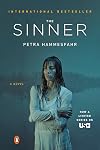
The Sinner is about a woman in her mid-twenties, Cora, who intends to commit suicide on a beautiful day at the beach with her husband and young son nearby. Instead she stabs a stranger to death and confesses to the crime. The detective investigating the crime doesn't believe it was nearly as straightforward as that and continues to dig.
That's the plot. The Sinner is also about religion, family, and sex, in the most shattering of ways. In the past, Cora's mother is revealed to be almost show more psychopathic in her Catholic fervour, blaming Cora for her younger sister's failing health. As a relief from Cora's tortured childhood and disastrous present, there are perspective chapters for the chief, allowing the reader to understand that his motivations go beyond a desire to lock up a criminal. The crime itself is straight forward, but the connection the victim has to Cora's past is murky and confused.
The narrative switches between Cora's past and present, at times even merging, her mental state deteriorating the closer inspector Grovian gets to the truth. The prose is simple, almost stark at times, but occasionally veers towards confusing, giving the reader a glimpse into Cora's state of mind and her inability to properly process her past.
And Cora's past is truly horrific: her mother's religious mania, her sister's illness, and her father's frustrations all converged on Cora, forcing her to shoulder their burdens, twisting her mind unnaturally. The tragedy is not the violent death of the victim but Cora's entire life. As the reader you're drawn into it, frustrated by her family's endless selfishness.
The Sinner is a solid sort of mystery, a compulsive read to be sure, though I'm not sure that I would quite classify it as great. show less
That's the plot. The Sinner is also about religion, family, and sex, in the most shattering of ways. In the past, Cora's mother is revealed to be almost show more psychopathic in her Catholic fervour, blaming Cora for her younger sister's failing health. As a relief from Cora's tortured childhood and disastrous present, there are perspective chapters for the chief, allowing the reader to understand that his motivations go beyond a desire to lock up a criminal. The crime itself is straight forward, but the connection the victim has to Cora's past is murky and confused.
The narrative switches between Cora's past and present, at times even merging, her mental state deteriorating the closer inspector Grovian gets to the truth. The prose is simple, almost stark at times, but occasionally veers towards confusing, giving the reader a glimpse into Cora's state of mind and her inability to properly process her past.
And Cora's past is truly horrific: her mother's religious mania, her sister's illness, and her father's frustrations all converged on Cora, forcing her to shoulder their burdens, twisting her mind unnaturally. The tragedy is not the violent death of the victim but Cora's entire life. As the reader you're drawn into it, frustrated by her family's endless selfishness.
The Sinner is a solid sort of mystery, a compulsive read to be sure, though I'm not sure that I would quite classify it as great. show less
As you can tell from the blurb above, THE SINNER is a whydunnit, as opposed to a whodunnit book, although that's way too simplistic a description. When Cora Bender stabs a man to death in front of family, friends, and a crowded park, nobody realises that she was originally planning to commit suicide. Bender is obviously not in a good place in her life, despite outward appearances. Rejected wholeheartedly by her husband immediately after the attack, it seems an open-and-shut case, which may show more only be mitigated by a plea of insanity. Except that Rudolf Grovian senses something behind Frau Bender's acknowledgement of her guilt and maniacal desire to declare herself guilty with no reasons or explanations.
It's partially Grovian's investigation into Bender's childhood and family life, and partially his patient and careful questioning of her that slowly draws out the truth. Bender's childhood is the stuff of nightmares - a desperately ill younger sister and a fanatical religious zealot of a mother who never hesitated to blame her first-born daughter for all of the younger sister's medical problems. Add a caring but sexually frustrated and ineffectual father, who whilst never sexually abusing his daughter, confronted her with her parent's sexual problems, and everything has combined to create a girl who is guilty, conflicted, and profoundly disturbed. Her closeness with her father creates a complex relationship with him, whilst he is kind and caring towards his daughter, his failure to take firm action in the face of her mother Elsbeth's more extreme behaviour makes him a weak figure, difficult to maintain respect, love and affection for. Bender's ill sister, Magdalena, should have died many times in her childhood, somehow managing to cling to life, she is the centre of her mother's world, swamping everything and everyone with her requirements, draining the families financial as well as emotional resources, isolating them. Eventually the two sisters seem to work out an understanding, a relationship, even love for each other, although, as with everything in this family, there's something not quite right.
Because of the way that Grovian goes about drawing out the story of Bender's background and therefore her reasons for violently killing a complete stranger, there's a lot of ground gone back over. As she constantly lies about her past, Grovian is forced to look for the sprinklings of truth within the lies and slowly and steadily disprove the lies, forcing Bender back and back over the same ground, coaxing the truth from the ultimate in unreliable narrators. Because of that narrative device, the pace is slow, emotional, repetitive and intricate. The reader is given every opportunity to share Grovian's frustration, but at the same time you also get a feeling for Bender's distress, her desperation. Whatever it is that she doesn't want known is held close, she's desperate to obfuscate, confuse, deny, avoid. Particularly interesting was the way that Bender's family members, in particular, are characterised. Seen, as they are, mostly from Bender's point of view, there's something misty about them, hesitantly revealing her father's ineffectiveness, her mother's madness, and her sister's memory. It's particularly interesting that Magdalena is both transparent, weak, seemingly just about incapable of even basic communication; yet she's ultimately revealed as a much stronger personality, capable of manipulation, more able than originally contemplated. Remembering that we were viewing Bender's family from her perspective, and the role that Magdalena's entire existence had such a profound affect on Bender - made it a particularly thought-provoking aspect.
THE SINNER isn't a straight-forward book. Part thriller, a most unusual psychological study, it wasn't an easy book to read but it was an extremely thought-provoking, worthwhile book to read. show less
It's partially Grovian's investigation into Bender's childhood and family life, and partially his patient and careful questioning of her that slowly draws out the truth. Bender's childhood is the stuff of nightmares - a desperately ill younger sister and a fanatical religious zealot of a mother who never hesitated to blame her first-born daughter for all of the younger sister's medical problems. Add a caring but sexually frustrated and ineffectual father, who whilst never sexually abusing his daughter, confronted her with her parent's sexual problems, and everything has combined to create a girl who is guilty, conflicted, and profoundly disturbed. Her closeness with her father creates a complex relationship with him, whilst he is kind and caring towards his daughter, his failure to take firm action in the face of her mother Elsbeth's more extreme behaviour makes him a weak figure, difficult to maintain respect, love and affection for. Bender's ill sister, Magdalena, should have died many times in her childhood, somehow managing to cling to life, she is the centre of her mother's world, swamping everything and everyone with her requirements, draining the families financial as well as emotional resources, isolating them. Eventually the two sisters seem to work out an understanding, a relationship, even love for each other, although, as with everything in this family, there's something not quite right.
Because of the way that Grovian goes about drawing out the story of Bender's background and therefore her reasons for violently killing a complete stranger, there's a lot of ground gone back over. As she constantly lies about her past, Grovian is forced to look for the sprinklings of truth within the lies and slowly and steadily disprove the lies, forcing Bender back and back over the same ground, coaxing the truth from the ultimate in unreliable narrators. Because of that narrative device, the pace is slow, emotional, repetitive and intricate. The reader is given every opportunity to share Grovian's frustration, but at the same time you also get a feeling for Bender's distress, her desperation. Whatever it is that she doesn't want known is held close, she's desperate to obfuscate, confuse, deny, avoid. Particularly interesting was the way that Bender's family members, in particular, are characterised. Seen, as they are, mostly from Bender's point of view, there's something misty about them, hesitantly revealing her father's ineffectiveness, her mother's madness, and her sister's memory. It's particularly interesting that Magdalena is both transparent, weak, seemingly just about incapable of even basic communication; yet she's ultimately revealed as a much stronger personality, capable of manipulation, more able than originally contemplated. Remembering that we were viewing Bender's family from her perspective, and the role that Magdalena's entire existence had such a profound affect on Bender - made it a particularly thought-provoking aspect.
THE SINNER isn't a straight-forward book. Part thriller, a most unusual psychological study, it wasn't an easy book to read but it was an extremely thought-provoking, worthwhile book to read. show less
I don't get all the "I was confused/I had no idea what was going on" comments.
This is an intricately-plotted novel that rewards by making a deep incision almost immediately, then slowly, delicately peeling back the layers to get to the heart of the crime.
I won't say more about the story than that, and to have some patience, because it will reward you in the end.
Really good read.
This is an intricately-plotted novel that rewards by making a deep incision almost immediately, then slowly, delicately peeling back the layers to get to the heart of the crime.
I won't say more about the story than that, and to have some patience, because it will reward you in the end.
Really good read.
A good editor would have been Petra Hammesfahr's best friend because The Sinner is at least one-third in length longer than it needed to be. This is a psychological crime novel that strives to get into the head of its main character, one of the most unreliable narrators I've encountered in recent memory, while that character tries to make sense of what happened to her five years earlier.
The book has an interesting "reveal" at the end but it takes so long to get to that point that the whole show more experience is borderline boring...the events of a single night and another day are rehashed and recounted in so many different ways as different investigators give develop their own theories, that the reader is often tempted to chuck the whole thing.
I'm rating this one a 3-star book because the essential plot is a good one...the execution of that plot, not so much. show less
The book has an interesting "reveal" at the end but it takes so long to get to that point that the whole show more experience is borderline boring...the events of a single night and another day are rehashed and recounted in so many different ways as different investigators give develop their own theories, that the reader is often tempted to chuck the whole thing.
I'm rating this one a 3-star book because the essential plot is a good one...the execution of that plot, not so much. show less
Lists
Awards
You May Also Like


Associated Authors
Statistics
- Works
- 49
- Members
- 1,652
- Popularity
- #15,552
- Rating
- 3.3
- Reviews
- 36
- ISBNs
- 244
- Languages
- 11
- Favorited
- 5
