
Sarah Albee
Author of Elmo Loves You!
About the Author
Sarah Albee was born in 1962 in Cleveland, Ohio. She attended Harvard University from 1981-1984. Albee was a member of The American University in Cairo Presidential Interns. This group is for alumni from the Presidential Intern Program at the American University in Cairo. Albee started her career show more as a newspaper cartoonist and a semi-professional basketball player. She writes children's books for many age groups and under a number of pseudonyms like Constance Allen, Catherine Lukas, and Sarah Wilson. She has had three of her books appear on the New York Times Bestseller list. Sarah Albee is an author of Sesame Street and Big Bag books; she also wrote the script for Elmo and the Orchestra. Albee has also contributed to the Elmo's Neighborhood and Sesame Street ABCs series. She is also a writer for books from the non-Muppet series, Blue's Clues. (Publisher Provided) show less
Disambiguation Notice:
Sarah Albee writes Sesame Street books under the name Constance Allen and several Nickelodeon series under her married name, Sarah Willson.
Image credit: Sarah Albee
Series
Works by Sarah Albee
Watch Out for Banana Peels and Other Important Sesame Street Safety Tips (2000) 173 copies, 1 review
The Quest for the Holey Pail: A Time Travel Adventure (The Rugrats Files) (2000) 52 copies, 1 review
The Puppy Twins (Ready-To-Read Dora the Explorer - Level 1) (Dora the Explorer Ready-to-Read) (2009) 40 copies
Chicken Little - A Tale About Common Sense (Reader's Digest Young Families - Famous Fables) (2006) 26 copies
Very First Things to Know About Monkeys (Very First Things to Know About... Series) (1999) 19 copies
Elmo's Little Library (Sesame Street): Elmo's Mother Goose; Elmo's Tricky Tongue Twisters; Elmo Says; Elmo's ABC Book (2013) 9 copies
Follow the Shooting Star (Read with Pooh . . . All Year Through!) (2005) — Author — 7 copies, 1 review
The Three Billy Goats Gruff (Classics for Beginning Readers, Readers Digest Young Families) (2005) 4 copies, 1 review
Rumble Tummy Sesame street 2 copies
Sweet victory 2 copies
Frederick Douglass / Sojourner Truth: Biographies of Two African American Slaves Who Achieved Greatness (2011) 2 copies
Try Your Best 2 copies
Polite Little Pig 2 copies
Sesame Street: The Goodnight Elmo Kit: Nightlight and Illustrated Book (Miniature Editions) (2017) 2 copies
I Can Do It! by Albee, Sarah [Random House Books for Young Readers, 2011] Paperback [Paperback] 1 copy
Elmo ABC Book 1 copy
Le chemin de la lecture 1 copy
My O & P Storybook 1 copy
A New Pet is the Greatest 1 copy
Elmo en de oppas 1 copy
CARING AND SHARING 1 copy
Ernie's Day at the Farm 1 copy
Plaza Sesamo: Colores con sabores (Plaza Sesamo- Monstruos Sanos y Felices/ Sesame Street) (Spanish Edition) (2008) 1 copy
It's Check up-Time Elmo 1 copy
The Bunny Hop (Sesame Street) (Little Golden Book) by Albee, Sarah (January 6, 2015) Hardcover 1 copy
Frederick Douglas 1 copy
Abimanyu: Mulan 1 copy
Een Vrolijke Picknick? 1 copy
By Sarah Albee Elmo Loves You (Sesame Street) (Big Bird's Favorites Board Books) [Board book] 1 copy
Watching the Wales 1 copy
My G & H storybook; G whiz! 1 copy
What Should Eddie Pack? 1 copy
My Dress up Party 1 copy
Can't Have Ants 1 copy
Sesame Street Talent Show 1 copy
Budgie to the rescue 1 copy
What do I see? 1 copy
The Tale of Peter Rabbit 1 copy
Associated Works
Tagged
Common Knowledge
- Legal name
- Albee, Sarah
- Other names
- Allen, Constance
Willson, Sarah
Samuel, Catherine
Lukas, Catherine - Birthdate
- 1962
- Gender
- female
- Occupations
- staff editor (Childrens' Television Network)
- Agent
- Caryn Wiseman (Andrea Brown)
- Nationality
- USA
- Birthplace
- Cleveland, Ohio, USA
- Places of residence
- Burlington, Vermont, USA
New York, New York, USA
Norwalk, Connecticut, USA
Watertown, Connecticut, USA - Disambiguation notice
- Sarah Albee writes Sesame Street books under the name Constance Allen and several Nickelodeon series under her married name, Sarah Willson.
- Associated Place (for map)
- USA
Members
Reviews
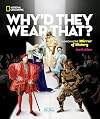
A few years ago I went to a museum exhibit of Impressionist art, with the fashion of the time period to accompany it. It was amazing, but I drove my friends nuts. While they were oohing and aahing over the amazing clothes, I was wondering how long servants had to spend ironing those millions of pleats. So, when Sarah Albee first announced that she was writing a book on fashion, I knew I was going to love it. She has a genius for looking into the small, practical aspects of history and show more relating them to the bigger events.
The book opens with a foreword by Tim Gunn and an introduction by Sarah Albee, explaining how the book is arranged and a general overview of how fashion and history are intertwined.
The main body of the book is divided into time periods, beginning with "The Ancient World", which includes Egyptian fashion, silk, Celts, and how fashion affected the Roman world. "The Middle Ages" focuses on Europe and the cost and expense of clothing, but also talks about how the Crusades affected European industry and includes snippets of information about Japanese styles. "The Age of Exploration" expands fashion across the globe, including dyes and their effect on the economy. "The Renaissance" focuses on the extravagant European styles, including poisonous make up (which isn't as historical as you might think!). "The Age of Reason" contrasts the clothing styles of the wealthy versus the poor, what colonists wore and how it related to the beginnings of revolution and how clothes were (or weren't) laundered. "Revolutionary Times" explains the importance of beaver pelts in the colonial economy and the growing use of cotton and its effect on the politics and economy of India and the American colonies. "Marching Toward Modernity" covers the mid-1700s to the early 1900s and includes a wide range of information about changes in children's fashions, military fashions, and the growing importance of the cotton and textile industry. "The Industrial Revolution" takes this information and digs deeper, talking about the rapid changes in the world that were affected by the fashion industry and in turn made major changes in fashion from more freedom for women's clothing to labor conditions in sweatshops. There's also a fascinating section on how the discovery of synthetic dyes made a drastic change in clothing styles and their economic and class significance. There are also sections on swimwear, athletic wear, fads in women's hats that affected wildlife, and more. The final chapter "World at War" takes readers through the radical changes in the world during the two world wars and the how the political and economic changes were reflected in clothing.
Final sections encourage thinking about how our clothing choices today reflect our world, from mass-produced clothing in third-world countries to wearing fur. Back matter includes a time line, final notes from the author, bibliography, further reading and resources, index, and credits for the extensive illustrations and photographs that fill the book.
Sarah Albee's great skill is in making history come alive and showing how the sometimes distant and unreal events like wars and politics, affected everyday people; not to mention how everyday people and events affected larger events. Of course kids have always wondered exactly how you went to the bathroom in one of those giant hoop skirts or how a knight in armor went to the bathroom (the answer...well, would you stop in the middle of battle to take all your armor off so you could go....)- but did they ever stop to think about how people fastened their clothes with no buttons, zippers or Velcro? Or how the cotton they might see growing in the fields or wear every day had a major effect on world events? It might even start some kids thinking about where their clothes come from and how they can make more informed choices.
Verdict: Copious photographs and a constant stream of interesting, weird, and gross facts will keep kids' interest, even if they aren't history or fashion fans, and by the end of the book they'll not only be amused, they'll also have learned some subtle lessons about how the small choices we make affect the world around us. Highly recommended.
ISBN: 9781426319198; Published 2015 by National Geographic; Review copy provided by publisher; Donated to the library show less
The book opens with a foreword by Tim Gunn and an introduction by Sarah Albee, explaining how the book is arranged and a general overview of how fashion and history are intertwined.
The main body of the book is divided into time periods, beginning with "The Ancient World", which includes Egyptian fashion, silk, Celts, and how fashion affected the Roman world. "The Middle Ages" focuses on Europe and the cost and expense of clothing, but also talks about how the Crusades affected European industry and includes snippets of information about Japanese styles. "The Age of Exploration" expands fashion across the globe, including dyes and their effect on the economy. "The Renaissance" focuses on the extravagant European styles, including poisonous make up (which isn't as historical as you might think!). "The Age of Reason" contrasts the clothing styles of the wealthy versus the poor, what colonists wore and how it related to the beginnings of revolution and how clothes were (or weren't) laundered. "Revolutionary Times" explains the importance of beaver pelts in the colonial economy and the growing use of cotton and its effect on the politics and economy of India and the American colonies. "Marching Toward Modernity" covers the mid-1700s to the early 1900s and includes a wide range of information about changes in children's fashions, military fashions, and the growing importance of the cotton and textile industry. "The Industrial Revolution" takes this information and digs deeper, talking about the rapid changes in the world that were affected by the fashion industry and in turn made major changes in fashion from more freedom for women's clothing to labor conditions in sweatshops. There's also a fascinating section on how the discovery of synthetic dyes made a drastic change in clothing styles and their economic and class significance. There are also sections on swimwear, athletic wear, fads in women's hats that affected wildlife, and more. The final chapter "World at War" takes readers through the radical changes in the world during the two world wars and the how the political and economic changes were reflected in clothing.
Final sections encourage thinking about how our clothing choices today reflect our world, from mass-produced clothing in third-world countries to wearing fur. Back matter includes a time line, final notes from the author, bibliography, further reading and resources, index, and credits for the extensive illustrations and photographs that fill the book.
Sarah Albee's great skill is in making history come alive and showing how the sometimes distant and unreal events like wars and politics, affected everyday people; not to mention how everyday people and events affected larger events. Of course kids have always wondered exactly how you went to the bathroom in one of those giant hoop skirts or how a knight in armor went to the bathroom (the answer...well, would you stop in the middle of battle to take all your armor off so you could go....)- but did they ever stop to think about how people fastened their clothes with no buttons, zippers or Velcro? Or how the cotton they might see growing in the fields or wear every day had a major effect on world events? It might even start some kids thinking about where their clothes come from and how they can make more informed choices.
Verdict: Copious photographs and a constant stream of interesting, weird, and gross facts will keep kids' interest, even if they aren't history or fashion fans, and by the end of the book they'll not only be amused, they'll also have learned some subtle lessons about how the small choices we make affect the world around us. Highly recommended.
ISBN: 9781426319198; Published 2015 by National Geographic; Review copy provided by publisher; Donated to the library show less

Well, isn't this the most ominous Winnie the Pooh title ever? You crack the cover expecting to find yourself at Christopher Robin's funeral.
But instead, on the way to a dinner engagement with Owl, Pooh realizes with Piglet and Eeyore that it is already dark out and that they may be late for the meal or that something might be wrong with the sun. Owl whips out books and diagrams to explain the solstices and seasons, but Pooh happily zones out the explanation, content that science has the show more situation under control. And really, don't we all do the same most days? (Vaxxers and Flat Earthers excluded, obviously.)
(My Pooh Project: I love Winnie the Pooh, and so does my wife. Having a daughter gave us a chance to indoctrinate her into the cult by buying and reading her every Pooh book we came across. How many is that? I’m going to count them this year by reading and reviewing one every day and seeing which month I finally run out. Track my progress here:
https://www.goodreads.com/review/list/23954351-rod-brown?ref=nav_mybooks&she... ) show less
But instead, on the way to a dinner engagement with Owl, Pooh realizes with Piglet and Eeyore that it is already dark out and that they may be late for the meal or that something might be wrong with the sun. Owl whips out books and diagrams to explain the solstices and seasons, but Pooh happily zones out the explanation, content that science has the show more situation under control. And really, don't we all do the same most days? (Vaxxers and Flat Earthers excluded, obviously.)
(My Pooh Project: I love Winnie the Pooh, and so does my wife. Having a daughter gave us a chance to indoctrinate her into the cult by buying and reading her every Pooh book we came across. How many is that? I’m going to count them this year by reading and reviewing one every day and seeing which month I finally run out. Track my progress here:
https://www.goodreads.com/review/list/23954351-rod-brown?ref=nav_mybooks&she... ) show less
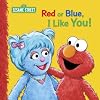
This book does an excellent job of addressing the differences between people and how to accept them. Angela lives on a street where only blue monsters live, and her brother had preconceived notions about red monsters, like Elmo: "So you red monsters like a lot of the same stuff we blue monsters do, huh?...I thought all red monsters liked to was, you know, red-monster food." Elmo quickly and pleasantly tells him that red monsters like many different kinds of food. Then, Angela goes to Elmo's show more house the next day, and she is much more uncomfortable because she has been around mostly blue monsters, so the amount of red monsters in her house makes her nervous. Some members of Elmo's family had preconceived notions as well, but they embrace her openly, just as Angela's family embraced Elmo. Angela even gets to see that Elmo's friends are many colors and sizes, and she ends up having a ton of fun with them. This book shows children that it is okay to be uncomfortable with things we are not familiar with at first, but we should be open to meeting them and learning about them, which is the big idea of this book. This book is simple and clear and gets its point across perfectly. show less

Eeyore is having a sad Valentine's Day because he thinks he has received no Valentines. But of course that's not the case and once the misunderstanding has been cleared up all the Pooh friends end up at one of those parties Pooh writers throw in when they can think of no other way to end a Pooh book. It's like the Pooh version of "and they all lived happily ever after."
(My Pooh Project: I love Winnie the Pooh, and so does my wife. Having a daughter gave us a chance to indoctrinate her into show more the cult by buying and reading her every Pooh book we came across. How many is that? I’m going to count them this year by reading and reviewing one every day and seeing which month I finally run out. Track my progress here:
https://www.goodreads.com/review/list/23954351-rod-brown?ref=nav_mybooks&she... ) show less
(My Pooh Project: I love Winnie the Pooh, and so does my wife. Having a daughter gave us a chance to indoctrinate her into show more the cult by buying and reading her every Pooh book we came across. How many is that? I’m going to count them this year by reading and reviewing one every day and seeing which month I finally run out. Track my progress here:
https://www.goodreads.com/review/list/23954351-rod-brown?ref=nav_mybooks&she... ) show less
Lists
Christmas Books (1)
Awards


You May Also Like


Associated Authors
Statistics
- Works
- 380
- Also by
- 3
- Members
- 17,562
- Popularity
- #1,258
- Rating
- 3.5
- Reviews
- 155
- ISBNs
- 1,000
- Languages
- 14
- Favorited
- 1