
Sherry Jones (1) (1961–)
Author of The Jewel of Medina
For other authors named Sherry Jones, see the disambiguation page.
About the Author
Image credit: Sherry Jones sent this picture to me via email.
Series
Works by Sherry Jones
Tagged
Common Knowledge
- Birthdate
- 1961-09-09
- Gender
- female
- Occupations
- journalist
novelist - Awards and honors
- Finalist, Pacific Northwest Booksellers Association Awards; Finalist, FOREWORD magazine awards; Silver Medal, Independent Publishers' Association Awards (IPPY)
- Agent
- Natasha Kern Literary Agency
- Nationality
- USA
- Birthplace
- Amarillo, Texas, USA
- Associated Place (for map)
- Texas, USA
Members
Reviews
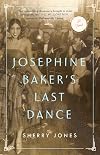
Josephine Baker’s Last Dance by Sherry Jones is a biographical novel about American Josephine Baker, who, because of her race, had to go to France in the 1920s to be declared the entertaining star that she was. She lived life on the edge whether she was struggling as a poor black child in St. Louis or achieving fame by dancing partially nude on the stage of the Folies Bergere. But there was more to this woman than what was shown on stage, she was equally at home in the uniform of the show more French Air Force, or working with the French Resistance during World War II, for which she was awarded the Resistance Medal and the Croix de Guerre. She also spent time as a Civil Rights Activist and was the only woman invited to speak at the 1963 March on Washington. Unfortunately she was never able to attain popularity in the United States and her star turn in the 1936 Ziegfeld Follies was not commercially successful.
The author brings this vibrant personality to life on these pages. As Josephine Baker conquers Paris in the Jazz Age we read of her transformation and her interactions with some of the greatest artists of the day among them, Pablo Picasso, Ernest Hemingway, Cole Porter and George Gershwin. Her romantic life was very bumpy but she never gave up her search for love and acceptance. The words “too young, too dark, too ugly” haunted her and her celebrity status at times was much more important to her than being faithful in a relationship. Josephine’s rise to stardom took place in France but meanwhile the Nazi party and Hitler were rising in Germany and soon cast their shadow over all of Europe.
I thoroughly enjoyed Josephine Baker’s Last Dance not only for learning about this intriguing personality, but also for the author’s wonderful writing and creative research which brought the setting and the times vividly to life. show less
The author brings this vibrant personality to life on these pages. As Josephine Baker conquers Paris in the Jazz Age we read of her transformation and her interactions with some of the greatest artists of the day among them, Pablo Picasso, Ernest Hemingway, Cole Porter and George Gershwin. Her romantic life was very bumpy but she never gave up her search for love and acceptance. The words “too young, too dark, too ugly” haunted her and her celebrity status at times was much more important to her than being faithful in a relationship. Josephine’s rise to stardom took place in France but meanwhile the Nazi party and Hitler were rising in Germany and soon cast their shadow over all of Europe.
I thoroughly enjoyed Josephine Baker’s Last Dance not only for learning about this intriguing personality, but also for the author’s wonderful writing and creative research which brought the setting and the times vividly to life. show less

The Jewel of Medina is a historical novel by Sherry Jones that recounts the life of Aisha, one of Muhammad's wives, from the age of six, when she was betrothed to Muhammad, through to his death. Although Aisha is depicted as rather spoiled, wilful, and jealous, the author does develop the character and allows her to mature and grow.
Aisha was a child bride, married to the prophet Muhammed when she was a child of thirteen. Muhammed decided to let her grow up before consummating the marriage. show more The book consists of Aisha making various plans to enhance her life. She considers running away but find herself growing to love Muhammed so she schemes to get him to take her to bed. Wanting power she plots to become the head wife and leader of the harem, she spies on her sister-wives and reports their wrong doings to Muhammed, which instead of him approving only causes him to trust her less.
The Jewel of Medina was not well received when published as many felt it was too light and superficial. I would have to agree with many of the criticisms as I felt Muhammed was portrayed as a weak man who was controlled by his advisors and easily seduced by a pretty face. I would have preferred that the religious aspect of the story not be glossed over and more actual historical events were included. The author maintains that she wrote the book to be entertaining and she did succeed at that. show less
Aisha was a child bride, married to the prophet Muhammed when she was a child of thirteen. Muhammed decided to let her grow up before consummating the marriage. show more The book consists of Aisha making various plans to enhance her life. She considers running away but find herself growing to love Muhammed so she schemes to get him to take her to bed. Wanting power she plots to become the head wife and leader of the harem, she spies on her sister-wives and reports their wrong doings to Muhammed, which instead of him approving only causes him to trust her less.
The Jewel of Medina was not well received when published as many felt it was too light and superficial. I would have to agree with many of the criticisms as I felt Muhammed was portrayed as a weak man who was controlled by his advisors and easily seduced by a pretty face. I would have preferred that the religious aspect of the story not be glossed over and more actual historical events were included. The author maintains that she wrote the book to be entertaining and she did succeed at that. show less
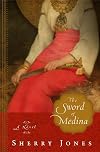
This is book 2 of 2 of Sherry Jones's controversial novels about Aisha, Islam's prophet Muhammad's child-bride. As someone well-grounded in Islamic history and teachings, both books profoundly irritated me, and not because of any offense.
Poetic license with history is one thing, sloppy inconsistencies in transliterations is another. For example, one character is sometimes called Abdallah, other times Abdullah, other times Abd Allah. Where was this author's editor and/or proofreader?
Even the show more author's instances of genuine poetic license, including and especially calling God "Al-Lah" instead of "Allah", seemed like unnecessarily jarring choices to me. It serves no purpose that I can discern.
In short, I came to the books eager for the scandal (modern and ancient) and ended up mostly annoyed. The only reason I'm not giving this the lowest rating is that it's one of the few fictionalized works about Islamic history. It succeeds somewhat in both humanizing Muhammad's closest companions and also illuminating people on the unsavory civil-war-related aspects of early Islam, knowledge about which is often deliberately withheld from Muslims. show less
Poetic license with history is one thing, sloppy inconsistencies in transliterations is another. For example, one character is sometimes called Abdallah, other times Abdullah, other times Abd Allah. Where was this author's editor and/or proofreader?
Even the show more author's instances of genuine poetic license, including and especially calling God "Al-Lah" instead of "Allah", seemed like unnecessarily jarring choices to me. It serves no purpose that I can discern.
In short, I came to the books eager for the scandal (modern and ancient) and ended up mostly annoyed. The only reason I'm not giving this the lowest rating is that it's one of the few fictionalized works about Islamic history. It succeeds somewhat in both humanizing Muhammad's closest companions and also illuminating people on the unsavory civil-war-related aspects of early Islam, knowledge about which is often deliberately withheld from Muslims. show less
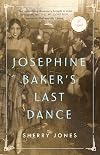
Josephine Baker, born in 1906 to a poor family in St. Louis, was used pretty much as a slave from the time she could walk. Her mother put her out to white families as a live in servant, with Josephine’s pay going to her. Josephine never saw anything of it. Worse, she was sexually abused starting at an early age. But she was determined that she would be a dancer and singer; it was the one way she could see out of her impoverished situation. She just needed to get a chance….She was told by show more producers that she was too skinny, too dark, and didn’t have a strong enough voice to be a chanteuse. She was relegated to the chorus line in all people of color reviews.
But in 1925 she sailed to Paris and started breaking down barriers. She was the first woman of color on a Paris stage, the first to star in a movie, the first to sing in an opera. But her most famous act is, sadly, something that started as sarcasm. She was designing her own costumes in Paris. The man in charge, however, thought she was trying to dress too elegantly. So she drew her next costume as a skirt (a belt, really) of bananas and nothing else. That, of course, is what the costume maker produced and that is what she danced in for many performances, and that is the picture that will come up first when you Google her.
In Paris she was received as an equal, not some subhuman servant like she was see in the US. She was the center of any party, the star of the stage. She rubbed elbows with the American ex-pats. Of course, the Nazis came and everything went to hell. So she did what any rebel would do- she joined the French Resistance. As a star and party giver, she had access to the Nazi bigwigs who didn’t know she spoke German. She risked her life giving information to the Resistance- and then spent time flying supplies for the Red Cross.
This was all exciting. After the war she led a much quieter life. She adopted 12 children, of different races and cultures. She tried to come back to the US, but found herself denied service in restaurants and denied rooms in hotels. She was treated like dirt.
I loved the book, but the last part of her life was rushed over. What became of all her children? What kind of relationships did she have with them? After her last big performance- a production that frames the story- what did she do? I know she worked for equality. How did she die? Who was with her then? But it’s still a five star book, because I couldn’t put it down. She was a fascinating woman, and lived her life to the fullest. show less
But in 1925 she sailed to Paris and started breaking down barriers. She was the first woman of color on a Paris stage, the first to star in a movie, the first to sing in an opera. But her most famous act is, sadly, something that started as sarcasm. She was designing her own costumes in Paris. The man in charge, however, thought she was trying to dress too elegantly. So she drew her next costume as a skirt (a belt, really) of bananas and nothing else. That, of course, is what the costume maker produced and that is what she danced in for many performances, and that is the picture that will come up first when you Google her.
In Paris she was received as an equal, not some subhuman servant like she was see in the US. She was the center of any party, the star of the stage. She rubbed elbows with the American ex-pats. Of course, the Nazis came and everything went to hell. So she did what any rebel would do- she joined the French Resistance. As a star and party giver, she had access to the Nazi bigwigs who didn’t know she spoke German. She risked her life giving information to the Resistance- and then spent time flying supplies for the Red Cross.
This was all exciting. After the war she led a much quieter life. She adopted 12 children, of different races and cultures. She tried to come back to the US, but found herself denied service in restaurants and denied rooms in hotels. She was treated like dirt.
I loved the book, but the last part of her life was rushed over. What became of all her children? What kind of relationships did she have with them? After her last big performance- a production that frames the story- what did she do? I know she worked for equality. How did she die? Who was with her then? But it’s still a five star book, because I couldn’t put it down. She was a fascinating woman, and lived her life to the fullest. show less
Lists
Awards


You May Also Like


Associated Authors
Statistics
- Works
- 6
- Members
- 813
- Popularity
- #31,388
- Rating
- 3.4
- Reviews
- 70
- ISBNs
- 48
- Languages
- 7

