
Sophie Perinot
Author of Ribbons of Scarlet
Works by Sophie Perinot
Associated Works
Songs of Blood and Gold — Contributor — 4 copies
Tagged
Common Knowledge
- Gender
- female
- Occupations
- writer
historical novelist - Agent
- Kevan Lyon (Marshal Lyon Literary Agency)
- Short biography
- I’ve always been passionate about history. I was the first member of my college graduating class to declare a history major (first quarter of freshman year – not that I was over-eager or anything). Next I attended law school. Whatever else can be said about lawyers (and please, spare me the bad jokes), we get a lot of practice writing. It’s a much larger part of the job than most people realize. Eventually, however, my muse was stronger than my inner-litigator and I left the legal side of things to my husband (aka my law-school-sweetheart) and “retired” to the happier job of raising my children and pursuing artistic interests, including writing.
It’s often said writers are readers first. I am no exception. I have always been an avid reader, especially of the classics. Deciding what to write was easy. As a life-long student of history, from a family of history-nerds, historical fiction was destined to be my niche. My attraction to French history was equally natural — I studied French abroad, and I am a hopeless devotee of one of the grandfathers of the genre, Alexandre Dumas, père.
I live in Great Falls, Virginia surrounded by trees and books. My books are time machines. Currently I am traveling daily to the 17th century, but it is anybody’s guess where I will be off to next and who I will meet. I can’t wait! [website: https://www.sophieperinot.com/home/abo... ] - Nationality
- USA
- Places of residence
- Great Falls, Virginia, USA
- Associated Place (for map)
- Virginia, USA
Members
Reviews
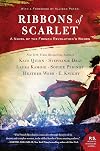
Given the list of authors involved in writing this novel, I was certain I'd enjoy it, but still it surprised me. I hadn't expected that a collaboration among so many different authors could come together as such a perfect, cohesive whole.
There are six parts, each focusing on a different woman (though one part centers on two women). The women are from diverse backgrounds, ranging from a poor fruit seller to a princess. Each character tells her story in first person, and with a different show more author at the helm of each of these stories, every character has a her own distinct voice.
Every one of these six stories feels as if it could stand on its own, but combined, they tell one complete, unforgettable story. The parts are arranged in chronological order with the first set before the Revolution and the last set during the Terror. Though each part centers on one main character, each part has appearances by most of the other women too. That way, once a characters section has wrapped up, her story may continue. And if the character hasn't been featured yet, the reader has already gotten to know her. This criss crossing of characters was perfectly done and made for a solid, unified whole.
I definitely found some characters more relatable than others, but there was more to relate to here than the women. There were themes that are very relevant today.
I also appreciated the range of emotion in this book. Of course there was horror, but there was also tenderness and love.
I learned a lot reading this, and I appreciated the authors' notes at the end.
I would recommend this for anyone who enjoys historical fiction or even books about strong women.
I was fortunate enough to have an ARC to base this review on, but I was so impressed by this novel that I ordered a finished copy. show less
There are six parts, each focusing on a different woman (though one part centers on two women). The women are from diverse backgrounds, ranging from a poor fruit seller to a princess. Each character tells her story in first person, and with a different show more author at the helm of each of these stories, every character has a her own distinct voice.
Every one of these six stories feels as if it could stand on its own, but combined, they tell one complete, unforgettable story. The parts are arranged in chronological order with the first set before the Revolution and the last set during the Terror. Though each part centers on one main character, each part has appearances by most of the other women too. That way, once a characters section has wrapped up, her story may continue. And if the character hasn't been featured yet, the reader has already gotten to know her. This criss crossing of characters was perfectly done and made for a solid, unified whole.
I definitely found some characters more relatable than others, but there was more to relate to here than the women. There were themes that are very relevant today.
I also appreciated the range of emotion in this book. Of course there was horror, but there was also tenderness and love.
I learned a lot reading this, and I appreciated the authors' notes at the end.
I would recommend this for anyone who enjoys historical fiction or even books about strong women.
I was fortunate enough to have an ARC to base this review on, but I was so impressed by this novel that I ordered a finished copy. show less
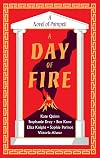
A Day of Fire is a vividly imagined compilation from six best-selling authors as they envision the last days of Pompeii. Each author writes a story about their chosen character and what fate befell them from the eruption of Mount Vesuvius. The characters come from a varied back ground, from a wealthy senator to a couple of lowly prostitutes, a retired soldier and a young bride-to-be. Pompeii was a lively resort town filled with a flourishing population before it was destroyed and buried in show more 79 AD.
The unique format of the book gives us a wide view of the city of Pompeii and it’s inhabitants. The authors have meshed together well and we are awarded with some very interesting characters who show up in more than one story which helps to give the book continuity. These intertwining plots give the book the feeling of a novel rather than just inter-connected stories. While some of the chapters are tragic and dark, there are also others that are uplifting and hopeful.
A Day of Fire brings this two thousand year old tragedy to life. Authors Kate Quinn, Vicky Alvear, Ben Kane, Stephanie Dray, Eliza Knight and Sophie Perinot capture the terror of this momentous historical event even as they educate us in Roman culture, society and relationships. Overall, I found A Day of Fire to be a gripping and involving read. show less
The unique format of the book gives us a wide view of the city of Pompeii and it’s inhabitants. The authors have meshed together well and we are awarded with some very interesting characters who show up in more than one story which helps to give the book continuity. These intertwining plots give the book the feeling of a novel rather than just inter-connected stories. While some of the chapters are tragic and dark, there are also others that are uplifting and hopeful.
A Day of Fire brings this two thousand year old tragedy to life. Authors Kate Quinn, Vicky Alvear, Ben Kane, Stephanie Dray, Eliza Knight and Sophie Perinot capture the terror of this momentous historical event even as they educate us in Roman culture, society and relationships. Overall, I found A Day of Fire to be a gripping and involving read. show less
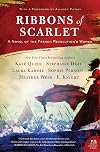
I received a free copy of this book in exchange for an honest review.
I am in awe of this multi-faceted creation by some of the biggest names in historical fiction. Each chapter of this novel is written by a different author, but you'd never know it. The text comes together in the most wonderful way, flowing into one seamless style.
The novel presents women of different backgrounds, political parties and social class during the French Revolution, from the beginning to the end. I can't say show more that I'm very well versed in this part of French history, but you don't really have to be to follow along. I must say I am inspired to do more reading into this turbulent and unbelievably bloody time.
This novel should rocket right to the top of the TBR pile of all historical fiction fans, and even of general fiction fans. Congratulations to all the authors. This is was absolutely wonderful. show less
I am in awe of this multi-faceted creation by some of the biggest names in historical fiction. Each chapter of this novel is written by a different author, but you'd never know it. The text comes together in the most wonderful way, flowing into one seamless style.
The novel presents women of different backgrounds, political parties and social class during the French Revolution, from the beginning to the end. I can't say show more that I'm very well versed in this part of French history, but you don't really have to be to follow along. I must say I am inspired to do more reading into this turbulent and unbelievably bloody time.
This novel should rocket right to the top of the TBR pile of all historical fiction fans, and even of general fiction fans. Congratulations to all the authors. This is was absolutely wonderful. show less
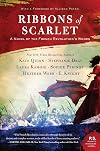
Liberté, égalité, sororité!
Six of my favorite historical fictions writers, referred to as the "Scarlet Sisters" (Stephanie Dray, Laura Kamoie, Eliza Knight, Sophie Perinot, Kate Quinn and Heather Webb), have combined forces in this exquisite compendium of tales of the French Revolution. The book features seven sections in chronological order - each told through the voice of an historic female figure of the revolution and written by one of the "Scarlet Sisters". The stories intentionally show more intersect from time to time, imagining how these women of note may have interacted. These historic woman come from all walks of life whether peasantry, royalty, aristocracy, merchant class or enlightened philosophy and were assuredly aware of one another.
The research which went into telling these tales is herculean. The writing is exquisite and the tales are deftly rendered. I loved how well the stories segued into one another and how beautifully the women's lives were brought to life. My own senses were heightened through the writing as I could easily imagine the stench of a prison, the wafting of a ladies rosewater perfume, the shimmer of light against the guillotine's blade and the din of an angry mob beyond control.
Although her own schedule did not allow for participating in the writing of one of the book's sections, renowned historical fiction writer, Allison Pataki provided a wonderful foreword, drawing the reader into these pages of "herstory". To the beloved "Scarlet Sisters", bravi pour un travail bien fait! show less
Six of my favorite historical fictions writers, referred to as the "Scarlet Sisters" (Stephanie Dray, Laura Kamoie, Eliza Knight, Sophie Perinot, Kate Quinn and Heather Webb), have combined forces in this exquisite compendium of tales of the French Revolution. The book features seven sections in chronological order - each told through the voice of an historic female figure of the revolution and written by one of the "Scarlet Sisters". The stories intentionally show more intersect from time to time, imagining how these women of note may have interacted. These historic woman come from all walks of life whether peasantry, royalty, aristocracy, merchant class or enlightened philosophy and were assuredly aware of one another.
The research which went into telling these tales is herculean. The writing is exquisite and the tales are deftly rendered. I loved how well the stories segued into one another and how beautifully the women's lives were brought to life. My own senses were heightened through the writing as I could easily imagine the stench of a prison, the wafting of a ladies rosewater perfume, the shimmer of light against the guillotine's blade and the din of an angry mob beyond control.
Although her own schedule did not allow for participating in the writing of one of the book's sections, renowned historical fiction writer, Allison Pataki provided a wonderful foreword, drawing the reader into these pages of "herstory". To the beloved "Scarlet Sisters", bravi pour un travail bien fait! show less
Lists
Awards


You May Also Like


Associated Authors
Statistics
- Works
- 4
- Also by
- 1
- Members
- 702
- Popularity
- #36,076
- Rating
- 4.0
- Reviews
- 52
- ISBNs
- 25
- Favorited
- 1
