
Elizabeth Loupas
Author of The Second Duchess
Works by Elizabeth Loupas
Tagged
Common Knowledge
- Canonical name
- Loupas, Elizabeth
- Gender
- female
Members
Reviews
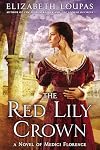
While the companion novel to this, The Second Duchess, is a standard historical mystery with a secret that needs cracking open and a villain the reader is trying to identify before it's too late, Loupas's third novel, The Red Lily Crown is more of a historical thriller. The Medicis are an omnipotent and omniscient family. They see everything and can get away with murder. Literally. It's not secret to either our heroine or the reader just who the bad guys are. It's more just a slow descent show more into chaos until the reader is gripping the book, wondering what the hell is going to happen next.
There are three narrators in this novel: Chiara is a teenage alchemist from the streets who cares about her skin and the skin of her family more than anything else. As the outsider to the Medici court, readers are made to identify mostly with her. If only we could all be so tenacious. Ruan is an English alchemist who can't stand Francesco de Medici but bides his time while slowly becoming more entangled with Chiara. I know the synopsis makes it sound like he can't be trusted, but come on. We all know where this is going.
Finally, there's Francesco de Medici himself. He doesn't narrate often, and he was my least favorite narrator. He kind of served as an expostion narrator and explained how his glamorous world worked to readers. When he wasn't doing that, he was fantasizing about all the bdsm stuff he was going to do to his mistress. I really didn't need those parts.
Other than that, this book is filled with thrills both exciting and terrifying. The stakes keep getting higher, and the cast of characters is so insane and insanely memorable. You'll definitely feel like you just stepped into a whole new world. show less
There are three narrators in this novel: Chiara is a teenage alchemist from the streets who cares about her skin and the skin of her family more than anything else. As the outsider to the Medici court, readers are made to identify mostly with her. If only we could all be so tenacious. Ruan is an English alchemist who can't stand Francesco de Medici but bides his time while slowly becoming more entangled with Chiara. I know the synopsis makes it sound like he can't be trusted, but come on. We all know where this is going.
Finally, there's Francesco de Medici himself. He doesn't narrate often, and he was my least favorite narrator. He kind of served as an expostion narrator and explained how his glamorous world worked to readers. When he wasn't doing that, he was fantasizing about all the bdsm stuff he was going to do to his mistress. I really didn't need those parts.
Other than that, this book is filled with thrills both exciting and terrifying. The stakes keep getting higher, and the cast of characters is so insane and insanely memorable. You'll definitely feel like you just stepped into a whole new world. show less
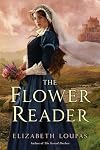
First, an admission: I was in love with Elizabeth Loupas’ first novel, The Second Duchess. It was one of the best books I read last year –even better than many of the offerings from more established historical fiction authors. I raved about the book to anyone who would listen and found virtually any excuse to recommend it to others. Needless to say, I was incredibly excited about Loupas’ follow-up novel, The Flower Reader.
Marina, known as Rinette, is the heir to a great Scottish show more estate, a relation to the French crown, and a close friend to Mary of Guise, the French-born Scottish queen. She also has the unique ability to divine the future from flowers, an ability that makes her an asset to the crown as well as a danger. When Mary of Guise trusts a casket filled with the secrets of the Scottish nobles and predictions from Nostradamas to Rinette, her life is changed forever. Rinette promises to protect the casket until it can reach the hands of Mary’s daughter, but soon finds the deadly consequence of that promise. Her beloved husband is killed, she becomes the target of numerous court schemes, and is forced to marry a man she hates.
The Flower Reader takes a more unique approach to historical fiction than just about everything else on the shelf right now. Rather than being primarily biographical, Flower Reader is a historical mystery surrounding the perilous court of Mary, Queen of Scots, but explored through the eyes of a purely fictional character. In fact, many of the characters in this book are fictional (more than the average historical fiction novel, I’d say), as is the plot. And honestly, I thought this was incredibly refreshing for the genre, especially since Loupas made the characters feel so real. They absolutely came alive on every page, and I got completely engrossed in Rinette’s story and struggles. I was cheering for her the entire time, even when it seemed like all was lost.
Would I say that The Flower Reader is as good as The Second Duchess? That’s a tough one. Both novels are very different and follow very different subjects with unique approaches, but Flower Reader is a worthwhile follow up that is easily one of the best book I’ve read so far this year. I’d recommend it to any fellow historical fiction reader. show less
Marina, known as Rinette, is the heir to a great Scottish show more estate, a relation to the French crown, and a close friend to Mary of Guise, the French-born Scottish queen. She also has the unique ability to divine the future from flowers, an ability that makes her an asset to the crown as well as a danger. When Mary of Guise trusts a casket filled with the secrets of the Scottish nobles and predictions from Nostradamas to Rinette, her life is changed forever. Rinette promises to protect the casket until it can reach the hands of Mary’s daughter, but soon finds the deadly consequence of that promise. Her beloved husband is killed, she becomes the target of numerous court schemes, and is forced to marry a man she hates.
The Flower Reader takes a more unique approach to historical fiction than just about everything else on the shelf right now. Rather than being primarily biographical, Flower Reader is a historical mystery surrounding the perilous court of Mary, Queen of Scots, but explored through the eyes of a purely fictional character. In fact, many of the characters in this book are fictional (more than the average historical fiction novel, I’d say), as is the plot. And honestly, I thought this was incredibly refreshing for the genre, especially since Loupas made the characters feel so real. They absolutely came alive on every page, and I got completely engrossed in Rinette’s story and struggles. I was cheering for her the entire time, even when it seemed like all was lost.
Would I say that The Flower Reader is as good as The Second Duchess? That’s a tough one. Both novels are very different and follow very different subjects with unique approaches, but Flower Reader is a worthwhile follow up that is easily one of the best book I’ve read so far this year. I’d recommend it to any fellow historical fiction reader. show less
I love fiction set in this time period for all the over-the-top disregard for laws among the elite, and The Red Lily Crown has all the secret romance, murder, family backstabbing, and illegitimate children one could possibly dream up. There’s a pretty high body count (because you have to off a few rivals to make it to grand duke of Florence. Or mistress of the duke, for that matter. Or cardinal. Or a Cornish miner studying alchemy at the Florentine court. There is a lot of murder, is what show more I’m saying).
Without giving away too much, The Red Lily Crown has all my favorite de Medici elements. The only way it could have been more perfect is if the characters had spent a little more time commissioning art, but it was probably hard to find the time with all the assassinations going on.
From my review on (The) Absolute. show less
Without giving away too much, The Red Lily Crown has all my favorite de Medici elements. The only way it could have been more perfect is if the characters had spent a little more time commissioning art, but it was probably hard to find the time with all the assassinations going on.
From my review on (The) Absolute. show less
Fantastic. I absolutely love Elizabeth Loupas's novels. This book, in particular, seems to defy genre. It's very staunchly historical fiction, but it's not just that. I wouldn't exactly call it a mystery, but there is a lot of suspense and a lot of thrills. Even at its toughest moments, I couldn't put the book down! There's also a fantasy element due to the flower reading. In an interview, Loupas admits that she ended up making up most of the system on her own, which is incredible, if you show more ask me. There's also an unsuspecting romance, which is the best kind.
Marina Leslie/Rinette is a lady-in-waiting and prophetess first to Mary of Guise and then Mary of Scots. Readers are introduced to the beginning of Mary's reign as queen, which are turbulent yet glamorous. Marina has no interest in the glamour, though. She wants to find out who murdered her husband, and she plays a dangerous game when she bargains with Mary of Scot. See, Marina holds a special prophecy from Mary's mother written by the famed Nostradamus. Marina was supposed to hand this over as soon as Mary landed in Scotland, but one thing after another kept getting in the way, leading to her husband's untimely death. However, blinded by grief, Marina will resort to anything to have justice, including teaming up with the enigmatic and somewhat androgynous Nico de Clerac, an advisor first to Mary of Guise and then her daughter.
Marina is quick-thinking, romantic, headstrong, and not afraid of taking risks if the reward is the guaranteed safety of her loved ones. She was fascinating to read about, and the writing was so well done that I felt like I was next to her every step of the way.
The supporting cast was vibrant and really made the story come to life. Nico de Clerac is the epitome of the French diplomat: de-escalating situations with his words all while wearing earrings and fancy clothes. Queen Mary is in her late teens/early twenties throughout the story, and she comes off as very mercurial, the exact opposite of Saorise Ronan's portrayal in the biopic. Personally, I didn't mind this interpretation. According to Loupas, Mary of Scots was actually quite temperamental in real life, so it was interesting reading about this. The rest of the Scottish court is full of menacing men in what I imagine to be dark mustaches all vying for power and chafing at the fact that a young woman is queen while another young woman the same age holds Scotland's greatest secrets in her hands.
Indeed, women's rights, women's places in marriage, and women's roles in general take center stage in this novel. The reality is that women in this time period had very little power, and while both Marina Leslie and Queen Mary exercise great power over the course of the novel, they are both often shown to be quite powerless, and the results are often near fatal. However, the novel is overall very triumphant. It's definitely worth the read, as all of the trials and tribulations make the end that much sweeter. While we know the fate of Queen Mary of Scots does not end well (that isn't shown in this book but it is heavily implied), the fate of Marina Leslie is glorious. The heroine saves herself time and time again, making her the most inspirational of all of Loupas's heroines, in my opinion. And so, if you read any of Loupas's books, let it be The Flower Reader. show less
Marina Leslie/Rinette is a lady-in-waiting and prophetess first to Mary of Guise and then Mary of Scots. Readers are introduced to the beginning of Mary's reign as queen, which are turbulent yet glamorous. Marina has no interest in the glamour, though. She wants to find out who murdered her husband, and she plays a dangerous game when she bargains with Mary of Scot. See, Marina holds a special prophecy from Mary's mother written by the famed Nostradamus. Marina was supposed to hand this over as soon as Mary landed in Scotland, but one thing after another kept getting in the way, leading to her husband's untimely death. However, blinded by grief, Marina will resort to anything to have justice, including teaming up with the enigmatic and somewhat androgynous Nico de Clerac, an advisor first to Mary of Guise and then her daughter.
Marina is quick-thinking, romantic, headstrong, and not afraid of taking risks if the reward is the guaranteed safety of her loved ones. She was fascinating to read about, and the writing was so well done that I felt like I was next to her every step of the way.
The supporting cast was vibrant and really made the story come to life. Nico de Clerac is the epitome of the French diplomat: de-escalating situations with his words all while wearing earrings and fancy clothes. Queen Mary is in her late teens/early twenties throughout the story, and she comes off as very mercurial, the exact opposite of Saorise Ronan's portrayal in the biopic. Personally, I didn't mind this interpretation. According to Loupas, Mary of Scots was actually quite temperamental in real life, so it was interesting reading about this. The rest of the Scottish court is full of menacing men in what I imagine to be dark mustaches all vying for power and chafing at the fact that a young woman is queen while another young woman the same age holds Scotland's greatest secrets in her hands.
Indeed, women's rights, women's places in marriage, and women's roles in general take center stage in this novel. The reality is that women in this time period had very little power, and while both Marina Leslie and Queen Mary exercise great power over the course of the novel, they are both often shown to be quite powerless, and the results are often near fatal. However, the novel is overall very triumphant. It's definitely worth the read, as all of the trials and tribulations make the end that much sweeter. While we know the fate of Queen Mary of Scots does not end well (that isn't shown in this book but it is heavily implied), the fate of Marina Leslie is glorious. The heroine saves herself time and time again, making her the most inspirational of all of Loupas's heroines, in my opinion. And so, if you read any of Loupas's books, let it be The Flower Reader. show less
Lists
Awards


You May Also Like


Statistics
- Works
- 3
- Members
- 488
- Popularity
- #50,612
- Rating
- 4.0
- Reviews
- 58
- ISBNs
- 26
- Languages
- 3

